
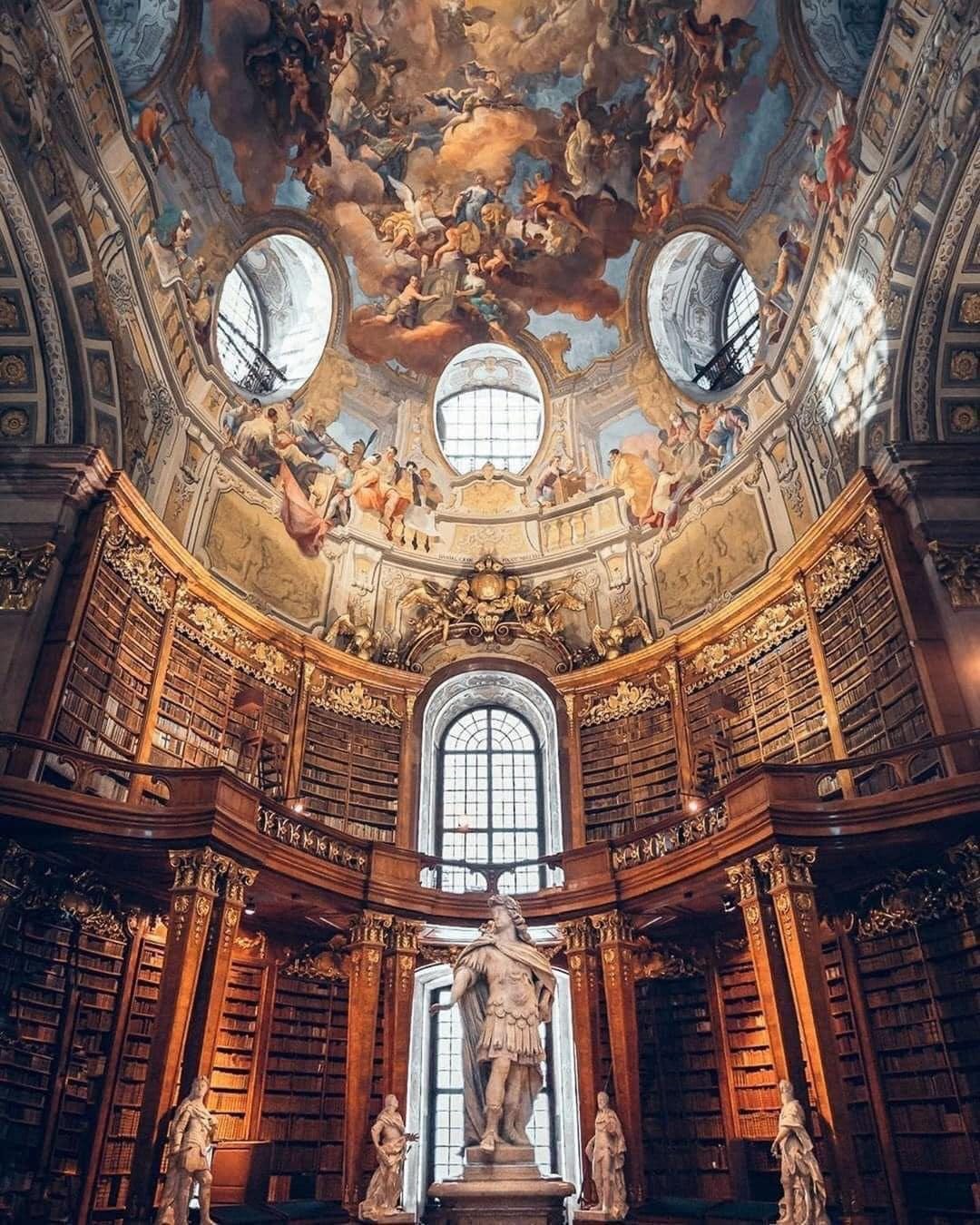
While everyone is talking about AI, automation, and the future of work, people are reading less than ever before. Many adults struggle to finish a book, and even university graduates leave education without ever opening the works that shaped the civilization they live in.
The gap between readers and non-readers is one of the defining divides of our time.
For most of Western history, that would have been unthinkable.
Thomas Jefferson and Alexander Hamilton grew up reading Homer, Plato, Aristotle, Cicero, and Virgil in the original languages. John Adams spent his evenings with Tacitus and Plutarch. Theodore Roosevelt read history with an appetite that amazed everyone around him. C.S. Lewis thought every new book should be balanced with an old one.
None of these men treated the classics as museum pieces. They read them because they expected to find wisdom there, and generation after generation they did.
I’ve often been asked where someone should begin if they want to build a classical library of their own. It’s a fair question because there are thousands of books you could choose from, and no one has time to read them all.
If I had to recommend just eight, these are the books I’d put into your hands first..
1. Homer’s Iliad
Every educated person in the ancient world knew Homer.
Long before there were universities, degrees, or reading lists, Greek boys learned the Iliad. They copied its verses, memorized long passages, and grew up with Achilles, Hector, Odysseus, and Agamemnon almost as familiar as members of their own family. When Rome conquered Greece, it adopted Homer as the foundation of its education. Centuries later, Renaissance scholars travelled across Europe searching for Greek manuscripts so they could read him in the original language once again.
Few books have shaped Western civilization so profoundly.
Alexander the Great reportedly carried a copy of the Iliad throughout his campaigns, keeping it beneath his pillow beside his dagger. Thomas Jefferson urged young students to read Homer. Generations of poets, painters, composers, and historians returned to the same pages, each finding something new in a poem already thousands of years old.
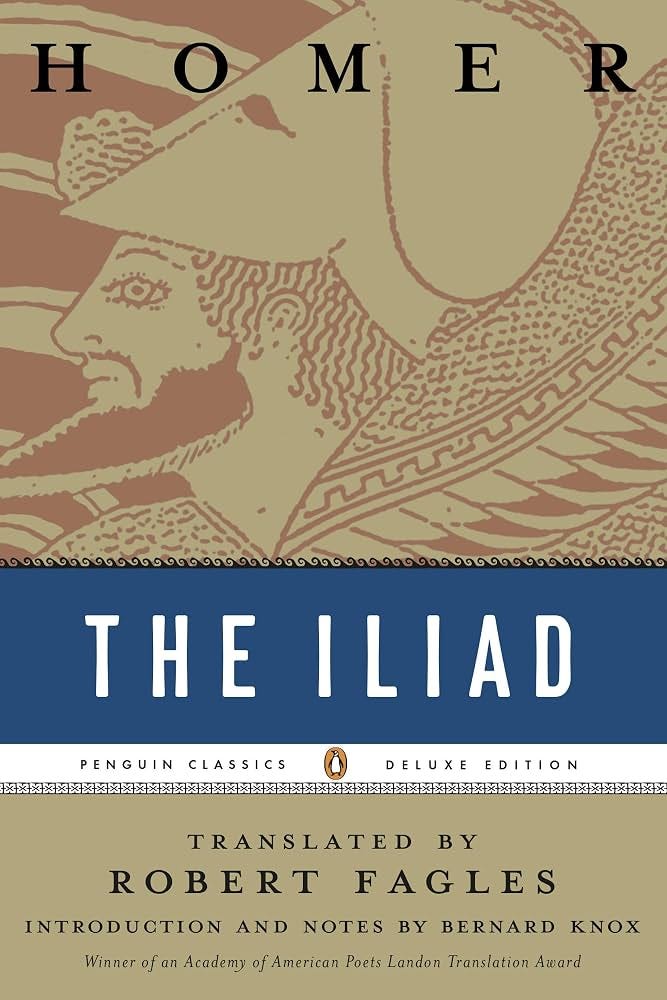
Homer tells only a small part of the Trojan War. The Iliad follows just a few weeks of the conflict, centering almost entirely on Achilles and the consequences of his anger. After quarrelling with Agamemnon, Achilles withdraws from the fighting, leaving the Greek army to struggle without its greatest warrior. His decision eventually leads to the death of Patroclus, the friend he loves most, drawing him back into the war with a fury that shapes the rest of the poem.
Alongside Achilles stands Hector, the prince of Troy. He understands that facing Achilles certainly means death, yet he walks outside the city’s walls anyway because his family, his king, and his people depend upon him. Homer fills the poem with moments like these, allowing courage, grief, loyalty, pride, and honour to emerge naturally through the choices his characters.
Generation after generation found themselves returning to those same pages. Alexander admired Achilles. Medieval scholars preserved the poem. Renaissance humanists recovered it. The Founding Fathers recommended it. They all recognized that Homer had asked questions about human nature that every civilization eventually has to answer.
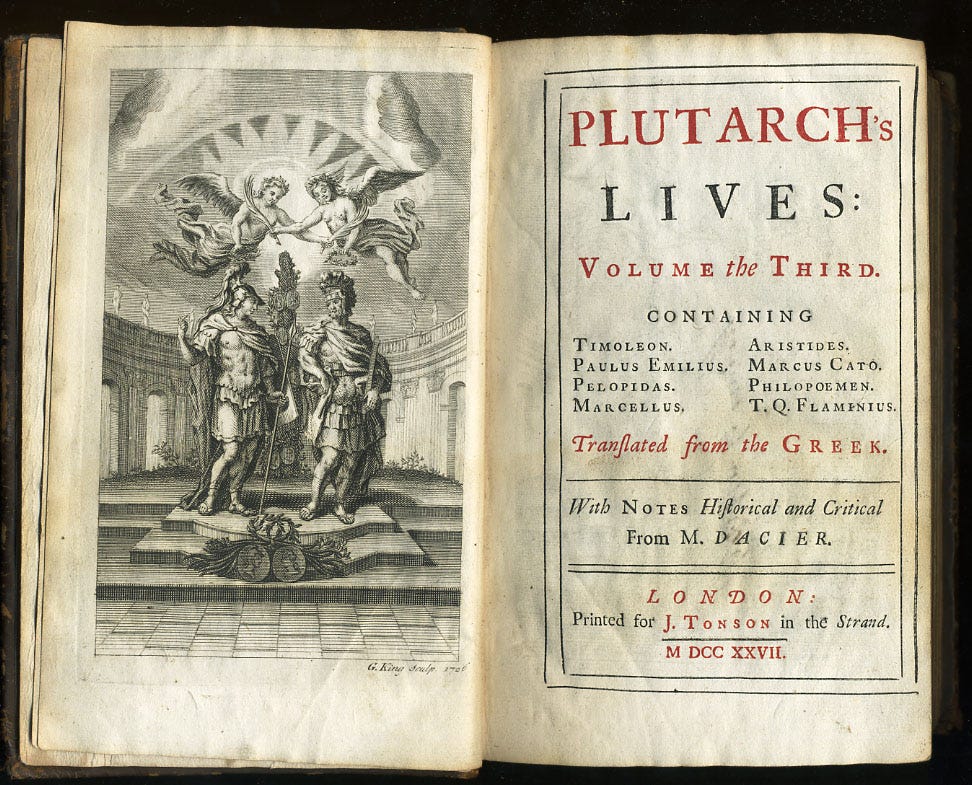
2. Plutarch’s Lives
If Homer taught the ancient world how to think about heroes, Plutarch taught it how to think about leaders.
Writing in the first century, Plutarch collected the biographies of some of history’s greatest Greeks and Romans, pairing figures like Alexander and Julius Caesar, Lycurgus and Numa, Demosthenes and Cicero. His purpose was never simply to record events. He wanted to understand the men behind them.
That approach transformed the way generations read history.
Shakespeare borrowed heavily from Plutarch when writing Julius Caesar, Coriolanus, and Antony and Cleopatra. Napoleon carried the book throughout his campaigns. America’s Founding Fathers quoted it constantly because they believed republics were shaped by character long before they were shaped by constitutions.
One of Plutarch’s most memorable observations appears in the opening pages. He explains that small actions reveal more about a person’s character than great battles ever could. A joke, a conversation, or a passing decision may tell us more about a leader than the victory for which history remembers him.
Two thousand years later, that insight still feels fresh.
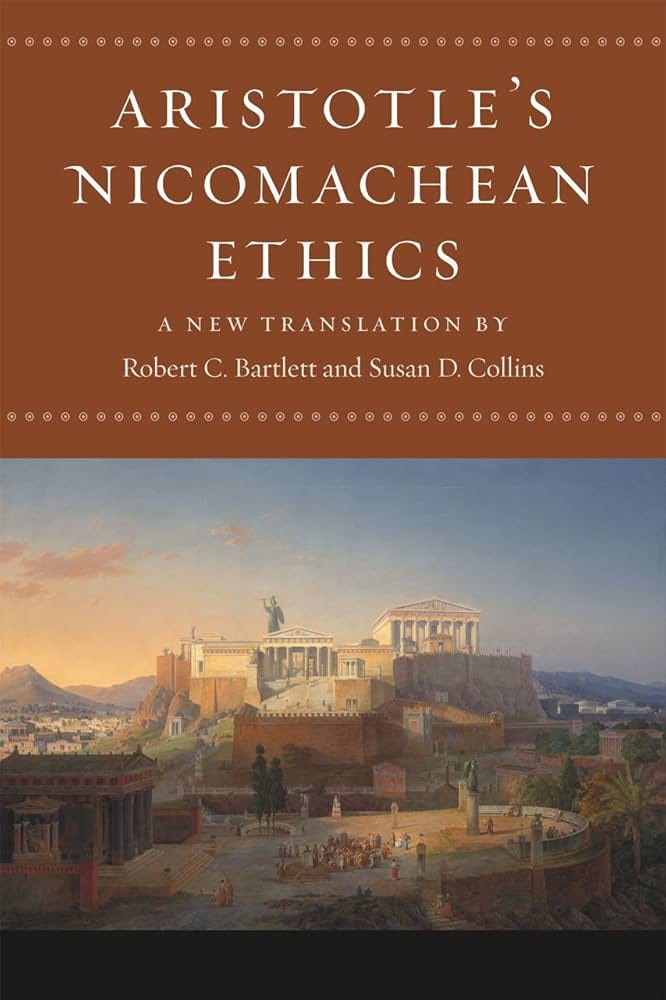
3. Aristotle’s Nicomachean Ethics
Few books have shaped Western ideas about virtue more than Aristotle’s Nicomachean Ethics.
Instead of asking how governments should function or how the universe was created, Aristotle begins with a much more personal question.
How should we live?
The answer occupies him for ten books. Along the way he discusses courage, justice, friendship, generosity, moderation, happiness, and practical wisdom. His arguments are rarely abstract. They almost always begin with ordinary human experience, which is one reason the book continues to feel modern.
Some of Aristotle’s observations have become famous in their own right. He argues that friendship is more important than justice because friends naturally do what laws are forced to command. He argues that young people lack the experience necessary to judge politics wisely. He argues that excellence grows out of habit rather than talent.
It isn’t difficult to see why this became one of the foundations of classical education.
For more than two thousand years, teachers have turned to Aristotle whenever they wanted students to think seriously about character.
Friendly reminder: The Western Spirit exists because of readers like you. Join us and help keep this project alive and independent.
If you’ve been enjoying these essays, consider becoming a paid subscriber. For a few dollars a month, you’ll get:
In-depth pieces on forgotten battles, brave men, and turning points in Western history
Reflections on faith, order, tradition, and the deeper meaning behind culture
Full access to the growing archive — essays, book breakdowns, and historical deep dives
This project exists because readers like you make it possible.
4. Dante’s Divine Comedy
If one book captures medieval Christendom at its height, it is Dante’s Divine Comedy.
Written in the early fourteenth century, the poem follows Dante himself as he journeys through Hell, Purgatory, and finally Heaven. Along the way he encounters emperors, popes, saints, philosophers, poets, soldiers, and ordinary people, each revealing something about justice, mercy, freedom, and the human condition.
The scale of the work is astonishing.
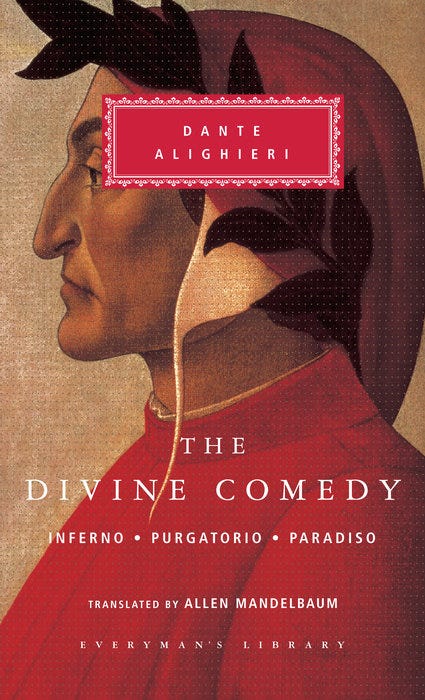
Virgil guides Dante through Hell. Aristotle appears among the great thinkers of antiquity. Thomas Aquinas enters the story alongside kings and bishops. Ancient Greece, imperial Rome, and medieval Christianity all become part of the same journey.
For centuries, the Divine Comedy stood beside the Bible as one of the defining works of European literature. Artists illustrated it. Composers drew inspiration from it. Philosophers debated it. Schoolchildren learned passages by heart.
Reading Dante is like stepping into the mind of medieval Europe itself.
5. Cervantes’ Don Quixote
Few novels have enjoyed a life quite like Don Quixote.
Published in two parts during the early seventeenth century, it tells the story of an aging gentleman who becomes so absorbed in tales of medieval knights that he decides to become one himself. Armed with rusting armour, an old horse, and boundless enthusiasm, he rides across Spain searching for adventures that exist mostly in his imagination.
The humour has delighted readers for centuries.
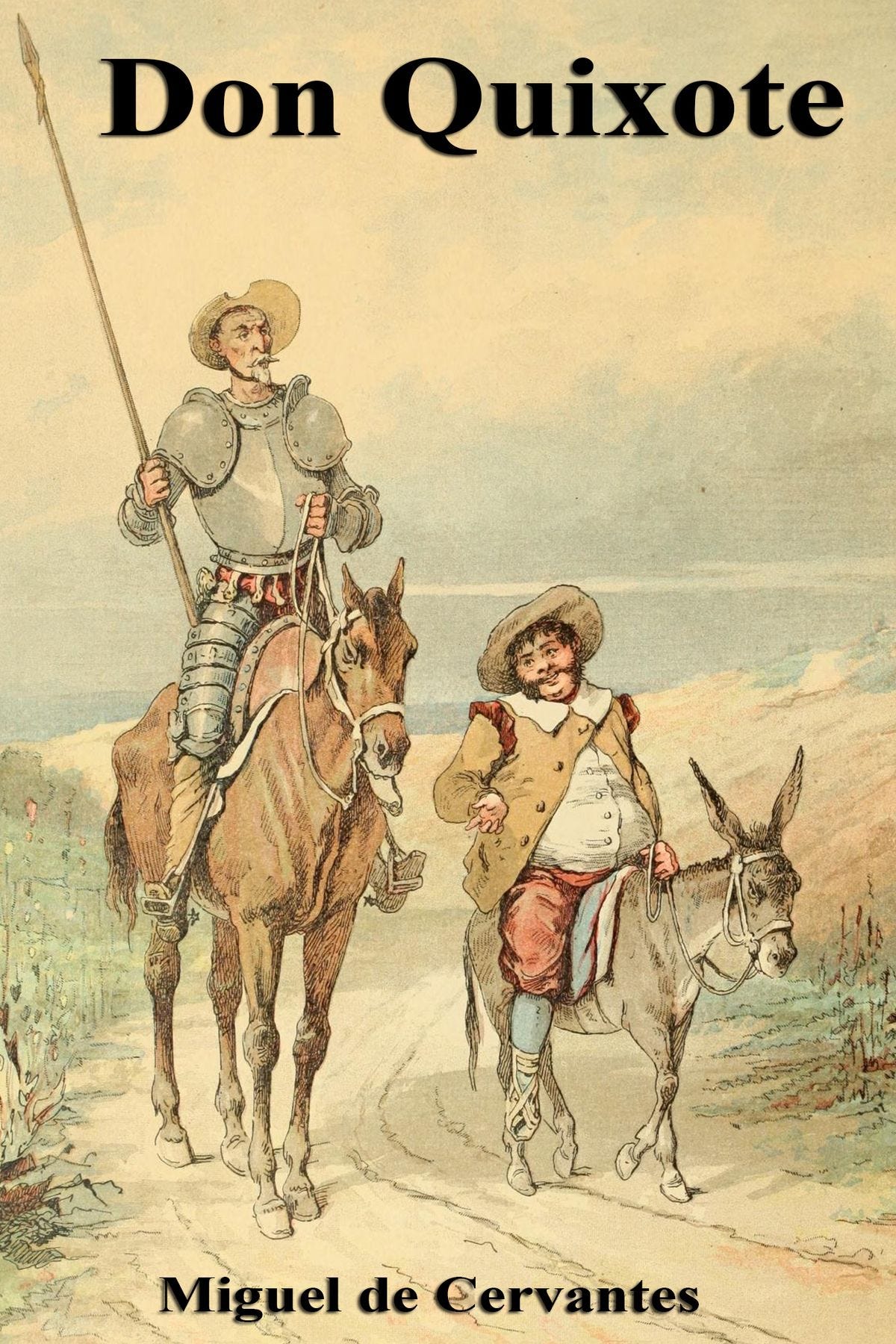
Behind it stands the remarkable life of Cervantes himself.
As a young man he fought at the Battle of Lepanto in 1571, where the Holy League defeated the Ottoman fleet. A few years later, Barbary corsairs captured his ship and carried him to Algiers, where he spent five years in captivity before finally being ransomed.
Those experiences shaped the novel.
Beneath its comedy lie reflections on courage, honour, freedom, disappointment, and the passing of one age into another. Few books manage to be so entertaining while asking such serious questions.
6. The Song of Roland
Long before novels dominated European literature, epic poems carried the stories every educated person knew.
None proved more influential than The Song of Roland.
Written around the end of the eleventh century, the poem tells the story of Charlemagne’s nephew Roland, who commands the rear guard of the Frankish army as it returns from Spain. Surrounded by overwhelming forces, Roland refuses to sound his horn until the battle is almost lost, choosing honour and duty over his own safety.
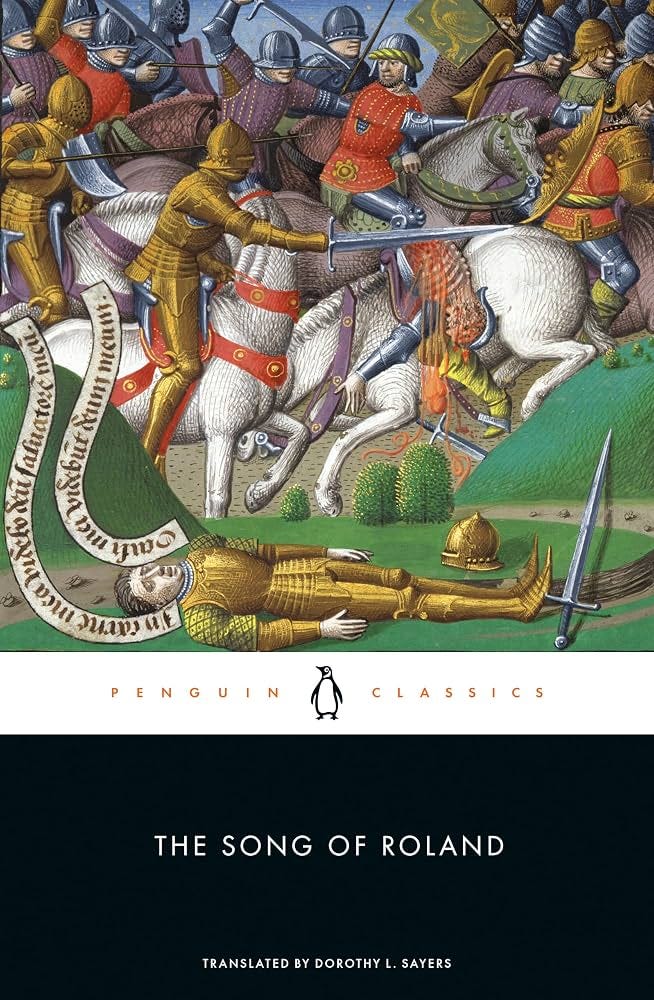
The story became one of medieval Europe’s defining legends.
Knights heard it recited in castles. Crusaders knew its heroes. Chroniclers referred to Roland as the ideal Christian warrior whose loyalty to God, king, and companions remained unshaken even in the face of certain death.
Like Homer’s Achilles or Virgil’s Aeneas, Roland became far more than a literary character.
He became an ideal.
7. Thomas Aquinas’ Summa Contra Gentiles
By the thirteenth century, Western Europe found itself in constant contact with the Islamic world through Spain, Sicily, trade, diplomacy, and the Crusades. Ancient Greek philosophy had also returned to Europe through new Latin translations, raising questions that earlier generations had never faced quite so directly.
Thomas Aquinas entered that conversation.
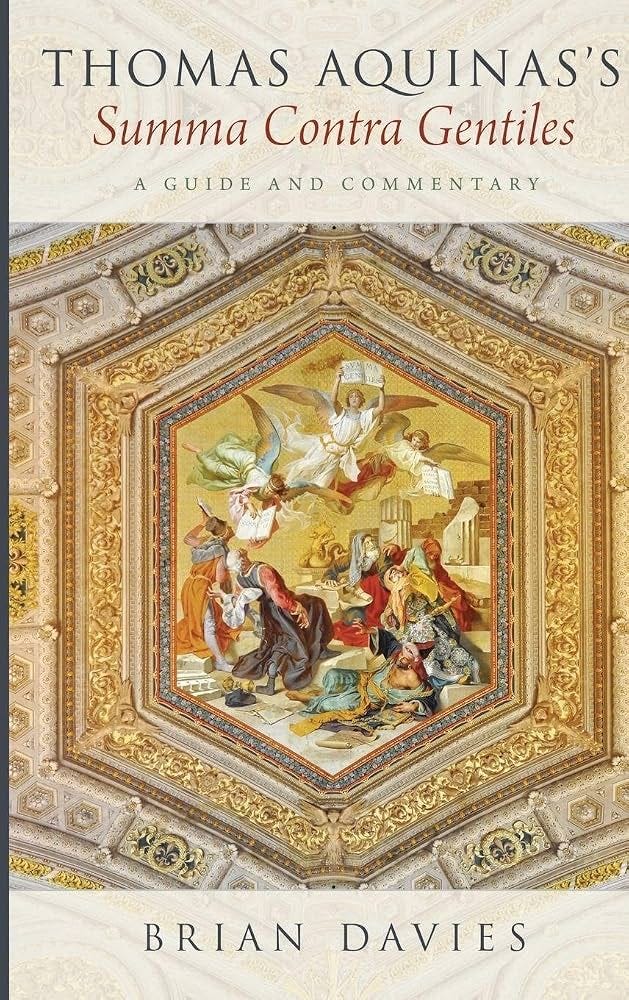
The Summa Contra Gentiles presents Christianity through philosophy as well as theology, drawing upon Aristotle while engaging with Muslim and Jewish thinkers whose works had become widely available across medieval Europe. Aquinas moves patiently from one argument to the next, building his case through careful reasoning instead of rhetoric.
The result became one of the greatest intellectual achievements of the Middle Ages.
Whether one agrees with Aquinas or not, it’s difficult to overstate his influence. Universities taught his works for centuries. Popes praised them. Philosophers debated them. His method shaped Christian scholarship long after the Middle Ages had ended.
8. John of Damascus’ On Heresies
Few people realize that one of the earliest Christian responses to Islam came from a man who lived under Muslim rule.
John of Damascus was born in the late seventh century, only decades after the Muslim conquest of Syria. Living in Damascus under the Umayyad Caliphate, he encountered Islam not as a distant observer but as a neighbour. That gave his writings a unique place in Christian history.
In On Heresies, John devoted a chapter to what he called the “Heresy of the Ishmaelites.” He summarized Islamic beliefs as he understood them before offering a theological critique rooted in Christian doctrine. His work became enormously influential throughout the Byzantine Empire and later medieval Europe because it represented one of the first sustained Christian examinations of Islam.
For centuries, theologians, monks, and scholars returned to John whenever they sought to understand how the earliest Christians responded to the emergence of a new religion that had rapidly expanded across the eastern Mediterranean.
Whether read for theology, intellectual history, or the history of Christian-Muslim relations, On Heresies remains one of the foundational texts of the medieval world.
Every generation inherits the same choice.
It can begin the conversation from scratch, or it can join one that has already lasted for thousands of years.
Jefferson chose Homer.
Adams chose Cicero.
Churchill chose Gibbon.
Lewis chose Athanasius.
They understood that the greatest books have already stood the test of time.
This is what pushed me to start the Athenaeum Book Club.
I’ve been building Athenaeum for over a year now, and honestly, it feels like the most important thing I’ve ever worked on. The response has been unbelievable. Every day, people reach out telling me they’ve been looking for something like this for years, a place where people sit down and read the great books seriously instead of just posting quotes from them online.
At Athenaeum, we read a new classic text every month, and we now have close to 45,000 readers following along. We have an incredible “inner circle” community actively participating in the biweekly discussions: reading, thinking, and engaging deeply with the material, together.
The appetite for the great books of Western civilization is far larger than most people think. Classics operate at a completely different depth than anything modern culture produces.
These are the books we’ve read so far (we are about to start The Brothers Karamazov):
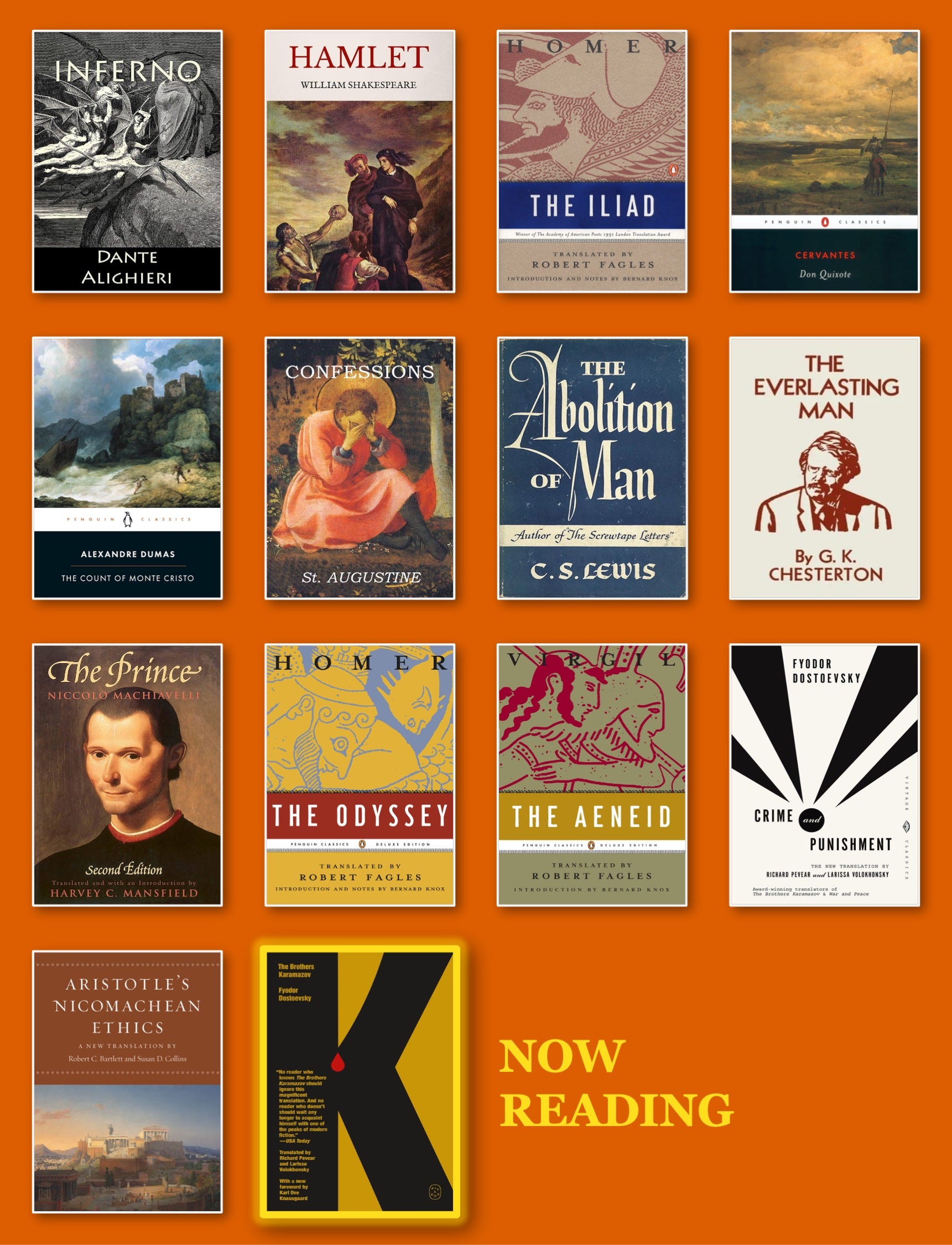
To preserve a culture, you must continually study the books and ideas that created it.
That is why the Athenaeum Book Club was created. Together, we are reading the books that form the mind and shape the spirit — the books our ancestors read. We’re doing it honestly and openly, in dialogue with each other.
If this sounds like something you’d like to be a part of, please join our community, and consider supporting our mission with a paid membership. You’ll get:
Live community book discussions (biweekly) and recordings
Access to our incredible community of readers
Regular essays to guide you through the books we’re reading
The full library of articles, essays, and podcasts
The ability to vote on what we read next…
Athenaeum is funded ENTIRELY by the members of this incredible community. Join us!
Every great book is a road laid by the dead for the living. Some roads lead through kingdoms, some through grief, and a surprising number pass through terrible family dinners.
My son was talking about the odyssey last year and said his biggest problem with it is that he always wishes he were reading the Iliad instead. So I’m starting that one soon!