
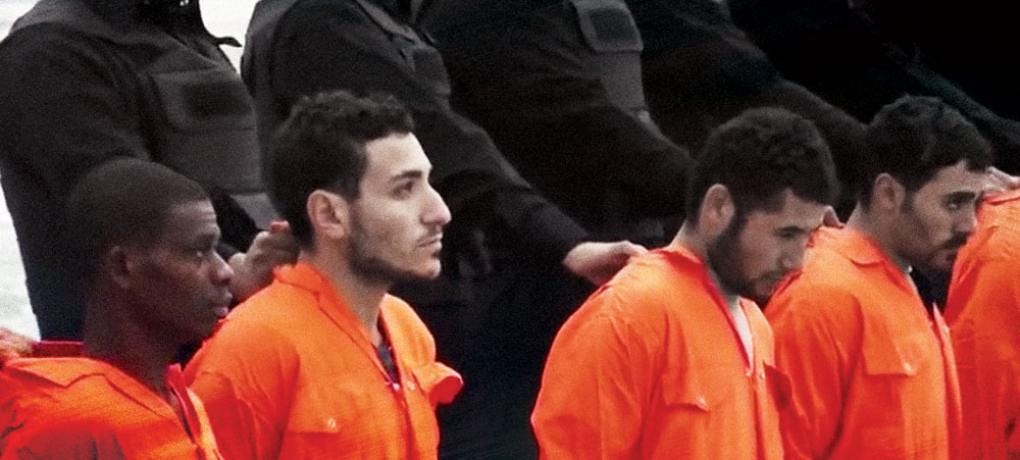
The belief that Christians must submit to Islam is rooted in Qur’anic verses that call for jihad until non-Muslims accept Islamic authority. Again and again, this belief has produced the same brutal demand: accept Islam or die. Some gave in to save their lives. Others refused. Those who refused paid with their lives. In Christian memory, they are remembered as martyrs.
The pattern appeared early in the centuries when Islamic armies expanded across the Mediterranean world. Within a hundred years of Muhammad’s death, Muslim rule stretched from Spain to Persia. Cities that had been Christian for centuries suddenly found themselves under a new religious authority.
Many Christians adapted to the new order. They paid the jizya, the tax placed on non-Muslims, and continued practicing their faith under Muslim rule. But not everyone was willing to compromise when confronted directly with pressure to convert.
One of the earliest and most famous examples occurred in 9th-century Cordoba, in Islamic Spain. At the time, Cordoba was one of the greatest cities in Europe. Under the Umayyad Emirate it had magnificent mosques (former churches), libraries, and a flourishing intellectual culture. Yet beneath this prosperity there were also religious tensions between Muslim rulers and the Christian population that had lived there long before the Arab conquest.
In 850 a Christian priest named Perfectus was confronted by a group of Muslims in the marketplace. They asked him a question designed to trap him: who was greater, Jesus or Muhammad? Perfectus initially tried to avoid answering. He knew the danger. Under Islamic law, insulting Muhammad was punishable by death. But the men kept pressing him. Eventually Perfectus answered honestly, saying that Christ was greater. The Muslims immediately reported him to the authorities. Perfectus was arrested, tried, and executed. According to Christian sources, he was beheaded on April 18, 850.
In the years that followed, dozens of Christians in Cordoba deliberately proclaimed their faith in public, even knowing it would bring execution. Some openly criticized Muhammad or refused demands to convert. They understood the consequences. Many walked into the courts almost willingly. These people became known as the Martyrs of Cordoba.
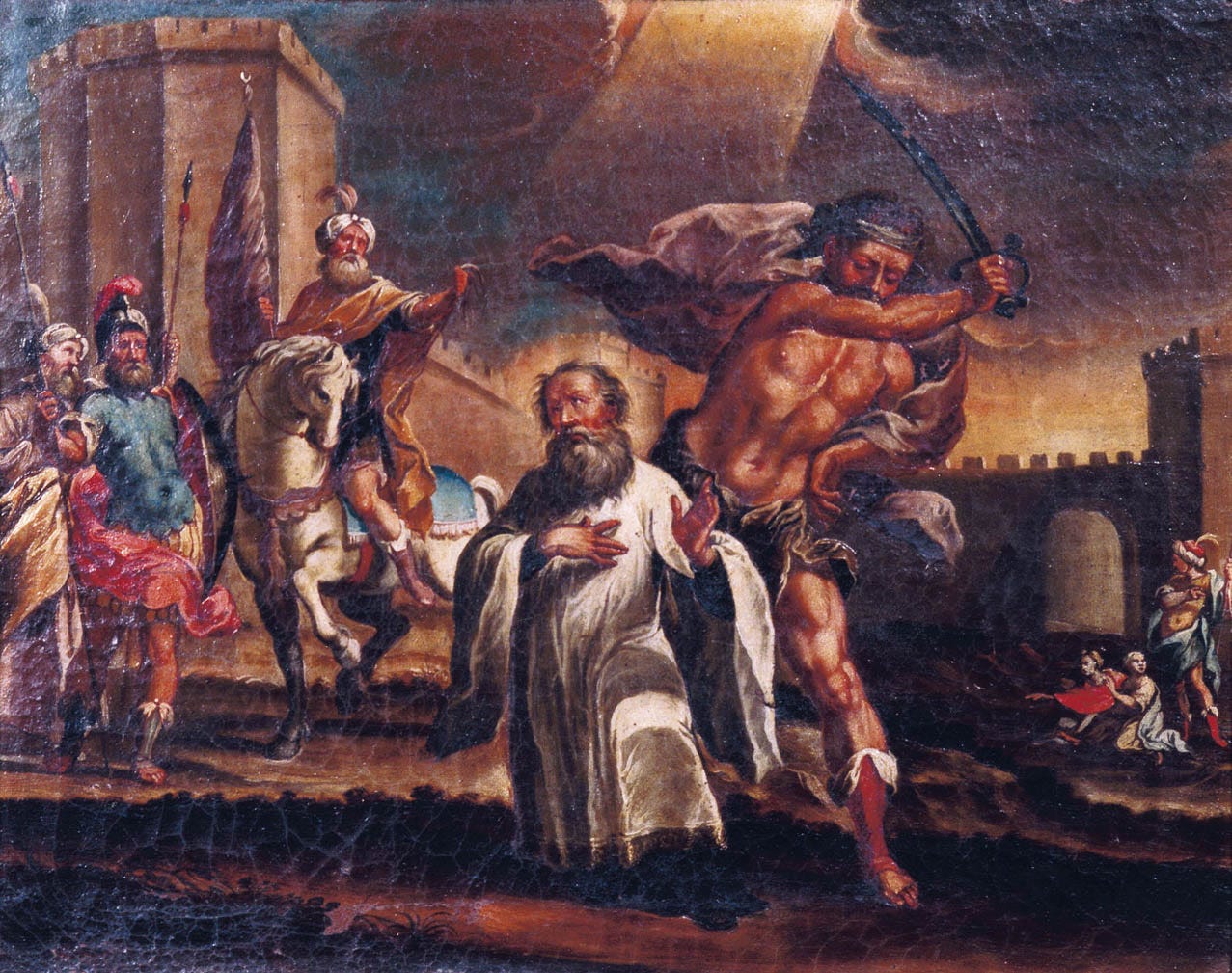
One of them was Saint Isaac, a young Christian who had once served as a government official under Muslim rule. Isaac resigned his position and appeared before a Muslim judge. There he openly declared the truth of Christianity and rejected Muhammad as a false prophet. The judge reportedly tried to save him. He told Isaac to reconsider, to retract his words, to simply leave and keep quiet. Isaac refused. He insisted on speaking plainly about his faith. The result was inevitable. Isaac was sentenced to death and executed in 851.
Another martyr was Flora, a young woman whose father was Muslim and whose mother was Christian. Because of her father’s religion, the authorities considered her legally Muslim. When she openly declared herself Christian, she was arrested. Even after imprisonment and interrogation, Flora would not renounce Christ. She was eventually executed alongside another Christian woman named Maria. Their deaths became part of the growing list of martyrs remembered by the Christian community in Spain.
One of the most famous examples is Saint George of Ioannina, a young Greek Christian living in Ottoman-controlled Greece in the early 19th century. George worked as a stable hand. One day rumors spread that he had converted to Islam. Ottoman authorities summoned him and asked him to confirm the conversion. Instead, George insisted he had always been Christian and would remain so. The officials urged him to simply accept Islam and save his life. George refused. He was beaten, imprisoned, and pressured repeatedly to change his answer. Finally he was sentenced to death. In 1838 he was publicly hanged in the city of Ioannina.
Friendly reminder: The Western Spirit exists because of readers like you. Join us and help keep this project alive and independent.
If you’ve been enjoying these essays, consider becoming a paid subscriber. For a few dollars a month, you’ll get:
In-depth pieces on forgotten battles, brave men, and turning points in Western history
Reflections on faith, order, tradition, and the deeper meaning behind culture
Full access to the growing archive — essays, book breakdowns, and historical deep dives
This project exists because readers like you make it possible.
Another famous case is Saint Ahmed the Calligrapher, an Ottoman Muslim official who secretly converted to Christianity in the 17th century after studying the Bible. When his conversion became known, he too was offered a chance to return to Islam. He declined. For leaving Islam and embracing Christianity, he was executed in Constantinople in 1682.
Stories like these appear not only in Europe but across the Middle East and North Africa. Armenian Christians, Greek Christians, Copts, Assyrians, and others all preserved accounts of believers who refused to abandon their faith under pressure.
And these stories did not end centuries ago. Even in the modern world, there are still places where leaving Islam or refusing conversion can carry deadly consequences, especially under strict interpretations of Sharia law.
In several countries, apostasy (leaving Islam) is still punishable by death under Islamic jurisprudence.
In others it is not formally enforced by the state but can provoke violence from families, communities, or extremist groups.
One of the most famous modern cases is Asia Bibi, a Christian woman in Pakistan. In 2009, Asia Bibi was working in the fields with several Muslim women. After she drank water from a communal cup, the women objected, saying a Christian had made the water impure. An argument followed, and Asia defended her faith. Soon afterward she was accused of blasphemy against Muhammad. Under Pakistan’s blasphemy laws, the accusation alone was enough to destroy her life. Asia Bibi was arrested, tried, and sentenced to death by hanging in 2010. For nearly a decade she lived on death row while mobs demanded her execution. Two Pakistani politicians who supported her… Punjab governor Salman Taseer and minister Shahbaz Bhatti… were assassinated. After years of international pressure, Pakistan’s Supreme Court finally acquitted her in 2018. Even then, violent protests erupted across the country. Asia Bibi had to flee Pakistan and eventually found asylum in Canada.
Another story comes from Sudan. In 2014, a young Christian woman named Meriam Ibrahim was arrested while eight months pregnant. Sudanese courts declared that because her father had been Muslim, she was legally Muslim as well. Her marriage to a Christian man was therefore considered invalid, and her refusal to convert to Islam was treated as apostasy. The court gave her a choice: return to Islam or face execution. Meriam refused. She was sentenced to death by hanging. While in prison she gave birth to her daughter while chained to the floor. International outrage eventually forced Sudan’s government to release her, and she was allowed to leave the country with her family.
In Iran, converts from Islam to Christianity regularly face arrest and imprisonment. One of the best known cases is Pastor Youcef Nadarkhani, an Iranian Christian pastor who had converted from Islam. In 2010 he was sentenced to death for apostasy. Judges repeatedly demanded that he renounce Christianity and return to Islam. He refused each time. For years his life hung in the balance until international pressure eventually led to his release, though he continued to face harassment and imprisonment.
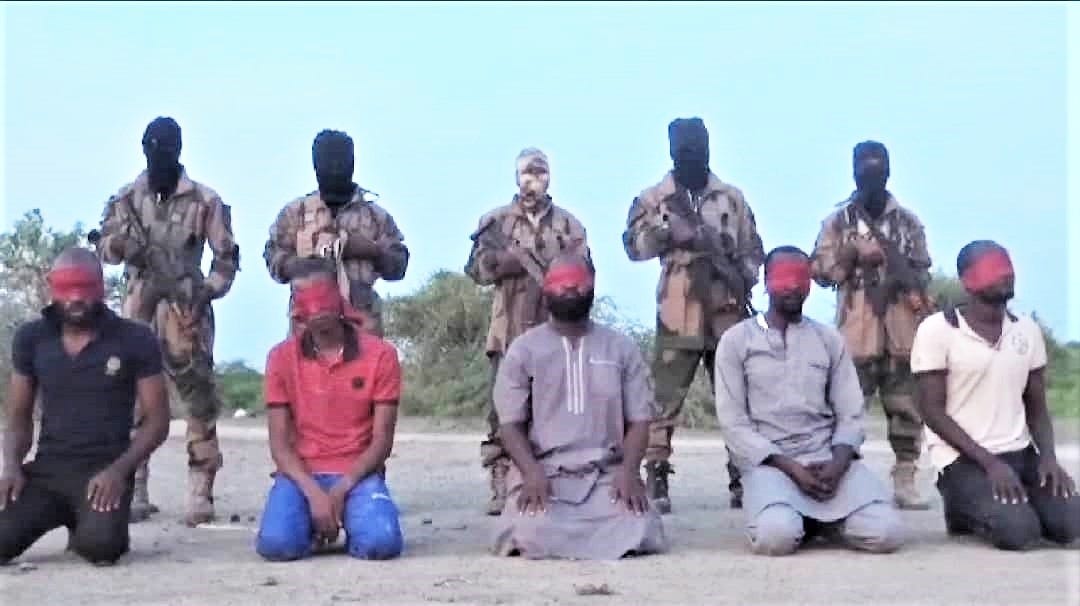
In parts of Nigeria, extremist groups have revived the ancient ultimatum in its most brutal form. The jihadist group Boko Haram has repeatedly captured Christian villagers and forced them to convert to Islam. Those who refuse are executed. One survivor, a Christian woman named Rebecca Bitrus, later testified that she watched Boko Haram militants gather prisoners and offer them a choice. Those who agreed to convert were separated from those who refused. The Christians who refused were shot.
And perhaps the most widely seen modern example occurred in Libya in 2015. ISIS militants captured 21 Egyptian Christian laborers and filmed their execution on a Mediterranean beach. In the video, the captives were dressed in orange jumpsuits and given a final opportunity to renounce Christianity. None did. One by one they were beheaded, dying with prayers on their lips. The Coptic Church later recognized them as martyrs.
This will not stop anytime soon. Many more Christians will be given the same terrible choice. Many more will be executed for refusing to abandon their faith.
So remember these martyrs. They chose faith over life, and their witness should never be forgotten..
One thing worth noting is that today, it is the West which has propped Islam up and used it as a force to topple regimes or partition countries. Without that support, Islam could have perished sooner, or at least have been defanged significantly.
Raymond Ibrahim has been warning about Islam and Christian Persecution for years. Please remember that JUNE 29 is the day to remember CHRISTIAN MARTYRS 🙏 - a brutality that is still happening.