
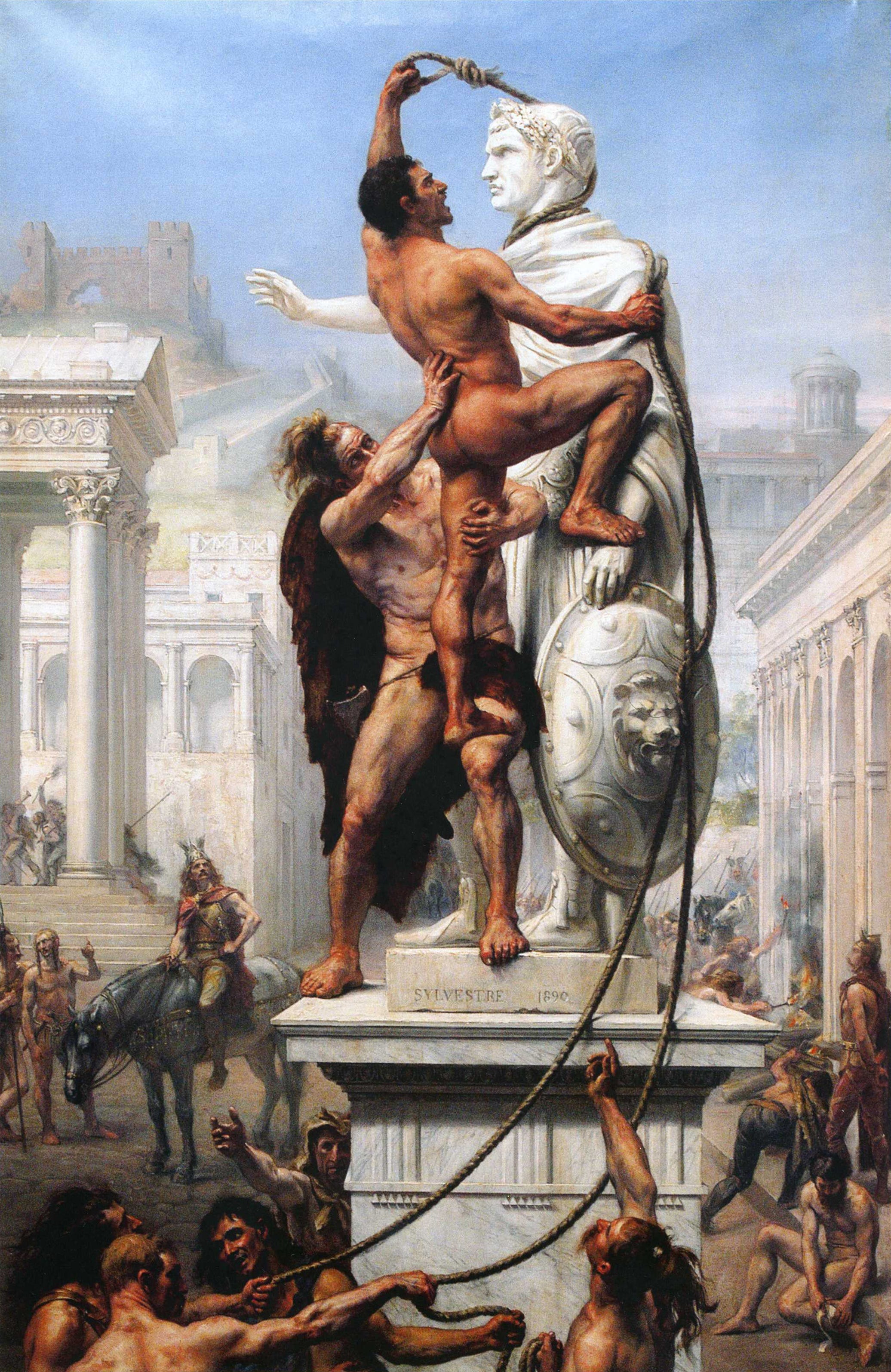
Some people claim that “Christianity destroyed the civilization of Greece and Rome.” They claim the Church replaced classical learning with theology, and that it only came back during the Renaissance.
That is, of course, bullshit.
In fact, the accusation is so old that one of the greatest books in Christian history was written partly to answer it.
In 410, an army of Visigoths under Alaric entered Rome and sacked the city. Although Rome was no longer the political capital of the Western Empire, the shock was enormous. For centuries Rome conquered other peoples. Now Rome itself was being conquered.
And some pagans knew exactly whom they wanted to blame.
Rome abandoned the old gods, they argued. Christianity spread through the Empire, emperors converted, pagan sacrifices declined, and now disaster followed. Rome became Christian, and Rome fell.
St. Augustine heard the accusation from North Africa. A few years later, around 413, he began writing his answer.
It became The City of God.
Augustine Answered Them With Rome Itself
Augustine’s answer was wonderfully simple: if Christianity caused Rome’s disasters, who caused all the disasters that came before Christianity?
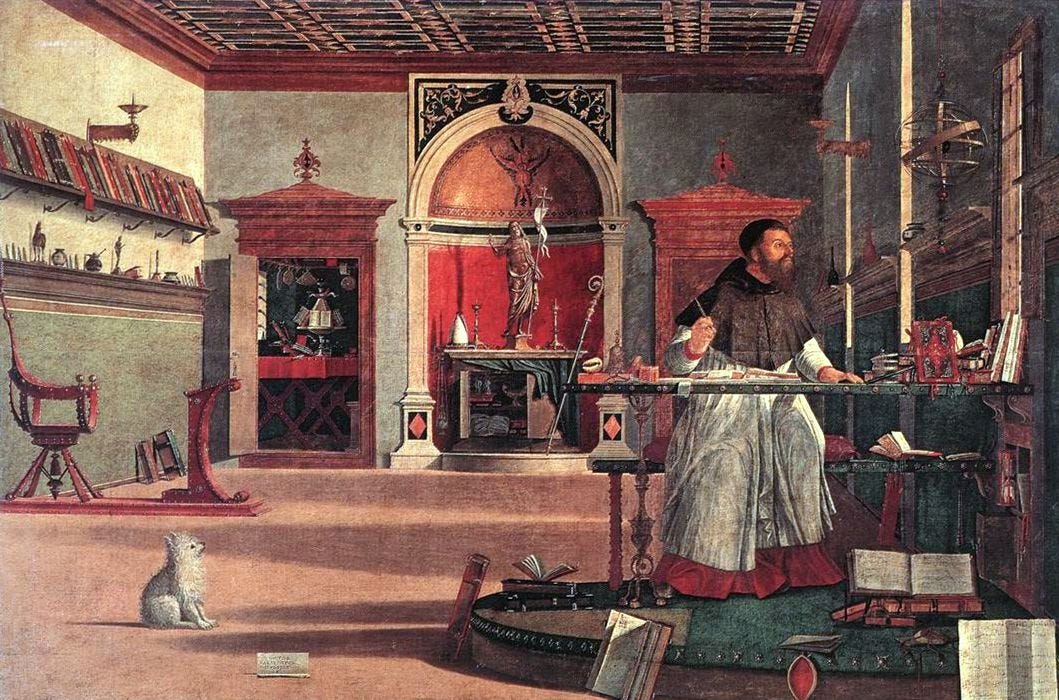
The pagan Rome his opponents remembered so fondly was hardly an uninterrupted age of peace and prosperity. Rome fought countless wars, endured civil conflict, political murder, famine, invasion, and rebellion, and watched emperors assassinated and overthrown long before Christianity became the religion of the Empire. Augustine spends the early books of The City of God going back through Roman history and reminding his readers of precisely this:
Let them then, along with us, call to mind with what various and repeated disasters the prosperity of Rome was blighted, before ever Christ had come in the flesh, and before His name had been blazoned among the nations with that glory which they vainly grudge. Let them, if they can, defend their gods in this article, since they maintain that they worship them in order to be preserved from these disasters, which they now impute to us if they suffer in the least degree. For why did these gods permit the disasters I am to speak of to fall on their worshippers before the preaching of Christ’s name offended them, and put an end to their sacrifices? … In short, not to recapitulate the many instances I have cited, and not to add to their number others which it were tedious to enumerate, this one thing I am persuaded of, and this every impartial judgment will readily acknowledge, that if the human race had received Christianity before the Punic wars, and if the same desolating calamities which these wars brought upon Europe and Africa had followed the introduction of Christianity, there is no one of those who now accuse us who would not have attributed them to our religion. How intolerable would their accusations have been, at least so far as the Romans are concerned, if the Christian religion had been received and diffused prior to the invasion of the Gauls, or to the ruinous floods and fires which desolated Rome, or to those most calamitous of all events, the civil wars!
But there is another reason The City of God is so interesting for this argument. Augustine answered the defenders of pagan Rome using an extraordinary knowledge of pagan Rome itself. He discusses Virgil, Cicero, Sallust, Varro, Plato, and the history and philosophy of the ancient world throughout the work. The Christian bishop supposedly belonging to a religion that destroyed classical learning was sitting in North Africa reading classical authors and using them to write one of the foundational works of Christian civilization.
Cicero Helped Lead Augustine Toward Wisdom
And Augustine’s relationship with classical literature went much deeper than simply quoting pagan authors when they proved useful.
When he was nineteen, Augustine encountered Cicero’s now-lost Hortensius. Years later, in the Confessions, he remembered what happened:
In the ordinary course of study, I lighted upon a certain book of Cicero, whose language, though not his heart, almost all admire. This book of his contains an exhortation to philosophy, and is called Hortensius. This book, in truth, changed my affections, and turned my prayers to Thyself, O Lord, and made me have other hopes and desires. Worthless suddenly became every vain hope to me; and, with an incredible warmth of heart, I yearned for an immortality of wisdom, and began now to arise that I might return to Thee. Not, then, to improve my language—which I appeared to be purchasing with my mother’s means, in that my nineteenth year, my father having died two years before—not to improve my language did I have recourse to that book; nor did it persuade me by its style, but its matter. How ardent was I then, my God, how ardent to fly from earthly things to Thee! Nor did I know how Thou wouldst deal with me. For with Thee is wisdom. In Greek the love of wisdom is called “philosophy,” with which that book inflamed me.
Augustine says Cicero awakened in him an “incredibly burning desire” for wisdom. Cicero did not convert him to Christianity, and Augustine eventually rejected pagan philosophy wherever he believed it contradicted Christian truth. But he never needed to pretend that a pagan author had nothing to teach him simply because he was pagan.
And Augustine was hardly an exception. St. Basil encouraged young Christians to read Greek literature, and generations of Christian scholars continued to study the ancient authors. Basil wrote:
Now this is my counsel, that you should not unqualifiedly give over your minds to these men, as a ship is surrendered to the rudder, to follow whither they list, but that, while receiving whatever of value they have to offer, you yet recognize what it is wise to ignore. … When they recount the words and deeds of good men, you should both love and imitate them, earnestly emulating such conduct. But when they portray base conduct, you must flee from them and stop up your ears, as Odysseus is said to have fled past the song of the sirens, for familiarity with evil writings paves the way for evil deeds. Therefore the soul must be guarded with great care, lest through our love for letters it receive some contamination unawares, as men drink in poison with honey. … So we, if wise, shall take from heathen books whatever befits us and is allied to the truth, and shall pass over the rest. And just as in culling roses we avoid the thorns, from such writings as these we will gather everything useful, and guard against the noxious.
And if you are looking for a place to put that approach into practice with others, we just crossed 60,000 readers over at the Athenaeum Book Club!!
We had no idea so many people would want to be part of this project, but here’s why we think it’s happening:
– People are tired of surface-level, short-form content
– They crave depth and genuine conversation with others
– They know that deep reading of great literature is our best weapon against the technological forces seeking to hijack our mental faculties
That said, we never thought we’d find such a thoughtful, intentional group of people so quickly. We hope you’ll be with us for a long time!
Our plan is to grow stronger every day, and to build a deep online resource to help as many people as possible discover the beauty and significance of the Great Books and the Great Conversation.
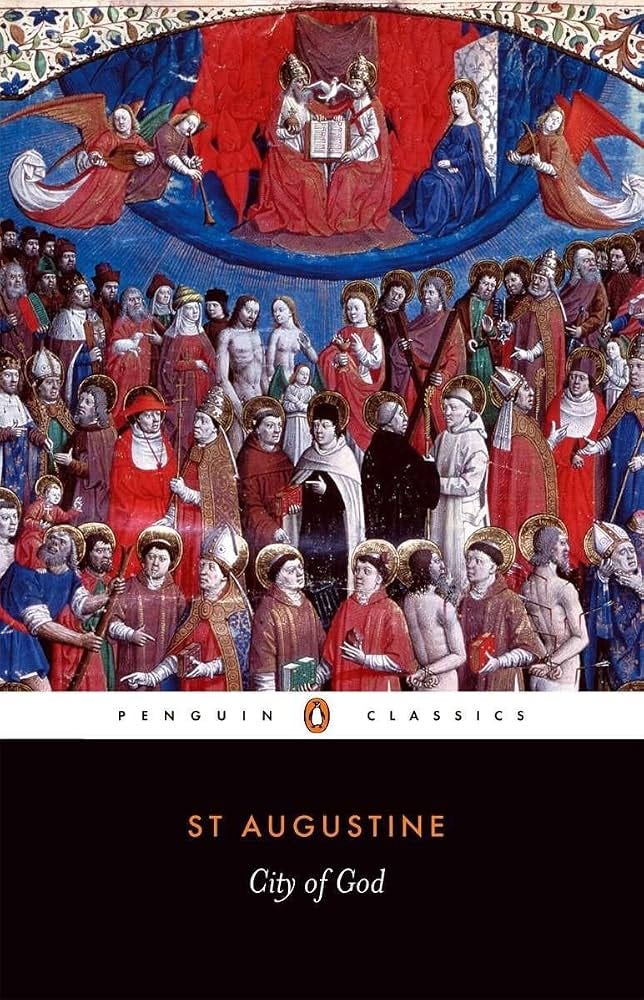
We are about to begin Augustine’s City of God, which we will read over the next 6 weeks. This will undoubtedly be one of our most important read-alongs so far.
The first discussion, focusing on Books 11,12, and 14, is on September 15, at noon ET. Please join us (remember, all sessions are recorded if you can’t make it live)!
Note: you don’t have to have read all of Books by then, but the more you have read, the more you’ll get out of the session.
Thanks to every one of you for being here and making it possible for us to do this work.
To celebrate, Western Spirit subscribers get 25% off for the next 24 hours.
If you’re new here, definitely join our book club discussions if you can. They take place biweekly, and have been nothing short of electric of late. And if you can’t make it, everything is recorded!
Welcome!
So it was Augustine who started the whattaboutism so much in use by America’s extremely illiberal Christian right.
And, so we see why it was imperative to remove teaching "the classics" in US public schools years ago. We would know Too Much!!