
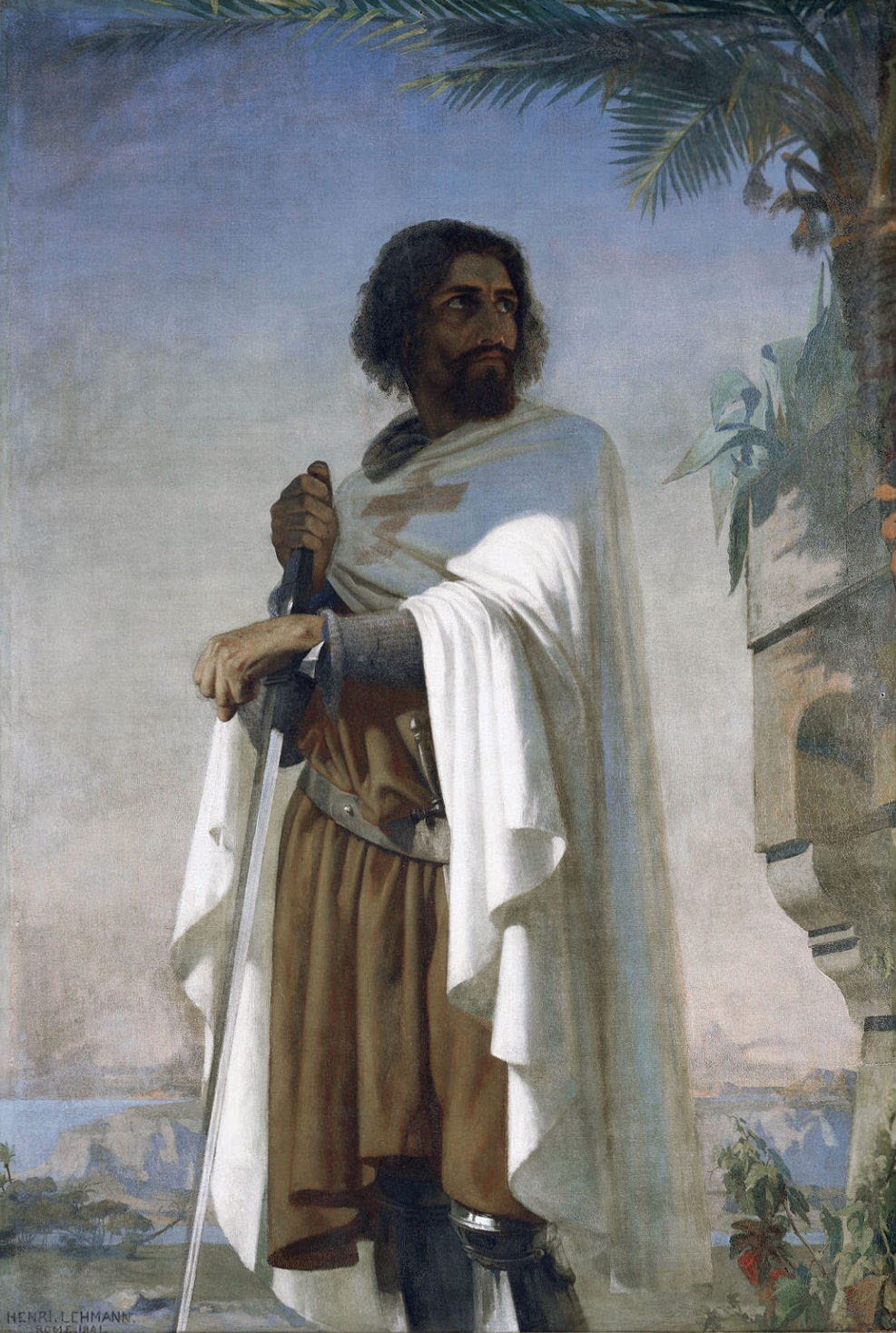
After the First Crusade captured Jerusalem in 1099, thousands of Christian pilgrims began traveling to the Holy Land, but the roads were still dangerous, and many were attacked along the way.
Around 1119, a French knight named Hugues de Payens and several friends decided to do something about this by founding a religious brotherhood dedicated to protecting pilgrims.
King Baldwin II of Jerusalem gave them quarters on the Temple Mount, near the site traditionally associated with Solomon’s Temple, which is how they became known as the Poor Fellow-Soldiers of Christ and of the Temple of Solomon, or simply the “Knights Templar”.
What makes them especially fascinating is that they were both monks and warriors, taking religious vows of poverty and obedience while devoting their lives to the military defense of Christianity.
In 1129, the Council of Troyes formally recognized the order. Theologian St. Bernard of Clairvaux wrote in his treatise In Praise of the New Knighthood:
This is, I say, a new kind of knighthood and one unknown to the ages gone by. It ceaselessly wages a twofold war both against flesh and blood and against a spiritual army of evil in the heavens. When someone strongly resists a foe in the flesh, relying solely on the strength of the flesh, I would hardly remark it, since this is common enough. And when war is waged by spiritual strength against vices or demons, this, too, is nothing remarkable, praiseworthy as it is, for the world is full of monks. But when the one sees a man powerfully girding himself with both swords and nobly marking his belt, who would not consider it worthy of all wonder, the more so since it has been hitherto unknown? He is truly a fearless knight and secure on every side, for his soul is protected by the armor of faith just as his body is protected by armor of steel. He is thus doubly armed and need fear neither demons nor men. Not that he fears death—no, he desires it. Why should he fear to live or fear to die when for him to live is Christ, and to die is gain? Gladly and faithfully he stands for Christ, but he would prefer to be dissolved and to be with Christ, by far the better thing. Go forth confidently then, you knights, and repel the foes of the cross of Christ with a stalwart heart. Know that neither death nor life can separate you from the love of God which is in Jesus Christ, and in every peril repeat, “Whether we live or whether we die, we are the Lord’s.” What a glory to return in victory from such a battle! How blessed to die there as a martyr! Rejoice, brave athlete, if you live and conquer in the Lord; but glory and exult even more if you die and join your Lord. Life indeed is a fruitful thing and victory is glorious, but a holy death is more important than either. If they are blessed who die in the Lord, how much more are they who die for the Lord!
Bernard further argued:
The knight of Christ, I say, may strike with confidence and die yet more confidently, for he serves Christ when he strikes, and serves himself when he falls. Neither does he bear the sword in vain, for he is God’s minister, for the punishment of evildoers and for the praise of the good. If he kills an evildoer, he is not a mankiller, but, if I may so put it, a killer of evil. He is evidently the avenger of Christ towards evildoers and he is rightly considered a defender of Christians. Should he be killed himself, we know that he has not perished, but has come safely into port. When he inflicts death it is to Christ’s profit, and when he suffers death, it is for his own gain. The Christian glories in the death of the pagan, because Christ is glorified; while the death of the Christian gives occasion for the King to show his liberality in the rewarding of his knight. In the one case the just shall rejoice when he sees justice done, and in the other man shall say, truly there is a reward for the just; truly it is God who judges the earth. I do not mean to say that the pagans are to be slaughtered when there is any other way to prevent them from harassing and persecuting the faithful, but only that it now seems better to destroy them than that the rod of sinners be lifted over the lot of the just, and the righteous perhaps put forth their hands unto iniquity.
Over the following decades, the Knights Templar grew into one of the most powerful organizations in Christendom, receiving huge donations of land and money from European nobles who wanted to support the defense of the Holy Land.
The Popes granted the order special privileges that placed it directly under papal authority, allowing the Templars to build commanderies throughout Europe and use the income from their estates to finance castles and soldiers in the Crusader states.
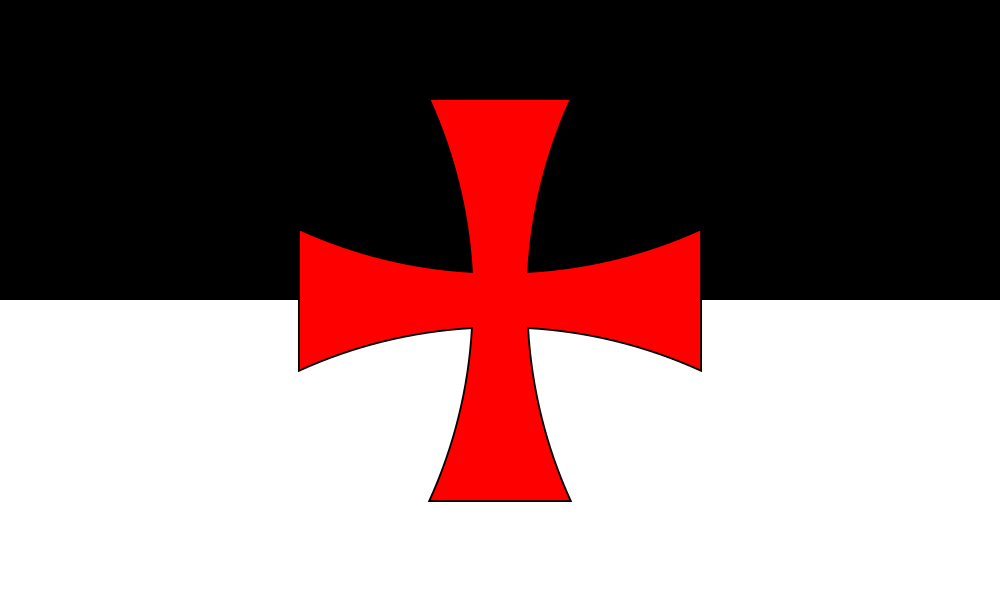
They also developed sophisticated financial services, helping transfer money across long distances and lending big sums to European monarchs, while their famous white mantles bearing red crosses became one of the most recognizable symbols of the Crusades.
But despite their military discipline and considerable resources, the Templars could not prevent the gradual loss of the Christian territories in the Holy Land.
In 1187, Saladin defeated the Crusader army at the Battle of Hattin and recaptured Jerusalem, leaving the remaining Christian strongholds vulnerable to Muslim attacks.
Then, in 1291, the Mamluks captured Acre, the last major stronghold of the Kingdom of Jerusalem.
The surviving knights withdrew to Cyprus, bringing nearly two centuries of Templar military involvement in the Holy Land to an end.
Although the order continued hoping for another crusade, European rulers questioned whether such a powerful independent military organization was still necessary, and some even suggested merging the Templars with the Knights Hospitaller.
The Templars refused to give up their independence, and their wealth and special privileges had attracted the attention of King Philip IV of France, who was determined to strengthen his own authority over the kingdom..
Philip IV and the Wealth of the Templars
Philip IV became king of France in 1285, and over the following decades his expensive wars placed enormous pressure on the royal treasury, leading him to introduce controversial taxes and look for new ways to raise money.

In 1306, he expelled the Jews from France and confiscated their property, while his struggle with Pope Boniface VIII had already reached a dramatic confrontation in 1303, when royal agents seized the pope at Anagni.
Philip also owed the order money, although historians still debate how much his financial difficulties influenced his decision to move against the Templars compared with his desire to strengthen royal authority.
Reminder:
The Western Spirit exists because of readers like you. Join us and help keep this project alive and independent.
If you’ve been enjoying these essays, consider becoming a paid subscriber. For a few dollars a month, you’ll get:
Essays on brave men
Reflections on faith and culture
Full access to the growing archive
This project exists because readers like you make it possible.
Friday, October 13, 1307
An excerpt from Raymond Ibrahim’s “The Two Swords of Christ”:
On Friday, October 13, 1307, after King Philip IV of France had heard tell of “a bitter thing, a lamentable thing, a thing horrible to contemplate, terrible to hear, a heinous crime, an execrable evil, an abominable deed, a hateful disgrace, a completely inhuman thing, indeed remote from all humanity,” all Templars in his domains, including Master James of Molay, were arrested and thrown in dungeons.
They were charged with heresy, including by denying Christ, spitting and urinating on the cross during their induction ceremony, engaging in homosexual activities and sorcery, worshipping demonic idols—some smeared with the fat of children they had roasted, no less—and even “worshipping a certain cat that appeared amongst them.”
Continue reading below..