
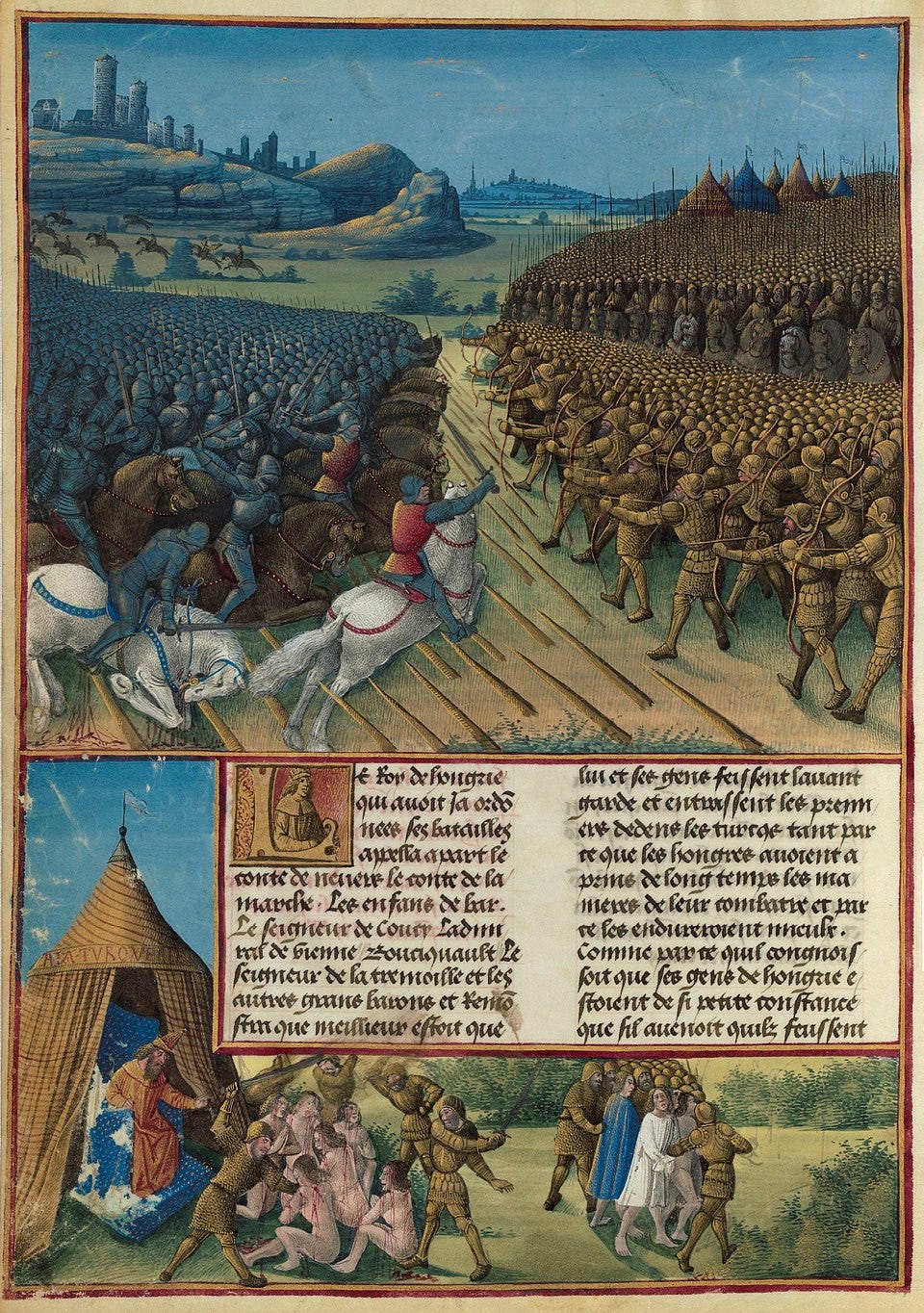
In the late summer of 1396, one of the largest crusading armies assembled in Europe… Knights from France, Burgundy, the Holy Roman Empire, Hungary, and beyond marched eastward with banners raised and confidence high. They believed they were riding to halt the advance of the Ottoman Empire and to restore Christian authority in the Balkans. Many of them believed victory was inevitable.
Within weeks, that army ceased to exist. The crusade failed for simple reasons.. The leaders were arrogant, they did not work together, and they ignored people who knew what they were facing.
Contemporary chroniclers understood this clearly. Jean Froissart, writing soon after the catastrophe, described the crusaders as men who “thought themselves invincible and would hear no counsel.” An eyewitness, Johann Schiltberger, who survived the battle and decades of captivity, recorded that “never had such pride been so swiftly punished.”
The Western Spirit exists because of readers like you. Join us and help keep this project alive and independent.
If you’ve been enjoying these essays, consider becoming a paid subscriber. For a few dollars a month, you’ll get:
In-depth pieces on forgotten battles, brave men, and turning points in Western history
Reflections on faith, order, tradition, and the deeper meaning behind culture
Full access to the growing archive — essays, book breakdowns, and historical deep dives
This project exists because readers like you make it possible.
The World on the Edge of Collapse
By the end of the fourteenth century, the Ottoman Empire had established itself as the dominant power in the eastern Balkans. Through a combination of military discipline, administrative continuity, and relentless campaigning, Ottoman forces had pushed deep into formerly Byzantine and Serbian territory. The defeat of the Serbs at Kosovo in 1389 marked a decisive shift. Christian resistance fractured. Tributary states replaced independent kingdoms.
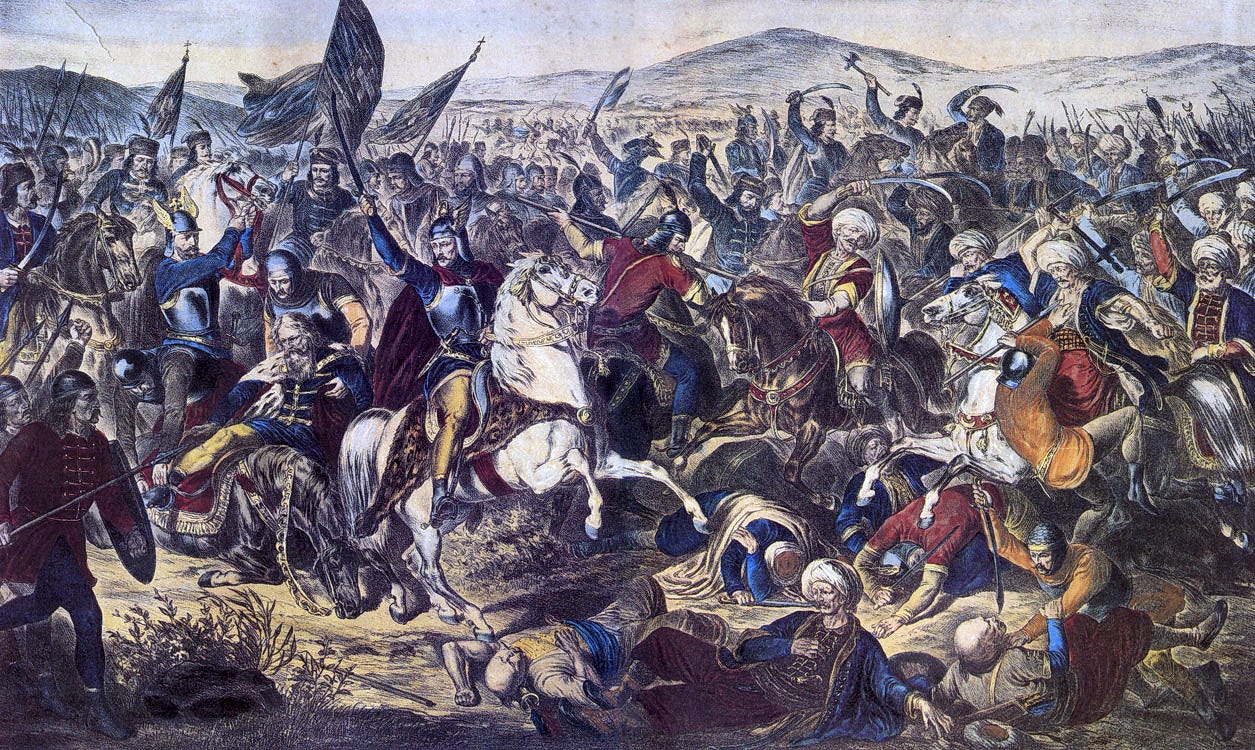
King Sigismund of Hungary stood at the frontier. His kingdom bore the weight of Ottoman expansion. Raids crossed the Danube. Fortresses fell one by one. Appeals for aid multiplied. Sigismund warned Western rulers repeatedly that the Ottomans were not another disorganized enemy, but a disciplined, adaptable force.
Western Europe responded late and imperfectly.
When Pope Boniface IX proclaimed a crusade in 1395, the response came primarily from France and Burgundy. Many of the knights who joined had never fought the Ottomans. Their understanding of crusade warfare came from older traditions, shaped by tournaments, chivalric ideals, and battles against similarly organized opponents.
They marched east believing courage and noble lineage would compensate for unfamiliar terrain and enemy tactics.
The Crusader Army Assembles
The crusader host that gathered along the Danube was impressive in appearance and deeply flawed in structure. French and Burgundian knights formed its most prestigious contingent. They arrived with elaborate armor, personal retinues, and a strong sense of honor. Many viewed the campaign as an opportunity for glory rather than survival.
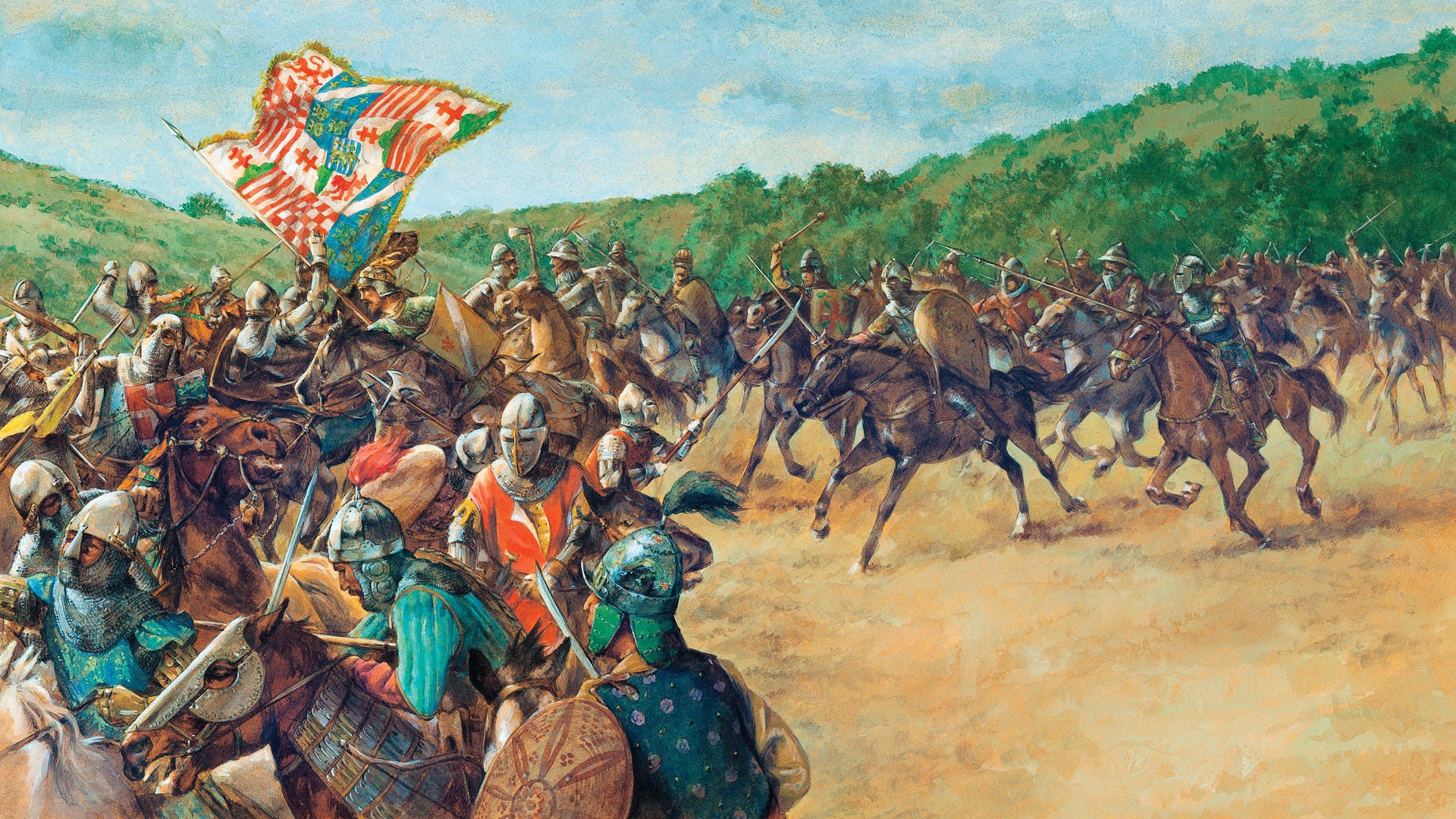
Hungarian forces under King Sigismund brought regional knowledge and practical experience. Wallachian and Transylvanian troops supplemented them. German contingents joined later. Coordination among these groups was limited. Command authority remained contested.
Sigismund attempted to impose discipline. He warned repeatedly against reckless action. Froissart records him advising caution, stating that “the Turks are subtle in war and know well how to draw men into traps.” His counsel was ignored.
The French knights considered themselves the natural leaders of the crusade. They dismissed Sigismund’s concerns as excessive caution.
March Toward Nicopolis
The crusader army moved down the Danube, capturing smaller fortresses along the way. These early successes reinforced their confidence. Towns fell quickly. Ottoman resistance appeared scattered. Many crusaders concluded the enemy lacked the will to stand and fight.
This assessment was incorrect..