
Most Bible stories are short. You can tell them in a few minutes. But the story of Joseph stretches across many chapters, almost like a novel. It has everything: betrayal, injustice, prison, politics, famine, forgiveness. It reads less like myth and more like life. Maybe that’s why it has always felt so modern.
Joseph was not a king or a prophet. He never fought in wars or wrote psalms. Yet his life shows something that keeps happening to people everywhere: the long arc from humiliation to glory, from being cast out to being raised up. It’s the shape of almost every great story.
His life shows us what it means to keep faith when everything seems lost, and how power, when finally given, should be used. And maybe most of all, it shows that suffering isn’t wasted, even if we don’t see why at the time.
Let’s walk through his story…
Reminder: The Western Spirit is a reader-supported publication. We are very close to 96/100 paid subscribers!
If you’ve been enjoying these essays, consider becoming a paid subscriber. For a few dollars a month, you’ll get:
In-depth pieces on forgotten battles, brave men, and turning points in Western history
Reflections on faith, order, tradition, and the deeper meaning behind culture
Full access to the growing archive — essays, book breakdowns, and historical deep dives
This project exists because readers like you make it possible.
The Dreamer
Joseph’s story begins with dreams. He was the favorite son of Jacob, born to his beloved wife Rachel. Jacob didn’t hide his favoritism. He gave Joseph a special coat, long and colorful, that made his brothers hate him.
Joseph, maybe naïve, told his brothers about his dreams: in them, his brothers bowed down to him. To older brothers already jealous of the coat, this sounded unbearable. Dreams can feel harmless, but when someone you dislike starts telling you that you’ll one day serve them, it cuts deep.
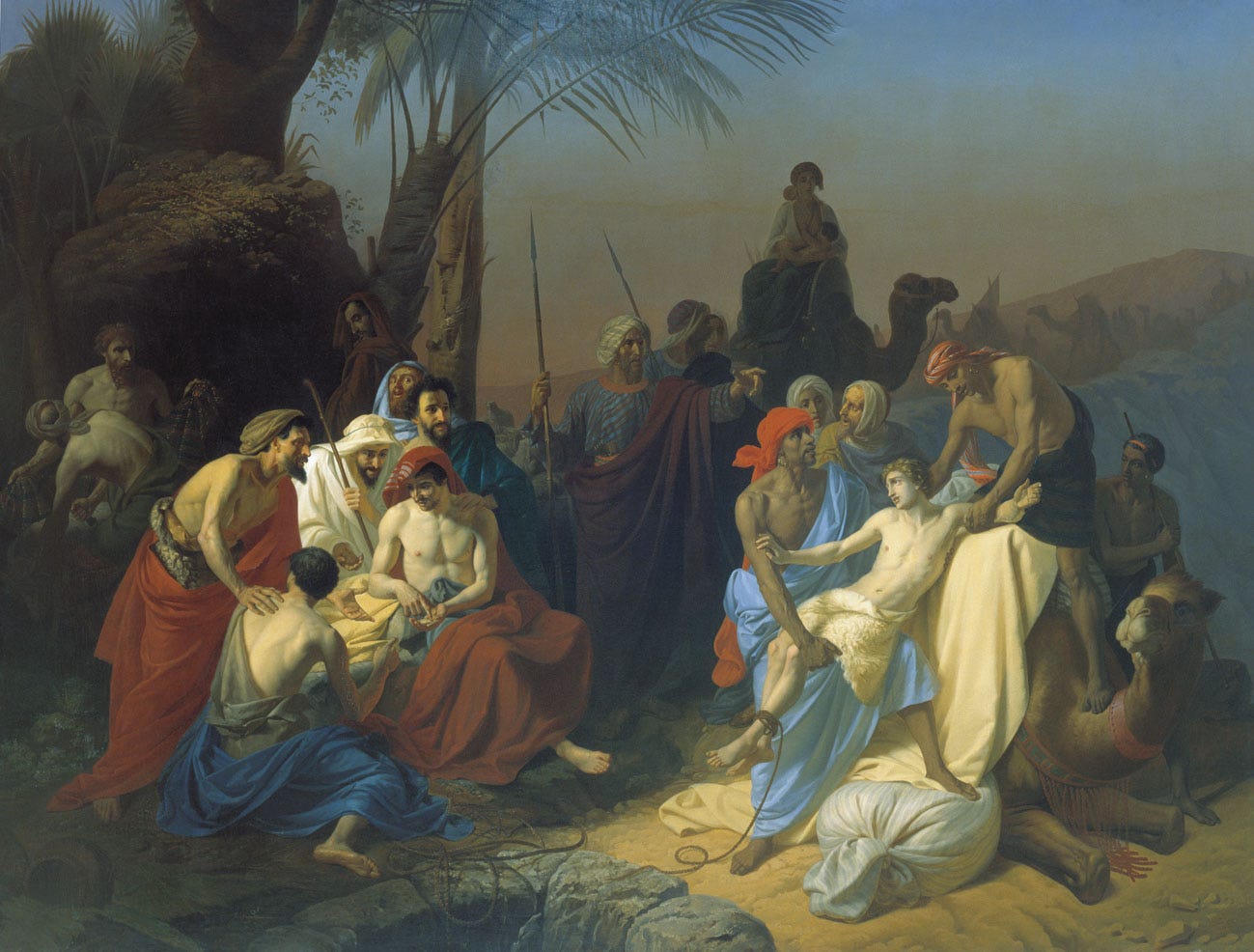
His brothers’ resentment boiled over into hatred. When Jacob sent Joseph to check on them in the fields, they saw an opportunity. Some wanted to kill him. Reuben, the eldest, stopped them. Instead, they threw him into a pit. Later, they sold him to passing traders. When the caravan disappeared into the distance, Joseph was gone.
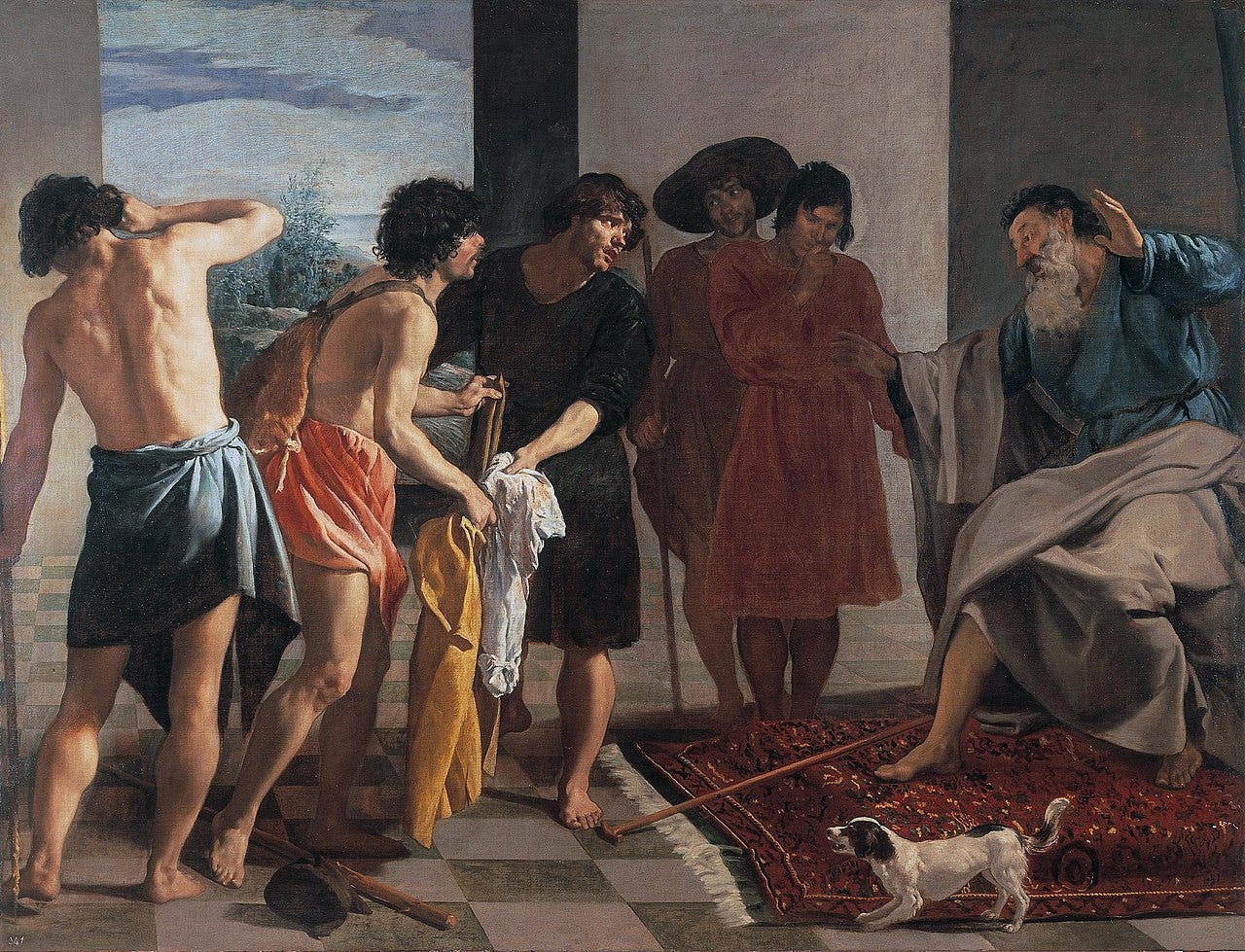
The brothers dipped his coat in goat’s blood and told Jacob that Joseph was dead. The favorite son was out of the way. The father was broken. And Joseph, still only a boy, was dragged off toward Egypt
Slavery and False Accusation
Being sold is about as low as a person can get. Joseph was no longer the favored son but property. He ended up in the house of Potiphar, an Egyptian official.
But Joseph had something rare. Even as a slave, he worked so well that everything in Potiphar’s house flourished under him. Potiphar saw this and put Joseph in charge of everything. Joseph was still a slave, but he was trusted. That’s an important pattern: even in bad situations, Joseph did the best he could.
But trouble came again. Potiphar’s wife tried to seduce him. Joseph refused. She accused him of assault, and Potiphar had him thrown into prison. Just like that, Joseph fell again: from favorite son, to slave, to prisoner.
This is where most people would break. You’ve done nothing wrong. You’ve been betrayed, sold, slandered, locked up. Why keep trying? But Joseph still worked. Even in prison, the warden put him in charge because everything went better under Joseph’s care. It’s strange: Joseph never let bitterness stop him from being useful.
Dreams in Prison
While Joseph was in prison, Pharaoh’s cupbearer and baker were thrown in too. Each had a dream. They told Joseph, and he interpreted them. The baker would be executed. The cupbearer would be restored. Both dreams came true.
Joseph asked the cupbearer to remember him, to tell Pharaoh about him when he was free. But the cupbearer forgot.
For two more years Joseph remained in prison. Think about that: two years after already being betrayed, enslaved, falsely accused. Waiting. Forgotten. This is the part of the story people rarely dwell on, but maybe it’s the most important. Joseph endured the silence of God. He kept going.
Pharaoh’s Dreams
Then Pharaoh had dreams no one could explain: seven fat cows eaten by seven thin ones, and seven good ears of grain swallowed by seven withered ones. Pharaoh’s magicians failed. That’s when the cupbearer finally remembered Joseph.
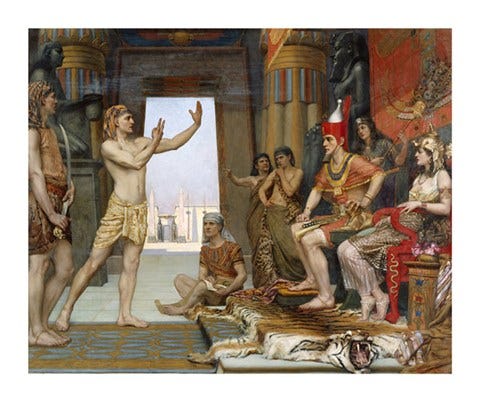
Joseph was brought up from prison. He told Pharaoh: the dreams meant seven years of plenty would be followed by seven years of famine. Joseph didn’t just interpret. He gave advice: Pharaoh should appoint someone to store food during the good years to survive the bad ones.
Pharaoh saw the wisdom in him. Just like that, Joseph was raised from prisoner to ruler, second only to Pharaoh himself. He was given robes, a ring, a chariot. The pit, the slavery, the prison… all had led to this.
The Famine and the Reunion
The famine came, not just in Egypt but across the region. Back in Canaan, Joseph’s brothers faced hunger. They traveled to Egypt to buy food. They bowed before Joseph, just as his dreams had shown years earlier. They didn’t recognize him. He recognized them
Joseph could have taken revenge. He could have thrown them in prison or had them killed. Instead, he tested them. He wanted to see if they had changed. He accused them of being spies, kept Simeon as collateral, and sent them back for Benjamin, the youngest.
When they returned, Joseph arranged a feast for them. He gave Benjamin extra portions. He was watching: would the brothers again be jealous of the favored one? They weren’t. Then Joseph tested them with one final trick: he planted his silver cup in Benjamin’s sack and accused him of theft. The brothers fell down in despair. Judah, who years earlier had suggested selling Joseph, now offered himself in Benjamin’s place.
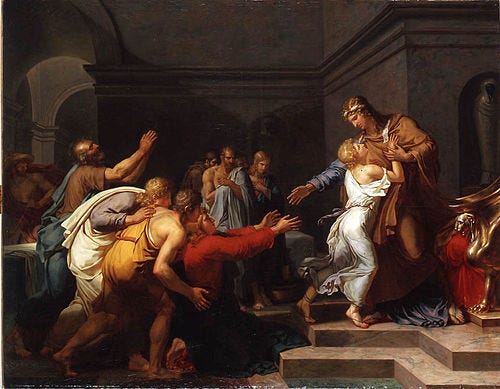
That’s when Joseph broke. He wept, told them who he was, and embraced them. “You meant evil against me,” he said later, “but God meant it for good.”
Jacob and the whole family moved to Egypt. Father and son were reunited after decades of loss. The family was saved from famine.