
Questions about Islam, its teachings, its political system, and its relationship with Christian Europe have been discussed in the West for nearly fourteen centuries.
That doesn’t mean everyone reached the same conclusions. They certainly didn’t. But it does mean that long before the modern vocabulary of “Islamophobia” existed, some of the West’s most influential theologians, philosophers, statesmen, and presidents had already written extensively about Islam, usually in response to the events of their own time.
Now the question is this: what did they say, and why did they say it?
John of Damascus
One of the earliest Christian writers to engage directly with Islam was John of Damascus, who lived during the eighth century under Umayyad rule. Unlike later Europeans, John wasn’t writing from a distance. He lived among Muslims, worked in the Umayyad administration, and was intimately familiar with Islamic teachings and practices.
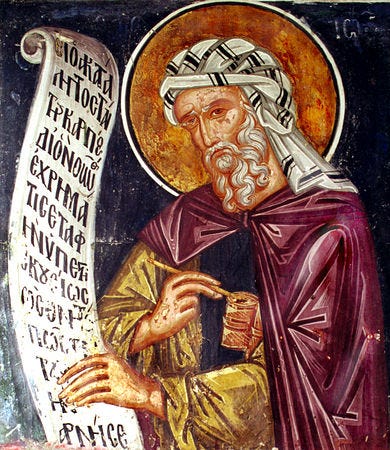
In his work On Heresies (specifically the section on the “Heresy of the Ishmaelites”), he described Islam as a Christian heresy rather than an entirely new religion. He criticized Muhammad’s claims to prophecy and traced what he saw as the origins and errors of the new faith. His writings became enormously influential throughout the medieval Christian world because they represented one of the first systematic Christian responses to Islam.
Here is a substantial excerpt:
“There is also the superstition of the Ishmaelites which to this day prevails and keeps people in error, being a forerunner of the Antichrist. They are descended from Ishmael, who was born to Abraham from Agar, and for this reason they are called Hagarenes and Ishmaelites. They are also called Saracens, which is derived from Sarah, because they say that Sarah sent them away empty-handed. These used to be idolaters and worshiped the morning star and Aphrodite, whom they called Chabar in their own language, which means ‘great.’ So until the time of Heraclius they were very idolatrous and worshiped the same things as the idolaters. From that time to the present a false prophet named Mohammed has appeared in their midst. This man, after having chanced upon the Old and New Testaments and likewise, it seems, having conversed with an Arian monk, devised his own heresy. Then, having insinuated himself into the good graces of the people by a show of seeming piety, he gave out that he had received the book from heaven. Having written some ridiculous compositions in this book of his, he gave it to them as an object of veneration.”
John went on to critique specific Islamic doctrines, including the denial of the Trinity and the crucifixion, and certain practices such as polygamy and the direction of prayer.
Thomas Aquinas
Five centuries later, Thomas Aquinas returned to the subject in his monumental work Summa Contra Gentiles. Writing in the 13th century, amid ongoing conflicts between Christian and Muslim powers in Spain, Sicily, and the Holy Land, Aquinas sought to engage Muslim thought on philosophical and theological grounds.
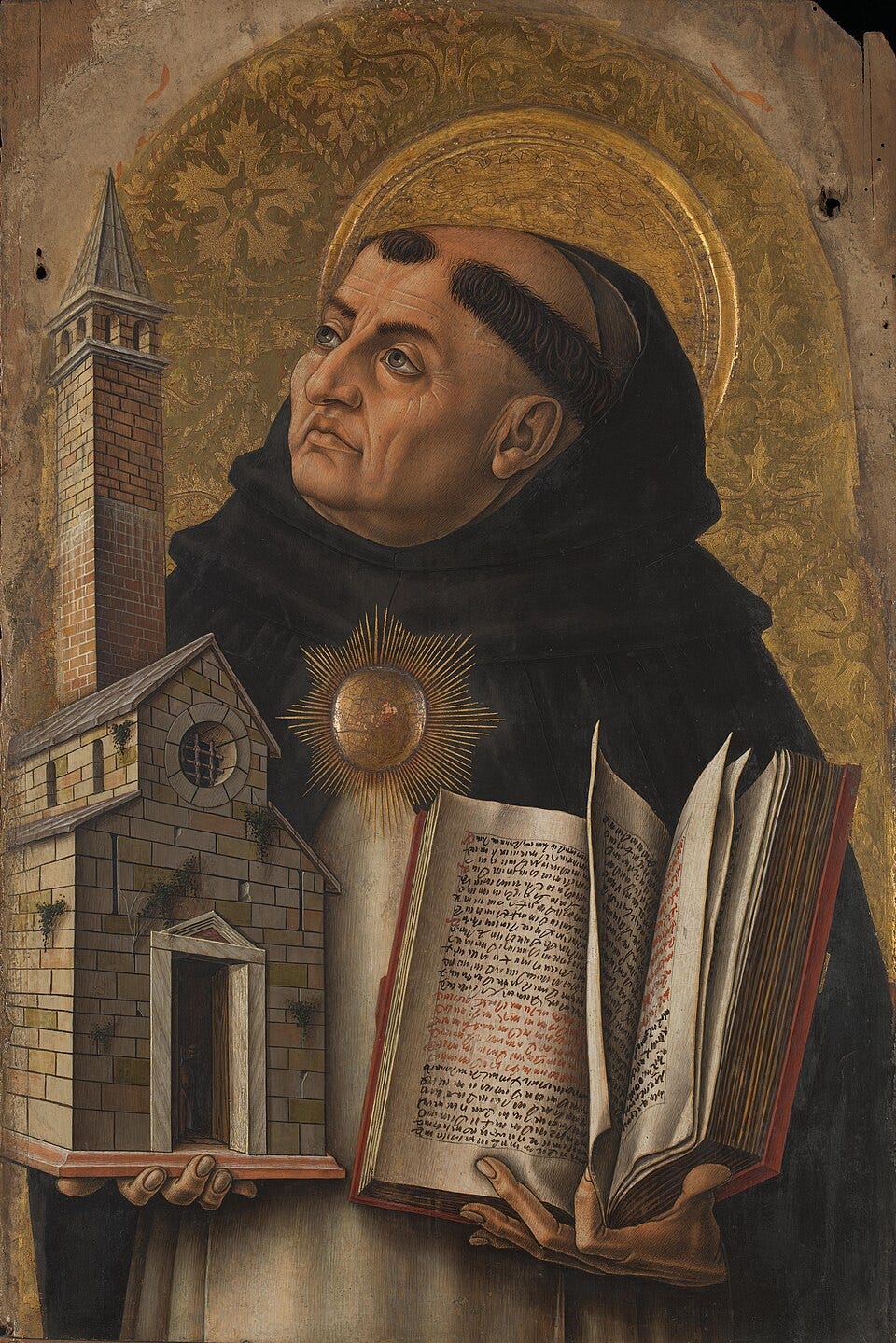
He argued that Christianity and Islam differed fundamentally in the way they presented their claims. In Book I, Chapter 6, he contrasted the methods of the prophets and apostles with those of Muhammad:
“The point is clear in the case of Muhammad. He seduced the people by promises of carnal pleasure to which the concupiscence of the flesh goads us. His teaching also contained precepts that were in conformity with his promises, and he gave free rein to carnal pleasure. In all this, as is not unexpected, he was obeyed by carnal men. As for proofs of the truth of his doctrine, he brought forward only such as could be grasped by the natural ability of anyone with a very modest wisdom. Indeed, the truths that he taught he mingled with many fables and with doctrines of the greatest falsity. He did not bring forth any signs produced in a supernatural way, which alone fittingly gives witness to divine inspiration; for a visible action that can be only divine reveals an invisibly inspired teacher of truth. On the contrary, Muhammad said that he was sent in the power of his arms—which are signs not lacking even to robbers and tyrants. What is more, no wise men, men trained in things divine and human, believed in him from the beginning. Those who believed in him were brutal men and desert wanderers, utterly ignorant of all divine teaching, through whose numbers Muhammad forced others to become his followers by the violence of his arms. Nor do divine pronouncements on the part of preceding prophets offer him any witness. On the contrary, he perverts almost all the testimonies of the Old and New Testaments by making them into fabrications of his own, as can be seen by anyone who examines his law. It was, therefore, a shrewd decision on his part to forbid his followers to read the Old and New Testaments, lest these books convict him of falsity. It is thus clear that those who place any faith in his words believe foolishly.”
Whether one agrees with Aquinas or not, his argument reflected the medieval world in which he lived, where Christian kingdoms and Muslim powers had spent centuries fighting across multiple theaters.
Friendly reminder: The Western Spirit exists because of readers like you. Join us and help keep this project alive and independent.
If you’ve been enjoying these essays, consider becoming a paid subscriber. For a few dollars a month, you’ll get:
In-depth pieces on forgotten battles, brave men, and turning points in Western history
Reflections on faith, order, tradition, and the deeper meaning behind culture
Full access to the growing archive — essays, book breakdowns, and historical deep dives
This project exists because readers like you make it possible.
Martin Luther
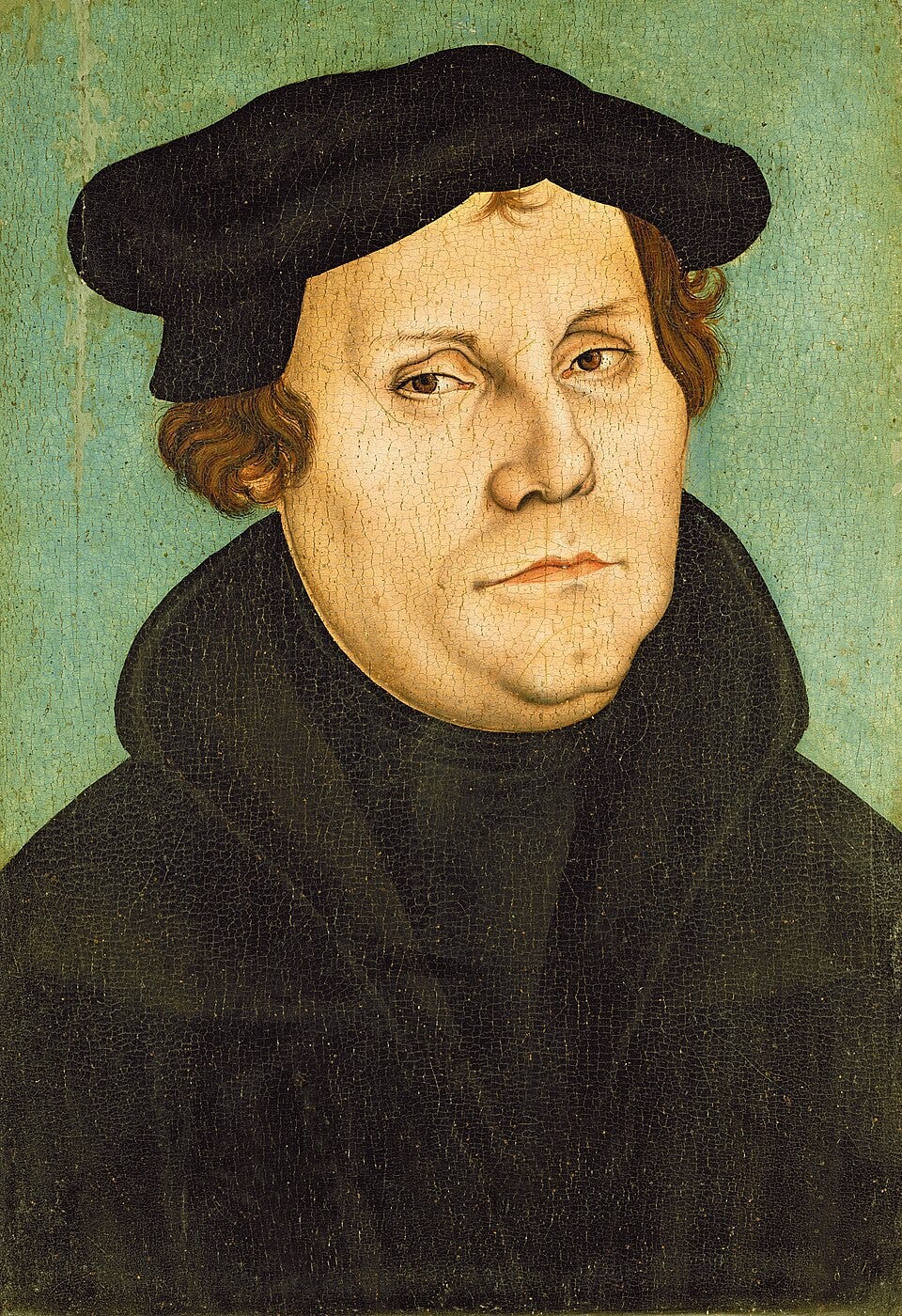
The Protestant Reformer Martin Luther also wrote extensively about the Ottoman Empire as Ottoman armies advanced into central Europe, reaching the gates of Vienna in 1529.
Luther rejected the idea that Christians should fear the Turks as invincible conquerors, yet he also regarded the Ottoman advance as one of the greatest military and spiritual threats facing Europe. In his 1529 treatise On War Against the Turk, he urged Christians to prepare both spiritually and militarily, believing that the conflict was as much a test of Christian character as it was a political struggle. He viewed the Turks not merely as political enemies but as instruments of divine judgment and, theologically, as destroyers of true Christian doctrine.
In one extended passage he wrote:
“Mohammed is a destroyer of our Lord Christ and His kingdom, and if anyone denies concerning Christ, that He is God’s Son and has died for us, and still lives and reigns at the right hand of God, what has he left of Christ? Father, Son, Holy Ghost, Baptism, the Sacrament, Gospel, Faith and all Christian doctrine and life are gone, and there is left, instead of Christ, nothing more than Mohammed with his doctrine of works and especially of the sword. That is the chief doctrine of the Turkish faith in which all abominations, all errors, all devils are piled up in one heap.”
Luther also emphasized that victory over the Turks required first defeating “the Turk’s god, the devil” through repentance and reform within Christendom itself. His views were shaped by the reality that Ottoman armies had reached the frontiers of the Holy Roman Empire during his lifetime.
Miguel de Cervantes
Few writers had more personal experience of the Mediterranean conflict than Miguel de Cervantes.
Before writing Don Quixote, Cervantes served as a Spanish soldier. In 1575, while returning home by sea after the Battle of Lepanto, his ship was captured by Barbary corsairs. He spent five years as a slave in Algiers, making several unsuccessful escape attempts before religious orders finally raised the ransom needed to secure his freedom in 1580.
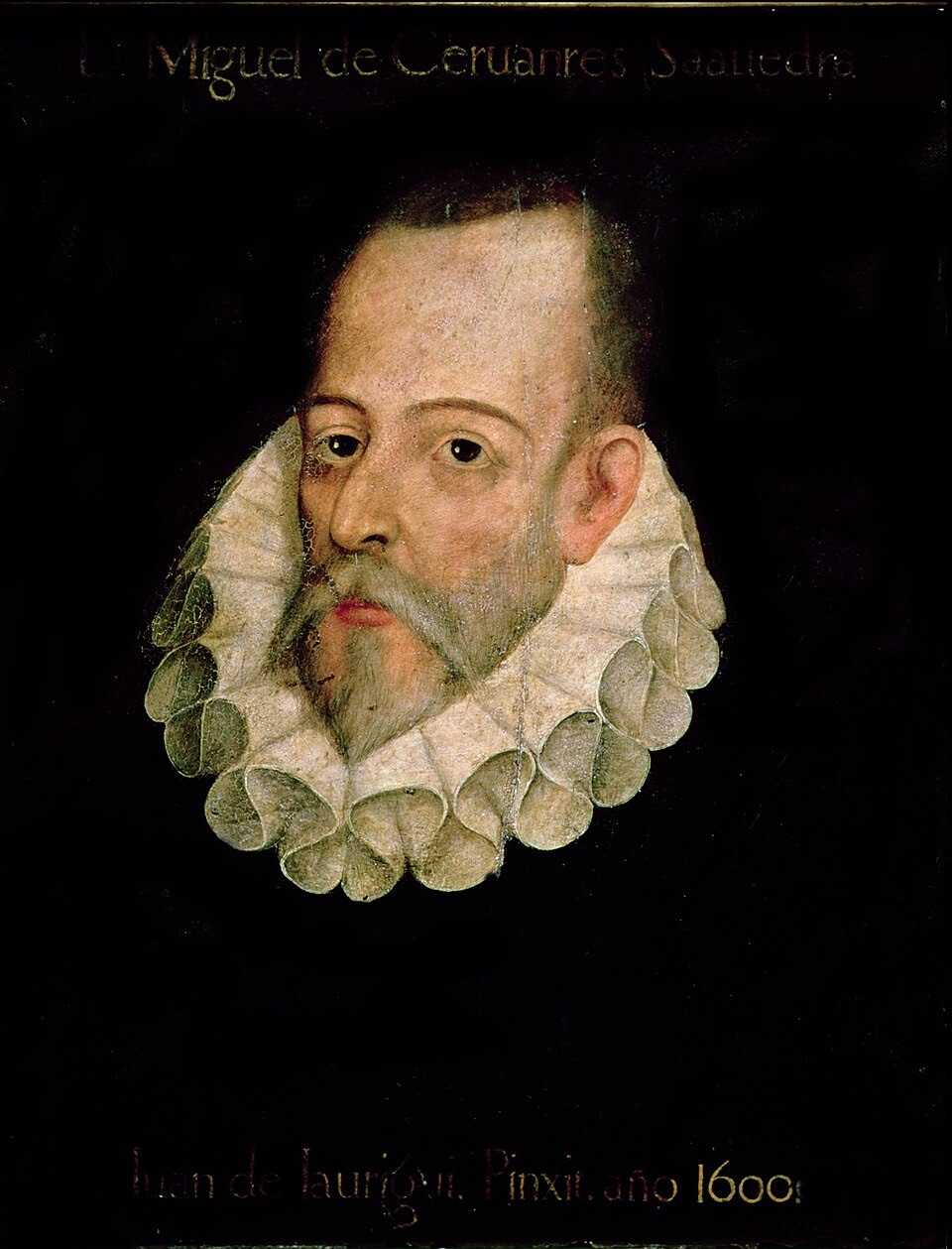
That experience profoundly shaped his writing. In Don Quixote, through the voice of the Captive (a character widely understood to draw heavily on Cervantes’ own ordeal), he described the world of Barbary slavery and the constant threat posed by the corsairs:
“He spoke to me in the language used throughout all of Barbary and even in Constantinople among captives and Moors—a language that is neither Moorish, nor Castilian, nor of any other nation, but a mixture of all languages, through which we all understood one another.”
Cervantes’ captivity gave him intimate knowledge of the daily realities of life under Barbary rule - the galleys, the bagnios (slave prisons), the renegades who converted to Islam, and the constant danger of being sold or ransomed. For many Europeans of his era, the conflict with the Barbary States was not theoretical. It affected merchants, sailors, fishermen, and ordinary families throughout the Mediterranean.
Thomas Jefferson and John Adams
America’s first sustained encounter with Muslim-ruled states came only after independence.
Without the protection of the Royal Navy, American merchant ships became targets for the Barbary States. In 1786, Thomas Jefferson and John Adams met the ambassador from Tripoli in London to ask why American ships were being attacked despite having done nothing to provoke Tripoli.
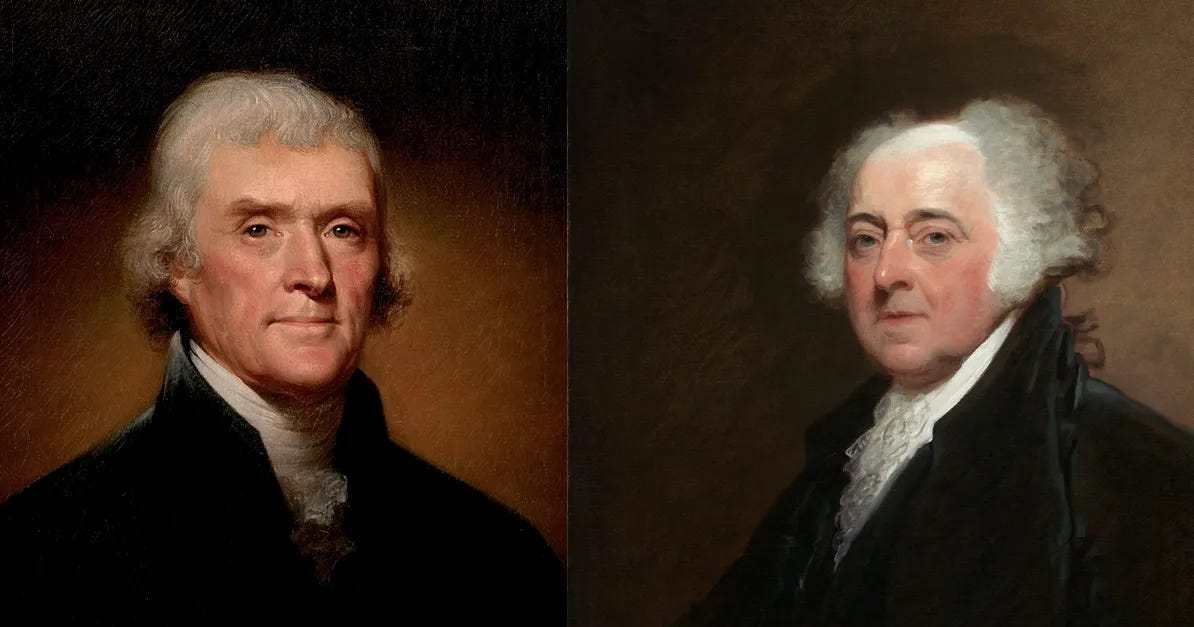
Jefferson later recorded the ambassador’s explanation in a letter to John Jay (March 28, 1786). That conversation became one of the most cited diplomatic exchanges in early American history:
“The Ambassador answered us that it was founded on the Laws of their Prophet, that it was written in their Koran, that all nations who should not have acknowledged their authority were sinners, that it was their right and duty to make war upon them wherever they could be found, and to make slaves of all they could take as Prisoners, and that every Musselman who should be slain in battle was sure to go to Paradise.”
Jefferson eventually concluded that paying tribute would only invite further demands, a view that helped lead to the First Barbary War in 1801.
Alexis de Tocqueville
After studying the Qur’an and observing French involvement in North Africa, Alexis de Tocqueville reached conclusions that reflected both his philosophical interests and the colonial context of nineteenth-century France.
In a letter (widely cited from his correspondence), he wrote:
“I studied the Quran a great deal. I came away from that study with the conviction that by and large there have been few religions in the world as deadly to men as that of Muhammad. As far as I can see, it is the principal cause of the decadence so visible today in the Muslim world and, though less absurd than the polytheism of old, its social and political tendencies are in my opinion more to be feared, and I therefore regard it as a form of decadence rather than a form of progress in relation to paganism itself.”
Whether modern readers agree or disagree, the quotation illustrates that Tocqueville regarded religion not merely as a matter of private belief but as something with profound political and social consequences.
Theodore Roosevelt
Few American presidents read more history than Theodore Roosevelt.
Reflecting on the long conflict between Christian Europe and Muslim powers, Roosevelt wrote in Fear God and Take Your Own Part (1916):