
I’ve read countless books on Iranian and Persian history… it’s one of the richest, most layered stories in the entire ancient world. There’s honestly way too much to cover in one article, but I’ve tried to pull out the most important milestones and turning points so you can see the big picture without getting lost in the details.
Long before it was called Iran or Persia, the region was known as Elam, a kingdom that goes back to around 3000 BC, centered in what is now southwestern Iran. Elam shows up in early Near Eastern records and even in biblical narratives, and by around 1900 BC, you already have kings like Kudur-Lagamar.
By the first millennium BC, Assyria and later Babylon dominate the region, but both are eventually overtaken by a rising Persian power under Cyrus the Great. Around 550 BC, Cyrus defeats the Median Empire and begins building what becomes the Achaemenid Empire, one of the largest empires the world had seen up to that point.
In 539 BC, Cyrus takes Babylon, and one of the key things he does afterward is allow deported peoples, including the Jews, to return to their homelands and rebuild their temples.
After Cyrus, power passes to Darius the Great, who rules from 522 to 486 BC and reorganizes the empire into satrapies, builds infrastructure like the Royal Road, and expands Persian control even further. His campaigns bring him into conflict with the Greek city-states, leading to the Battle of Marathon in 490 BC, where Persian forces are pushed back.
His successor, Xerxes I, launches another invasion in 480 BC, winning at Thermopylae but ultimately losing at Salamis and Plataea, which marks the limit of Persian expansion into Greece.
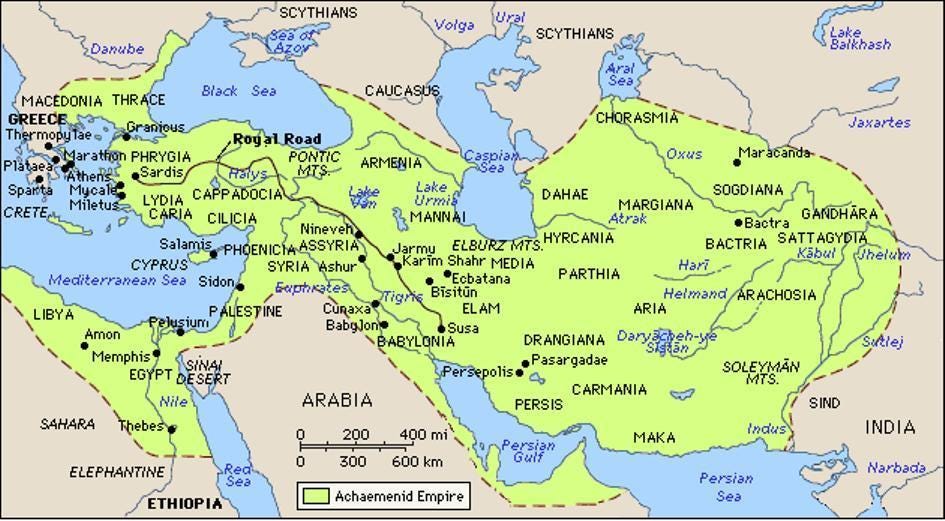
Then in 334 BC, Alexander the Great begins his campaign against Persia, defeating Darius III and taking control of the empire by 330 BC. After Alexander’s death in 323 BC, his generals divide the empire, and Persia falls under the control of Seleucus I Nicator, forming the Seleucid Empire.
During this period, Antiochus IV Epiphanes attempts to impose Hellenistic culture on Judea, leading to the Maccabean revolt in 167 BC, which shows how Persian territories remain tied to broader religious conflicts.
Friendly reminder: The Western Spirit exists because of readers like you. Join us and help keep this project alive and independent.
If you’ve been enjoying these essays, consider becoming a paid subscriber. For a few dollars a month, you’ll get:
In-depth pieces on forgotten battles, brave men, and turning points in Western history
Reflections on faith, order, tradition, and the deeper meaning behind culture
Full access to the growing archive — essays, book breakdowns, and historical deep dives
This project exists because readers like you make it possible.
By around 247 BC, the Parthian Empire rises and eventually replaces Seleucid control in Persia, followed later by the Sasanian Empire in 224 AD, founded by Ardashir I. The Sasanian Empire becomes Rome’s main rival for centuries, with constant wars along the eastern frontier.
Under Khosrow I, who reigns from 531 to 579 AD, the empire centralizes authority, strengthens its economy, and develops culturally, while maintaining Zoroastrianism as the state religion. Christianity exists within the empire but remains a minority.
This long conflict between Rome and Persia weakens both sides over time.
And that leads directly to the next major shift.
In the 7th century, Islam begins expanding beyond Arabia. After taking key territories from the Byzantine Empire, Islamic forces move into Persia. Khalid ibn al-Walid and others lead campaigns that defeat Persian armies in battles such as al-Qadisiyyah around 636 AD.
The last Sasanian ruler, Yazdegerd III, attempts to resist but ultimately loses control, and by 651 AD the Sasanian Empire collapses completely.
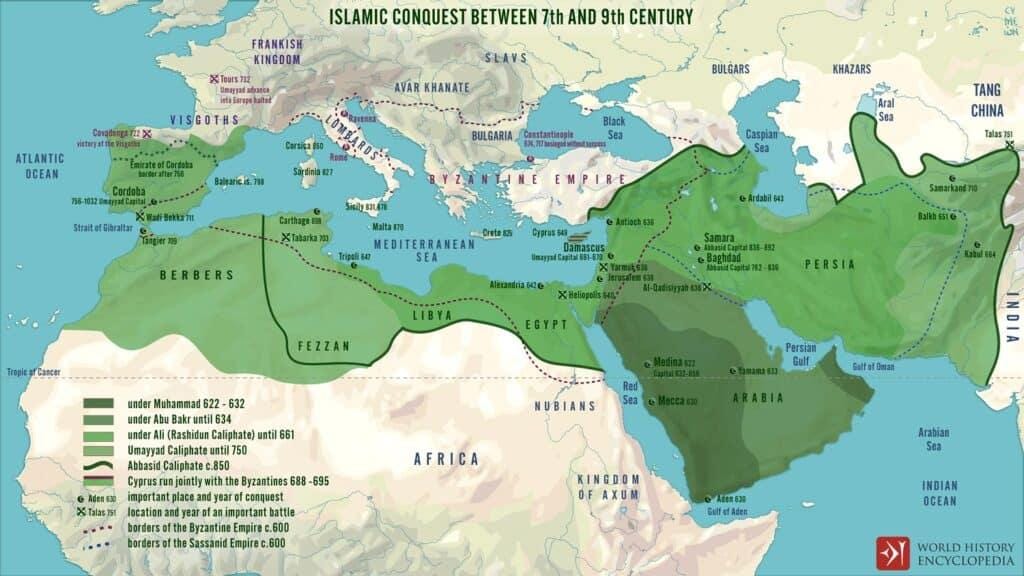
From that point on, Persia becomes part of the Islamic world, first under the Rashidun and Umayyad Caliphates, and later under the Abbasid Caliphate, which comes to power in 750 AD.
During the Abbasid period, especially between the 9th and 11th centuries, Persian scholars play a major role in what is often called the “Islamic Golden Age”. One of the most important figures is Avicenna, who lives from 980 to 1037 and writes extensively on medicine, philosophy, and science.
At the same time, debates emerge about the role of philosophy and reason in religion. Figures like Al-Ghazali, who dies in 1111, argue for a stronger focus on religious orthodoxy, pushing back against philosophical approaches and shaping the intellectual direction of the region.
Then in the early 13th century, another major disruption arrives.
The Mongols.
Starting around 1206 under Genghis Khan, Mongol armies begin expanding westward. By 1219, they invade Persia, destroying cities and killing large portions of the population. This culminates in 1258 when Hulagu Khan captures Baghdad, effectively ending the Abbasid Caliphate as a political force.
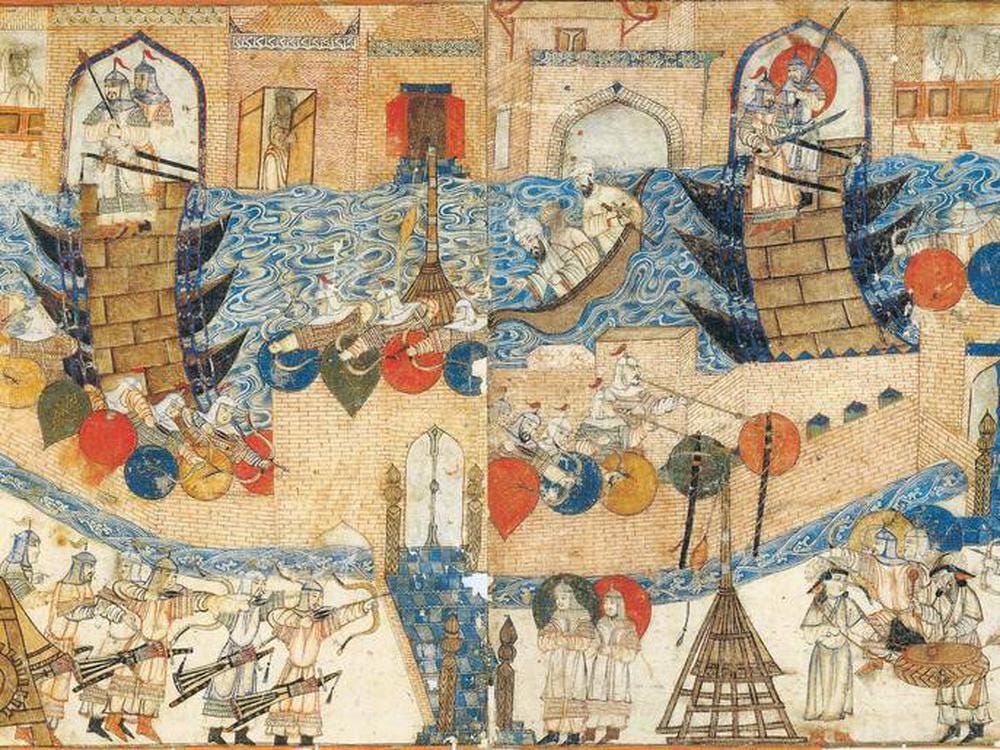
For a time, Mongol rule dominates the region, but by the late 13th century, the Ilkhanate rulers convert to Islam, bringing Persia back into the islamic sphere.
Persia has passed through multiple empires, religions, and ruling systems, each leaving a lasting impact.
So when people look at Iran today and try to explain it only through current events, they miss the deeper structure behind it.
Because what you’re seeing now is built on thousands of years of history, from Elam to the Achaemenids, from Alexander to the Sasanians, from the Islamic conquest to the Mongols and Timur.
Once you follow that sequence, things start to connect.
And that’s how you understand how we got here.
Make Persia Zoroastrian again!
The Maccabees Baby! They were bad ass!