
“I did not abandon Christ for gold, nor my people for power. I returned to defend what was ours.” —George Kastrioti Skanderbeg (1405–1468)
There was a long century in European history when the advance of Islam into the continent appeared steady, organized, and unstoppable, when Christian lands fell one after another and entire peoples learned to survive under domination that reshaped their faith, their customs, and their future.
It was during this era that George Kastrioti returned to Albania.
History knows him as Skanderbeg.
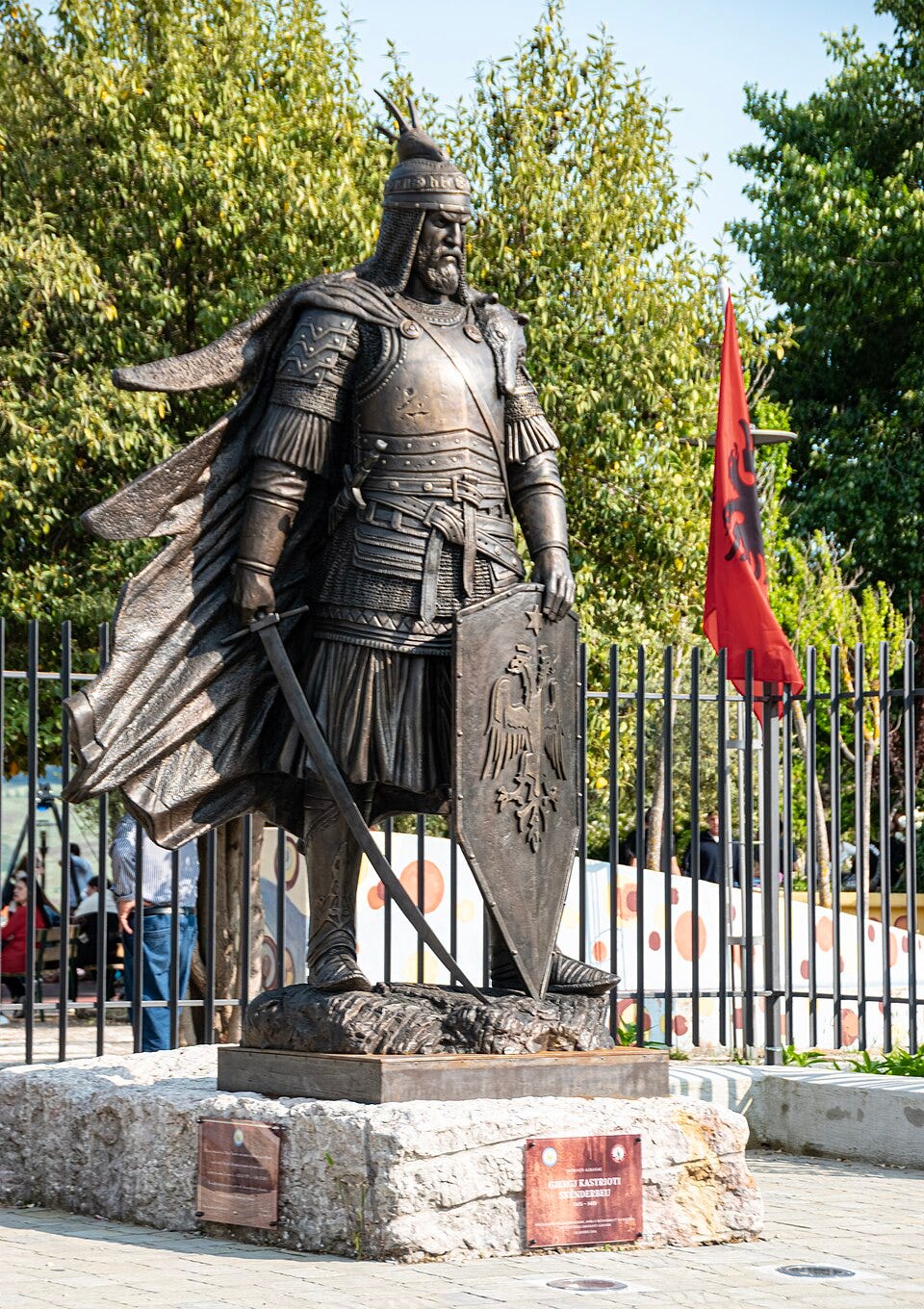
Skanderbeg was born in 1405 into the Albanian nobility, the son of a regional Christian lord whose territory lay directly in the path of Ottoman expansion. The Balkans had already begun to fracture under pressure. Serbian power was fading. Bulgaria had fallen. Greek lands lay exposed. Ottoman armies pressed westward with increasing confidence, supported by administrative systems designed to absorb conquered populations into a permanent structure of rule.
Like many Balkan rulers, Skanderbeg’s father faced demands that allowed little room for maneuver. Tribute was required. Hostages were demanded. Sons were taken to guarantee obedience. Skanderbeg was among them.
He grew up in the Ottoman court.
There he received the education reserved for promising commanders. He learned strategy, logistics, discipline, and the management of men. He studied languages. He rode and fought beside Ottoman soldiers. He converted outwardly to Islam, entered imperial service, and rose through the ranks. The sultan rewarded him with authority and land. Ottoman chroniclers praised his skill and intelligence. He earned the title “Iskander Bey,” invoking Alexander the Great.
From the outside, his transformation appeared complete.
Yet memory persisted.
The Western Spirit exists because of readers like you. Join us and help keep this project alive and independent.
If you’ve been enjoying these essays, consider becoming a paid subscriber. For a few dollars a month, you’ll get:
In-depth pieces on forgotten battles, brave men, and turning points in Western history
Reflections on faith, order, tradition, and the deeper meaning behind culture
Full access to the growing archive — essays, book breakdowns, and historical deep dives
This project exists because readers like you make it possible.
Skanderbeg retained knowledge of his homeland, its mountains and passes, its clans and customs, and its Christian faith. He observed the empire’s methods closely: the deportations, the enslavement of captives, the conversion of churches, the removal of Christian elites, and the systematic draining of subject lands. He understood how Ottoman power functioned and how it broke resistance.
In 1443, during an Ottoman campaign near Niš, confusion disrupted the normal discipline of the army. Skanderbeg seized the opportunity. He deserted with a small group of Albanian followers and rode west at speed, carrying with him a forged decree bearing the sultan’s seal.
When he reached Krujë, a key fortress in Albania, the ruse succeeded. The gates opened. Authority transferred without bloodshed. Skanderbeg moved immediately. He renounced Islam publicly. He restored the Christian faith. He raised the banner of Albania, the black double-headed eagle, and summoned the clans.
This decision carried final consequences. The empire regarded apostasy and rebellion as crimes demanding annihilation. Skanderbeg understood this fully. He acted with the knowledge that retreat would never again exist as an option.
Albania became a battlefield.
The land itself offered little comfort. Albania was poor, mountainous, and fragmented by clan loyalty. It possessed no great cities, no deep treasuries, and no standing army capable of prolonged open battle against imperial forces. It possessed terrain suited to defense, a population familiar with hardship, and a leader capable of uniting rival factions under a single command.
The Ottoman response followed quickly.
Armies advanced westward under experienced commanders. Expectations favored swift suppression. Previous resistance in the Balkans had collapsed once large forces appeared. Albania did not follow that pattern.
Skanderbeg shaped the conflict around speed, surprise, and attrition. He avoided prolonged sieges where possible. He struck supply lines, ambushed columns, and withdrew before superior numbers could engage fully. His knowledge of the land allowed his forces to move where Ottoman formations struggled. Each engagement eroded confidence.
The first major test came at Torvioll in 1444. An Ottoman army several times larger than Skanderbeg’s force advanced into the plain. Skanderbeg concealed his troops in the surrounding hills and allowed the enemy to deploy. When the moment came, Albanian forces descended from multiple directions, collapsing the Ottoman formation and driving it into flight. Thousands fell. Survivors retreated eastward in disorder.
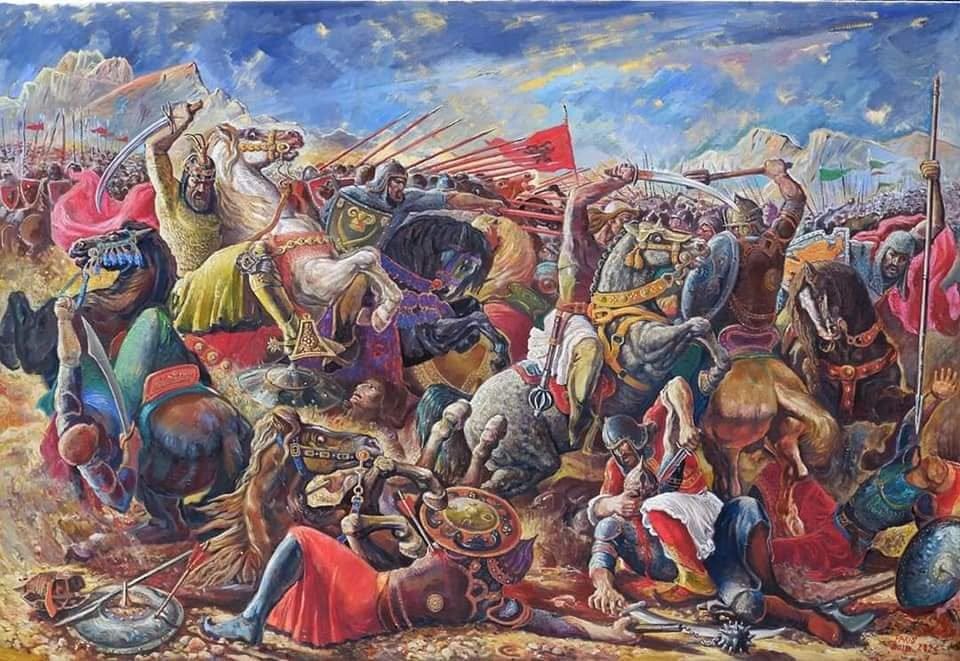
The victory echoed across the region.
Christian populations under Ottoman rule took notice. Albania emerged as a symbol of resistance. Ottoman commanders grew cautious.
Campaign followed campaign.
Each time, Ottoman armies entered Albania expecting resolution. Each time, they encountered disruption. Marches slowed. Supply trains vanished. Camps suffered constant harassment. Battles ended without decisive victory. The cost mounted.
One Venetian observer recorded that Skanderbeg fought “with the strength of ten men and the foresight of a hundred.”
A papal legate reported that Albanian peasants followed him into battle barefoot, convinced that their cause carried moral weight.
Ottoman chroniclers expressed frustration openly. One wrote that Skanderbeg caused more harm to Islam than any other Christian prince of his age.
The most significant assault came in 1450, when Sultan Murad II personally led a massive army against Albania. Krujë stood at the center of the campaign. The fortress was surrounded. Bombardment continued for months. Disease spread through the besieging army. Supplies dwindled. Skanderbeg refused surrender.
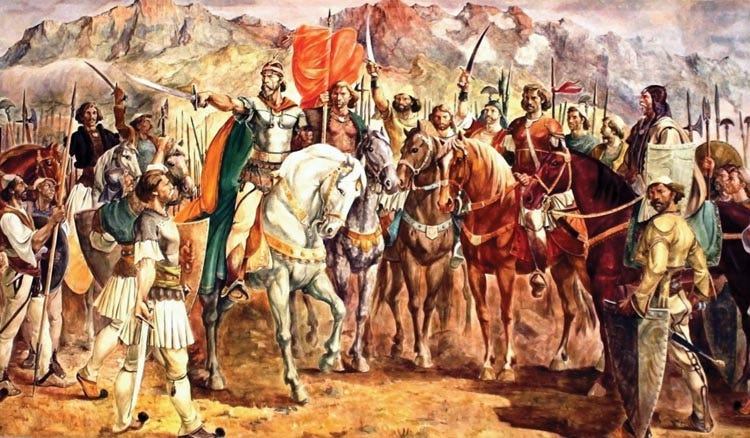
Sorties struck the besiegers repeatedly. Ottoman commanders fell. Winter approached. Eventually, the sultan withdrew, having lost tens of thousands of men. Murad died soon after, embittered by failure.
His successor, Mehmed II, the conqueror of Constantinople, renewed the effort.
Mehmed understood the significance of Albania. As long as Skanderbeg remained undefeated, the western frontier remained unstable. Albania guarded access to Italy and threatened Ottoman logistics in the Balkans. Its defiance disrupted imperial momentum.
More armies came.
More sieges followed.
Krujë endured repeated blockades. Each time, resistance held. Each time, the Ottomans withdrew with losses. Skanderbeg coordinated defense, raided enemy positions, and maintained cohesion among the clans.
Throughout these years, European powers offered intermittent support. Naples sent aid. Venice maneuvered carefully. The papacy praised Skanderbeg as the “Athlete of Christ” and recognized his role in holding the line. Assistance arrived unevenly. Skanderbeg relied primarily on local strength and discipline.
Ottoman fear spread beyond Albania.
A Turkish chronicler recorded that Muslim cities reinforced their defenses in anticipation of further disruption. Another noted that even the Mamluk sultan in Egypt monitored developments closely, preparing defenses should Skanderbeg’s influence expand further.
The war continued for twenty-five years.
Skanderbeg died in 1468. Without his leadership, resistance weakened. Within a decade, Albania fell under Ottoman control. The cost to the empire had been immense. Time had been bought. Italy remained unconquered. Resources diverted westward reduced pressure elsewhere. The advance slowed.
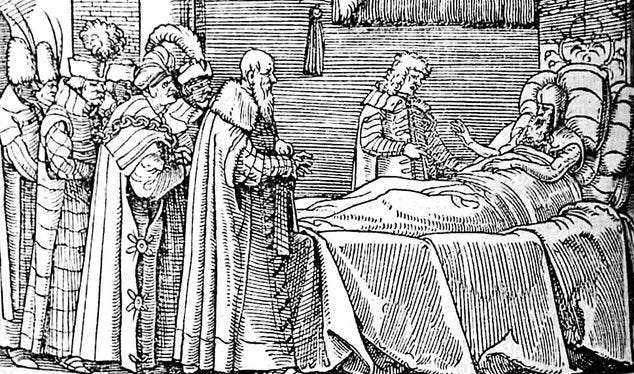
An Ottoman chronicler captured the effect with rare honesty: “Fear entered the hearts of men.”
Europe remembers Skanderbeg dimly. His enemies remembered him clearly.
And in that memory rests the lesson.
Where/who is our Skanderbeg?
I L-O-O-O-V-E this story