
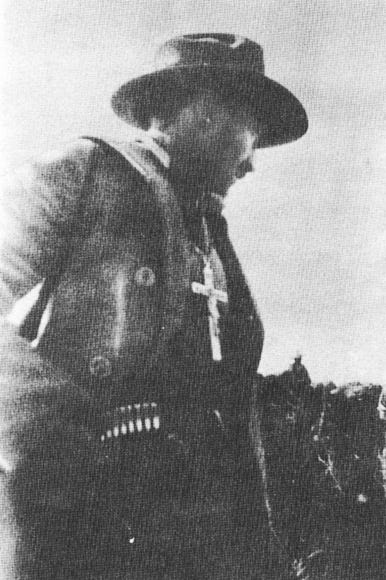
In 1926, the churches went silent in Mexico.
The government had outlawed Mass.
Priests were arrested. Crosses torn down. Catholic schools closed. Public prayer banned. The ruling regime — obsessed with “modernity” — saw the Church as a relic of the past. A new world was coming, and there would be no room for rosaries or sacraments.
They expected obedience.
What they got was war.
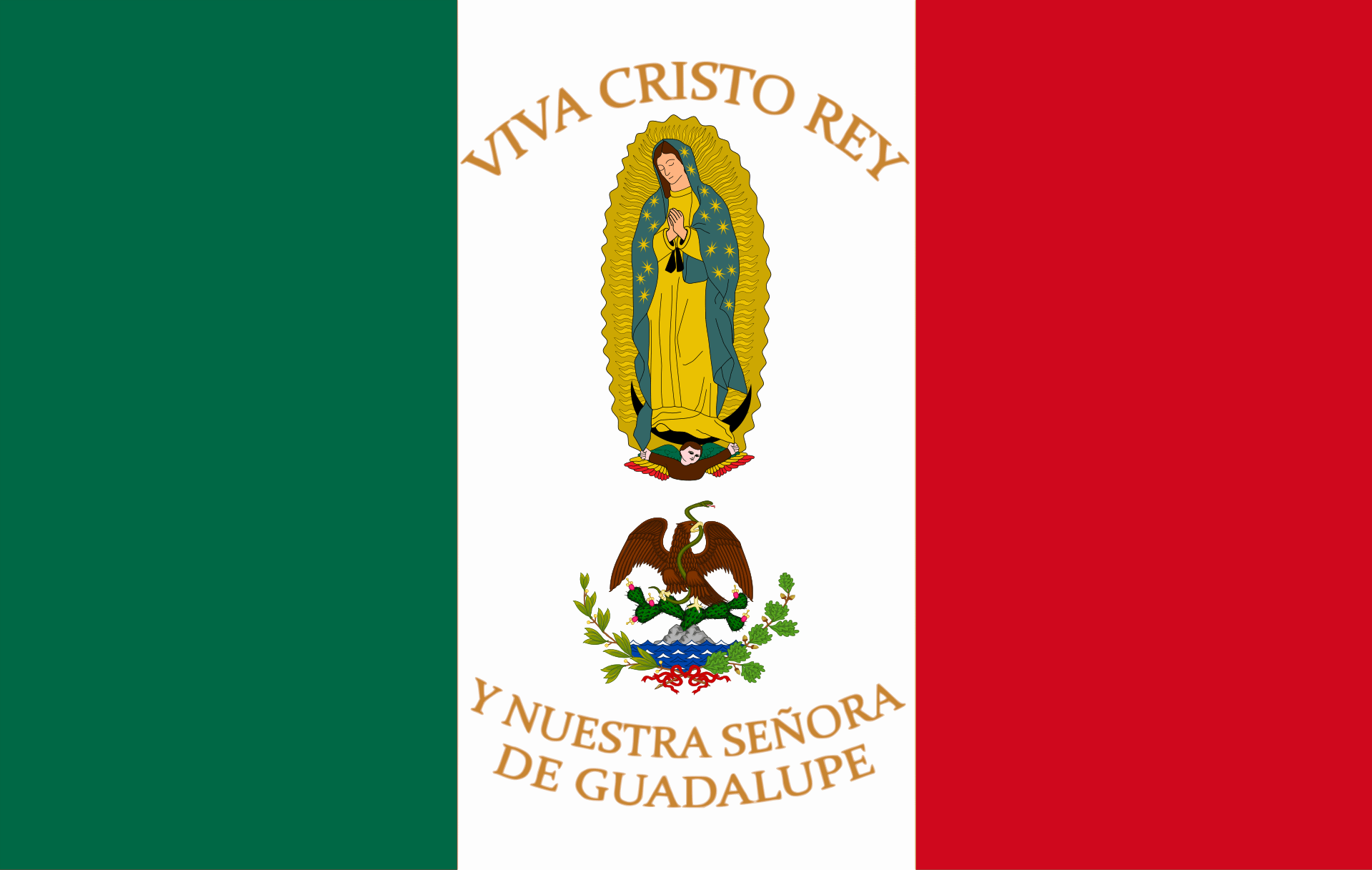
Within months, hundreds of thousands of ordinary Mexicans — ranchers, blacksmiths, teenage altar boys — took up arms. They weren’t soldiers. They had no uniforms. No funding. No political backing. Their only cry was “¡Viva Cristo Rey!” — Long live Christ the King.
What followed was a three-year guerilla war that shook the Mexican state to its core — and showed the modern world what happens when a faith refuses to die.
Reminder: The Western Spirit is a reader-supported publication.
If you’ve been enjoying these essays, consider becoming a paid subscriber. For a few dollars a month, you’ll get:
In-depth pieces on forgotten battles, brave men, and turning points in Western history
Reflections on faith, order, tradition, and the deeper meaning behind culture
Full access to the growing archive — essays, book breakdowns, and historical deep dives
This project exists because readers like you make it possible.
The Spark
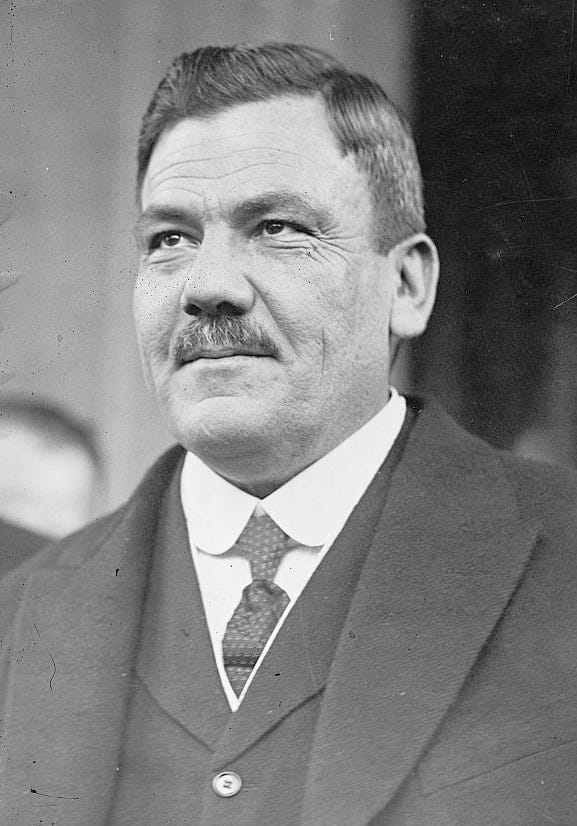
“We do not negotiate with superstition. We will educate it out of them.”
—President Calles, 1926
Mexico’s 1917 Constitution had been hostile to the Church from the start. But for years, enforcement was light. That changed with the rise of President Calles — an atheist, Freemason, and revolutionary.
He passed the Calles Law, making it illegal for priests to wear clerical garb, criticize the government, or conduct public worship. Foreign clergy were expelled. Bishops were placed under surveillance. Confession became illegal.
In July 1926, the Church responded by suspending all public Masses.
Millions of Catholics were suddenly in spiritual exile.
That’s when the resistance began.
In western states like Jalisco, Zacatecas, and Michoacán, peasants took up whatever weapons they could find. Their slogan: “Better to die on your feet than live on your knees.” They called themselves Cristeros.
They didn’t wait for orders.
They rode out to fight.
The Uprising
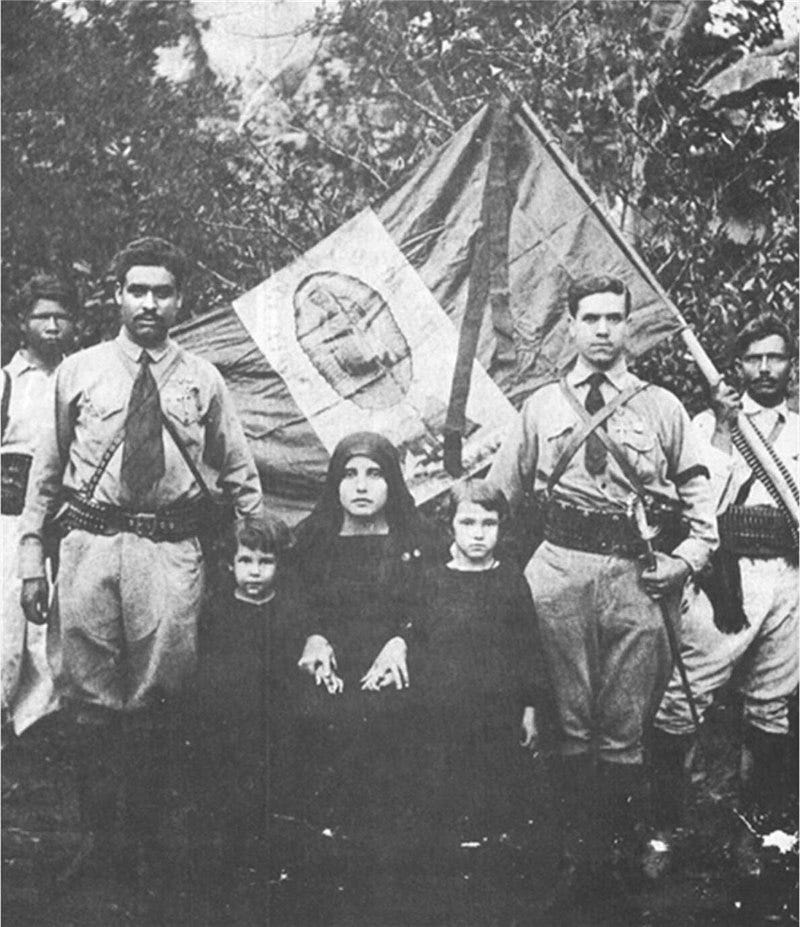
“We fight for the right to kneel.”
—Father José Reyes Vega, priest and commander
The war wasn’t conventional. It was Catholic guerrilla warfare.
At first, the Cristeros were a nuisance. Local skirmishes. Sabotage. Raids on garrisons. But by early 1927, they had full-scale units, field commanders, and even priest-officers. Some Masses were held in secret — others under arms, in open defiance.
One priest carried a rifle in one hand and the Eucharist in the other.
Entire towns joined the rebellion. Women formed a secret logistics network called Las Brigadas Femeninas, smuggling bullets inside baskets of tortillas. Teenagers joined cavalry units. Children served as messengers.
The Mexican Army responded with brutality.
Towns were burned. Suspected Cristeros were hanged from telephone poles. One 14-year-old boy — José Sánchez del Río — was tortured and executed for refusing to renounce Christ.
The Battle of San Julián
“They have guns. We have Christ. That will be enough.”
—Cristero fighter before the battle
The Cristero War wasn’t just ambushes and skirmishes.
Sometimes, it was full-on open battle.
In March 1927, a federal column of over 700 government troops moved toward the town of San Julián in Jalisco — a Cristero stronghold. They expected little resistance. The Cristeros, they believed, were just disorganized peasant militias.
They were wrong.
Waiting for them were fewer than 500 Cristeros, many armed with old hunting rifles, machetes, or nothing at all. But they had the terrain, the town’s support, and something else: unshakable morale.
The night before, a priest said Mass in the hills and gave absolution to the men preparing for battle.
At dawn, the Cristeros struck.
They attacked from high ground and street corners, driving the federales into a choke point between the town plaza and the church. The government troops tried to regroup — but the Cristeros moved fast, fighting block by block, praying between volleys.
Some charged into the gunfire barefoot, shouting “¡Viva Cristo Rey!” as bullets flew.
By evening, the federales were retreating in chaos. The Cristeros had not only held the town — they had captured rifles, ammunition, and even field artillery.
It was their most visible victory yet.
The next morning, the town held a public Mass in the open square, ringing the church bells as if nothing had ever been banned.
It wasn’t just a military triumph.
It was a declaration: the Church was still alive.
The Turning Point
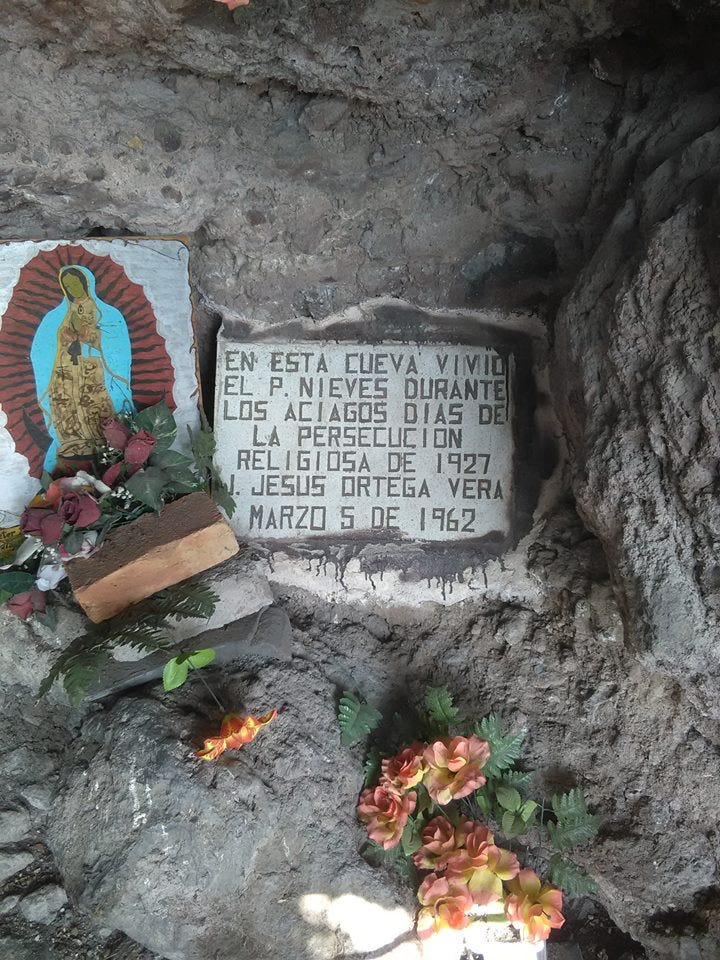
By 1928, the war had escalated beyond what Calles imagined.
Over 50,000 armed Cristeros were active. The Mexican Army, though larger, struggled with desertions and low morale. The Church refused to recognize the regime’s authority. And international pressure was building — especially from Catholics in the United States.
Then came the turning point.
With the U.S. fearing instability south of the border, secret negotiations began between the Vatican, the American ambassador, and the Mexican government. After intense back-channel talks, a compromise was struck:
The Church could resume public worship.
Priests would be released from prison.
The Calles Law would remain, but not be enforced.
In 1929, the Cristeros — against the wishes of many fighters — laid down their arms.
The rebellion had ended.
But something had changed.
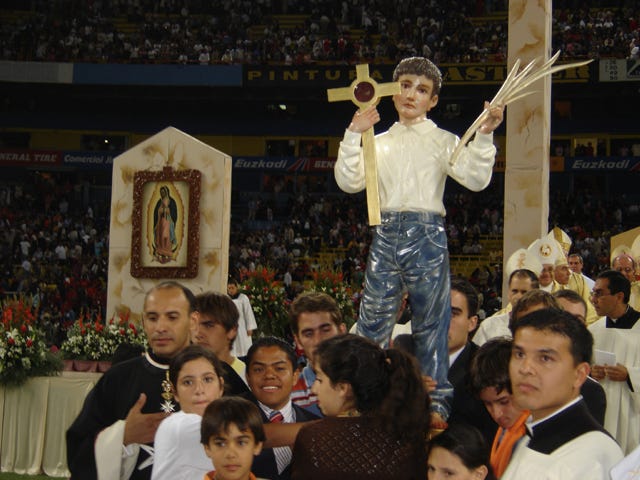
The Boy Martyr: José Sánchez del Río
“You will never take Christ from me.”
—José, age 14, refusing to deny his faith
One of the most powerful stories from the Cristero War didn’t come from a general or a priest. It came from a boy.
Born in 1913 in Sahuayo, Michoacán, José Sánchez del Río was just 13 when the war began. He begged his mother to let him join the Cristeros. She refused. He persisted. Eventually, he was allowed to serve as a flag bearer and aide to the troops.
In early 1928, José was captured during a firefight. He was imprisoned and tortured, and offered freedom in exchange for renouncing Christ and the Cristero cause.
He refused.
His captors sliced the soles of his feet, forced him to walk through town on rock and salt, and made him dig his own grave. At each step, they demanded he shout, “Death to Christ the King.”
He only ever answered: “¡Viva Cristo Rey!”
Just before they killed him, he scrawled a message in the dirt with his own blood: “Viva Cristo Rey.”
He was 14.
José became the face of the movement — the boy who stood barefoot before power and did not break. His story traveled across mountains, through villages, across oceans. To the world, he was a footnote. To the faithful, he was a saint.
In 2005, he was beatified. In 2016, canonized.
Even today, his image is carried in processions. His last words are whispered in times of trial.
The Legacy
“Our bodies are yours. But our souls belong to Christ.”
—Anonymous Cristero, before execution
The Cristero War was one of the last open Catholic uprisings in modern history.
And it was nearly erased.
For decades, the Mexican government banned any discussion of it. Textbooks ignored it. Memorials were forbidden. Even families were pressured to stay quiet. But the memory didn’t die.
It lived in whispered prayers. In stories passed down at dinner. In rosaries buried under floorboards.
In 2000, Pope John Paul II canonized 25 Cristero martyrs, including young José Sánchez del Río.
Today, their cry lives on — not just in Mexico, but wherever faith is tested by power.
Takeaways
1. Faith Makes Fighters
The Cristeros had no tanks, no state, no foreign aid. But they believed — not in politics, but in eternity. That belief turned farmers into freedom fighters.
2. Bureaucrats Underestimate the Soul
Calles thought faith could be legislated away. But faith doesn’t work like policy. You can ban the Mass — you can’t ban devotion. The human spirit isn’t shaped by law, but by worship.
3. Culture Is Worth Dying For
The Cristeros weren’t defending an idea. They were defending a way of life: processions, rosaries, baptisms, bells. A Catholic rhythm. When that rhythm was attacked, they fought back.
4. Martyrdom Isn’t Ancient
This wasn’t Rome in 200 AD. It was Mexico in the 20th century. Young boys were killed for kneeling before a crucifix. Saints are not just in the past — they’re among us now.
5. The Church Never Forgets
For 70 years, the Cristeros were silenced. But the Church remembered. It canonized them. It honored them. And now their names are spoken around the world — as proof that faith doesn’t lose. It just waits.
Quick heads-up: You’re now getting these emails through Substack instead of Beehiiv. I made the switch to keep things simpler on my end — for you, nothing changes. Same voice. Same content.
Second, the newsletter has a new name: The Western Spirit. The focus is the same — history, culture, faith, strategy — but the name feels closer to what I’m actually building.
Thanks for being here. More soon.
Want more? On Tuesday, subscribers will receive:
“The Siege Within: How French Catholics Survived the Revolution” — a deep dive into the Vendée uprising and the martyrdom of priests during the Terror.
We’ll explore how the altar outlasted the guillotine.
Subscribe now to support more untold stories from Catholic history, strategy, and the soul of the West.