
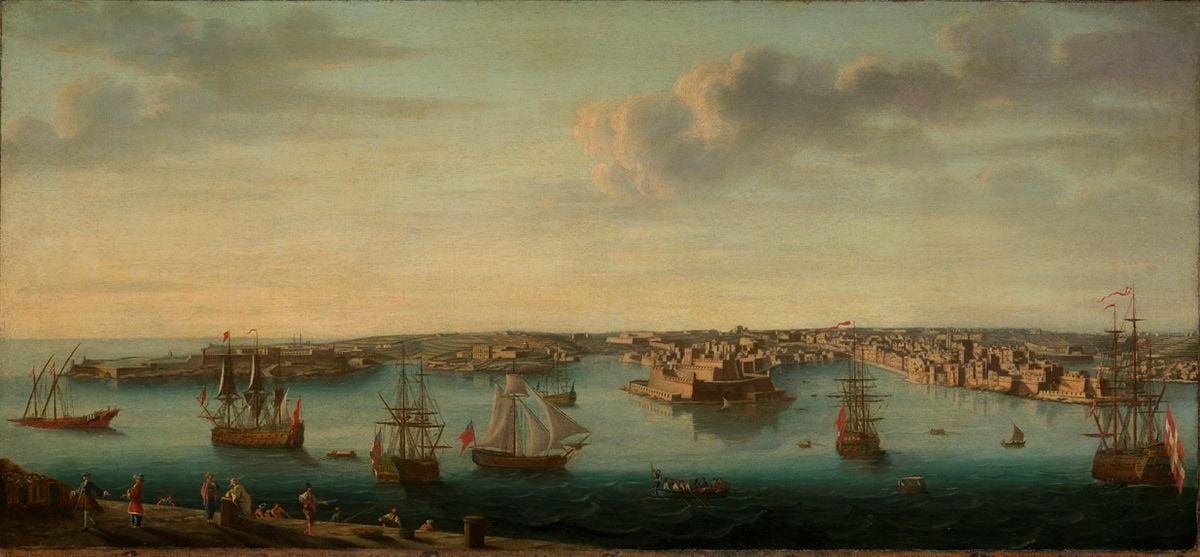
Malta in the 1500s is one of those tiny empires. The people who defended it were a religious order of warrior-monks… the Knights Hospitaller. For almost two hundred years, this brotherhood blocked an empire, and turned themselves into one of the most feared military forces in the Mediterranean.
History is full of big states doing big things. But what makes the Knights Hospitaller interesting is that they broke every rule of what power is supposed to look like. They had no population base. No natural resources. No land army. No hereditary leadership. Their entire institution depended on men who swore vows of poverty, chastity, and obedience. In other words, the exact opposite of what most people associate with statecraft. And yet they lasted longer than many kingdoms. They were the last functioning crusader institution, surviving centuries after the Crusader States themselves collapsed. They outlived the Templars. They outlasted the Teutonic Knights as a military power. For a long time, if you were an Ottoman merchant sailing from Alexandria to Istanbul, the Knights of St. John were your worst nightmare.
The more you study them, the stranger it gets. Their entire story is a case study in how leverage, discipline, and identity can outweigh demographics and geography. If there’s a lesson in Malta, it’s that small groups with a clear mission can change the course of history. And the Knights Hospitaller are maybe the best example Europe ever produced..
The Western Spirit exists because of readers like you. Join us and help keep this project alive and independent.
If you’ve been enjoying these essays, consider becoming a paid subscriber. For a few dollars a month, you’ll get:
In-depth pieces on forgotten battles, brave men, and turning points in Western history
Reflections on faith, order, tradition, and the deeper meaning behind culture
Full access to the growing archive — essays, book breakdowns, and historical deep dives
This project exists because readers like you make it possible.
A Monastery That Accidentally Became an Army
The strangest thing about the Knights is how they began. They started in a hospital..
In the early 11th century… decades before the First Crusade… a group of Benedictine monks in Jerusalem ran a hospice for pilgrims. It was a simple institution: beds, food, care. Pilgrimages were dangerous, and many travelers arrived sick, injured, or robbed. The monks treated them. That was it. No politics. No battles. Just charity. If history had gone differently, the Knights Hospitaller would’ve remained a footnote, the medieval equivalent of a humanitarian NGO.
But when the Crusaders captured Jerusalem in 1099, everything changed. The city was suddenly the center of a brand-new European kingdom, surrounded by enemies. Pilgrims kept coming, but now they needed more than medical care. They needed protection. The monks adapted... Some began escorting pilgrims. Others took up arms to guard roads and waypoints. Gradually a military wing formed around the hospital. And in 1113, the Pope recognized the Order officially as soldier-monks.
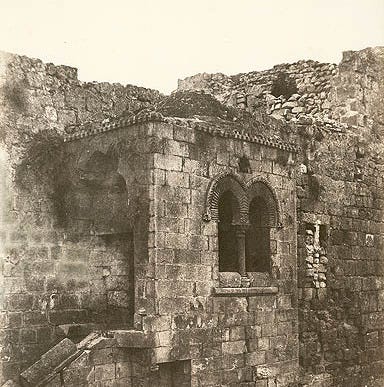
This transformation… monastery to military order… is one of the most unlikely origin stories in history. The Crusader States were fragile. The Knights became specialists in defending them. The Templars were shock cavalry. The Teutonic Knights were expansionists. But the Hospitallers were different: they balanced caring for the sick with fighting on the front lines. They were respected for their discipline and feared for their courage. This dual identity became the DNA of the Order.
At their height, the Knights were the elite troops of the Latin East. They fought Saladin at Hattin. They defended Ascalon, Gaza, Krak des Chevaliers, and countless pilgrim roads. And when the last Crusader stronghold… Acre… fell in 1291, the Knights fought to the last man inside their fortress, buying time for civilians to escape by sea.
From Refugees to Naval Power
The fall of Acre scattered the remaining Crusaders. Most went home. The military orders didn’t have that option. Their identity depended on defending the frontier of Christendom. They needed a new home near the conflict zone, but not so close they’d be immediately destroyed.
They tried Cyprus first, but Cyprus was too political. The Lusignan kings didn’t want a powerful military order acting independently on their island. The Knights needed sovereignty. They needed land they could hold, defend, and govern without interference.
That’s when they set their eyes on Rhodes.
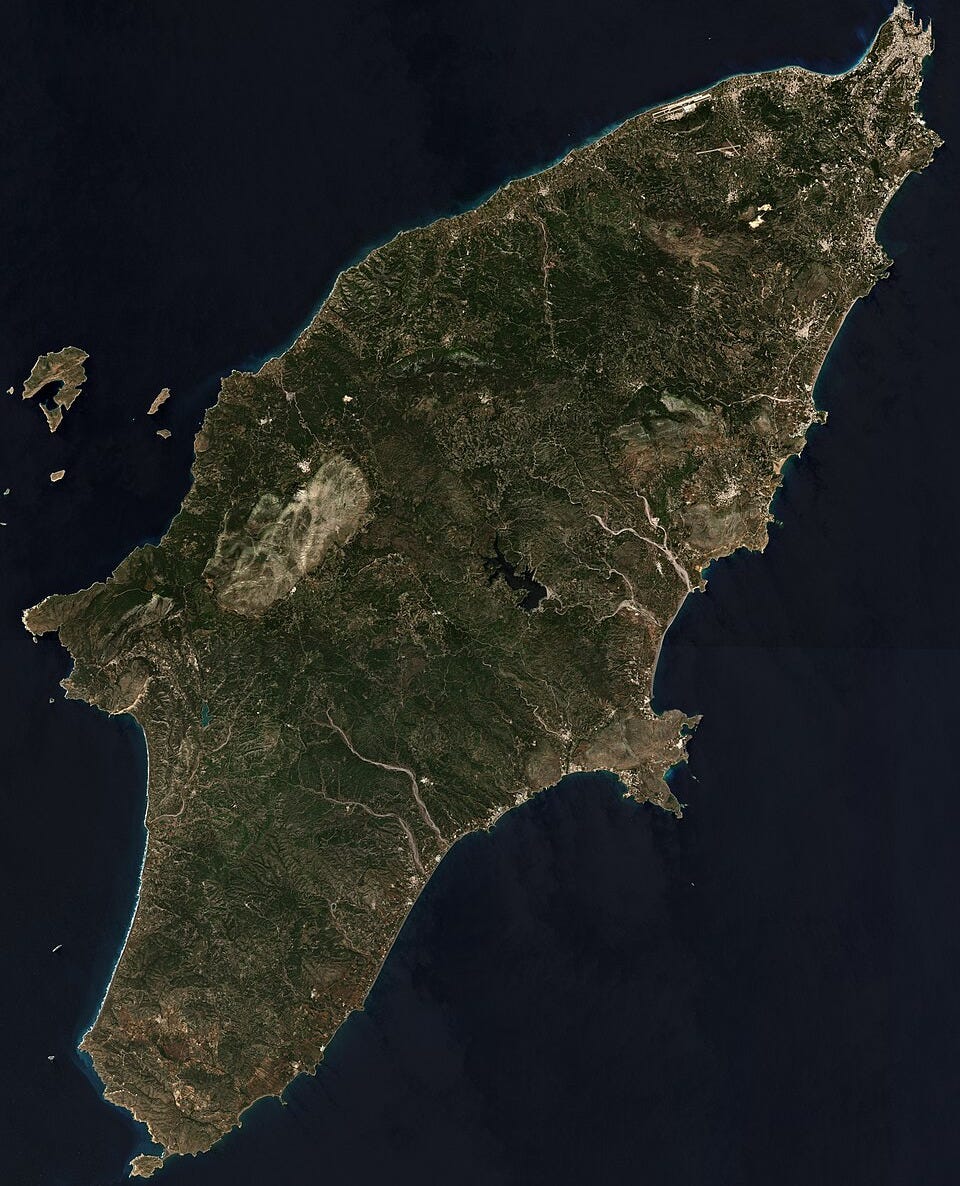
Rhodes was Byzantine, poorly defended, and strategically placed between Asia Minor and the sea lanes of the Levant. Capturing it wasn’t easy. It took years of campaigning and diplomacy. But in 1309, they finally succeeded. Rhodes became the Knights’ new headquarters, and they wasted no time turning it into one of the most fortified places on earth.
They rebuilt walls thicker than any they’d had in the Holy Land. They constructed massive bastions and towers. They reorganized their administration around “Langues”… national divisions that handled logistics, supplies, and command. And most importantly, they built a navy.
The Knights learned something important in their exile: on land, they would always be outnumbered. But at sea, discipline and innovation could compensate for size. Rhodes gave them a base to patrol the Aegean, raid enemy shipping, and protect Christian merchants. Their galleys became fast, efficient, and deadly. Ottoman captains feared them. Venetian merchants respected them. And European knights treated a tour in Rhodes like a mark of prestige.
For over two hundred years, the Knights controlled Rhodes like a small, independent naval state. But the Ottoman Empire was rising quickly. And eventually the two sides collided in a confrontation that tested the limits of courage itself..
The Siege of Rhodes and the End of an Era
By 1522, the Ottomans were the dominant power in the eastern Mediterranean. They had taken Constantinople in 1453. They controlled Egypt, Syria, Greece, and much of the Balkans. Rhodes stood in their way…
Sultan Suleiman the Magnificent decided to end the problem once and for all..