
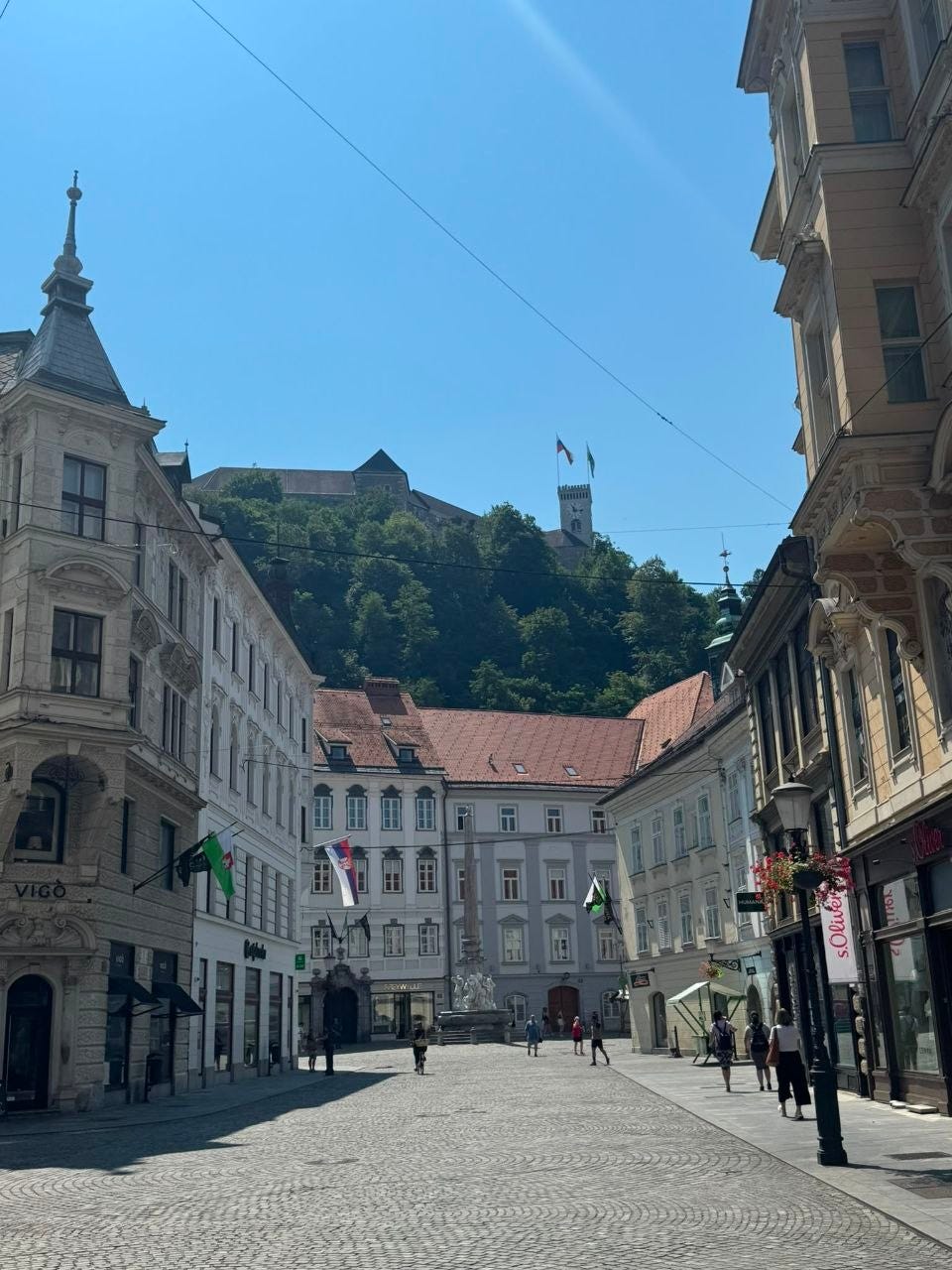
Hey guys, just a quick heads up before we begin. This article isn’t about what we usually cover here - Christian heroes, the Crusades, or the long struggle between Christendom and Islam - but I think it still fits the spirit of this publication. After all, The Western Spirit isn’t just about great battles and great men. It’s also about the cities they built, the culture they left behind, and the civilization they created.
As I mentioned in our subscriber chat, I recently spent a few days in Slovenia..
I had seen countless photos of Lake Bled and Ljubljana before, but like so many places on the internet, I wondered whether they would actually live up to the hype. Thankfully, they did. If anything, Slovenia surprised me because it feels like a country that hasn’t quite been discovered in the same way as Italy, Austria, or Croatia. Everything felt relaxed, incredibly clean, and easy to explore.
We based ourselves in Ljubljana. It’s not a huge capital, which is probably part of its charm. You can walk almost everywhere, there are no overwhelming crowds, and the Ljubljanica River winds through the old town with cafés lining both banks
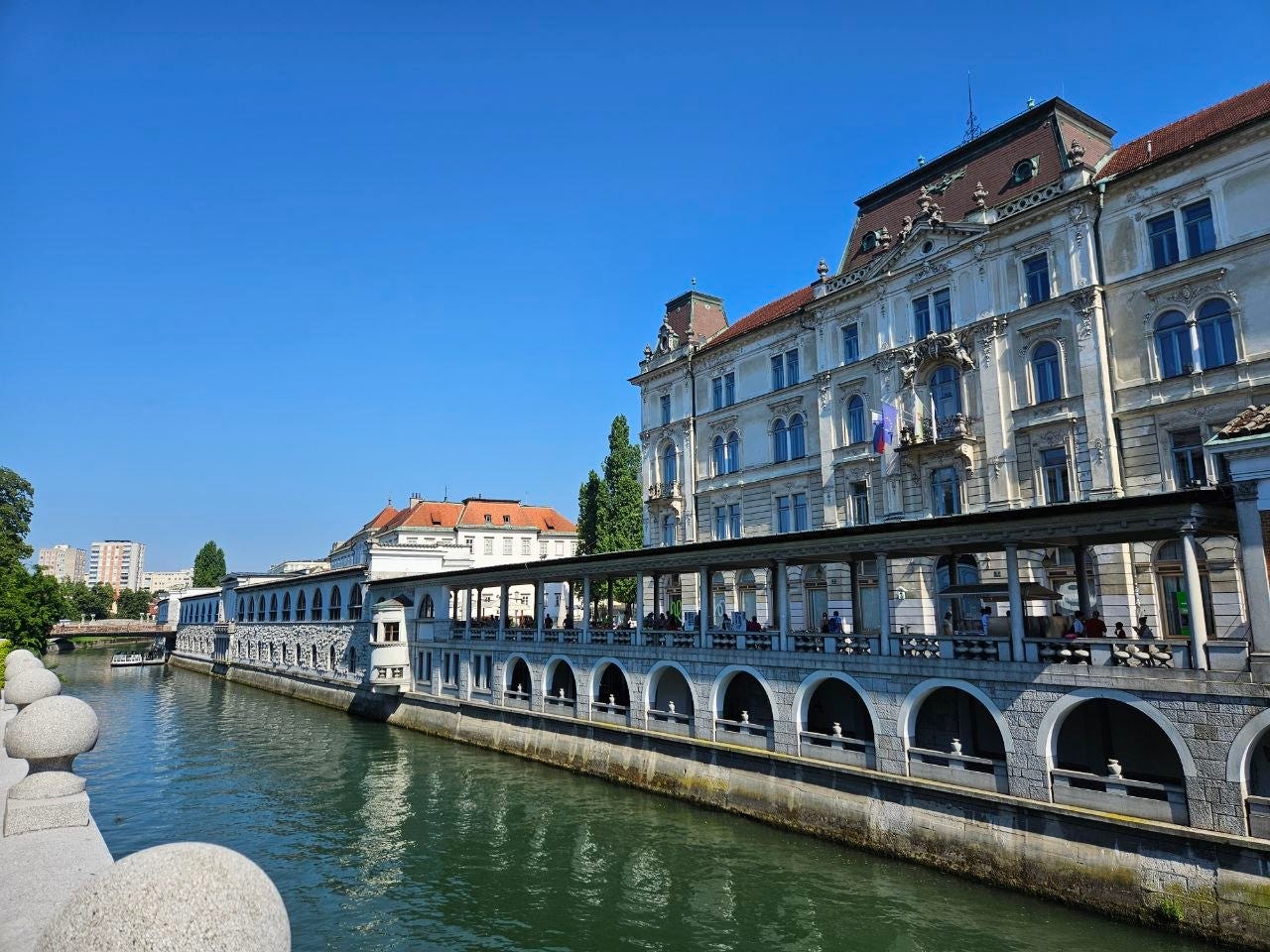
Every street tells a different chapter of its history, from the Roman settlement of Emona to centuries under the Habsburgs and, more recently, the work of one architect who shaped much of the city you see today.
Something else that really stood out was how European Ljubljana feels. Compared to many Western European capitals, there were very few foreigners. Aside from the occasional Roma beggar in the city centre, nearly everyone we encountered seemed to be Slovenian or tourists from neighbouring European countries. It gave the city a calm, familiar atmosphere that we both appreciated.
Before learning about that architect, though, we spent a morning at the National Museum. I always enjoy visiting museums at the beginning of a trip because they give you a bit of context before you start exploring, and this one did exactly that. Walking past Roman mosaics, inscriptions, coins, medieval weapons, and archaeological finds from ancient Emona, it became much easier to appreciate what we were seeing outside. It’s one thing to know that Ljubljana is an old city. It’s another to stand in front of objects made nearly two thousand years ago before stepping back onto streets built above the same foundations.
Friendly reminder: The Western Spirit exists because of readers like you. Join us and help keep this project alive and independent.
If you’ve been enjoying these essays, consider becoming a paid subscriber. For a few dollars a month, you’ll get:
In-depth pieces on forgotten battles, brave men, and turning points in Western history
Reflections on faith, order, tradition, and the deeper meaning behind culture
Full access to the growing archive — essays, book breakdowns, and historical deep dives
This project exists because readers like you make it possible.
That sense of history stayed with us as we made our way through the old town and climbed up to Ljubljana Castle. The walk itself is beautiful, winding through trees before opening onto panoramic views across the city’s red rooftops and church towers. The castle has watched over Ljubljana for centuries, serving at different times as a medieval fortress, a noble residence, a prison, and a military barracks. Standing on its walls, it isn’t difficult to understand why castles were always built on hills.
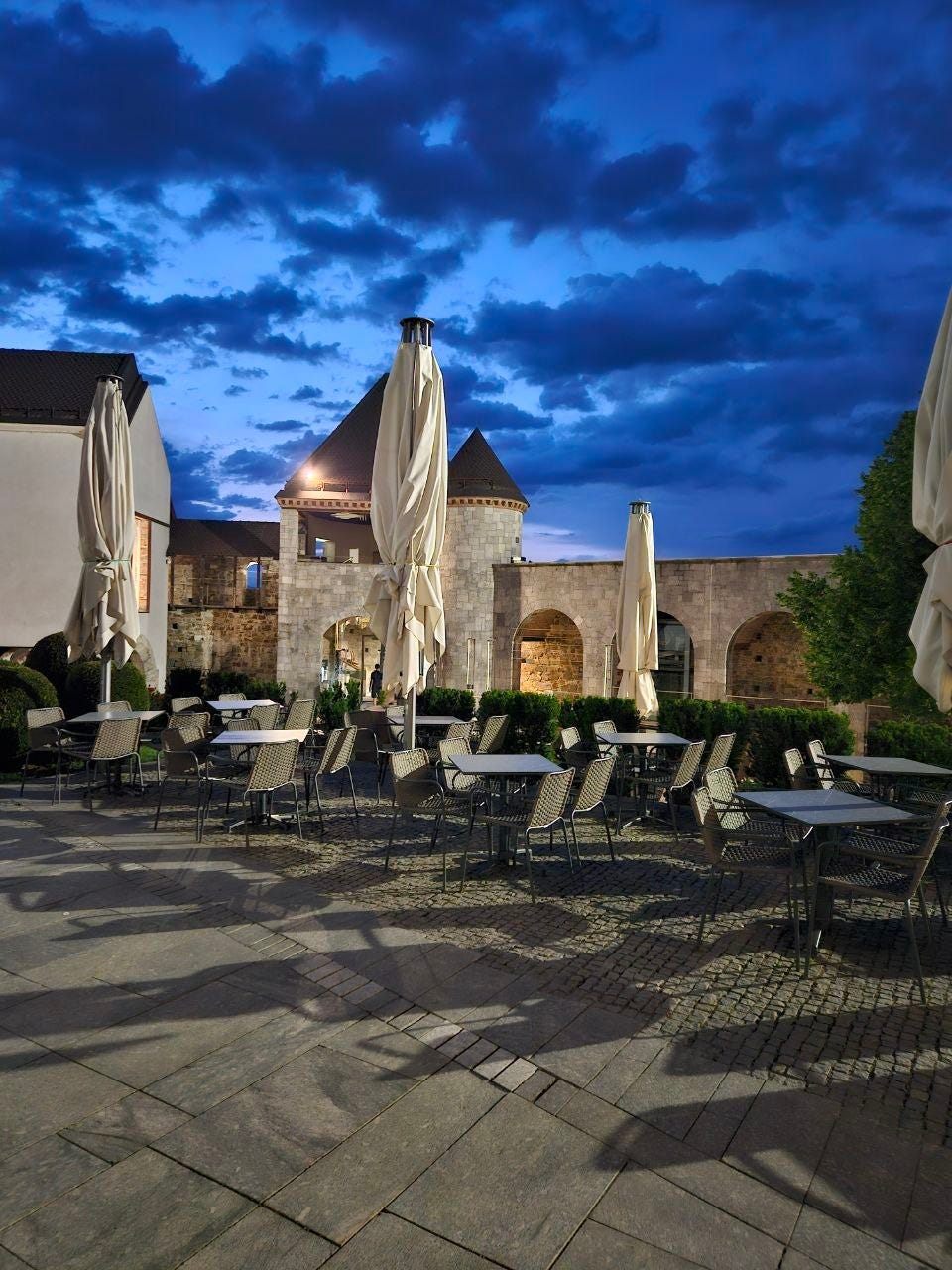
From up there you can see the entire valley, and any approaching army would have been visible long before reaching the city.
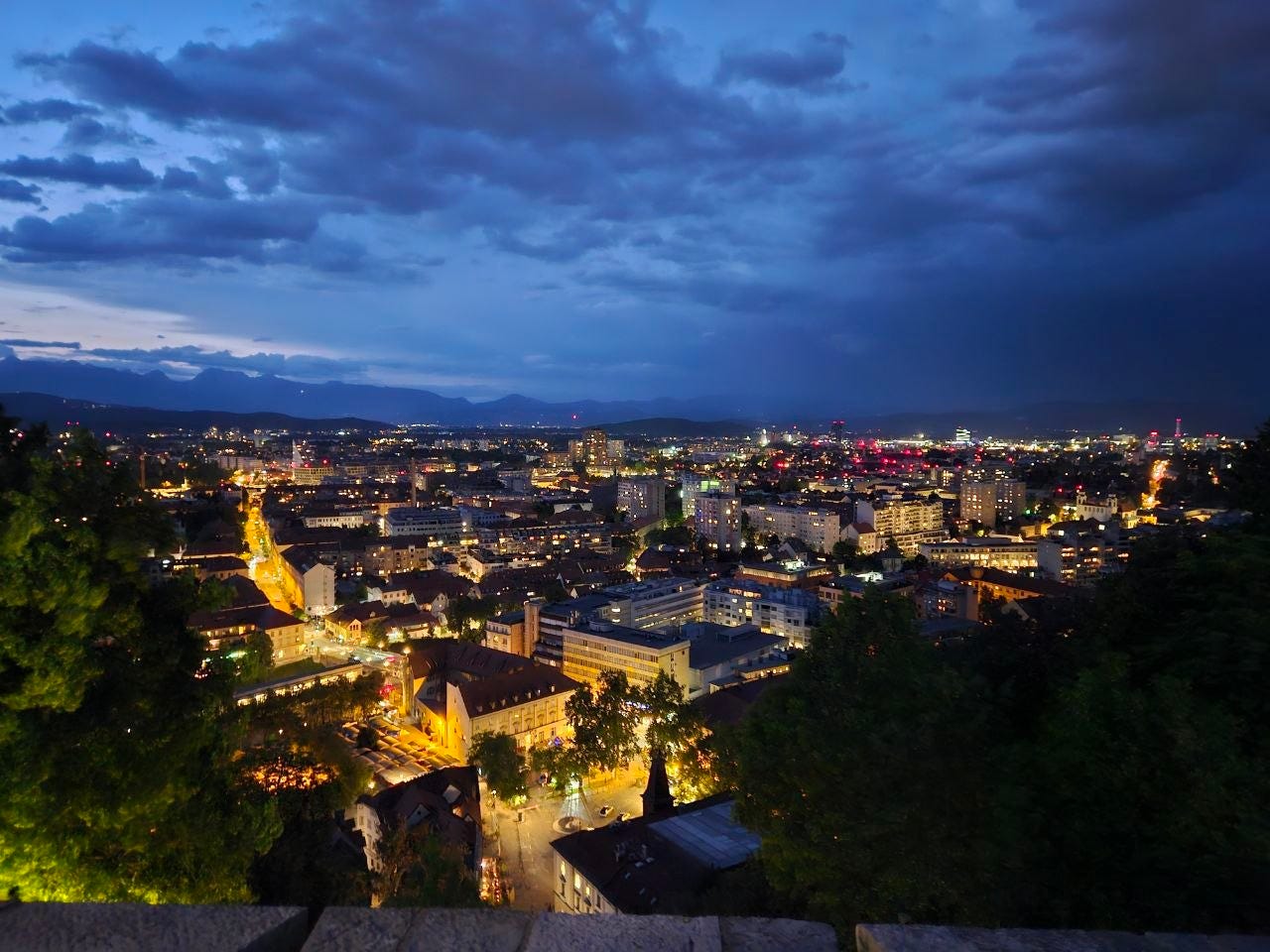
Looking down from the castle, one thing stood out. Ljubljana is super coherent. The bridges, the riverbanks, the churches, the public squares, and even the marketplaces all seem to belong together. I didn’t fully understand why until the following day, when we visited Plečnik House.
We booked a guided tour, and it ended up being one of the highlights of the entire trip. I thought we’d simply walk through the home of a famous architect, but instead we spent more than an hour learning about the man who, more than anyone else, gave modern Ljubljana its identity.
Before visiting, I knew Jože Plečnik had designed some of the city’s landmarks. Afterwards, I realized it’s impossible to spend a day in Ljubljana without encountering his work. If Christopher Wren rebuilt London after the Great Fire, Plečnik built modern Ljubljana.
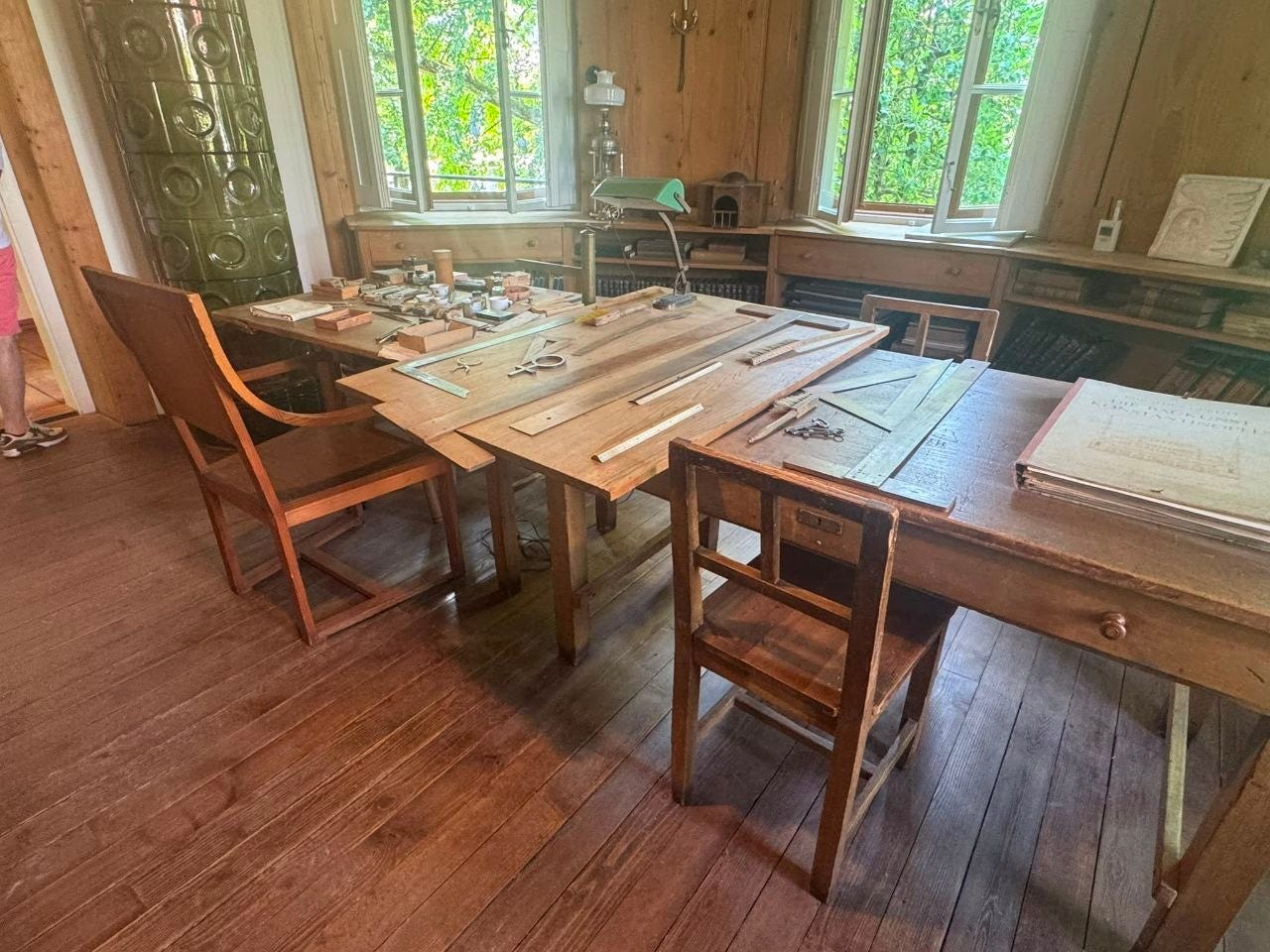
Our guide did a fantastic job bringing him to life. Rather than pointing at buildings, she told stories about the man himself. Plečnik lived modestly, remained deeply religious throughout his life, and believed architecture should elevate everyday life rather than simply solve practical problems. He wasn’t interested in designing monuments that drew attention to themselves. He wanted beauty to become part of ordinary life, whether someone was crossing a bridge, walking through a market, or sitting beside the river.
One story has stayed with me ever since. Plečnik had a small garden beside his home, and rather than designing a grand entrance, he deliberately made the garden gate unusually low. Anyone entering had to bow their head. It was his way of reminding people to show humility before nature. Our guide explained that Plečnik believed architecture should never dominate creation but work alongside it, and after hearing that, his buildings made much more sense.
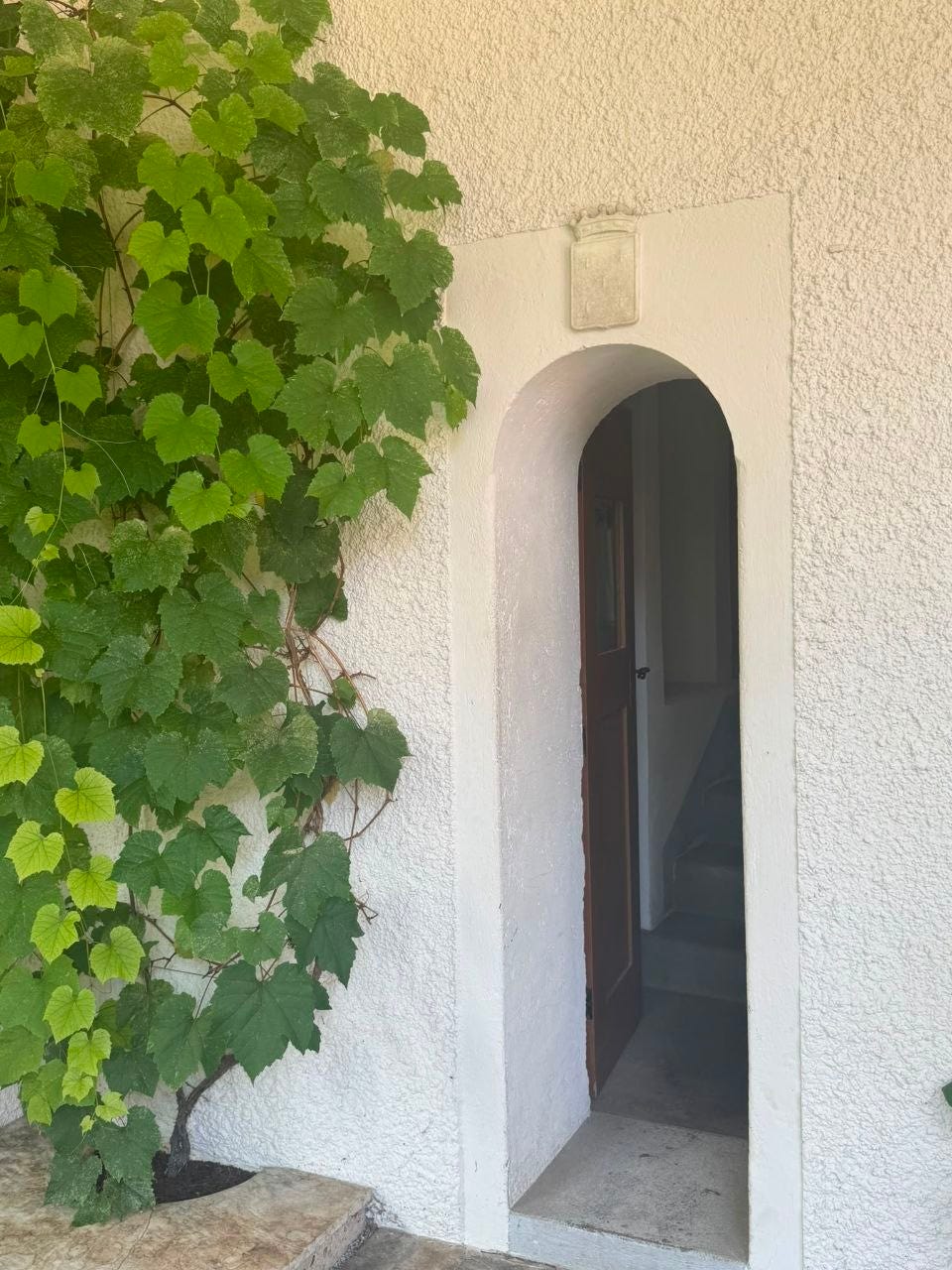
What fascinated me most was that Plečnik never tried to turn Ljubljana into another Vienna or Paris. Instead, he embraced its size and worked with what was already there. He designed elegant bridges, tree-lined promenades, churches, libraries, marketplaces, and public spaces that feel completely natural, almost as if they had always belonged. By the time we left his house, I wasn’t looking at Ljubljana the same way anymore.
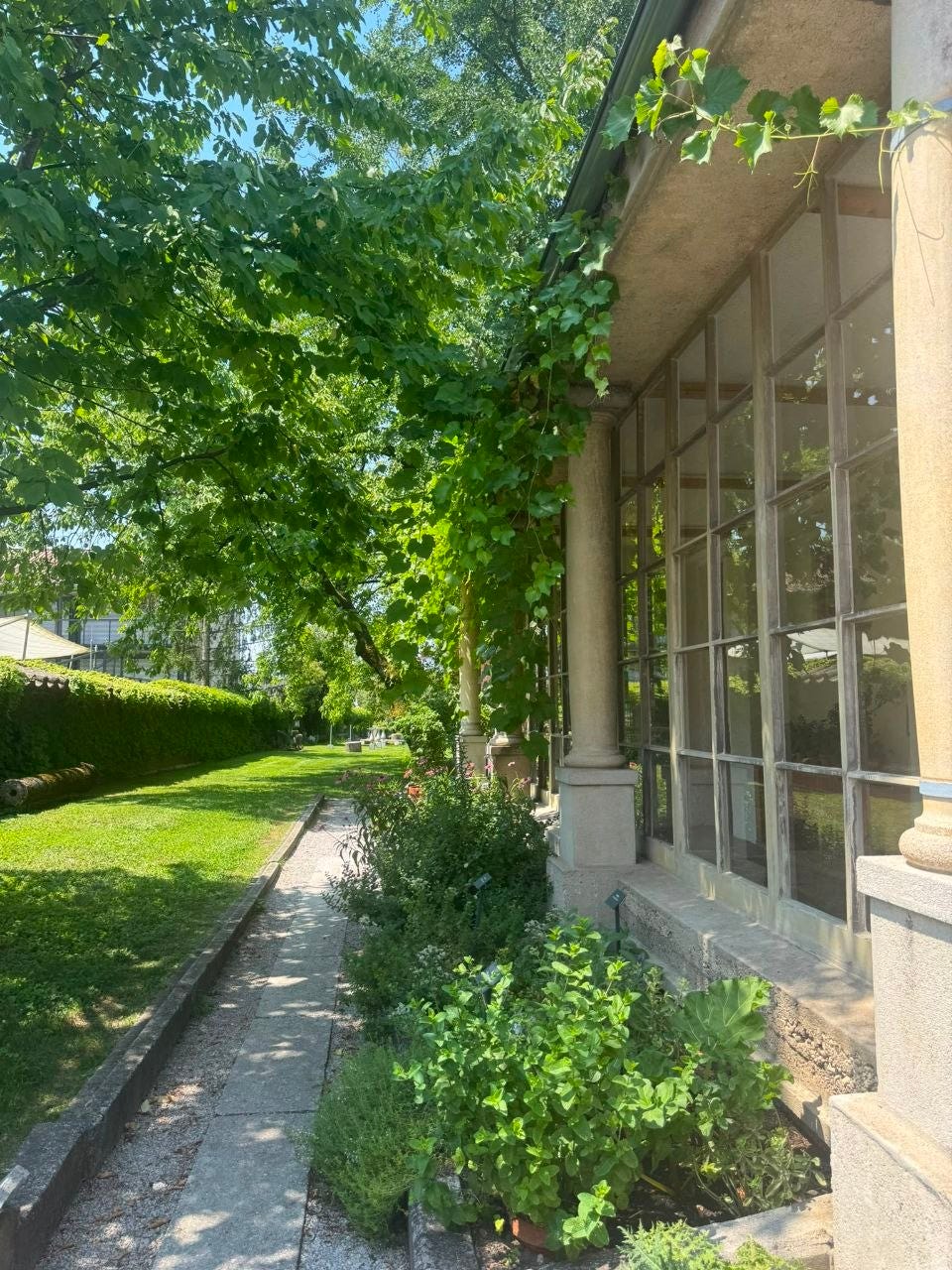
Once you start noticing Plečnik’s work, it’s almost impossible to stop. Our guide pointed out buildings we’d already walked past, bridges we’d crossed without thinking, and details we would have completely missed on our own. Afterwards we continued exploring the old town, which naturally brought us to the Cathedral of Saint Nicholas.
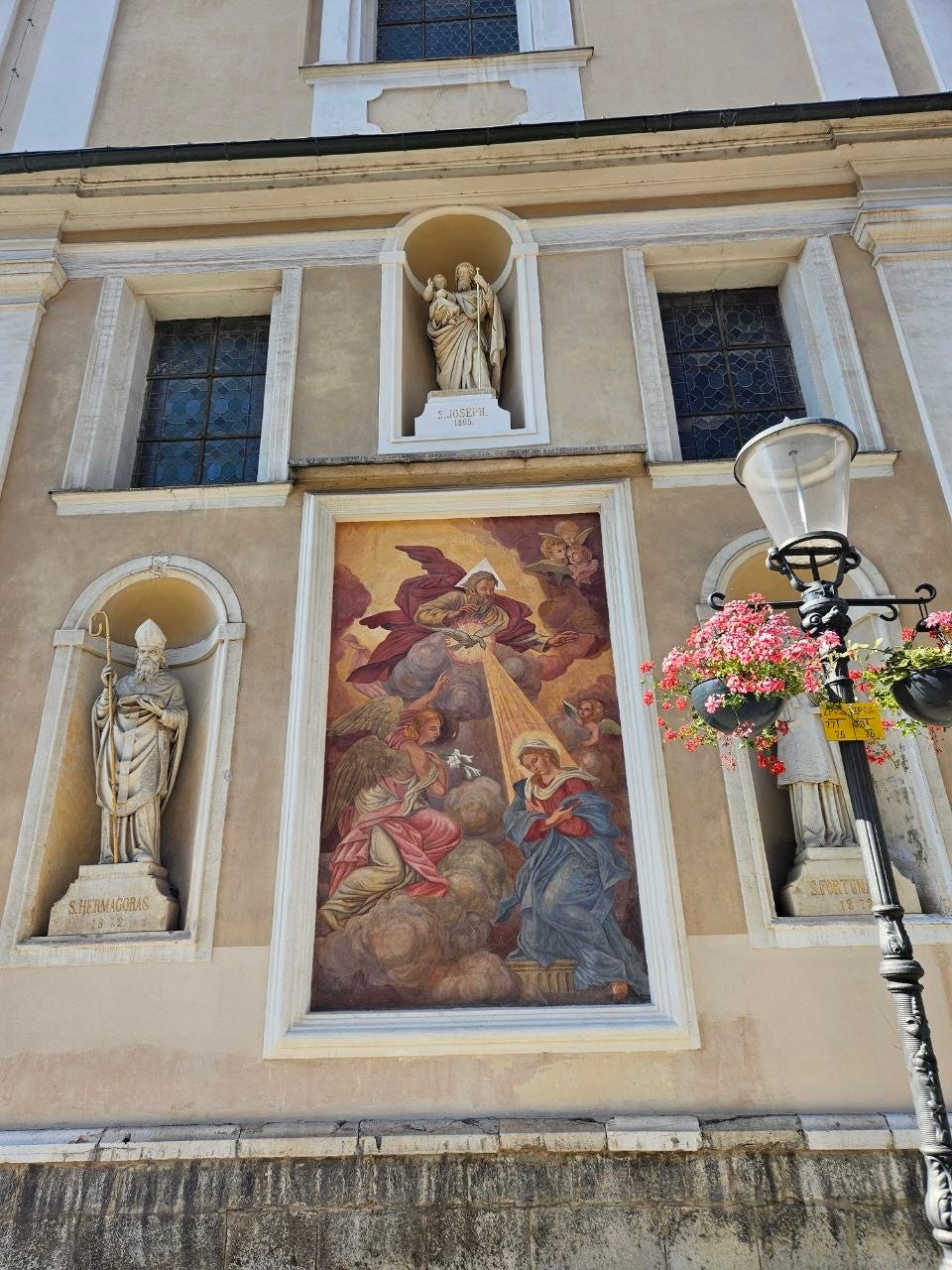
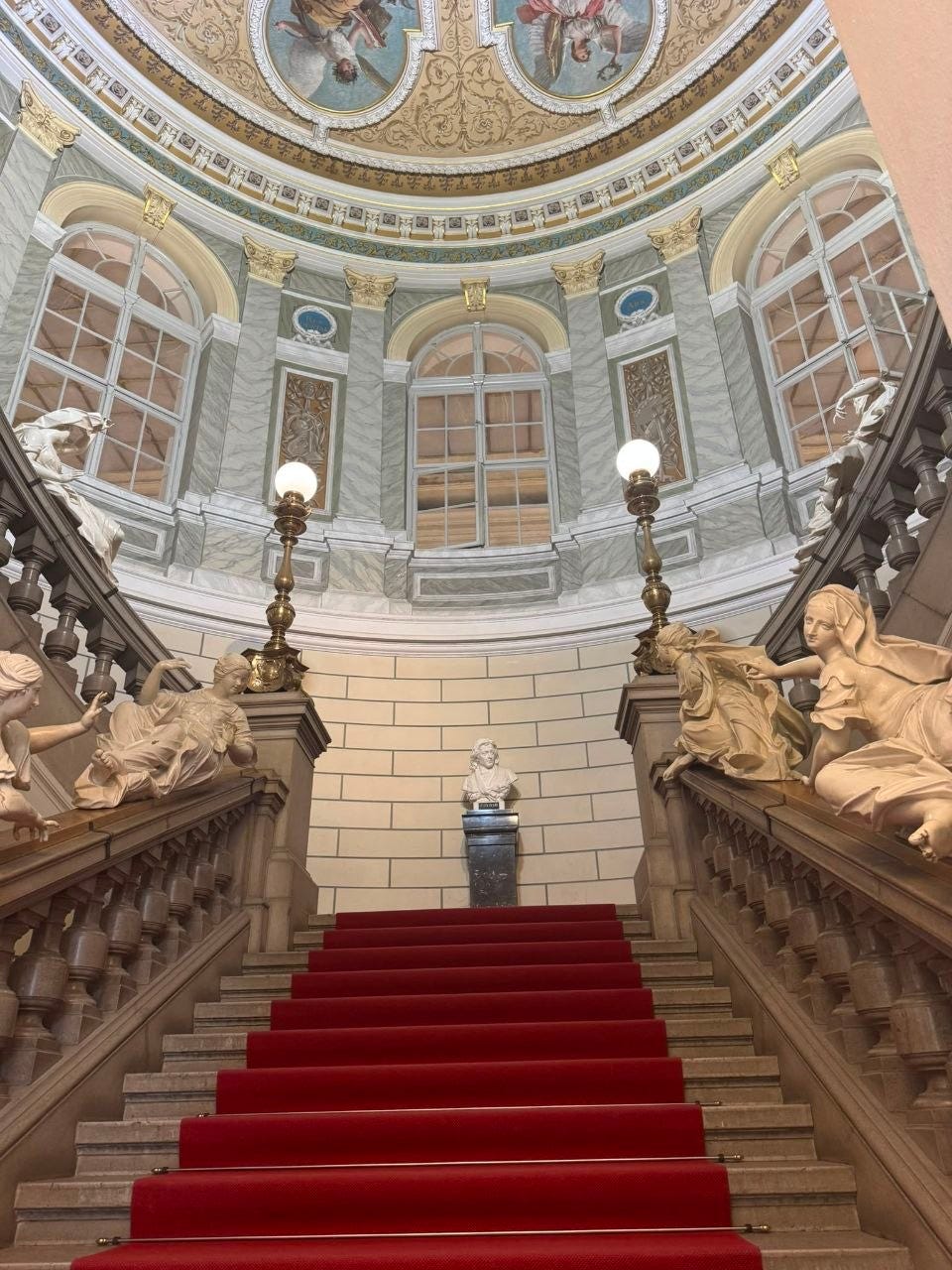
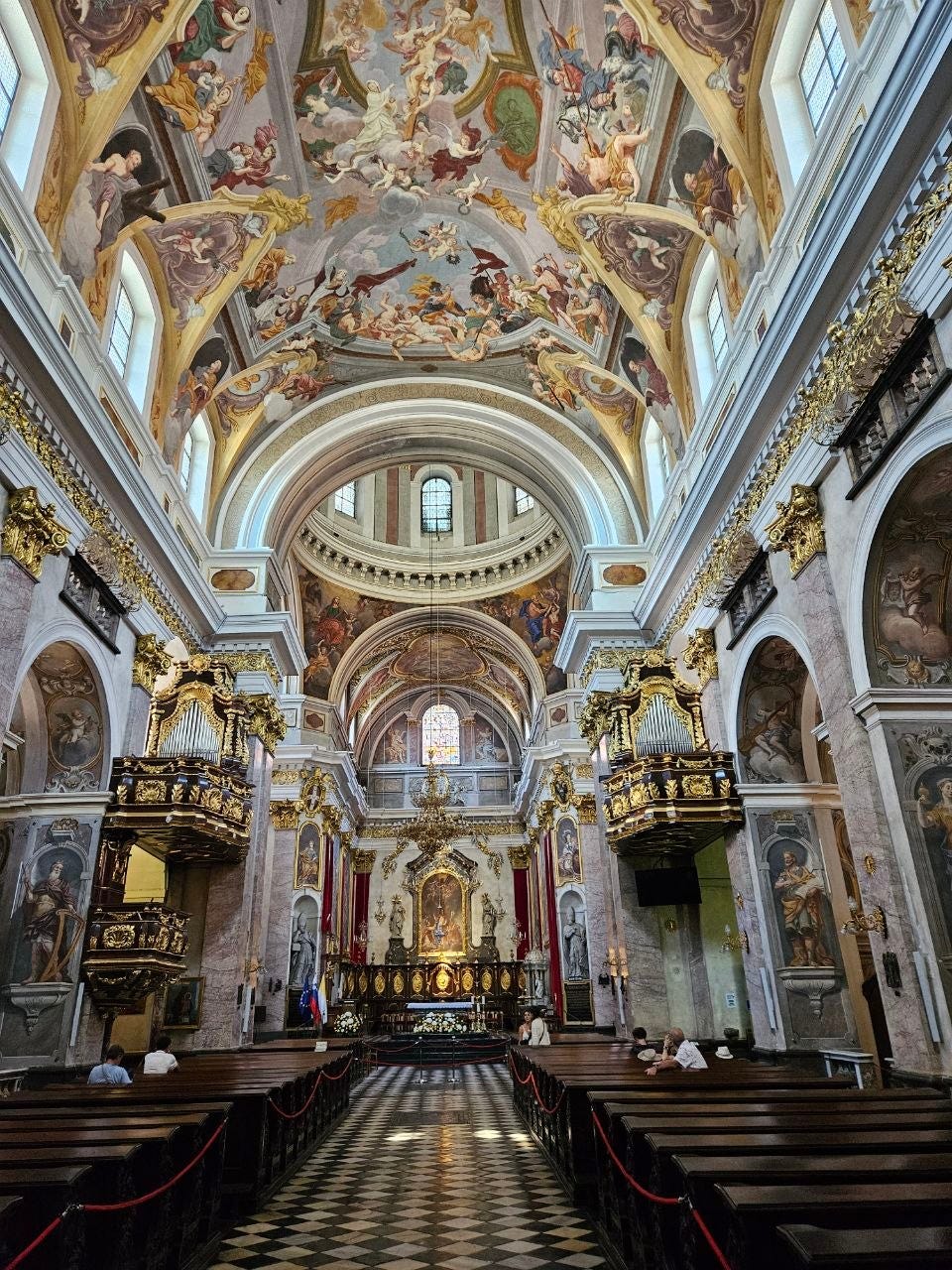
I always enjoy visiting churches, and this one certainly didn’t disappoint. From the outside it blends naturally into the surrounding streets, but the moment you step inside you’re greeted by magnificent Baroque frescoes, marble, gold, and an interior that feels both grand and peaceful at the same time.
As I stood there looking around, I couldn’t help thinking that buildings like this have witnessed centuries of baptisms, weddings, funerals, wars, occupations, and celebrations. Long before we arrived with our cameras, generations of Slovenians had gathered beneath the same ceiling, and that continuity is something you feel throughout the country.
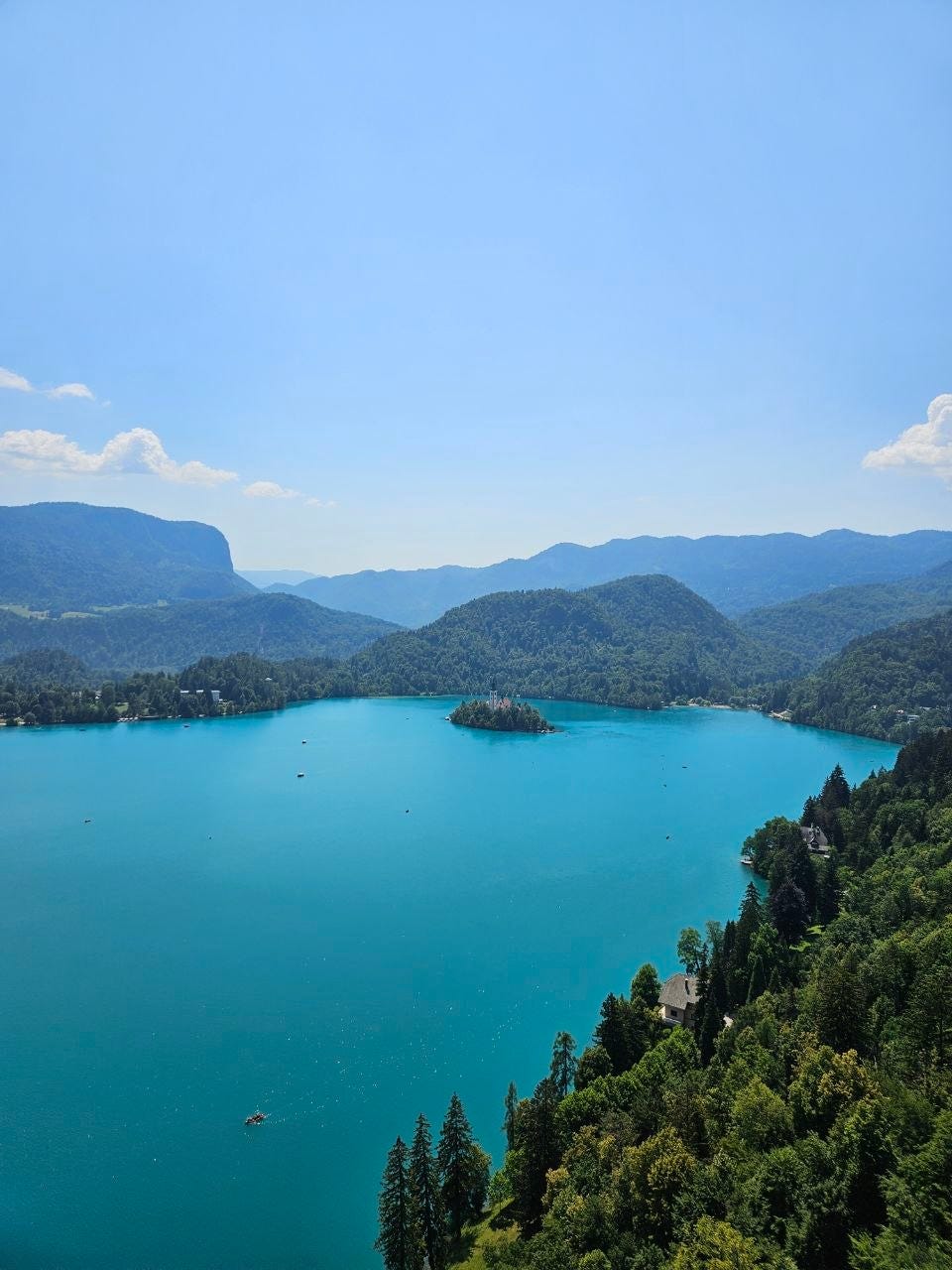
As much as we loved Ljubljana, we couldn’t leave Slovenia without seeing the place everyone talks about: Lake Bled. One thing we really appreciated was how easy it was to get there. The buses leave from Ljubljana’s central station, the journey takes a little over an hour, and everything ran smoothly. We didn’t need to rent a car or worry about complicated connections. We simply bought our tickets, got on the bus, and before long we were looking out over one of Europe’s most famous lakes.
I have to admit the photographs don’t exaggerate it.
The lake really is that beautiful.
The little island sitting in the middle, with its church rising above the trees, almost looks too perfect to be real. We walked around the shoreline, watched the traditional wooden pletna boats crossing the water, and eventually climbed up to Bled Castle, which overlooks the lake from a steep cliff. The view from the top is every bit as spectacular as people say it is, and I completely understand why Bled has become Slovenia’s postcard destination.
After spending time among the Alps, we headed in the opposite direction. Once again, the bus system made everything incredibly easy. From Ljubljana’s central station we caught a direct bus to Izola without any problems, and within a couple of hours the mountains had been replaced by the Adriatic Sea. One of the things that amazed me most about Slovenia is how quickly the scenery changes. In such a small country you can have breakfast beneath Alpine peaks and watch the sunset beside the sea on the very same day.
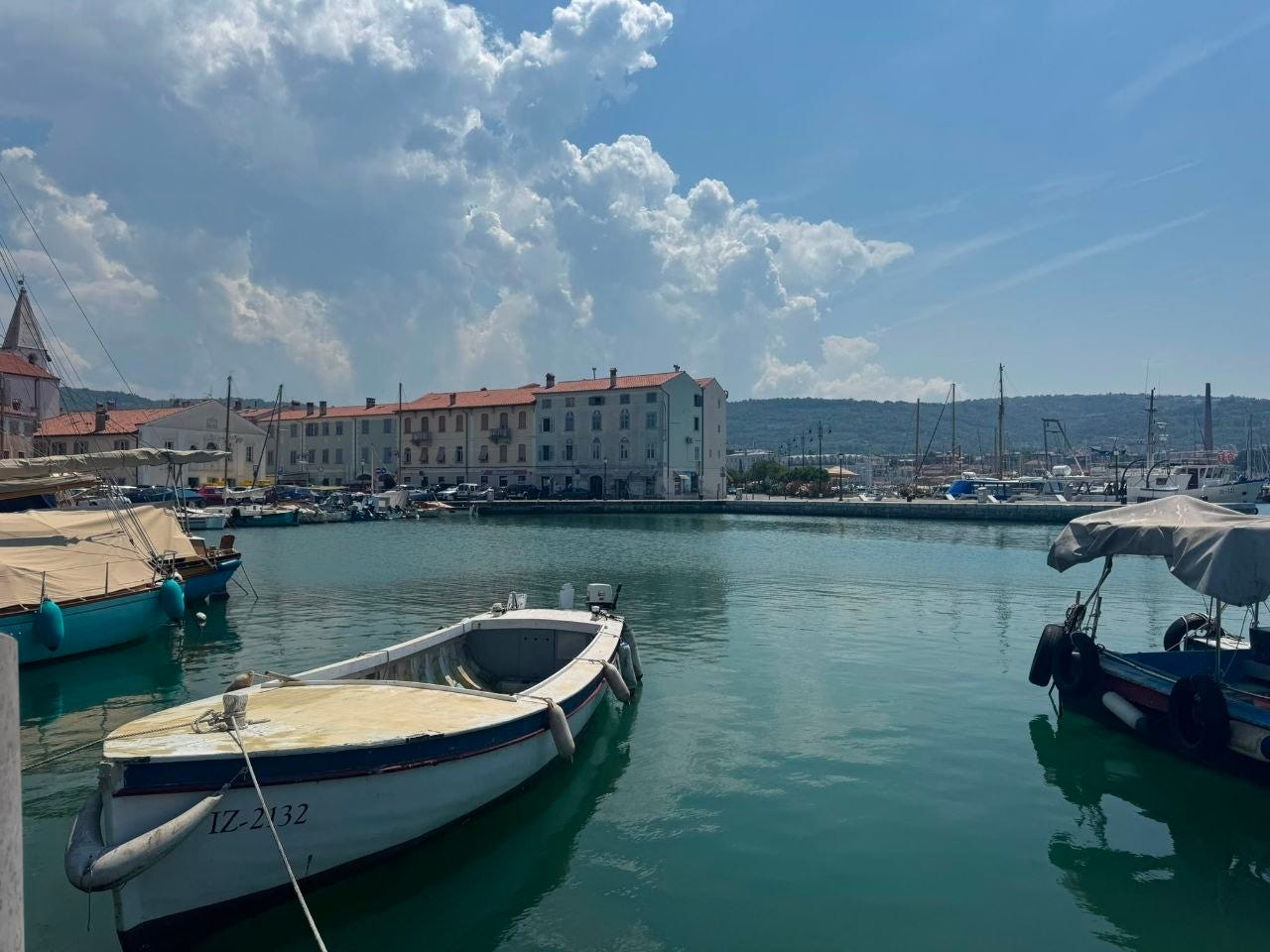
Compared to some of the larger coastal towns, Izola feels wonderfully authentic. Fishing boats still fill the harbour, narrow Venetian streets wind through the old town, and life seems to move at a much slower pace. We spent the evening walking along the waterfront before sitting down to watch the sun disappear over the Adriatic.
By the end of the trip, one thing had become very clear to me..