
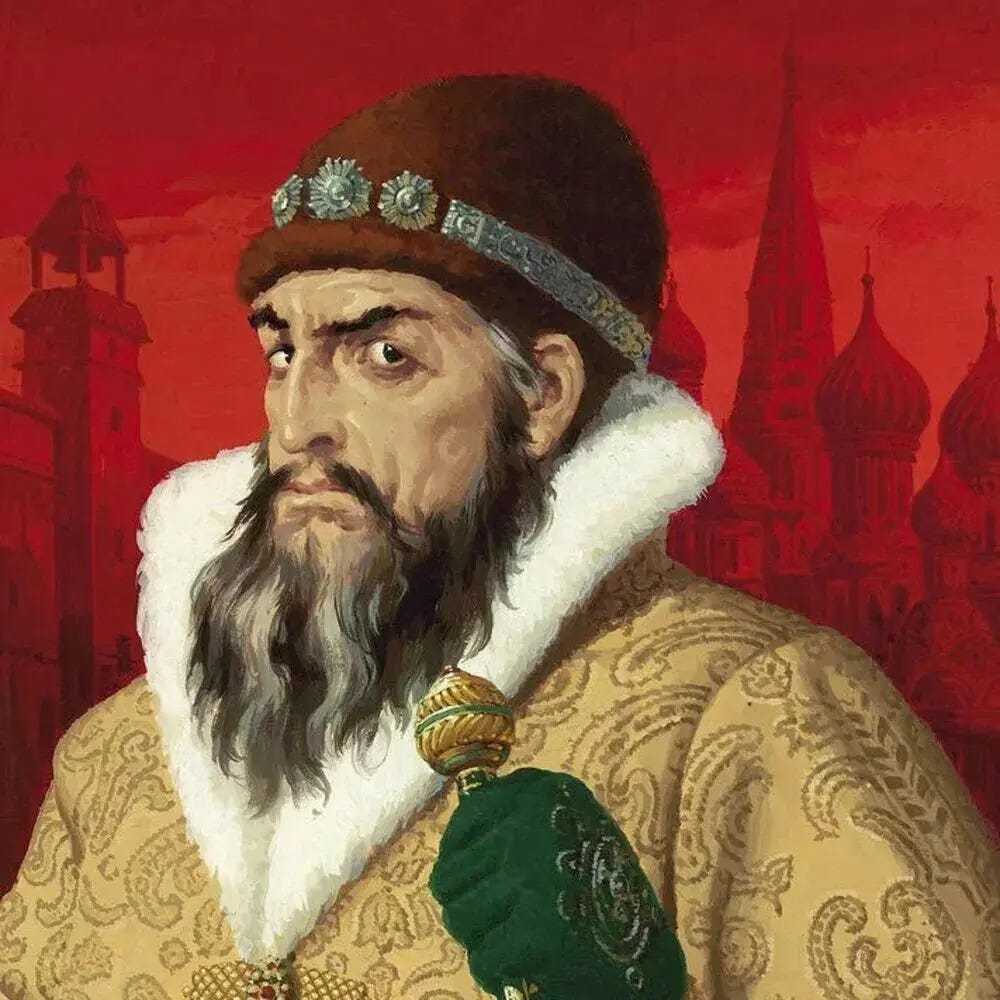
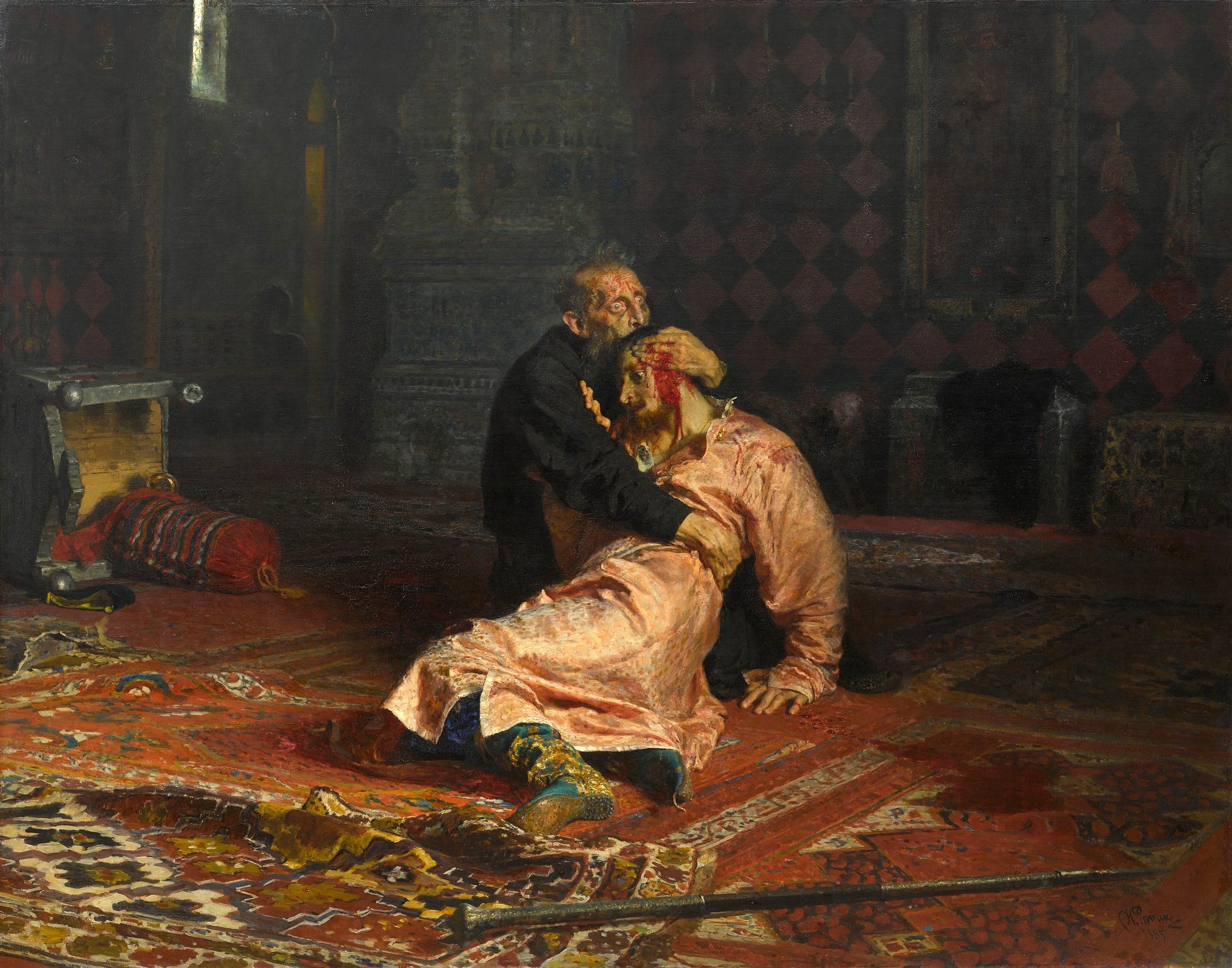
Ivan IV has gone down in history as one of Russia’s most brutal rulers, remembered for his violent temper, and the famous story that he killed his own son during an argument.
So I am not going to tell you that Ivan was secretly some gentle and misunderstood king, because he wasn’t.
But there is another side to his story that receives less attention in the West, and it concerns the centuries-long struggle between Christian Russia and the Muslim khanates that emerged from the remains of the Golden Horde (Mongols).
The Muslim Tatar forces of the Golden Horde and its successor khanates repeatedly slaughtered entire populations, burned major Russian centers, and enslaved large numbers of Russian Orthodox Christians over centuries of raids and domination.
As the Franciscan friar and papal envoy John of Plano Carpini, who traveled through the devastated Russian lands only a few years later in 1246, recorded in full:
“They went against Russia and made a great slaughter in the land of Russia; they destroyed cities and fortresses and killed people; they besieged Kiev, which was the capital of Russia, and after a long siege they took it and killed the inhabitants of the city. From this, when we were traveling through that land, we found innumerable heads and bones of dead people lying about in the fields. For this city had been very large and very populous, and now it is reduced almost to nothing: there are scarcely two hundred houses there, and the people are kept in the heaviest slavery.”
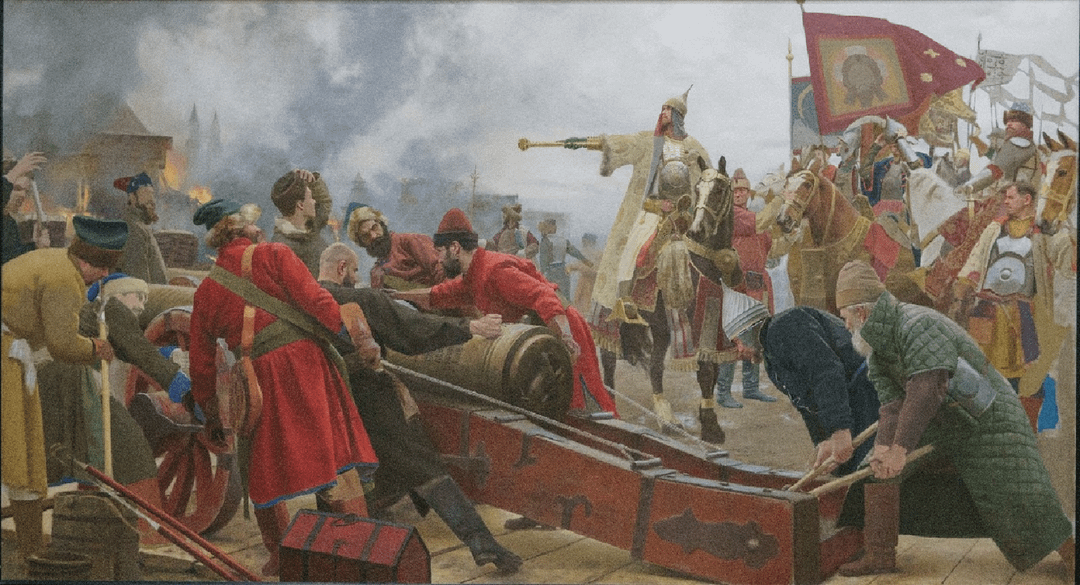
In 1552, Ivan went after Kazan. He led a huge army to the city, surrounded it, and used artillery to break through its defenses. Then his troops stormed the city. It was one of the biggest victories of his reign.
Four years later, Russia took Astrakhan too. This gave Moscow control over much of the Volga.
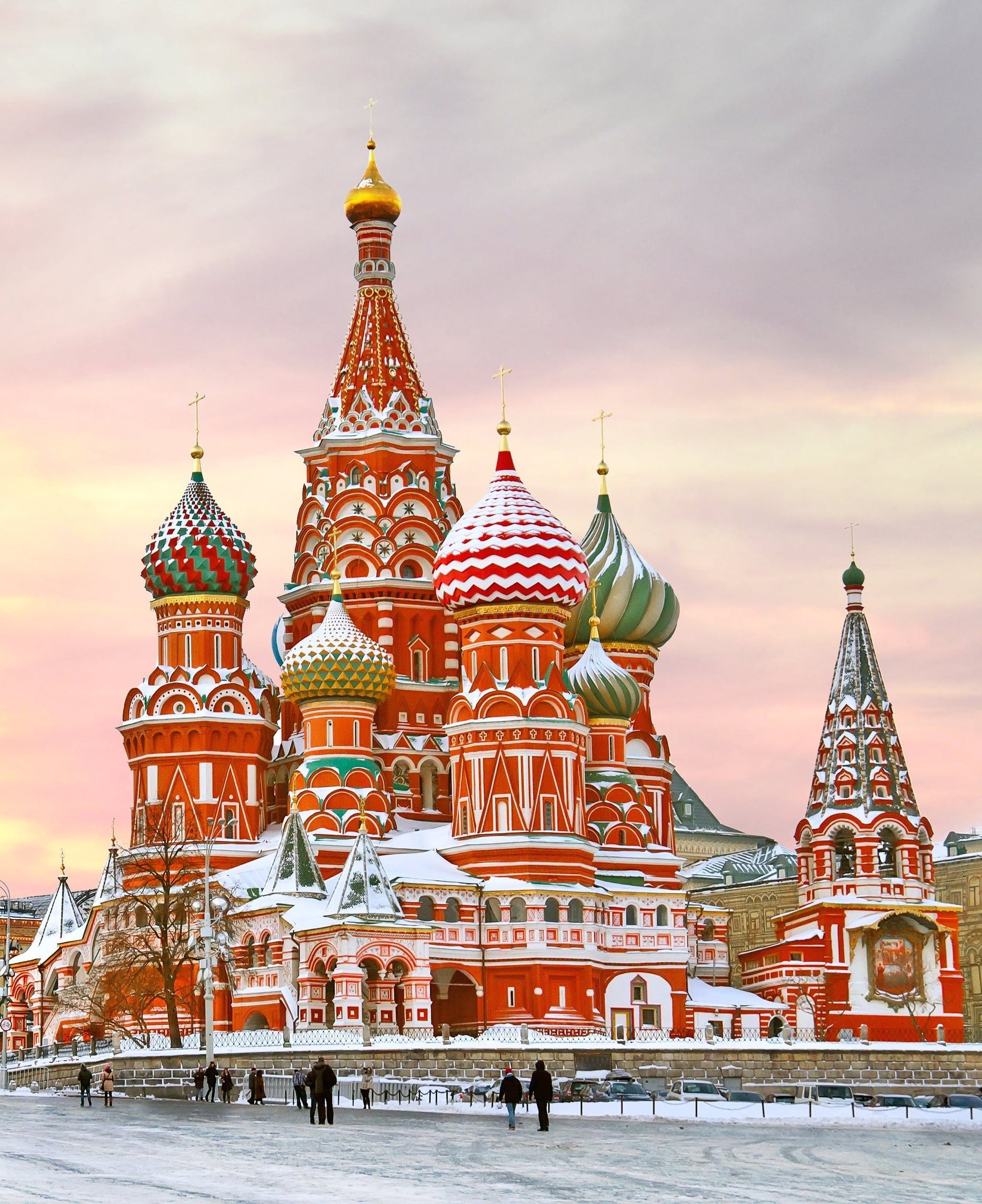
And if you have ever seen photographs of St. Basil’s Cathedral standing beside the Kremlin in Moscow, you have already seen the most famous monument to that victory.
Ivan built it to commemorate the conquest of Kazan…
Before Ivan, Russia Lived in the Shadow of the Tatars
To understand why Kazan was such a big deal, we need to go back a few centuries. For generations, medieval Russia lived under the power of the Mongol-Tatar states that grew out of the Mongol (Genghis Khan) conquests of the 1200s.
The most powerful of these was the Golden Horde, which later became Muslim. Over time, Moscow became stronger and eventually broke free from Tatar rule. But that didn’t mean the threat was gone. When the Golden Horde fell apart, several smaller Tatar states took its place, including the khanates of Kazan, Crimea, and Astrakhan.
Kazan was especially important because it was located along the Volga River and was fairly close to Moscow’s territory. Because of that, Russia and Kazan were constantly dealing with each other through wars, raids, trade, diplomacy, and competition for influence.

For Russian communities near the frontier, Tatar raids were a real danger. Settlements built defenses, and people could be captured and taken away during slave-raiding attacks. Fortified towns like Bui even served as places where people could take shelter during raids. So when Ivan eventually conquered Kazan, it greatly reduced this threat coming from the east.
Ivan inherited this world when he became ruler of Moscow.
And he eventually decided that defending the frontier was not enough.
Ivan Turns East
Ivan first tried to conquer Kazan in 1547–48, but the campaign failed when an early thaw made it extremely difficult to move his cannons and supplies. He tried again in 1549–50, but once again failed to take the city.
Instead of giving up, Ivan prepared much more carefully for his next attempt. He built the fortress of Sviyazhsk near Kazan, giving his army a strong base for future attacks.
Then, in the summer of 1552, Ivan tried again. This time, he was determined to finish the war.
The Russian army marched toward Kazan with cannons and siege equipment. Ivan also presented the campaign as more than just a fight for territory. In sixteenth-century Russia, the war could be seen as a religious struggle too—defending Orthodox Russia while fighting against the Muslim Khanate of Kazan.
“Therefore strive together to suffer for piety, for the holy churches, for the Orthodox Christian faith, summoning God’s merciful aid with the purest trust in Him, and strive on behalf of our brothers, those Orthodox Christians who have been made captive for many years without reason and who have suffered terribly at the hands of the infidels of Kazan. Let us remember the words of Christ, ‘Greater love hath no man than this, that a man lay down his life for his friends.’ Let us therefore pray to Him with a full heart for the deliverance of the poor Christians, and may He protect us from falling into the hands of our enemies who would rejoice over our destruction. I therefore bid you serve us as much as God will help you. Do not spare yourselves for the truth. If we die, it is not death, but life! If we do not make the attempt now, what may we expect from the infidels in future? I myself have marched with you for this purpose. Better that I die here than live to see Christ blasphemed and the Christians, entrusted to me by God, suffering at the hands of the heathen Tatars of Kazan. No one can doubt that God will hear your continuous prayers and grant us His aid. I shall bestow great rewards on you, and I shall favor you with my love, and provide you with everything you need, and in every way I shall reward you to the extent that God in His mercy offers His aid.”
— Ivan IV, addressing his army before the decisive phase of the 1552 campaign (as recorded in contemporary chronicles)
But this wasn’t simply a war between Christians and Muslims. Politics in the region were much more complicated than that. Christian and Muslim rulers sometimes worked together when it benefited them, and Ivan himself negotiated with Muslim leaders as well as fighting them.
Still, Kazan was mainly a Muslim Tatar state.
And Ivan wanted to conquer it.
Friendly reminder: The Western Spirit exists because of readers like you. Join us and help keep this project alive and independent.
If you’ve been enjoying these essays, consider becoming a paid subscriber. For a few dollars a month, you’ll get:
Essays on brave men, and turning points in Western history
Reflections on faith, tradition, and culture
Full access to the growing archive - essays, book breakdowns, and deep dives
This project exists because readers like you make it possible.
The Siege of Kazan
By late August 1552, the Russian army reached Kazan and surrounded the city. The defenders knew they could be fighting for the survival of their entire khanate.
Ivan’s army had one major advantage: artillery.
Russian cannons pounded Kazan’s defenses while military engineers dug tunnels underneath them. They placed explosives under important defensive positions and blew up parts of the walls, slowly making it harder for the city to hold out.
A Muslim account describing the earlier Russian attack in 1550 gives us an idea of just how terrifying these sieges looked from Kazan’s side:
“The Pharoah-mannered and the Nimrod-figured Ivan the Faithless, that infidel without religion, that haughty and spiteful polytheist, that malefactor of the time, and that gilded celestial mischief-maker, one of two Satans and the leader of a cursed army, approximately eight hundred thousand in number, came with countless heavy soldiers and an abominable army armed with numerous cannons and muskets… and they surrounded the borders of the well-protected province of Kazan and camped around the city and put a siege on it. The infidel army was no less than a swarm of ants and crickets. They were the descendants of Gog and Magog, not Adam… The battle in this way continued for ten days and it was like the Day of Resurrection.”
— Sharīf Ḥājjī-Tarkhānī, report on the 1550 siege (from Islamic Culture in the Khanate of Kazan)
Then, at the beginning of October, the final attack began.
Explosives blasted holes in Kazan’s defenses, and Russian soldiers rushed through the openings. Brutal fighting broke out across the city as the defenders desperately tried to hold their ground.
Prince Andrei Kurbsky, who fought in the campaign, later described just how intense and chaotic the fighting became:
“Let each man tell of his own deeds; I will briefly and truthfully narrate what I had before my own eyes at that time and what I did… Both Christians and Tatars fought fiercely and long; the walls and the gates were constantly bombarded from cannon; Streltsy fired their hand gonnes [guns], and from the city they fired from cannons and gonnes; and the battle was big and severe; because the boom of artillery, crashing of hand gonnes, men’s shouts and clatter of swords and spears not a single word could be heard even near; and it was great thunder and blasts of fire from cannons and gonnes and smoke… And when they [Russian soldiers] brought the prisoners whom they had captured alive to our tsar, he ordered them to be led out in front of the trenches and be bound to stakes, so they might beg and warn their comrades within the fortress to hand over the city of Kazan to the Christian tsar… But having listened to these words in silence, the Tatars began to shoot from the walls of the fortress, not so much on our men, as on their own men, saying: ‘We would rather see you killed from our Mussulman hands, than slaughtered by the uncircumcised Giaours!’”
By October 2, 1552, the battle was over.
Kazan had fallen.
The independent khanate was gone. Much of the city was destroyed, many people were killed, and Kazan’s lands were absorbed into Ivan’s growing Russian state.
For Russia, this was a huge turning point.
Then Came Astrakhan
Ivan wasn’t finished with the former lands of the Golden Horde. Just four years after conquering Kazan, Russia moved farther down the Volga and conquered Astrakhan in 1556. This gave Moscow control farther toward the Caspian Sea and over an extremely important trade route.
Think about how quickly this happened. Kazan fell in 1552. Astrakhan followed in 1556. In just a few years, Russia had gained control over most of the Volga and dramatically expanded its territory.
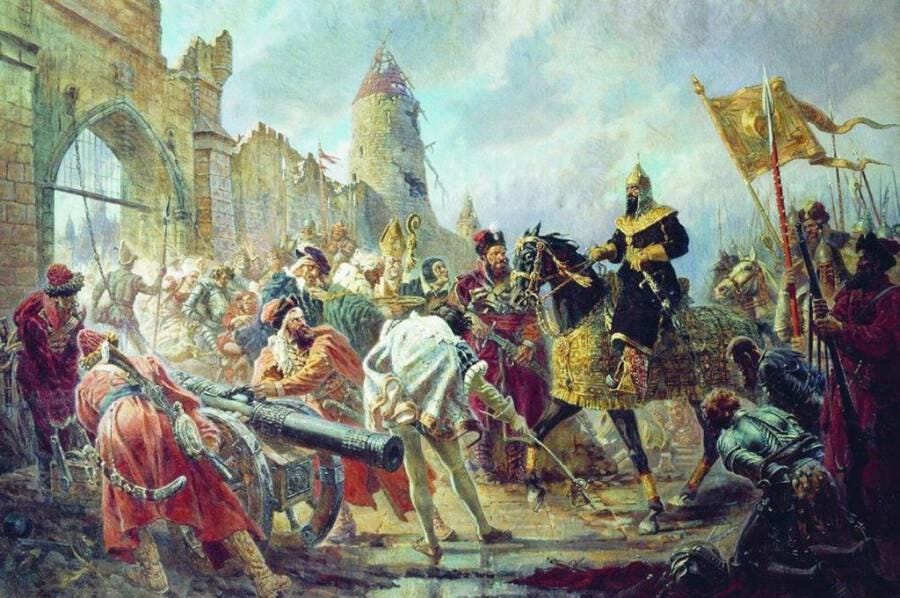
This was a major turning point. Moscow was now ruling large territories filled with Tatars and other peoples who had different languages, cultures, and religions.
For Ivan and Orthodox Russia, the conquest of Kazan was seen as a huge victory—one worth celebrating.
So Was Ivan Really “Not That Terrible”?
This is where the story gets more complicated.
Ivan could absolutely be terrible. His later reign included political terror, executions, brutal wars, and the infamous attack on Novgorod.
But describing his entire reign as nothing more than madness and violence also misses why he became such an important figure in Russian history.
Under Ivan, Russia expanded dramatically. He conquered Kazan and Astrakhan, gained control of the Volga, and helped turn Muscovy into a much larger state.
In a statement recorded in the chronicles around the time of these campaigns, Ivan described his responsibility like this:
“I have been appointed Tsar by God through the mediation of the Virgin and all the saints, and I am the shepherd over the Orthodox land and its people, and this has come about in order that I might govern God’s people, being unwaveringly faithful to the Orthodox Christian faith, and that I might protect them from all the evils they may encounter and take care of all their needs, because I am their Tsar by God’s favor and they must have fear of me and be obedient in all things… Those who suffer truly will receive glory on earth and laurels in heaven.”
And the struggle wasn’t over. The Crimean Khanate was still powerful and had strong ties to the Ottoman Empire. In 1569, Ottoman and Crimean forces even tried to push back Russian expansion and retake Astrakhan, but the campaign failed.
An exciting tale from start to finish, thanks for writing it up. Great context to learn!
Rulers are not allowed to be nice. If you want to be nice become a priest or social worker, not a ruler or leader. As anyone from the street knows respect has to be had. Nice? maybe allowed in quite secret moments.
Reminds me of Alexander the Great driving a spear through his favorite right hand generals chest sitting around the fire drunk after a big battle. The General was teasing Alexander about him not even being close to the general and leader Alexander's father Philip II of Macedon was. So, Alexandar drove a spear through him in rage, then went to his tent for two weeks and would not come out being in horrible grief over it.
Yes. PTSD was not looked at or studied in those days like today. It strikes dark quick deadly as one goes down a black hole quickly and then things like this happens.
But, hey part of being a ruler and leader. Comes with the territory. Don't want PTSD, become a priest or social worker, right? lol
Hard times = hard men