
Did you know that the last Muslim kingdom in Spain agreed to surrender to the Catholic Monarchs on November 25, 1491? On this day Muhammad XII of Granada, better known as “Boabdil”, reached an agreement with Ferdinand II of Aragon and Isabella I of Castile to surrender his kingdom.
For nearly eight centuries, Muslim rulers controlled parts of the Iberian Peninsula. Generation after generation, the Christian kingdoms fought to recover these lands until Granada was the only Muslim kingdom left in Spain.
On January 2, 1492, just over a month after the agreement was signed, Ferdinand and Isabella took possession of Granada, bringing an end to Muslim political rule in Iberia. But how did the last Muslim kingdom in Iberia survive for so long, and what finally brought about its surrender?
The Muslim Conquest of Iberia
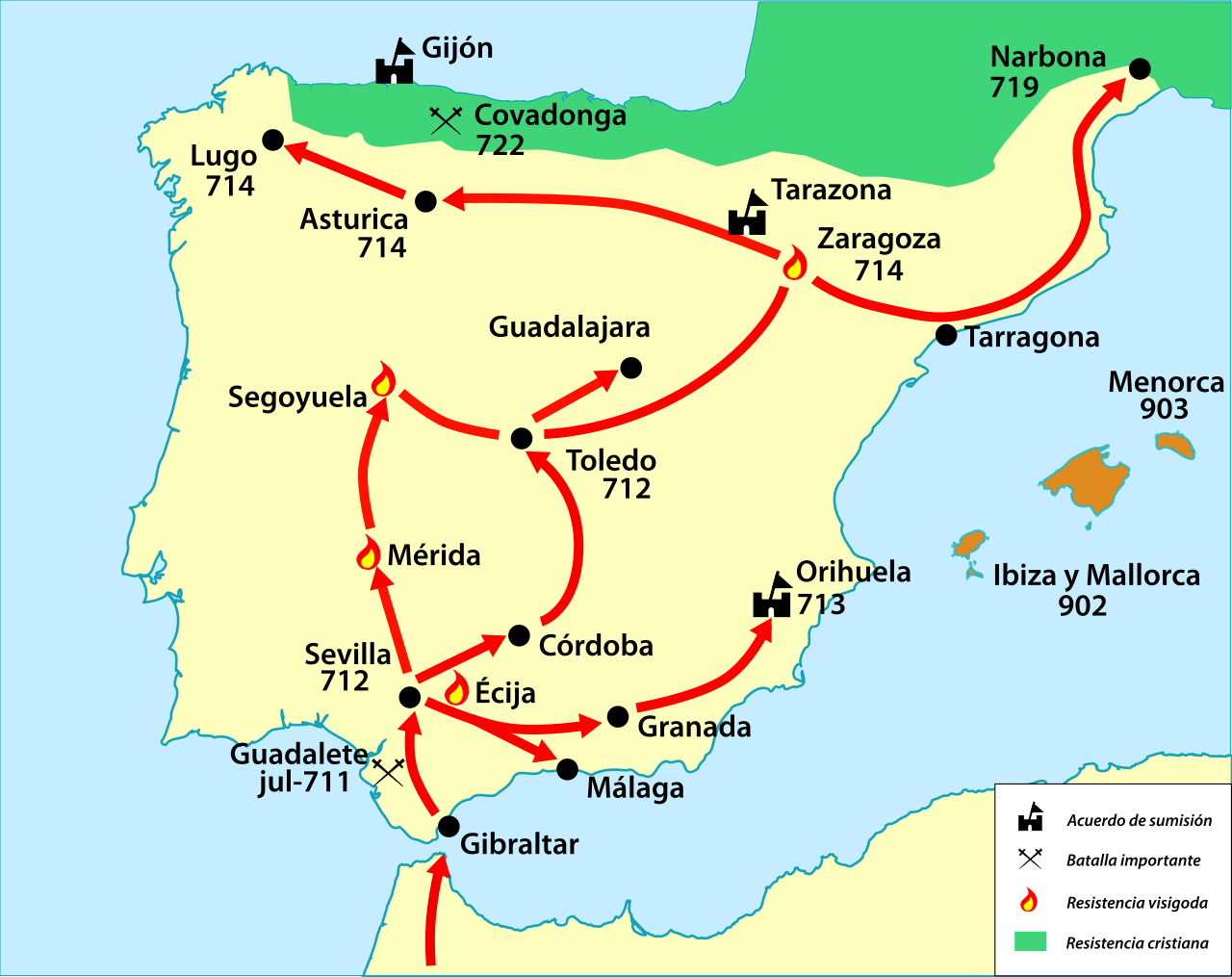
In 711 a Muslim army led by Tariq ibn Ziyad crossed the Strait of Gibraltar from North Africa and defeated the Visigothic king Roderic at the Battle of Guadalete. Within just a few years the Muslims conquered most of the Iberian Peninsula, putting an end to the Visigothic kingdom that ruled much of what is now Spain and Portugal.
But Christian resistance continued in the mountains of northern Spain. In 722, a Christian nobleman named Pelayo defeated a Muslim force at the Battle of Covadonga. Out of this victory emerged the Kingdom of Asturias, from which the Reconquista was born.
Over the following centuries the Christian kingdoms recovered more and more territory. In 1085 Alfonso VI of León and Castile reconquered Toledo, the former capital of the Visigoths. Then in 1212 the Christians inflicted a devastating defeat on the Almohad Caliphate at the Battle of Las Navas de Tolosa.
This was one of the great turning points of the Reconquista. Ferdinand III of Castile, whom the Catholic Church would later canonize, reconquered Córdoba in 1236 and Seville in 1248.
By the middle of the thirteenth century only one Muslim kingdom remained in Iberia: the Emirate of Granada. Its ruler, Muhammad I ibn Nasr, took possession of Granada in 1238 and founded a dynasty.
The Last Muslim Kingdom in Spain
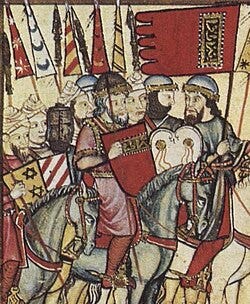
Muhammad knew that his kingdom was too weak to take on the Christian kingdoms. In 1246 he reached an agreement with Ferdinand III of Castile, accepting him as his overlord and agreeing to pay him tribute. Interestingly, he even sent troops to help Ferdinand reconquer Seville.
This arrangement allowed the Nasrid dynasty to survive for another two and a half centuries. It was during this period that the Muslim rulers of Granada built much of the Alhambra we know today, especially under Yusuf I and Muhammad V in the fourteenth century.
Granada’s mountainous terrain made it difficult to conquer, while its commercial ties with North Africa helped sustain its economy. Its rulers also knew how to take advantage of the rivalries between the Christian kingdoms. But in the second half of the fifteenth century, something happened that would fundamentally change the balance of power in Spain..
The Marriage That Changed Spanish History

In October 1469 Isabella married Ferdinand. Five years later Isabella became Queen of Castile, and in 1479 Ferdinand became King of Aragon. Two of the most powerful Christian kingdoms in Iberia were now ruled by a married couple, although each kingdom retained its own laws and institutions.
Both Ferdinand and Isabella were devout Catholics who saw the conquest of Granada as a religious undertaking. Ferdinand himself made this clear on several occasions:
In 1481 Ferdinand declared that his aim was “to expel from all Spain the enemies of the Catholic faith and dedicate Spain to the service of God.” In 1485 he claimed that “we have not been moved to this war by any desire to enlarge our realms, nor by greed for greater revenues.’”
For centuries the kings of Castile fought against Granada while dealing with rebellions and disputes over the throne. Ferdinand and Isabella could now bring the combined resources of their kingdoms into the fight against the last Muslim kingdom in Spain.
In 1481 the opportunity presented itself.
The Muslim Attack on Zahara
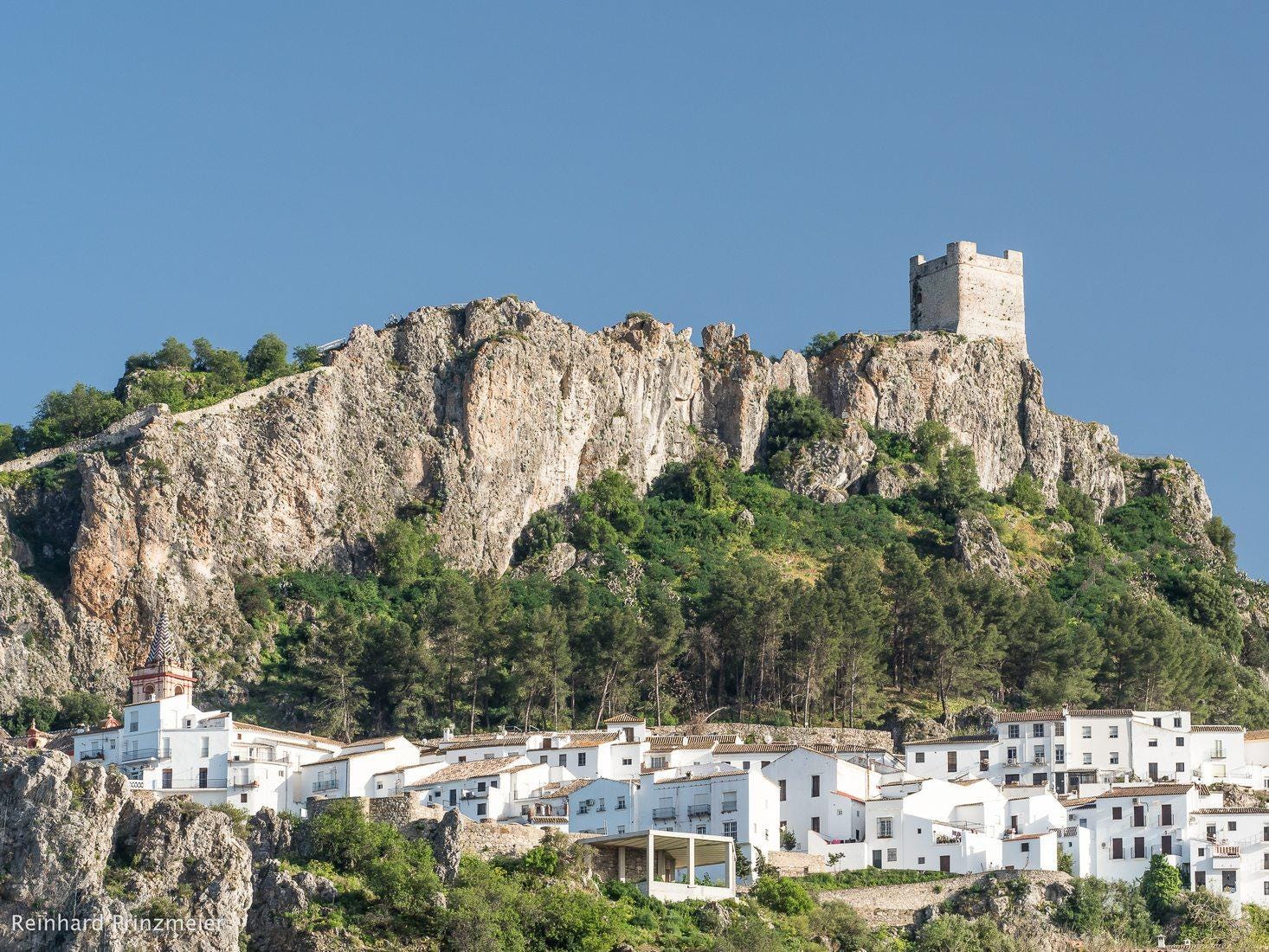
In December 1481 the Sultan of Granada, Abu al-Hasan Ali, known to the Christians as Muley Hacén, attacked the Christian frontier town of Zahara. His forces captured the town and took its inhabitants prisoner. The Castilian nobles were quick to respond.
Among them was Rodrigo Ponce de León, the Marquis of Cádiz, who spent much of his life fighting the Muslims along the Granadan frontier. In February 1482 he helped capture Alhama de Granada, a strategically important town only a short distance from the Muslim capital.
The loss of Alhama was a major blow to the Nasrid kingdom. The Muslims tried several times to retake the town, but the Christians held on to it. What followed was nearly ten years of warfare that would ultimately bring an end to Muslim rule in Spain.
If you value well-researched stories about Western civilization that mainstream outlets ignore, consider becoming a paid subscriber.
Here’s what you get by upgrading:
In-depth essays on Christian men and great battles
Lessons from the past and what they can teach us today
Full access to the growing archive
Help keep The Western Spirit alive and independent by upgrading.
The Civil War Within Granada
One of Granada’s biggest problems was the growing conflict within its own ruling family..
Continue reading below.