
Yesterday, September 11, we left Vienna as night began to fall.
The city was under siege for almost two months. Its defenders were exhausted, and Ottoman mines threatened the remaining fortifications. Outside the walls, Grand Vizier Kara Mustafa Pasha still commanded the Ottoman army that came to capture the Habsburg capital.
But help finally arrived. King John III Sobieski stood on the hills above Vienna with a Christian relief army made up of Polish troops and soldiers from the Holy Roman Empire.
Vienna survived the night.
On the morning of September 12, the people of Vienna looked toward the Kahlenberg and saw the army they waited weeks to see. Christian troops came down the mountain while their artillery opened fire on the Ottoman positions.
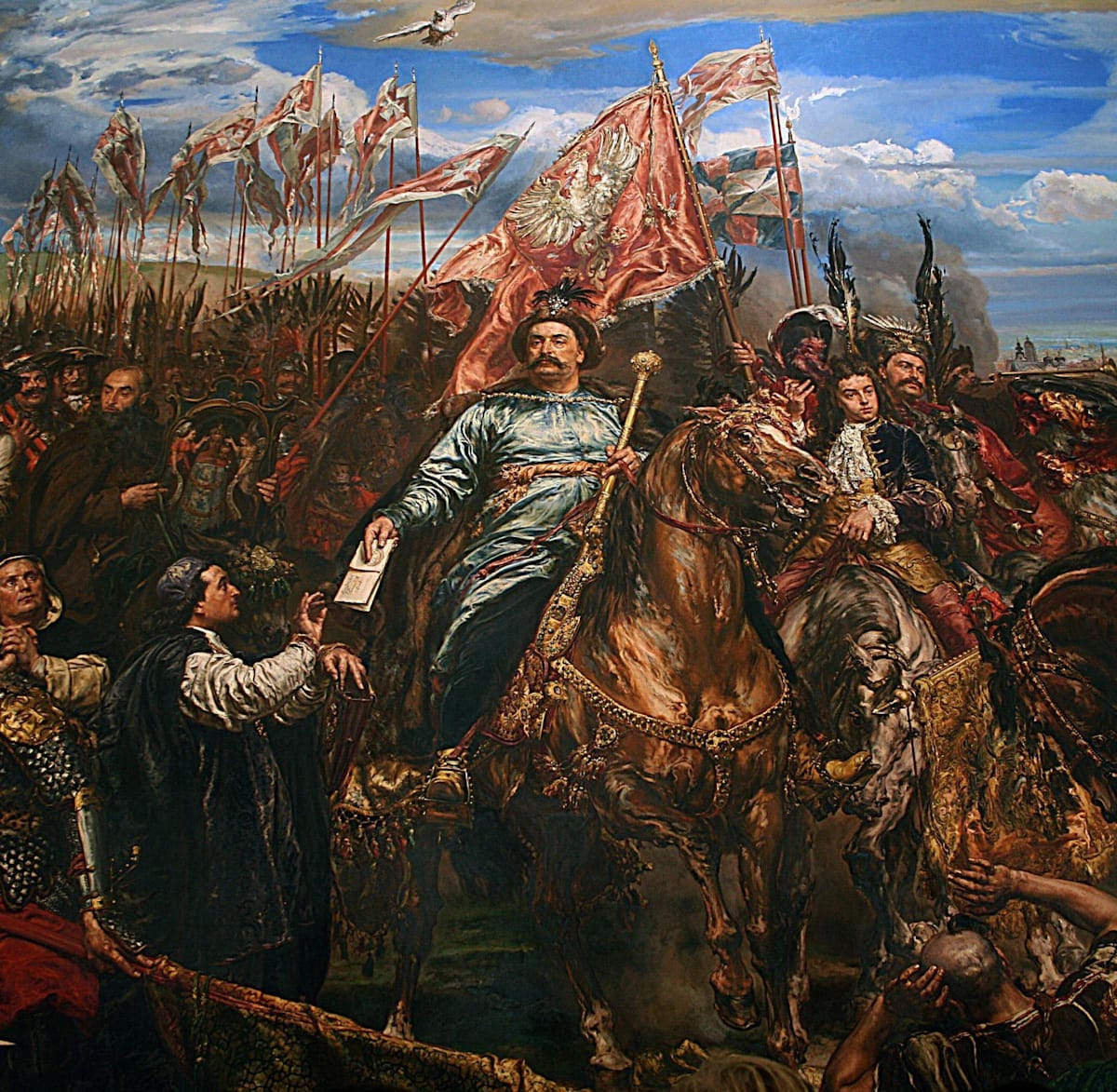
Some people in Vienna climbed onto the city walls to watch.
After almost two months trapped inside the city, they could finally see the battle that might save them.
A contemporary English pamphlet, printed in London in 1683, described the moment when the people of Vienna first saw it:
After a Siege of Sixty days, accompanied with a Thousand Difficulties, Sicknesses, Want of Provisions, and great Effusion of Blood, after a Million of Cannon and Musquet Shot, Bombs, Granadoes, and all sorts of Fire Works, which has changed the Face of the fairest and most flourishing City in the World, disfigured and ruined most part of the best Palaces of the same, and chiefly those of the Emperor; and damaged in many places the Beautiful Tower and Church of St. Stephen, with many Sumptuous Buildings. After a Resistance so vigorous, and the Loss of so many brave Officers and Souldiers, whose Valour and Bravery deserve Immortal Glory. After so many Toils endured, so many Watchings and so many Orders so prudently distributed by Count Staremburgh, and so punctually executed by the other Officers. After so many new Retrenchments, Pallizadoes, Parapets, new Ditches in the Ravelins, Bastions, Courtins, and principal Streets and Houses in the Town: Finally, after a Vigorous Defence and a Resistance without parallel, Heaven favourably heard the Prayers and Tears of a Cast-down and Mournful People, and retorted the Terror on a powerful Enemy, and drove him from the Walls of Vienna, who since the Fifteenth of July last early in the Morning, to the Twelfth of September, had so Vigorously attacked it with Two hundred thousand Men; and by endless Workings, Trenchings, and Minings, reduced it almost to its last gasp. Count Staremburgh, who sustained this great Burden, assisted by so many Gallant Officers, having given Notice to the Christian Army, by Discharge of Musquets from the Tower of St. Stephen, of the Extremity whereto the City was reduced, they discovered on the Twelfth of this Month, early in the Morning, the Christian Troops marching down the Neighbouring Mountains of Kalemberg, and heard continually the Discharges of their Artillery against the Turks, who being advanced thither, were fortified with Parapets of Earth and great Stones, to hinder the Descent of the Christian Army.
The Battle of Vienna began before their eyes.
The Christians Came Down the Mountain
The relief army faced an immediate problem because the country between the Kahlenberg and Vienna was difficult ground for an attacking army; Ottoman troops therefore built positions along the approaches and prepared to contest the descent.
The fighting started early.
Charles of Lorraine commanded the Imperial forces on the Christian left while Sobieski led the Polish wing farther south; troops from the Empire filled the center as the entire army moved toward Vienna.
Among them marched around 11,300 Bavarians.
Their ruler was Maximilian II Emanuel of Bavaria who was only twenty-one years old; despite his youth the elector personally joined the relief of Vienna and fought in the battle on September 12. Bavarian troops received the task of attacking toward Nussdorf and Heiligenstadt as the Christian army pushed closer to the city.
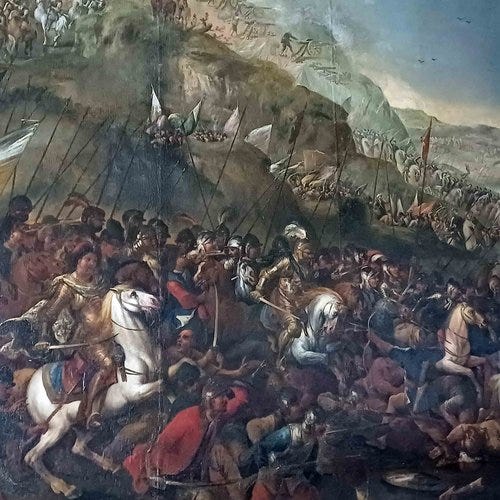
Max Emanuel therefore witnessed his first great war against the Ottomans at Vienna.
It would not be his last.
The Bavarian Elector Came to Fight
This was not simply a Polish rescue of Vienna.
Sobieski commanded the coalition, while Charles of Lorraine played an important role in planning the relief. Soldiers came from several German territories as well, including the Bavarian forces under Max Emanuel.
Only two years earlier, the young elector met Emperor Leopold I during a pilgrimage to Altötting. In January 1683, Bavaria and the emperor formed a defensive alliance as the Ottoman threat grew. When the Ottomans besieged Vienna, Max Emanuel led his troops east and joined the army preparing to rescue the city.
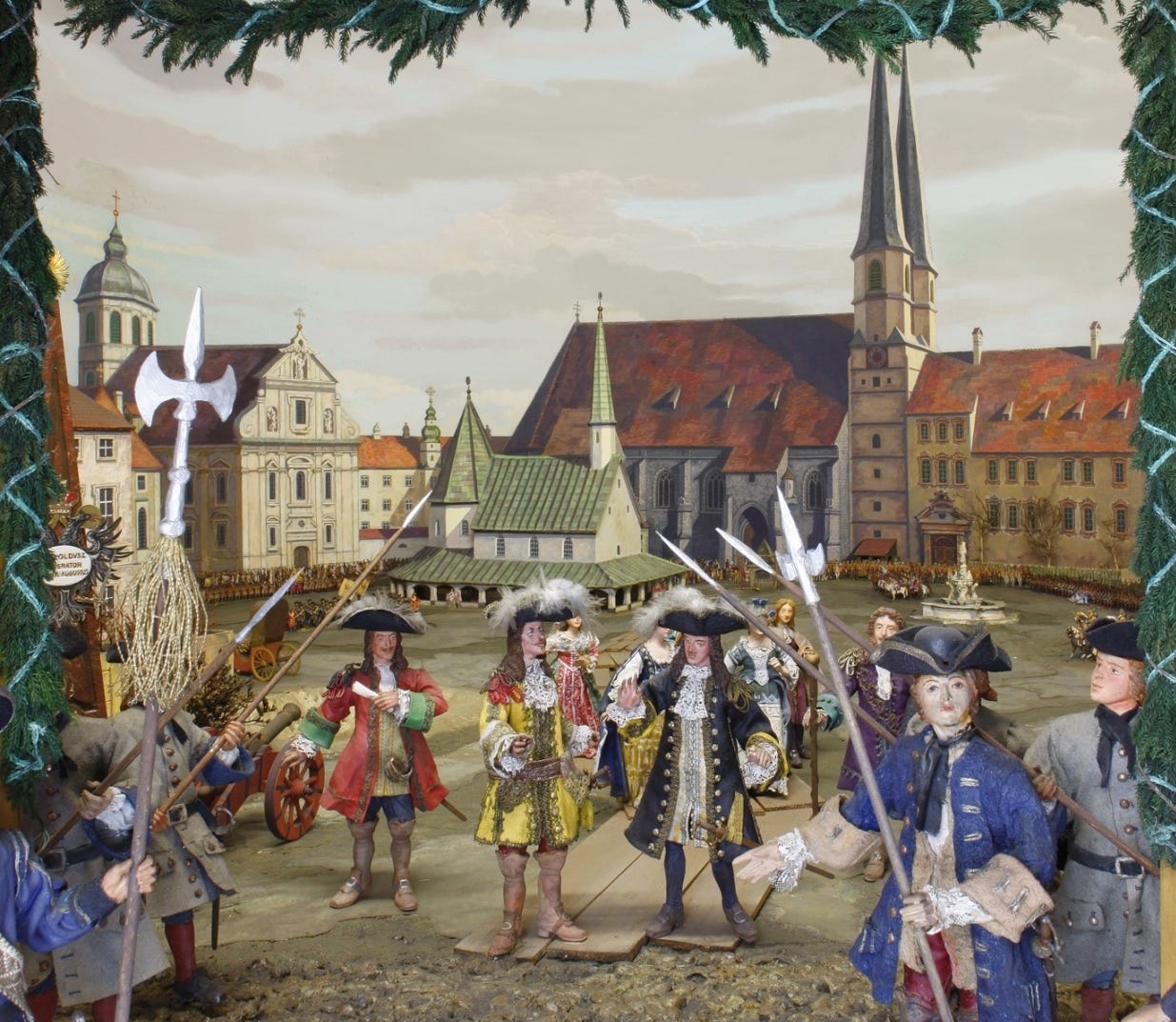
Now that alliance became real on the battlefield.
The twenty-one-year-old elector stood with his soldiers outside Vienna, with the Ottoman army below.
The Bavarians advanced toward Nussdorf while the rest of the Christian army moved forward beside them. With every position they captured, they came closer to Vienna.
Inside the city, the defenders could hear them coming.
Starhemberg Came Out to Meet Them
Count Ernst Rüdiger von Starhemberg directed the defense of Vienna for nearly two months.
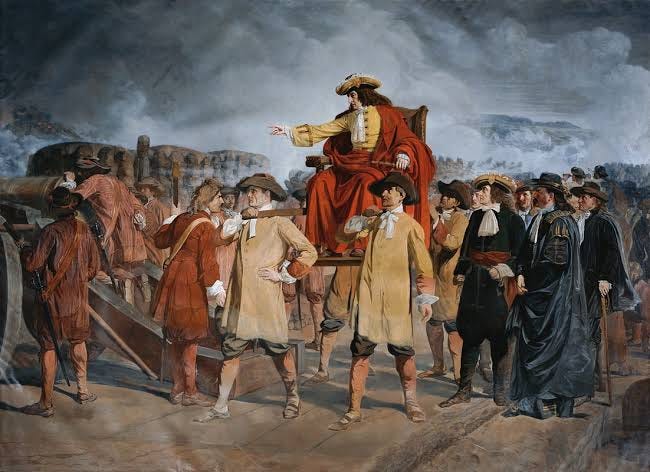
By September, his men lived and fought among damaged walls while Ottoman engineers continued digging beneath the fortifications. The relief army arrived at a critical moment. Vienna could not afford to wait much longer.
But as the battle moved closer to the city, Starhemberg did something remarkable…
The same account from 1683 describes the moment when Vienna’s defenders met the Christian relief forces in the trenches:
During these hot Skirmishes on the Mountains, the Christians lost near 100 Men, among whom the Serjeant Major of the Regiment of Schultz, Prince Maurice of Croy, Captain of the Regiment of Grana, the Prince his Brother, Mareshal Lieutenant of the Field, was wounded there in his Shoulder: They fired then continually against the Approaches and Batteries of the Turks, with the Artillery from our Bastions and Ramparts; the Besiegers, animated by the presence of the Grand Visier, answered vigorously from theirs, and great Vollies of Musquets were discharged from both sides, intermingled with great quantities of Granado’s. The Grand Visier, who was in the Approaches, gave them hopes of carrying the place; Prince Lewis of Baden and Collonel Heusler entred their Trenches, at the same time Count Staremburgh sallied and seconded them, and repulsed the Janizaries, who saved themselves, with the Grand Visier, whose Son was either killed or taken Prisoner, and himself wounded, as ’tis said. Towards the Evening the Turks seeing the Christians Masters of their Camp over against the Scotch Bastion, and that our Cavalry had entred it, planted Two Pieces of Cannon and shot against them, a while after, seeing themselves surprized, they quitted their Approaches and all their Artillery, consisting of Seventy five Pieces of Cannon, Fourteen Cannons for Battery, and some Mortar Pieces being comprized therein.
For nearly two months, Starhemberg fought to keep the Ottomans outside Vienna.
On September 12, he fought his way out of the city.
For the defenders watching from the walls, this was an extraordinary moment. The two Christian forces finally began to meet. Sobieski fought his way toward Vienna, while Starhemberg and his men attacked outward from the city.
Kara Mustafa now faced enemies from both sides.
Kara Mustafa Still Wanted Vienna
The grand vizier did not give up the siege when the relief army appeared.
Ottoman artillery continued to fire at Vienna while Ottoman troops fought the Christian army coming from the west. Kara Mustafa tried to keep pressure on the city and stop Sobieski at the same time.
For several hours, the Ottomans fought for every part of the ground between the Kahlenberg and Vienna.
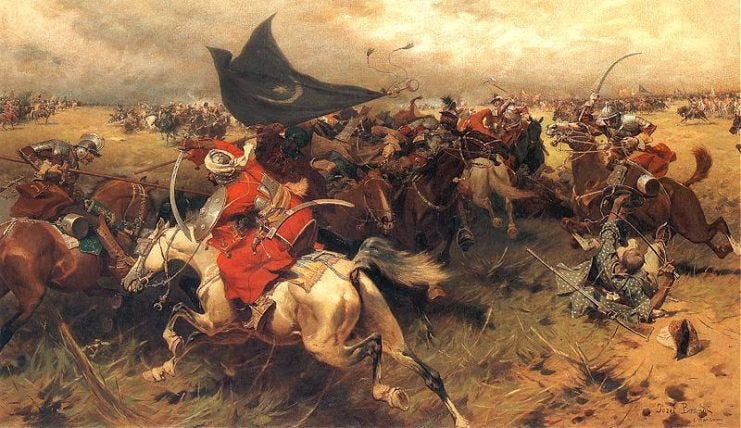
By the afternoon, however, the battlefield began to open in front of Sobieski.
That was exactly what the Polish king needed.
His cavalry could finally move.
Sobieski’s Son Rode Beside Him
Sobieski did not enter the battle alone.
His sixteen-year-old son Jakub joined him during the campaign and stayed close to his father during the fighting. In a letter to his wife after the battle, Sobieski proudly wrote about how the boy remained beside him despite the danger.
This makes the scene very different from the heroic paintings of Vienna.
Sobieski was a fifty-four-year-old king preparing to lead thousands of cavalry against the Ottoman army. Beside him rode his teenage son.
The king noticed his son’s courage.
After the battle, he made sure his wife Marysieńka knew about it.
During the campaign, Jakub also became friends with the young Elector of Bavaria. The two young princes came from different parts of the coalition, but both experienced the great victory at Vienna while still young men.
Then their fathers’ generation prepared to decide the battle…
Then Thousands of Horsemen Went Forward
Late in the afternoon, the cavalry began to move.
Polish horsemen advanced together with allied cavalry, while Christian infantry continued to push forward across the battlefield. Sobieski rode with the attack, with his son still close to him.
The Ottoman position was already growing weaker.
Then the cavalry attacked.
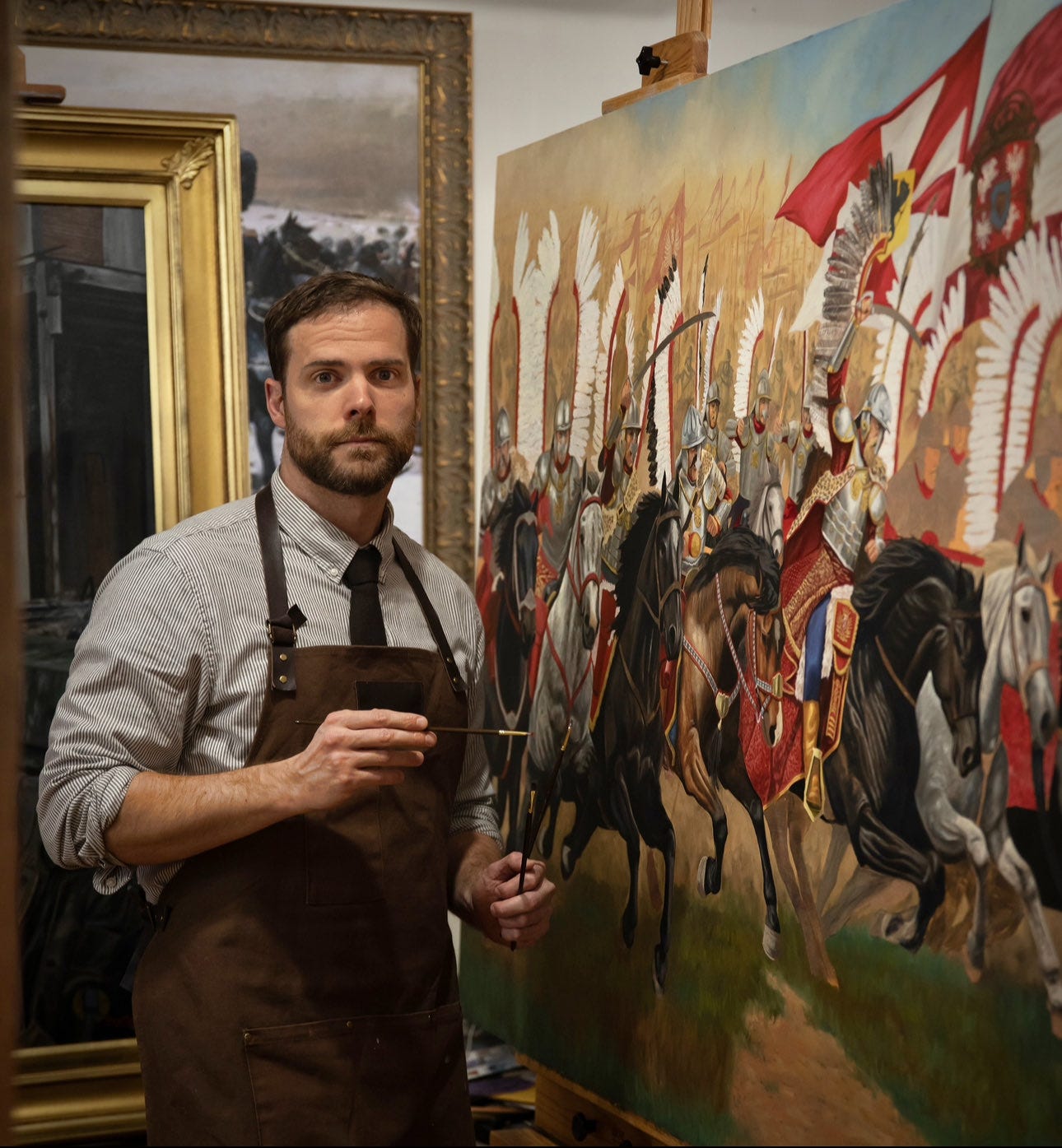
The horsemen charged toward Kara Mustafa’s position. Ottoman troops began to leave their defenses, and soon their retreat turned into a general flight toward Hungary.
Kara Mustafa saw what was happening.
Friendly reminder:
The Western Spirit exists because of readers like you. Join us and help keep this project alive and independent.
If you’ve been enjoying these essays, consider becoming a paid subscriber. For a few dollars a month, you’ll get:
Essays on brave men, and turning points in Western history
Reflections on faith, tradition, and culture
Full access to the growing archive - essays, book breakdowns, and deep dives
This project exists because readers like you make it possible.
On the night of September 13, Sobieski wrote to his wife from the captured grand vizier’s tents. He described how the Ottoman collapse looked from the battlefield:
When the vizier saw he would be unable to resist, he called his sons to him and wept like a child. Then he said to the khan: “Save me, if you can!”. And the khan responded: “We know the king, we cannot resist him and must think of ourselves, of how we might save ourselves”. The heat is so terrible that we survive almost solely on drink. Only now has a great number of carts laden with powder and lead [ammunition] been discovered; I have no idea what they [the Turks] are going to shoot with. Right now a message has come that the enemy abandoned the last few light cannons. So we are about to mount our horses and ride straight towards Hungary to pursue the enemy and, as I already mentioned long ago, God willing, we shall greet each other not nearer than at Stryj; where would Mr Wyszyński please have the chimneys completed and old buildings renovated. This letter is the best gazette, of which please have a dispatch made [addressed] to all the world, having written que c’est la lettre du Roi à la Reine. The princes of Saxony and Bavaria have sworn to follow me to the very ends of the world. We must ride two miles in great haste, for the stink from corpses, horses, cattle and camels is terrible. I have sent a few words to the king of France, saying that to him, as to au Roi très Chrétien, I report de la bataille gagnée et du salut de la chrétienté.
The German Princes Found Sobieski
Once the Ottoman army began to collapse, the commanders of the Christian coalition started to find one another across the battlefield.
Sobieski later described these meetings with great pride.
In his letter to Marysieńka, he told the story in detail:
Continue reading below…