
Only six years had passed since the First Crusade captured Jerusalem in 1099. Before that the city had been in the hands of the Fatimid Caliphate of Egypt, which had taken it from the Seljuks only the year before, and Cairo meant to have it back.
As the chronicler Bartolf of Nangis records, the king of Egypt gathered “a very great army and sent it to conquer Jerusalem and everyone living in it, and in the whole land of Israel, to destroy and annihilate the Franks.”
The new Christian kingdom was in a pretty dangerous position. It was surrounded by powerful Muslim states and didn’t have many people to build a large army. To the south was the Fatimid Caliphate of Egypt, which controlled the fortress of Ascalon and regularly used it to launch attacks into King Baldwin’s lands. Meanwhile, the rulers of Damascus—the Burid dynasty—were another major threat from the northeast.
And in the summer of 1105, these enemies came together.
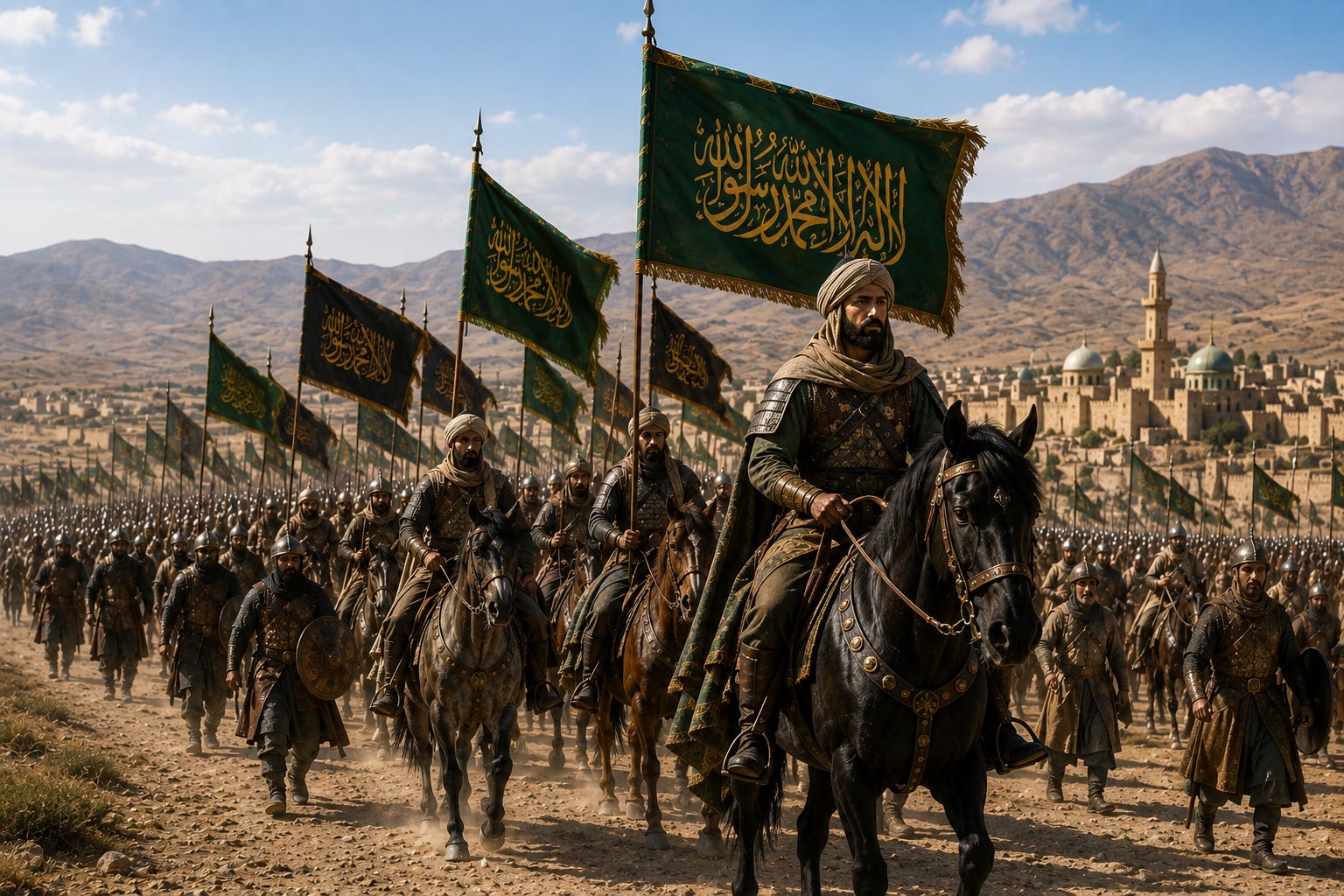
The Fatimids marched north from Egypt with an army of infantry and cavalry. They were joined by forces from Damascus, including around 1,300 Turkish horse archers. These fighters were fast, fought on horseback, and could fire lots of arrows while moving, which gave the Crusaders a different kind of problem from the Egyptian troops they were used to fighting.
It’s hard to know exactly how big the Muslim army was, but estimates range from around 6,000 to 16,000 men. Baldwin, meanwhile, gathered about 500 knights and 2,000 infantry, making it one of the biggest armies he had put together since becoming king.
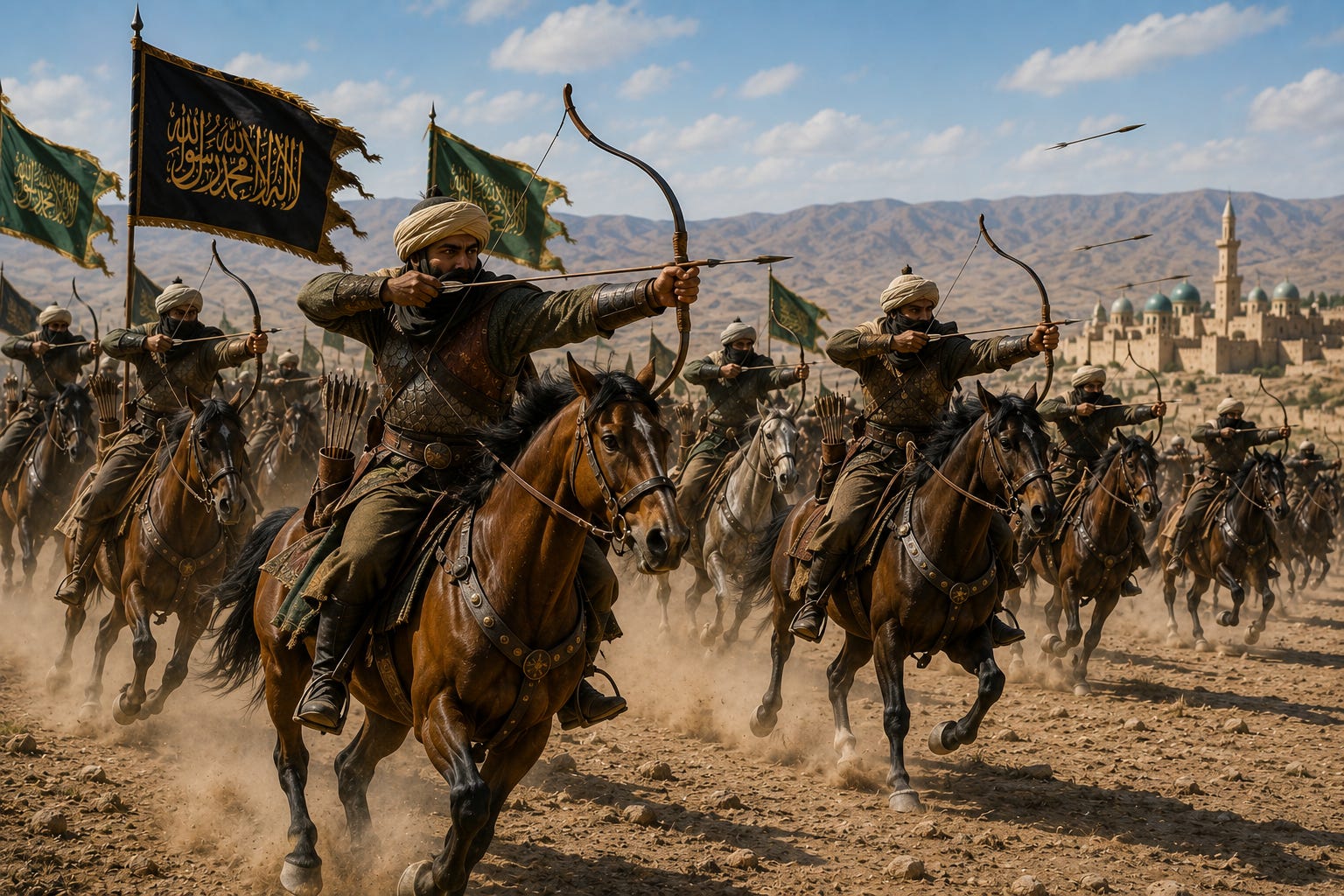
The alliance between Damascus and Cairo is described in Muslim sources. The historian Ibn al-Qalanisi, whose account was later studied and reconstructed by historian Michael Brett, describes the campaign like this:
Al-Afdal collected a substantial force of Arabs, giving them much money, and sent them off with his troops under his son Sharaf al-Ma‘ali. He also wrote to the Atabeg Zahir al-Din, lord of Damascus, to help him. Zahir al-Din could not come himself since he was besieging Bosra, whose lord Irtash ibn Taj al-Dawla had urged the Franks to attack the Muslims. Thus the Atabeg left Damascus for Bosra, but he did send an army to the aid of Ibn al-Afdal, which joined the Egyptians outside Ascalon. They encountered the Franks on 14 Dhu’l-Hijja (end August) between Jaffa and Ascalon. The Franks charged the Muslims, so that they were routed, and the governor of Ascalon was killed and various commanders captured, although many on both sides were killed before they retired. The wheel of fortune had spun for the Franks, and the army of Damascus returned to Bosra.
Baldwin already knew just how dangerous fighting at Ramla could be.
Three years earlier, in 1102, he had seriously underestimated a Fatimid invasion and rushed into battle with only a few hundred knights. It almost ended in disaster. Most of his force was wiped out, and Baldwin himself barely escaped. He eventually managed to get back to Jaffa after a dangerous journey through territory controlled by the enemy.
So in 1105, Baldwin wasn’t going to make the same mistake again. This time, he prepared carefully.
On Friday, August 25, Baldwin left Jaffa and headed toward Ramla, leaving about 300 men behind to protect the city. He reached Ramla the next day and waited there for Patriarch Evremar of Jerusalem, who was bringing another 150 infantrymen and something the Crusaders believed was even more important: the True Cross.
The Crusaders believed this was a piece of the actual Cross on which Jesus had been crucified. Carrying such a sacred relic into battle made the fight feel like much more than just a military conflict. For the Crusaders, it gave the battle a deeply religious and spiritual meaning, and they believed God was on their side.
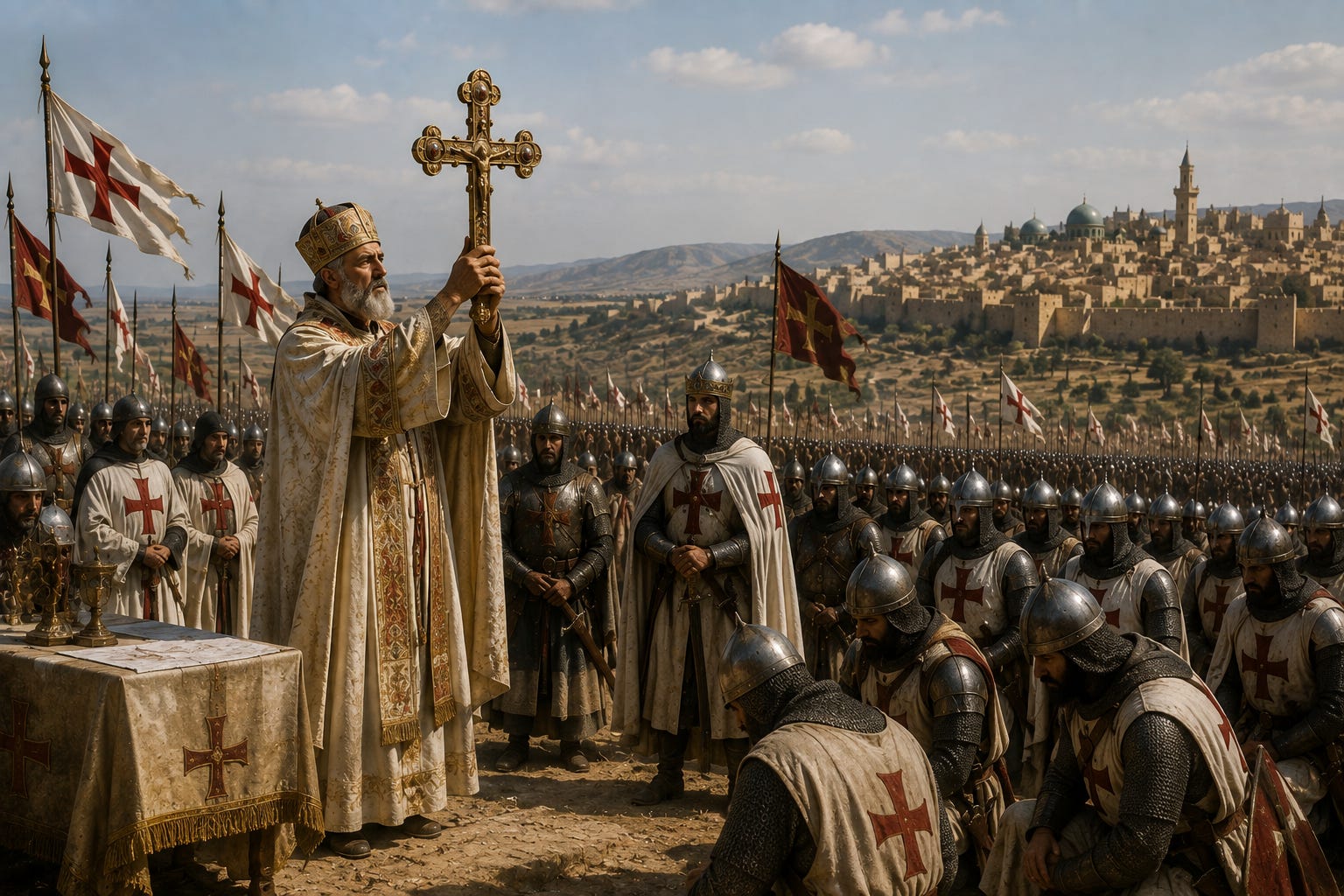
Fulcher of Chartres, a chaplain in the Kingdom of Jerusalem and one of the closest Christian writers to these events, later described what the Crusaders did that morning. His account makes it very clear just how religious the whole campaign was:
When Baldwin faced the Turks at Ramla again in 1105… the patriarch put on his pontifical vestments and took in his hands the glorious Cross of the Lord which was usually carried on such occasions.… For God Almighty, who is never unmindful of His servants, did not wish those infidels to destroy His Christians.… Then we praised and glorified God in whom we found great strength and who brought [victory]. There was present with us the Cross of the Saviour, mighty against the enemies of Christ. Against it by the grace of God, the pomp of the pagans could not prevail. As if confounded by the presence of the Cross, not only did they cease [to stand], but they were put to flight.
The Fatimid army, meanwhile, had advanced from Ascalon and established itself around Ibelin, only a short distance away.
And so Baldwin waited until Sunday.
Friendly reminder: The Western Spirit exists because of readers like you. Join us and help keep this project alive and independent.
If you’ve been enjoying these essays, consider becoming a paid subscriber. For a few dollars a month, you’ll get:
Essays on brave men, and turning points in Western history
Reflections on faith, tradition, and culture
Full access to the growing archive - essays, book breakdowns, and deep dives
This project exists because readers like you make it possible.
Sunday Morning, August 27
Imagine being one of Baldwin’s soldiers that morning. You wake up knowing that in just a few hours you could be dead, and somewhere nearby is an enemy army much larger than yours…