
People act like this is new. The stabbings. The bombings. The churches burning in France. Girls assaulted in parks. Old women pushed in front of trains by men who were “welcomed” a few years ago.
But if you read even a little history, you see it’s not new at all.
The Quran says, “Fight those who do not believe in Allah...” (9:29)
Muhammad said, “I have been commanded to fight until they say: ‘There is no god but Allah.’” (Bukhari 6924)
It’s the foundation of their religion. From the start, Islam spread through violence. The first Muslim armies attacked Christian towns in the 600s. They burned monasteries. Killed monks. Took children as slaves. It’s always been this way.
So when Muslim migrants bring crime and conflict to the West, we shouldn’t be surprised. This isn’t some strange mistake. It’s the same pattern repeating.
They’ve been doing this for 1,400 years. And every time we forget, they remind us.
This article is a record of how we’ve survived. Belgrade, Tours, Lepanto — moments when ordinary men stood up and said, No more. I wrote this so you remember who you are. And what you’re part of…
Most people don’t realize how close Europe came to being conquered.
In 732, a Muslim army crossed the Pyrenees and invaded what we now call France. They were expanding. For two decades, Muslim forces from North Africa — called Moors — had swept through Spain like wildfire. The old Visigothic kingdom fell quickly. Cities like Toledo and Córdoba were taken. The last Visigothic king, Roderic, died in battle. Spain became al-Andalus, part of the Umayyad Caliphate.
But it didn’t stop there. The man in charge of the push into France was Abdul Rahman al-Ghafiqi, a seasoned governor and military commander. He saw weakness in the Frankish kingdoms to the north. The Merovingian kings had grown soft and ceremonial. Real power rested in the hands of men like Charles Martel (the Mayor of the Palace), not even a king, but the one who actually ruled.
Abdul Rahman led his army northward. Along the way, they looted cities like Bordeaux and smashed local resistance. The local Duke of Aquitaine, Odo, tried to stop them but failed. His army was crushed. He fled north and begged Charles Martel for help.
Charles wasn’t just some noble with a title. He was a fighter. He had spent years battling rebellious dukes and consolidating his power. He knew how to raise an army quickly and how to train them. Most of his soldiers were farmers and townsmen — and they were tough, used to hardship, and loyal to him. He paid them from church lands he’d seized, which made the Church unhappy, but it also meant he could field a force when others couldn’t.
He marched south, toward the Muslim army. The two forces met somewhere between the cities of Tours and Poitiers. No one knows the exact location. For six days, they camped across from each other. No one moved. Then on the seventh day, Abdul Rahman ordered the attack.
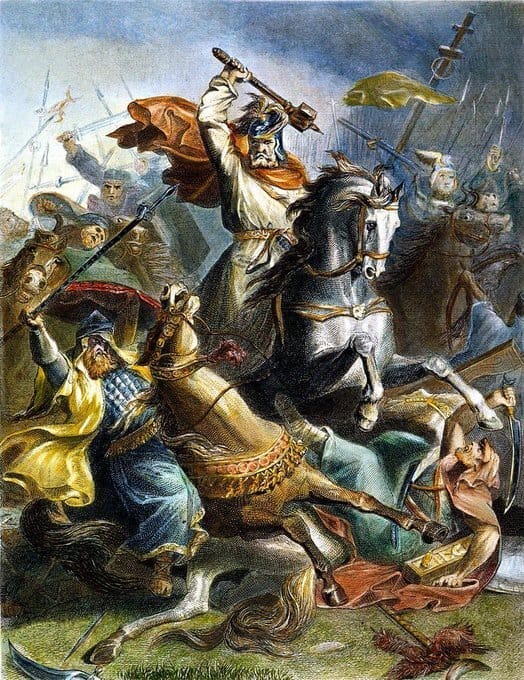
The Muslim cavalry charged, expecting to break the Franks as they had others before. But Charles had arranged his men in dense defensive formations — like a shield wall. They didn’t break. The Franks fought hand-to-hand, holding their line. In the middle of the chaos, something unexpected happened. A rumor spread that the Franks were attacking the Muslim camp. Some soldiers broke off and turned back. In the confusion, Abdul Rahman was surrounded and killed.
Once their leader was dead, the Muslim army began to fall apart. They retreated in the night. Charles didn’t chase them. He wanted to be sure they were really gone. The next morning, their camp was empty.
That moment changed everything. The Moors never tried to push that far into Europe again. They held on to Spain for centuries, but the north was closed to them. Charles Martel became a hero. Later generations called him “The Hammer.” He wasn’t a king, but his grandson would be — Charlemagne, the first Holy Roman Emperor.
The Battle of Tours wasn’t the biggest battle in terms of numbers. But it mattered. If Abdul Rahman had won, there’s a good chance that Western Europe would have followed the path of al-Andalus. It might have looked more like North Africa — more Arabic, more Islamic. Instead, it became the Europe we know, shaped by Frankish kings, Catholic bishops, and Roman traditions.
There are turning points in history that you don’t see until much later. This was one of them. One man with a loyal army stood between Europe and something very different. And for once, the tide didn’t turn.
Most people think the fall of Constantinople in 1453 was the end of the story. Really, it was just the beginning.
When the Ottomans took Constantinople, it shocked Europe. The “unbreakable” city that had stood for over a thousand years was gone in a matter of weeks. Mehmed II, the young sultan who conquered it, wasn’t satisfied. He saw himself as a world conqueror. And now that Constantinople was his, the rest of Europe was next.
The next target was Belgrade.
Belgrade wasn’t Constantinople. It wasn’t enormous or rich. But it mattered. It sat on the Danube River, guarding the gateway into Central Europe. If Belgrade fell, the Ottomans would have a clear shot into Hungary. From there, they could march on Vienna. And once Vienna was gone, what was to stop them from reaching Rome?
In 1456, Mehmed brought an army that may have numbered over 100,000 men. He had artillery — heavy guns like the ones that had smashed Constantinople’s walls. His plan was the same: surround the city, break its walls, and flood in.
At first, it looked like it might work. The Hungarian king was slow to react. Most of Europe was still in shock from the fall of Constantinople. The Pope called for a crusade, but very few responded. No major army came to help. Just a few scattered forces, a handful of knights, and something unexpected: a 70-year-old monk with fire in his blood.
His name was John of Capistrano. He was a Franciscan preacher who believed that Europe’s spiritual decay was worse than the Ottoman threat. He wasn’t a soldier. But when the siege began, he walked from town to town, rallying people. He gathered peasants, students, and tradesmen — anyone who would take up arms. Somehow, they listened. They followed him to Belgrade.
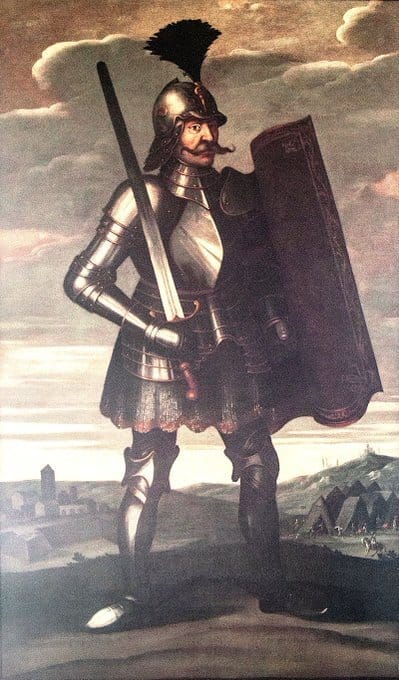
Meanwhile, the defense of the city was in the hands of John Hunyadi, the greatest military leader Hungary had. Hunyadi had spent his life fighting the Ottomans. He knew what they were capable of. He also knew he didn’t have the numbers. But he had experience, and he had walls — and now he had Capistrano’s volunteers.
By July, Belgrade was under full siege. The Ottomans bombarded the city day and night. The walls cracked. The defenders held. Then, on July 21st, Mehmed ordered the final assault.
The Ottomans came in waves. They breached the outer wall. For a moment, it looked like the city would fall. But the defenders rallied. Hunyadi led a counterattack. Capistrano, incredibly, charged with the peasant volunteers. They pushed the Ottomans back.
And then something strange happened.
The Christian forces stormed the Ottoman camp. It was chaos. The Ottomans weren’t expecting it. Their formations collapsed. Even Mehmed was wounded in the fighting. What was supposed to be the fall of Belgrade became a rout.
The Ottomans fled.
The shock of it spread fast. Europe had braced itself for another catastrophe. Instead, the tide had turned — if only for a moment. Belgrade held. Hungary was saved. Vienna and Rome were safe, at least for now.
Pope Callixtus III was so relieved that he ordered all the church bells in Europe to ring at noon to celebrate the victory. That tradition still exists today. Most people have no idea why.
The Siege of Belgrade was one of those moments when everything could have gone the other way. If Hunyadi hadn’t been there, if Capistrano hadn’t inspired the people, if the defenders had hesitated — it would’ve been over. The Balkans would have collapsed. Europe would’ve looked very different.
Instead, a warrior and a monk held the line.
And for a little while longer, Christendom endured.
Some battles don’t look important until you realize what would’ve happened if they’d been lost.
In 1565, the Ottoman Empire was unstoppable. They controlled half the Mediterranean, most of the Balkans, and all of North Africa. They had the largest navy in the world. And their sultan, Suleiman the Magnificent, was still alive — old, but still determined to expand his empire.
His target was a rocky little island called Malta.
Most people wouldn’t have given it a second thought. Malta was tiny. Dry. Mostly stone and cliffs. But it mattered. It sat in the middle of the Mediterranean, right between Europe and the Ottoman strongholds in Africa. Whoever held Malta controlled the sea lanes. And on Malta sat the Knights of St. John.
The Knights were no longer what they had once been. They had been driven from the Holy Land, then from Rhodes. Malta was their last refuge. They were outnumbered, isolated, and seen by many in Europe as relics of the past — fanatical warrior-monks clinging to a lost cause. But they had one thing: they refused to quit.
Suleiman sent an invasion force to wipe them out. Some say it was 30,000 men. Others put it closer to 40,000. The Knights had maybe 600. Add some soldiers, a few thousand local Maltese, and you had around 8,000 defenders in total.
The man leading them was Jean de Valette. He was 70 years old. He had fought the Ottomans for decades. He knew they were coming. And he was ready to die.
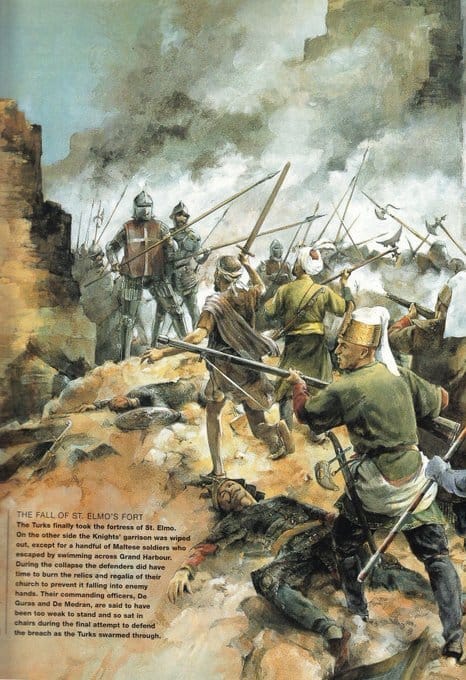
In May, the Ottomans landed and laid siege to the island. First they attacked Fort St. Elmo, a small outpost guarding the harbor. Everyone expected it to fall in days. It held for over a month. The defenders fought to the last man. When it finally fell, the Ottomans found only corpses. They lost thousands just taking that one fort.
But that was only the beginning. The main battle came at the walls of Birgu and Senglea — the Knights’ strongholds. The Ottomans bombarded the cities day and night. Their cannons tore through stone. Their engineers dug tunnels to collapse the walls. And every time they breached the defenses, the Knights pushed them back. Sometimes hand-to-hand. Sometimes with fire and boiling oil. Sometimes with nothing but desperation.
Meanwhile, Europe watched. Spain, France, the Holy Roman Empire — none of them moved. The Pope sent prayers. That was about it.
And yet the defenders held.
After three months, the Ottomans began to run low on supplies. Disease broke out. Morale dropped. They had expected a quick victory. Instead, they were stuck on a rock, bleeding men every day, while a handful of stubborn knights refused to die.
In September, a small Spanish relief force finally landed. It wasn’t huge — but it was enough. The Knights launched a counterattack. The Ottomans, exhausted and demoralized, broke and fled. What was supposed to be an easy conquest ended in disaster.
Suleiman never tried again. He died the next year. The loss at Malta exposed a weakness. For the first time, the Ottoman navy had been stopped. And it wasn’t by another empire. It was by a tiny brotherhood of warrior-monks on a barren island.
The siege became legend. Painters painted it. Poets wrote about it. In London, schoolboys read of Jean de Valette and the heroism at Malta.
After the battle, de Valette ordered a new city to be built on the island’s high ground. It would be named Valletta. It still stands today.
There are moments in history when everything hangs by a thread, and no one knows how it will end. The Battle of Lepanto was one of those moments.
For over a hundred years, the Ottoman Empire ruled the Mediterranean. Their navy was the most powerful in the world. They took island after island — Rhodes, Cyprus, Crete. Muslim corsairs raided Italian coasts. Christian ships couldn’t sail without fear of capture or death. The sea, once a Roman lake, had become an Ottoman one.
Most of Europe had accepted it. Venice traded with the Turks. France even allied with them. The idea of beating the Ottoman navy seemed impossible.
But in 1571, Pope Pius V decided to try anyway.
He pulled together a coalition — a “Holy League” from the fragments of Christian Europe. It wasn’t easy. Spain, Venice, and Genoa didn’t trust each other. The Papal States had little muscle. But somehow, it came together. An uneasy alliance. A fleet built in haste. Soldiers, sailors, priests, mercenaries — all sworn to fight under one flag.
At the head of it was Don Juan of Austria, the 24-year-old illegitimate son of Charles V, half-brother to King Philip II of Spain. He had charm, courage, and just enough ruthlessness. And he believed in the cause.
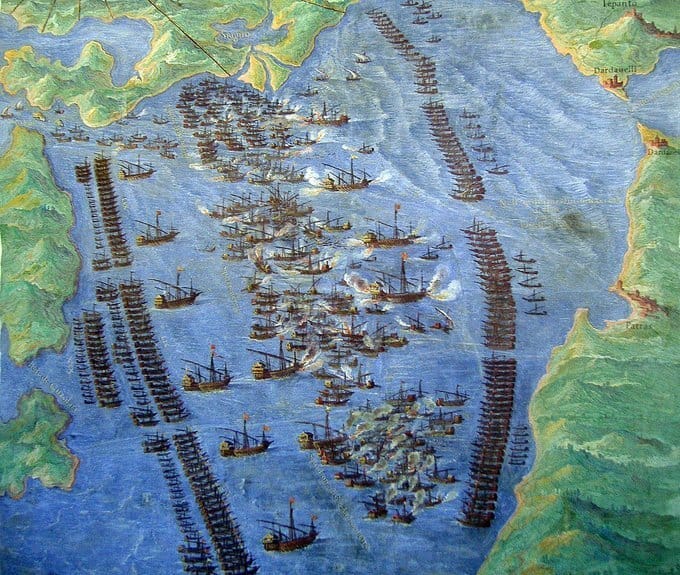
On October 7, 1571, the two fleets met in the Gulf of Patras, near a small Greek port called Lepanto.
The Ottoman fleet was massive — over 200 galleys, led by Ali Pasha, a veteran admiral who flew the green banner of the Prophet from his flagship. The Christian fleet was about the same size. This was no skirmish. It was the largest naval battle in the world since the days of Rome.
These weren’t modern ships. They were galleys — long, narrow vessels powered by sails and oars. It was brutal, close-quarters fighting. Cannons roared, but most of the killing was done with swords and muskets once the ships collided and men jumped from deck to deck.
At the center of the battle, Don Juan’s flagship clashed with Ali Pasha’s. The fighting was savage. Twice, Ottoman soldiers swarmed Don Juan’s ship. Twice, the Spaniards pushed them back. In the final assault, Ali Pasha was shot in the head. His men broke. Don Juan raised the captured Ottoman banner high. The rest of the fleet saw it and panicked.
By the end of the day, the sea was red. More than 30,000 Ottomans were dead. Almost their entire fleet was destroyed — over 200 ships lost. The Christians freed 12,000 galley slaves, many of whom had been chained to their benches for years.
The shockwave across Europe was immediate. Church bells rang for days. Even enemies of Spain and the Papacy celebrated. It was the first major victory over the Ottomans in generations. More than a battle, it was a turning point.
The Ottomans still had power. They built a new fleet the next year. But something had changed. They never again tried to dominate the western Mediterranean. Their aura of invincibility was gone.
And for the Christians, it felt like a miracle. Cervantes — the Spanish writer who would go on to write Don Quixote fought at Lepanto. He lost the use of his left hand there. He later said he’d rather have fought in that battle than written a thousand books.
Lepanto was the last great galley battle in history. The age of cannon and sail would soon begin…