
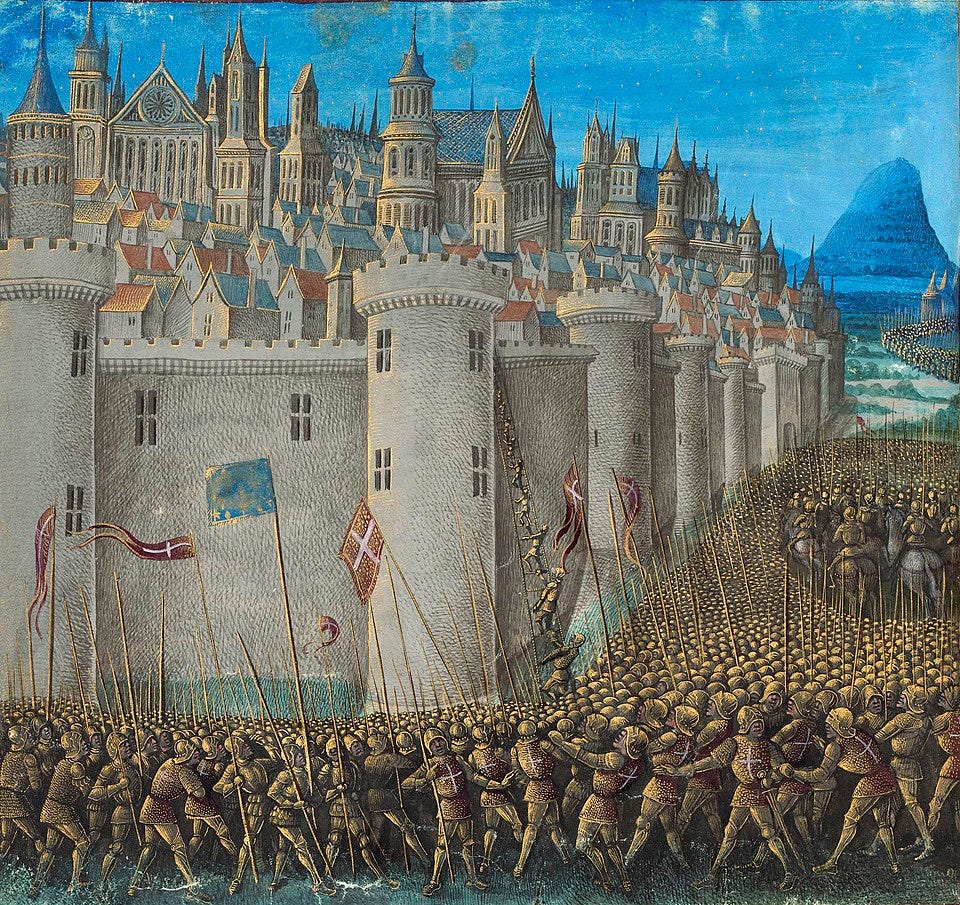
In October 1097, around 927 years ago, the army of the First Crusade arrived before the walls of Antioch.
After marching thousands of miles across Europe and Asia Minor, many realized how impossible the situation was..
Antioch was one of the greatest fortified cities in the eastern Mediterranean, protected by enormous walls, defended by hundreds of towers, and positioned so strongly that medieval chroniclers repeatedly described it as impossible to capture through direct assault.
The crusaders were exhausted long before the siege even began, because thousands had died during the march eastward, many were starving, disease spread constantly through the camps, and most of the men there had never traveled farther than a few villages from home before suddenly finding themselves trapped thousands of miles away in hostile territory preparing to besiege one of the strongest cities in the Muslim world.
The anonymous author of the Gesta Francorum, who marched with the crusade himself, described the situation this way:
“We suffered greatly before Antioch from excessive cold and terrible famine, for many had no bread and many no horses, and the weaker among the poor died daily from hunger.”
The siege of Antioch looked nothing like the romantic image many people imagine when they hear the word “Crusade,” since what unfolded there was mostly mud, rain, starvation, fear, exhaustion, and slowly collapsing morale while men watched themselves weakening week after week beneath walls they could barely damage.
Food disappeared quickly. Horses died everywhere.
And soon the crusaders became so desperate that chroniclers describe men boiling leather, scavenging roots from the countryside, and secretly eating dead animals simply to survive another day beneath the city.
One eyewitness account records:
“There were some who cut pieces from dead horses and cooked them secretly, while others wandered through the mountains seeking herbs and leaves to preserve life.”
The crusaders realized they did not even possess enough manpower to surround Antioch properly, which meant supplies continued entering parts of the city while Muslim forces outside the walls constantly attacked crusader foraging parties and made gathering food even more dangerous.
The priest Peter Tudebode described the worsening conditions this way:
“The army of God was reduced to such misery that scarcely could anyone find enough strength to stand guard upon the walls or walk beyond the camp.”
And gradually the entire expedition began looking less like an advancing army and more like a starving mass of desperate men trapped before a city that refused to fall.
Friendly reminder: The Western Spirit exists because of readers like you. Join us and help keep this project alive and independent.
If you’ve been enjoying these essays, consider becoming a paid subscriber. For a few dollars a month, you’ll get:
In-depth pieces on forgotten battles, brave men, and turning points in Western history
Reflections on faith, order, tradition, and the deeper meaning behind culture
Full access to the growing archive — essays, book breakdowns, and historical deep dives
This project exists because readers like you make it possible.
Bohemond Captured Antioch Through Betrayal
As the winter dragged on, morale inside the crusader camp continued collapsing because desertion increased constantly and many believed the entire expedition was already doomed, including major nobles like Stephen of Blois, who abandoned the siege shortly before Antioch finally fell because he believed there was no realistic chance the crusaders would survive much longer.
And honestly, reading the chronicles today, you understand why so many men lost hope.
The crusaders were starving, exhausted, sick, and completely unable to storm the city directly.
One man, however, understood Antioch would probably never fall through brute force alone.
That man was Bohemond I of Antioch, the Norman prince whose political instincts and ambition made him one of the most important figures of the entire crusade.
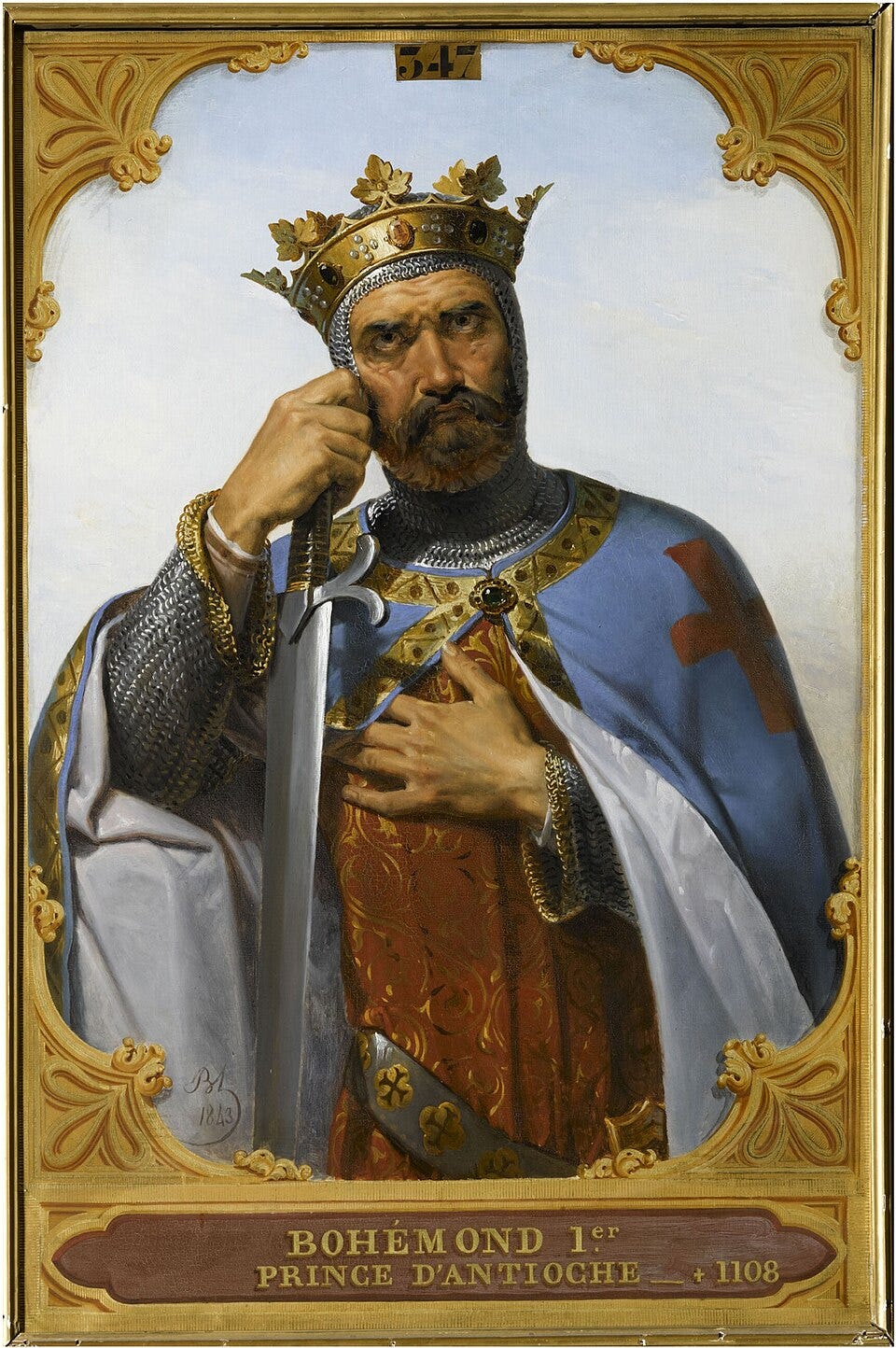
While the siege dragged onward, Bohemond opened communication with an Armenian convert inside Antioch named Firouz, who controlled one of the city’s towers, and over time he arranged the betrayal that would eventually decide the siege entirely.
Meanwhile conditions inside the crusader camp became catastrophic
The chronicler Fulcher of Chartres wrote:
“Famine afflicted the army so terribly that men despaired of life itself, and many cursed the journey they had once embraced joyfully.”
By this stage the crusaders no longer resembled triumphant holy warriors marching confidently toward Jerusalem.
They were frightened, starving men trapped thousands of miles from home wondering whether they would ever see Europe again.
Then finally, in June 1098, after nearly eight months of siege warfare, Bohemond’s plan succeeded.
During the night, a small group of crusaders climbed Antioch’s walls using ladders lowered from one of Firouz’s towers, and after killing guards they opened the gates and allowed crusader forces to pour into the city after months of starvation, desperation, and near collapse.
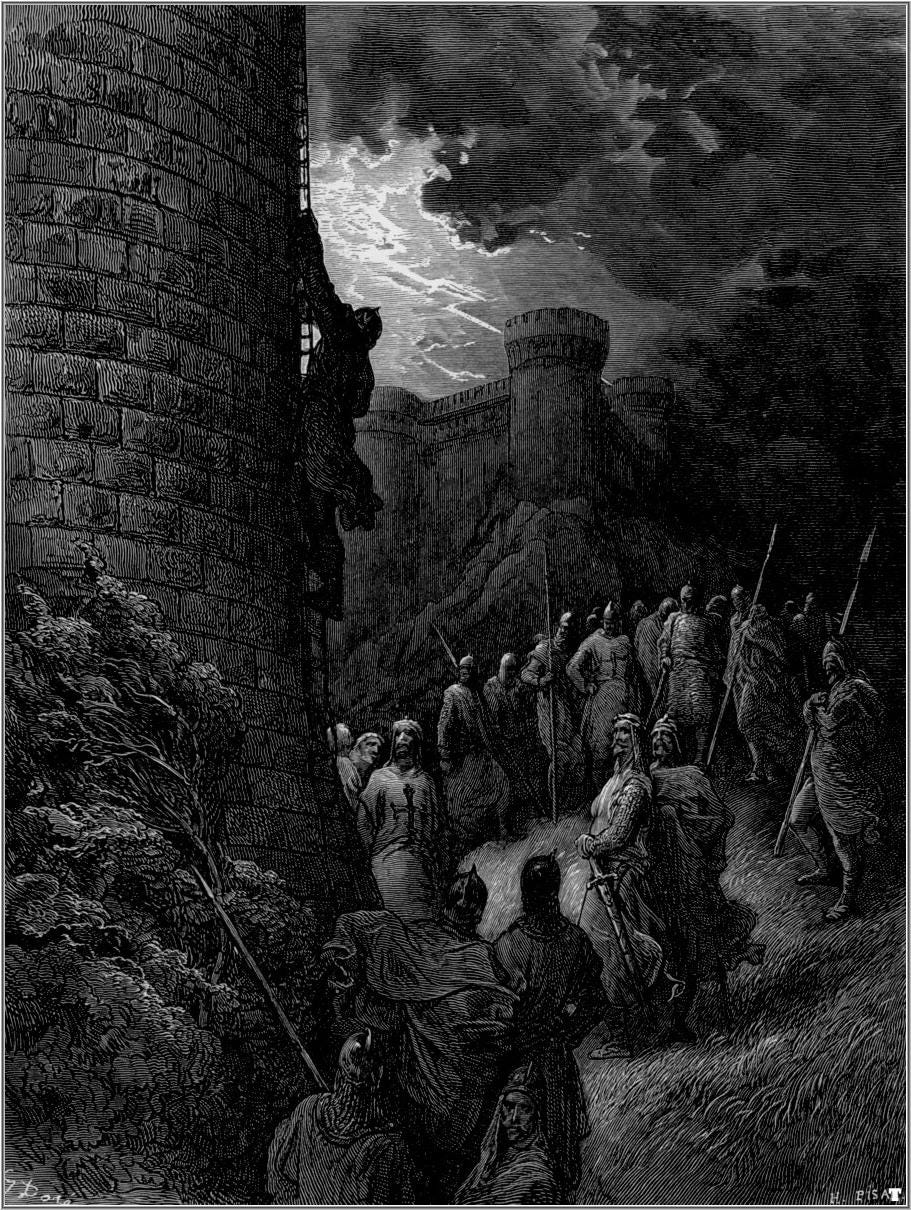
The Gesta Francorum describes the moment this way:
“At dawn we entered the city through the mountain gate, and all the enemy fled before us while our men pursued them through the streets shouting with joy.”
Yet the victory barely lasted days before disaster struck again, because almost immediately after Antioch fell, a massive Muslim relief army under Kerbogha of Mosul arrived and surrounded the crusaders inside the very city they had just captured.
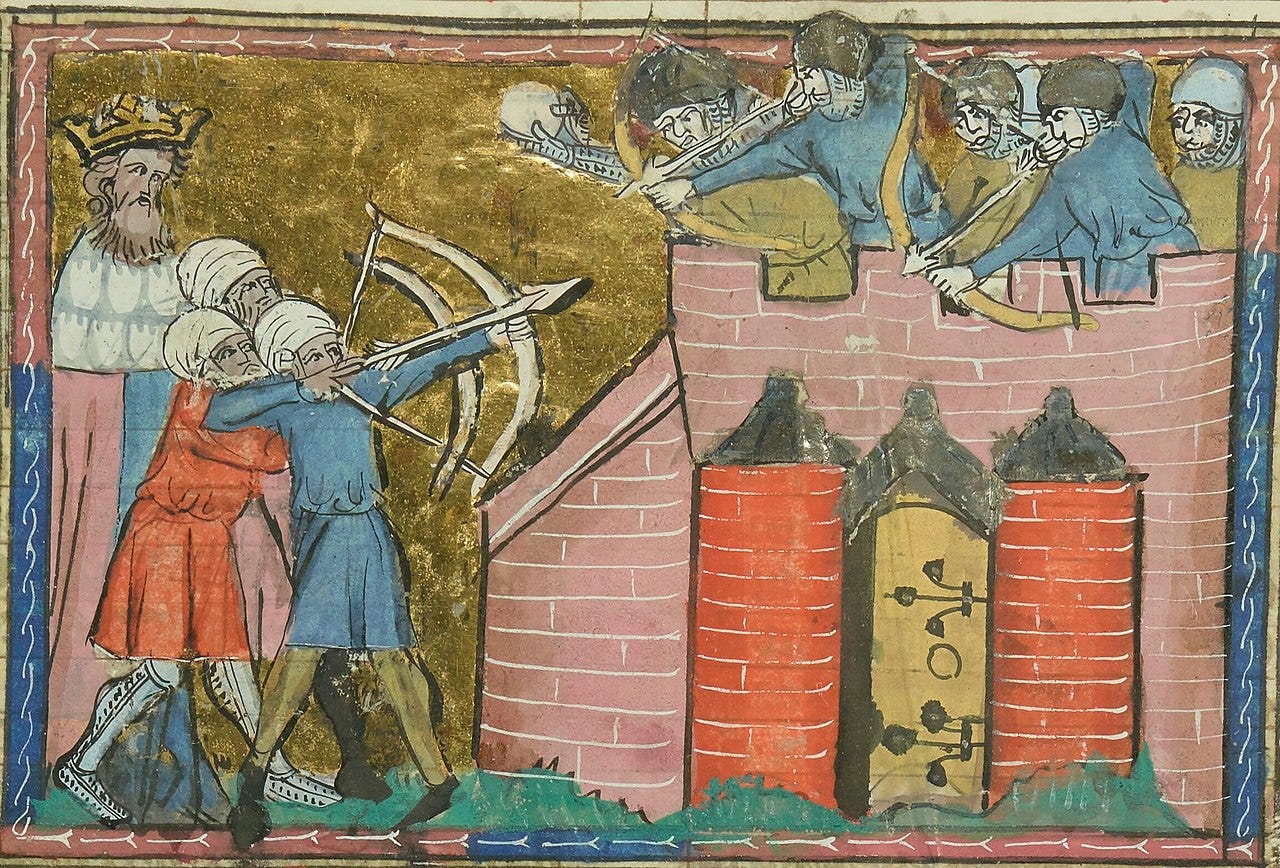
And suddenly everything reversed…
The besiegers became the besieged.
The crusaders were now trapped inside Antioch with almost no food remaining, thousands already sick or wounded, and a much larger enemy army surrounding the city from every direction.