
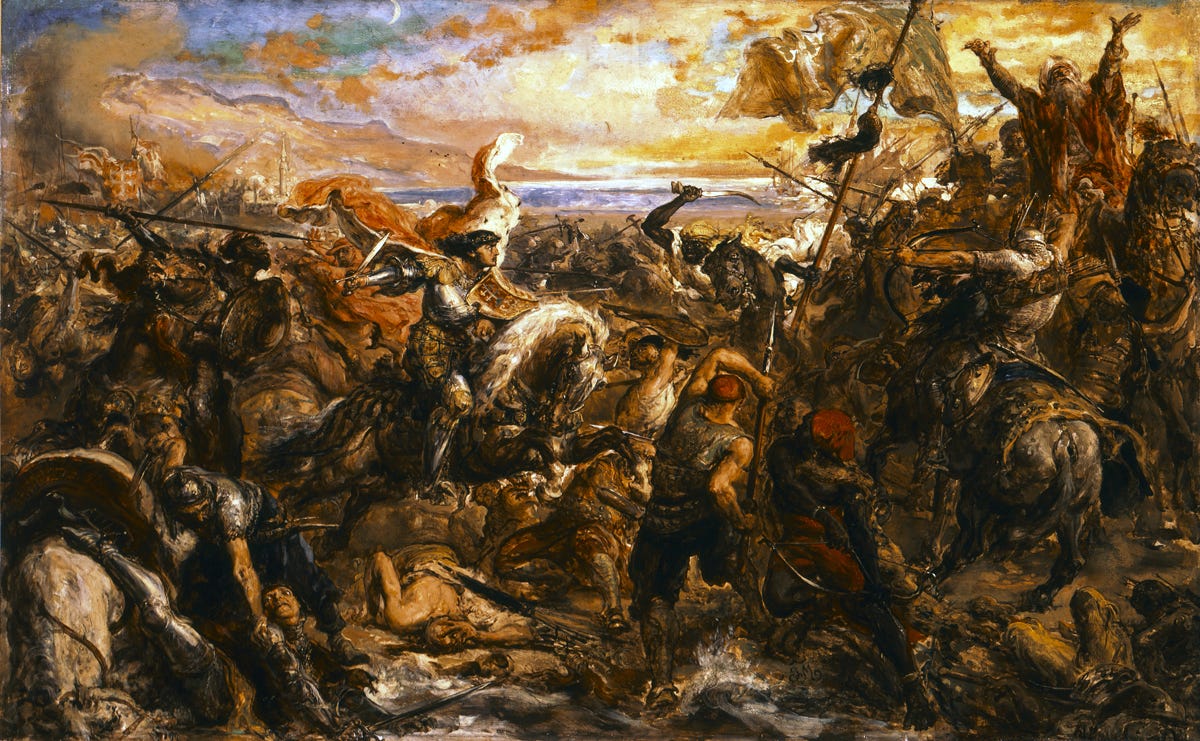
Today I am going to tell you about the Battle of Varna, and I want you to picture the narrow plain where it took place in November of 1444. On one side stood the crusader army led by the young King Władysław of Poland and Hungary, supported by John Hunyadi and the commanders who hoped to halt the expansion of the Ottoman Empire. On the other side marched Sultan Murad II, returning to command after a brief retirement and bringing with him an army gathered from across his domains. Both sides believed the coming battle would determine control of the Balkans.
The crusade had begun with promises of unity and pressure from church leaders who urged a final effort to break Ottoman power. The oath of peace signed months earlier had already been abandoned, and the decision to march south created a chain of commitments that could not be undone..
The Western Spirit exists because of readers like you. Join us and help keep this project alive and independent.
If you’ve been enjoying these essays, consider becoming a paid subscriber. For a few dollars a month, you’ll get:
In-depth pieces on forgotten battles, brave men, and turning points in Western history
Reflections on faith, order, tradition, and the deeper meaning behind culture
Full access to the growing archive — essays, book breakdowns, and historical deep dives
This project exists because readers like you make it possible.
The Road to Varna
The Balkan frontier in the 1440s was a zone of shifting alliances. Hungarian forces under John Hunyadi guarded the kingdom against Ottoman advances. The Papacy pushed for a new crusade. The young Polish and Hungarian king, Władysław III, known to some chroniclers as Ulászló, became the symbolic figure at the center of the effort. The Treaty of Szeged had promised a truce, yet political and ecclesiastical pressures encouraged the king to break it and launch a campaign against the Ottomans. The decision set the armies on a collision course that could not be undone.
Chroniclers recorded the mood of the time. The Byzantine historian Kritoboulos of Imbros wrote, “The Christian princes believed that if they struck swiftly, the Turk might be driven back across the straits.” A Burgundian knight, Philippe de Ligne, described the war councils as filled with confident speeches: “Men spoke as if the borders of old Christendom could be restored in a single campaign.” These accounts convey how commanders and nobles saw the crusade as a turning point.
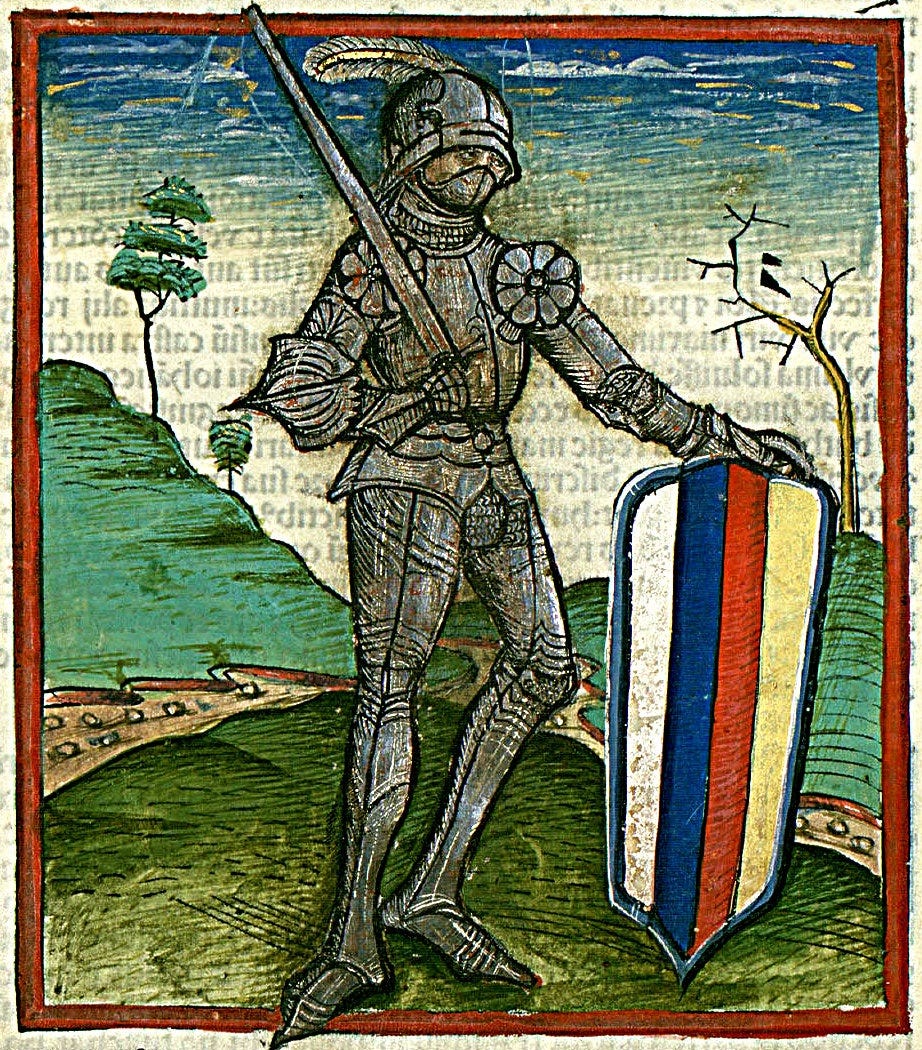
The army began to gather in the summer of 1444. Hungarian infantry, Polish knights, Transylvanian units, Czech and German mercenaries, and Wallachian contingents assembled. Supply wagons followed them as they moved south. Hunyadi commanded most of the experienced troops. The king rode near the front, accompanied by his personal guard and standard bearers. Observers described a young ruler who showed determination, although he carried little battlefield experience.
As the army crossed the Danube, news arrived that Sultan Murad II had retired from the throne. Some European leaders believed this would weaken the Ottoman response. Others doubted the reports. No one had firm intelligence. Scouts went out daily to measure the movement of enemy forces, yet the information remained uncertain.
The crusader army continued south toward the Black Sea, following the plan that papal advisors had laid out. Their intention was to meet the Ottoman forces before they could gather a full army. This intention depended on speed, and the army began to feel the pressure of time.
The March Through the Balkans
The crusaders advanced through Bulgaria in late October. The weather shifted often, with cold rain turning roads into thick mud. Horses struggled in certain stretches. Chroniclers from the region described villages abandoned or half deserted, for many residents had fled earlier campaigns and raids. The crusader army relied on supplies from local sources, yet provisions grew thinner as they advanced.
Hunyadi often rode at the front. The Polish historian Jan Długosz noted: “The Voivode spent more time in the saddle than in his tent, questioning shepherds and inspecting every pass with his own eyes.” The king remained with the main column, listening to reports. He observed tracks, questioned local shepherds, and evaluated the paths through the low hills that separated the army from Varna. The king remained with the main column, listening to reports and urging the army forward.

During this march, scouts returned with conflicting news. Some claimed the Ottomans had not assembled in full strength. Others said Murad II had returned to the throne and was marching north with a large force. Tension rose in the camp as commanders weighed the possibility that the crusade had underestimated the Ottoman response.
On November 9, the crusaders reached the plains near Varna. They observed the Black Sea to their east and Lake Varna to their west. The terrain created a narrow space with limited room to maneuver. Hunyadi recognized both the opportunity and the danger. Critics among the later chroniclers said the army had little choice but to stand and fight in this location.
The crusader commanders ordered the troops to form lines. They expected the Ottomans to arrive within a day.
The Ottomans Advance
Murad II had returned to command. When he learned the crusade had crossed the Danube, he gathered his forces rapidly. Ottoman chroniclers such as Şükrullah wrote that the sultan moved day and night to reach Varna before the crusaders withdrew. His army included Janissaries, sipahi cavalry, Azap infantry, and irregular forces drawn from the surrounding provinces.
Ottoman scouts observed the crusader camp from distant hills. They reported the narrow position between the sea and the lake. The sultan recognized the advantage immediately. He advanced quickly and ordered the vanguard to make contact with the enemy the moment the army arrived.
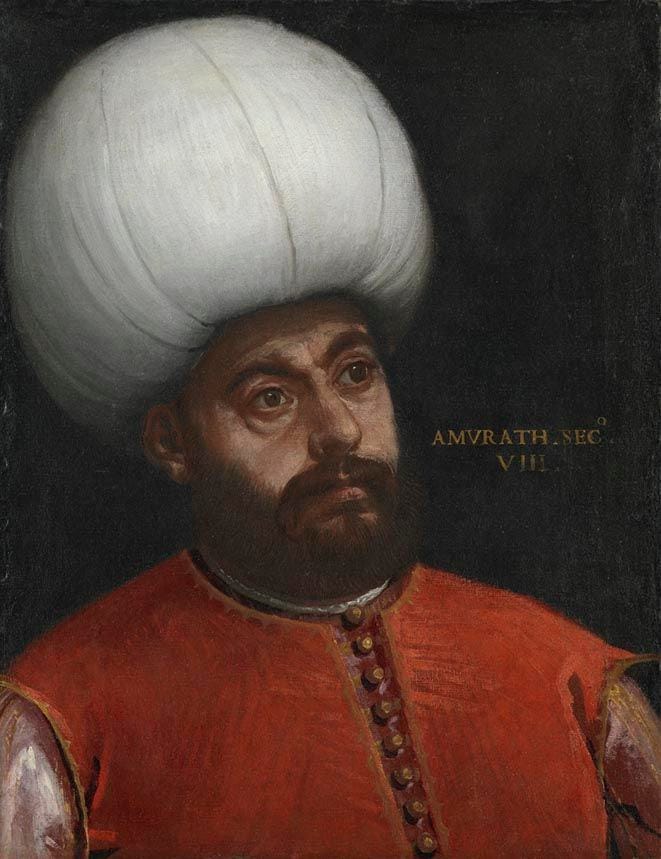
The countryside filled with the movement of thousands of soldiers. Riders passed through villages, and supply caravans followed behind. One account describes the sound of drums and horns echoing across the plains as the army approached Varna at dawn on November 10.
A Greek merchant, watching from afar, wrote, “The banners of the Turk darkened the horizon like a storm.”
The crusaders saw the dust first. Then they saw the banners. Chroniclers on the Christian side wrote that the Ottoman host appeared larger than expected, with lines of cavalry extending across the field to the south. Długosz wrote that the crusader commanders realized they faced a much greater force than anticipated, and that the narrow ground prevented escape.
Murad positioned his army carefully. He placed the Janissaries in the center, behind a line of stakes to protect them from cavalry charges. His right wing formed under his experienced commanders, while his left wing extended toward the slopes of the Franga plateau. He brought the sacred standard known as the sancak, which chroniclers describe as a large banner carried at the head of his elite troops.
The Opening Engagement
The battle began in the morning. Ottoman archers advanced and released the first volleys. Crusader crossbowmen responded from behind the infantry lines. The exchange continued for some time, filling the air with arrows that struck shields, armor, and the earth between the armies.
Hunyadi opened the main engagement by ordering the left and right wings to advance. The Hungarian and Polish cavalry on the right moved quickly against the Ottoman left. A Czech captain later wrote, “The hill ran red as the Azaps scattered before our charge.” The crusader horsemen pressed forward, pushing the Ottoman units back toward the slope of the plateau.
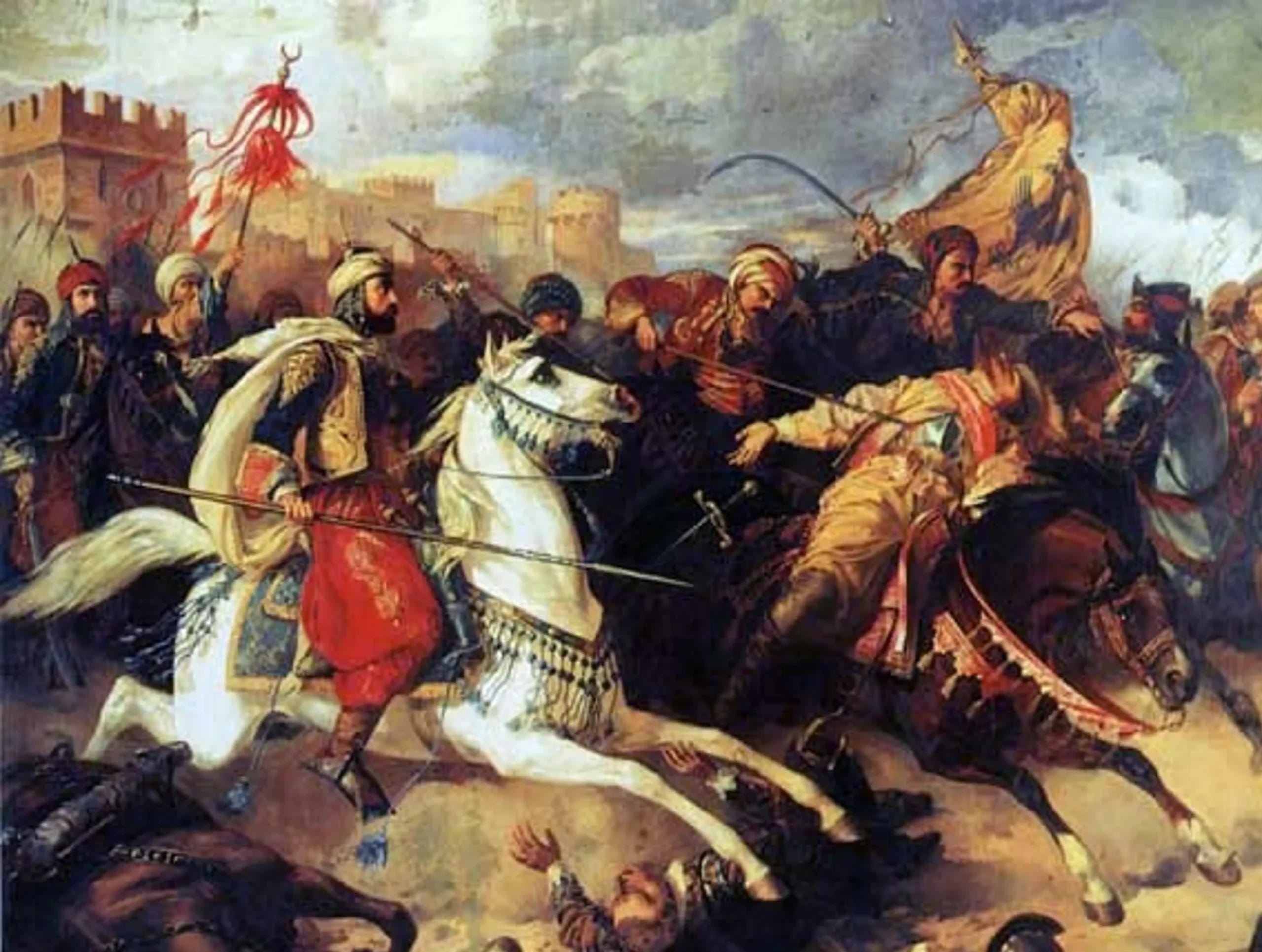
At the same time, Wallachian and Transylvanian infantry engaged the Ottoman right. The fighting grew intense. Swords, spears, and axes struck in close quarters. Contemporary accounts describe shouting across the lines and the sound of armor clashing as men closed in on one another. Some later writers believed that the crusader wings gained an early advantage.
Murad observed these movements from the center. He directed his cavalry to regroup and prepare for a renewed assault. An Ottoman officer wrote, “The Padishah spoke softly, commanding the wings to fold inward like a great hawk tightening its grasp.”
The battle shifted as the Ottomans pushed back against the initial crusader success. Hunyadi moved across the field, shouting commands and reorganizing units. He recognized that the center remained fixed, because the Janissaries stood behind their defenses, waiting for the decisive moment.
The field became crowded with wounded men and scattered weapons. The fighting continued without pause.
The Battle Reaches Its Turning Point
By midday, the crusader wings had achieved mixed results. On the right, the cavalry maintained pressure. On the left, the crusaders struggled against the renewed Ottoman counterattacks. The ground grew uneven as bodies and broken equipment covered the field. One Italian observer wrote, “The air stank of iron and wet earth.”
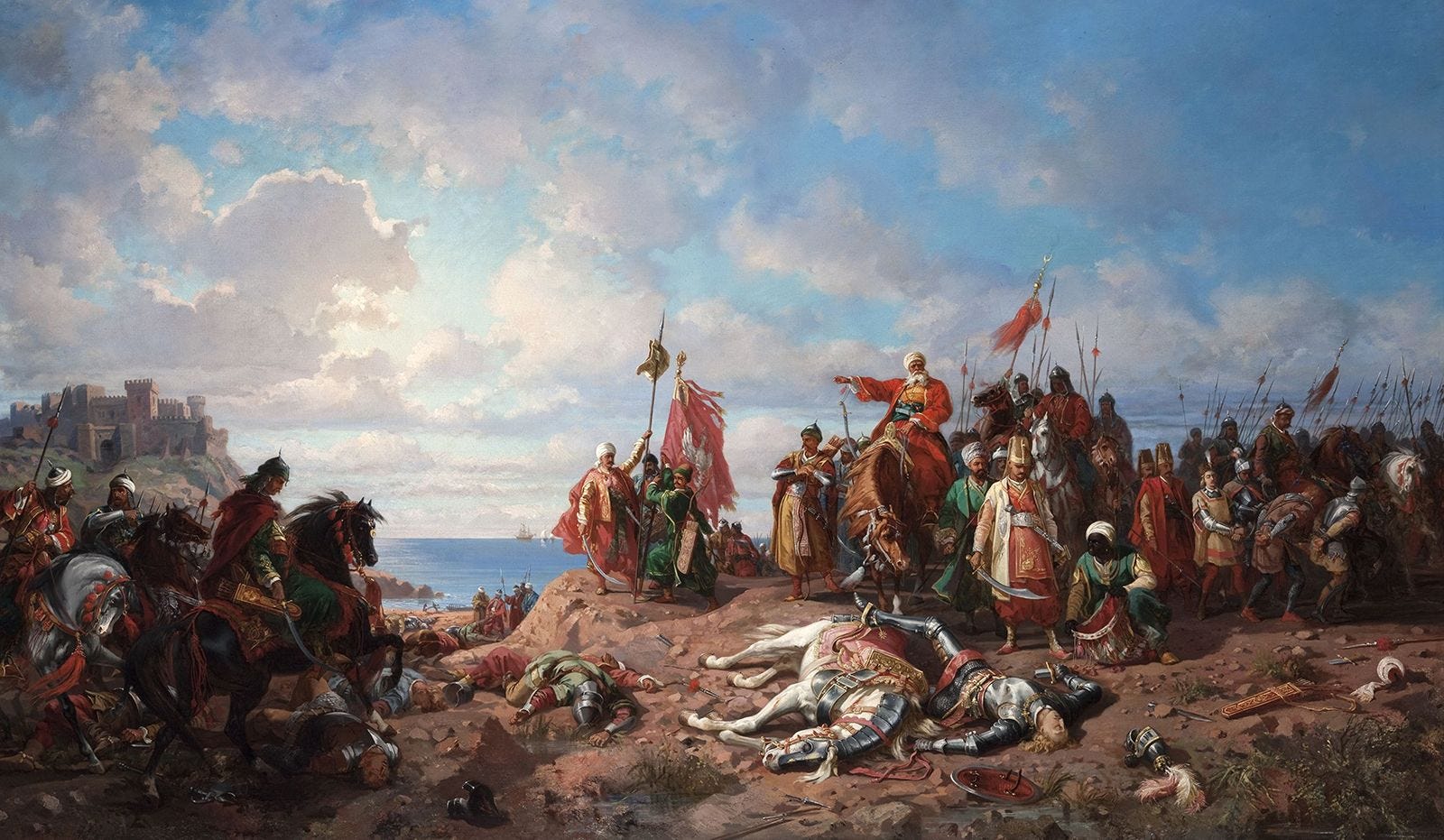
Hunyadi saw that the only way to break the Ottoman formation was to strike the Janissary center. Yet he also saw how well the position was fortified. He intended to reorganize the army before committing to another assault.
Władysław III, however, saw something different. The Byzantine historian Doukas wrote: “The young king burned with desire for a blow that would decide all.”