
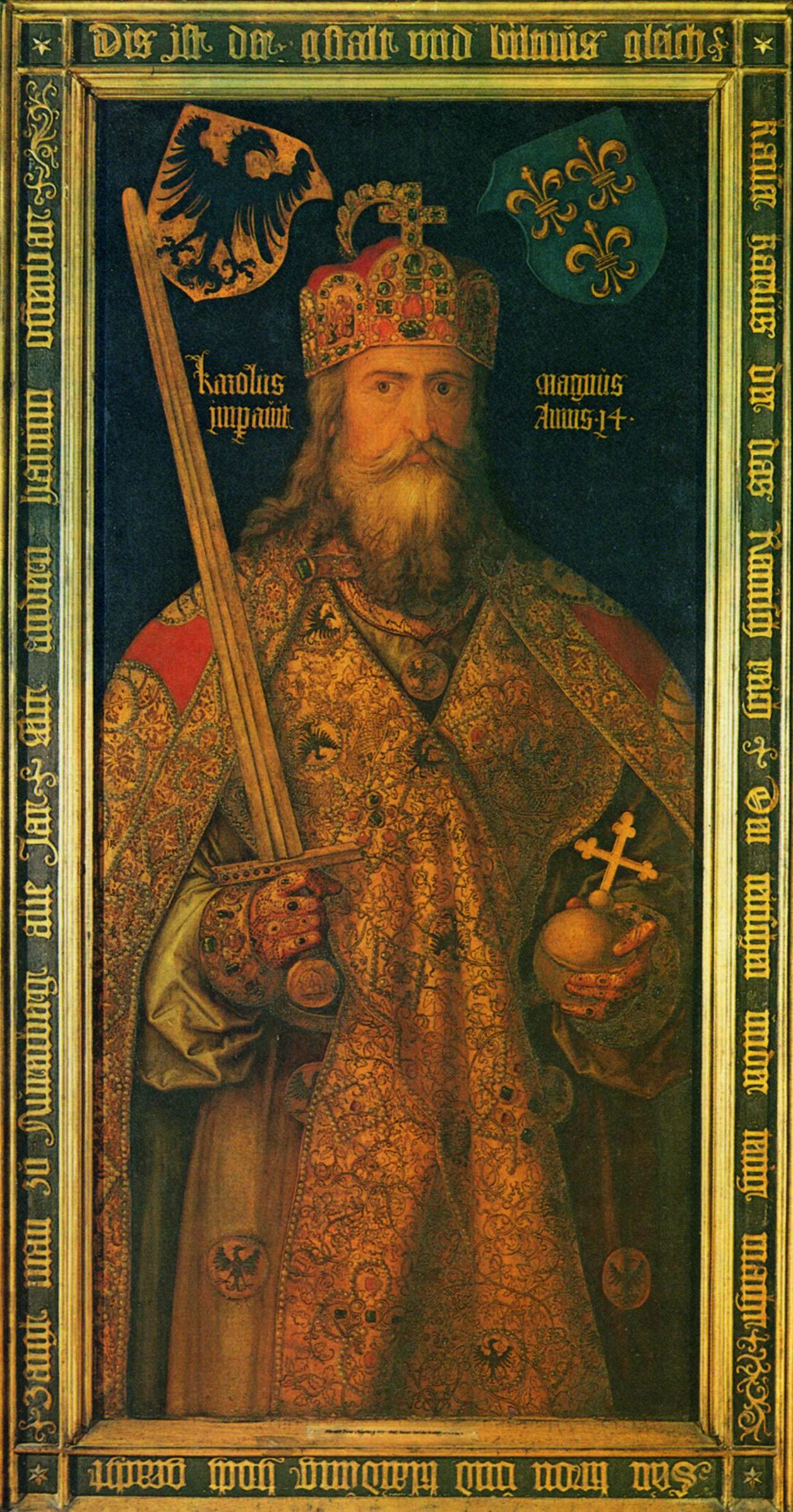
Charlemagne was not just a ruler. He was also a builder. When people call him “the Father of Europe,” they are not exaggerating. In an age when most of the continent was divided and uncertain, he brought unity, law, and learning back to life.
He ruled for nearly fifty years, from 768 to 814, and during that time he changed everything. He fought wars, made laws, founded schools, and rebuilt the idea of Rome in a Christian world.
Charlemagne was a man of contrasts. He could be gentle and curious, but also ruthless. He loved poetry and science, but he spent most of his life at war. He could pray all night and fight all day. His life was the bridge between the ancient world and the one we still live in.
The Western Spirit exists because of readers like you. We’re just one subscriber away from hitting 100 paid members — join us and help keep this project alive and independent.
If you’ve been enjoying these essays, consider becoming a paid subscriber. For a few dollars a month, you’ll get:
In-depth pieces on forgotten battles, brave men, and turning points in Western history
Reflections on faith, order, tradition, and the deeper meaning behind culture
Full access to the growing archive — essays, book breakdowns, and historical deep dives
This project exists because readers like you make it possible.
A Kingdom of Fragments
Charlemagne was born around 742. Europe was in chaos. The old Roman Empire had collapsed three centuries earlier, and what was left of it lay scattered in ruins. Roads had broken, trade had slowed, and knowledge had nearly disappeared. The Franks were one of the few strong peoples left. They were Germanic, fierce in battle, and proud of their kings.
Charlemagne’s grandfather was Charles Martel, the man who stopped the Muslim advance into France at the Battle of Tours. His father was Pepin the Short, who made himself king of the Franks and gained the blessing of the pope. From that moment, the Frankish crown became tied to the Church. The ruler’s job was not only to govern but to protect Christianity.
When Pepin died, his kingdom was divided between his two sons, Charlemagne and Carloman. It was the custom then to split inheritance, even among kings. The division did not last. Carloman died a few years later, and Charlemagne became ruler of the entire Frankish realm. He was twenty-six.
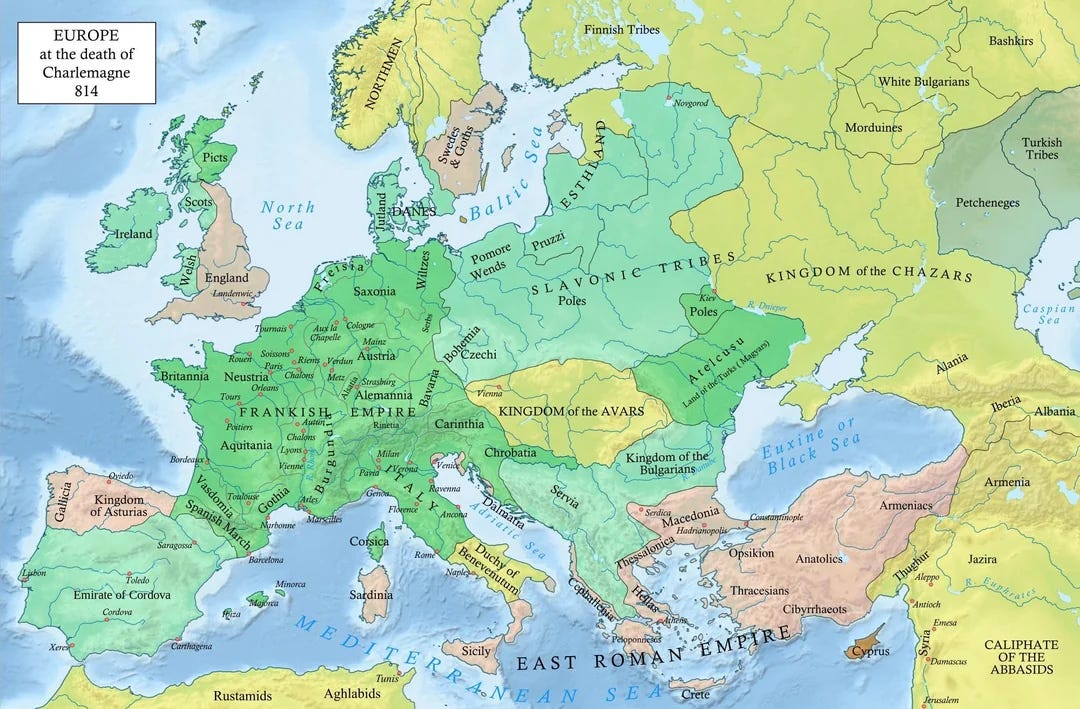
He inherited a world full of opportunity and danger. The Saxons in the north were still pagan and rebellious. The Lombards in Italy threatened Rome. The Muslim emirates in Spain pushed eastward. And within his own borders, nobles competed for power. It was a hard world to rule, but Charlemagne believed it could be mastered.
The Warrior King
Charlemagne began his reign with war. He saw it as both duty and destiny. His first major campaign was against the Lombards in Italy, who had attacked the papal territories. The pope, Adrian I, asked for help. Charlemagne marched across the Alps, besieged Pavia, and defeated the Lombard king. Instead of destroying the kingdom, he took its crown and declared himself “King of the Lombards.” It was his first taste of empire.
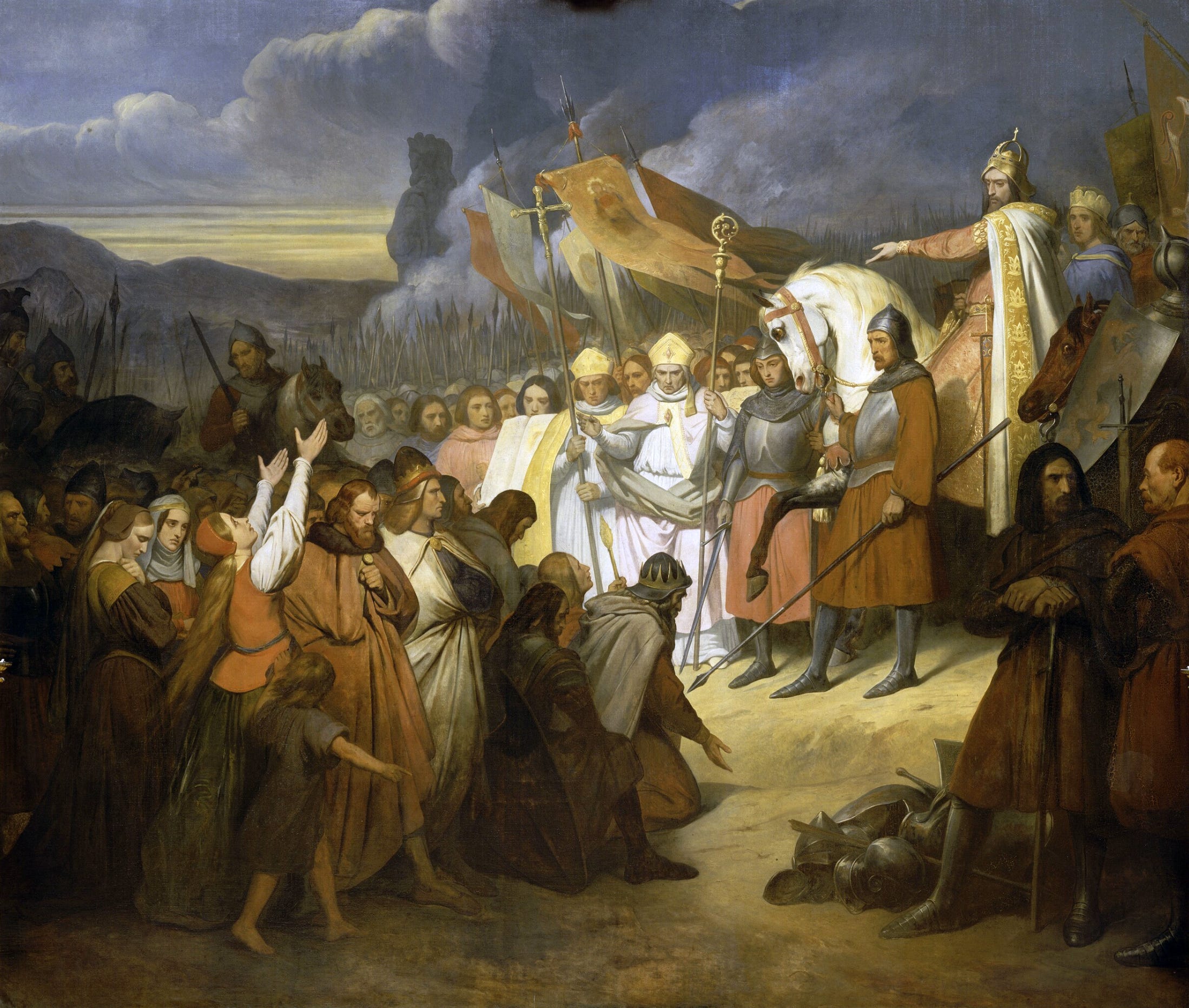
Then came the Saxons. They were fierce, stubborn, and proud of their gods. They refused baptism and attacked Christian lands. Charlemagne saw them as both a threat and a mission. He led eighteen campaigns against them over thirty years. Villages were burned, temples destroyed, and whole tribes moved by force. Some resisted for decades, but eventually the Saxons submitted and accepted Christianity.
To modern eyes, these wars look brutal. And they were. But in Charlemagne’s mind, they were part of something larger. He believed he was bringing both order and salvation to a violent world. He saw conquest and conversion as one task.
His empire grew through battle. He pushed his borders east toward Bavaria, south into Spain, and north to the North Sea. By the end of his life, his realm stretched from the Pyrenees to the Danube and from the North Sea to central Italy. No ruler had controlled so much of Western Europe since the fall of Rome.
The Emperor and the Pope
Charlemagne’s victories made him powerful, but his alliance with the Church gave him legitimacy. He saw himself as God’s servant, ruling not only by strength but by divine duty. The Church, in turn, needed his protection. Rome had lost its armies long ago. The pope depended on the Franks for defense.
This partnership reached its peak in the year 800. On Christmas Day, while Charlemagne was praying at St. Peter’s Basilica in Rome, Pope Leo III placed a crown on his head and declared him “Emperor of the Romans.” The crowd shouted, “To Charles Augustus, crowned by God, great and pacific emperor of the Romans, life and victory.”
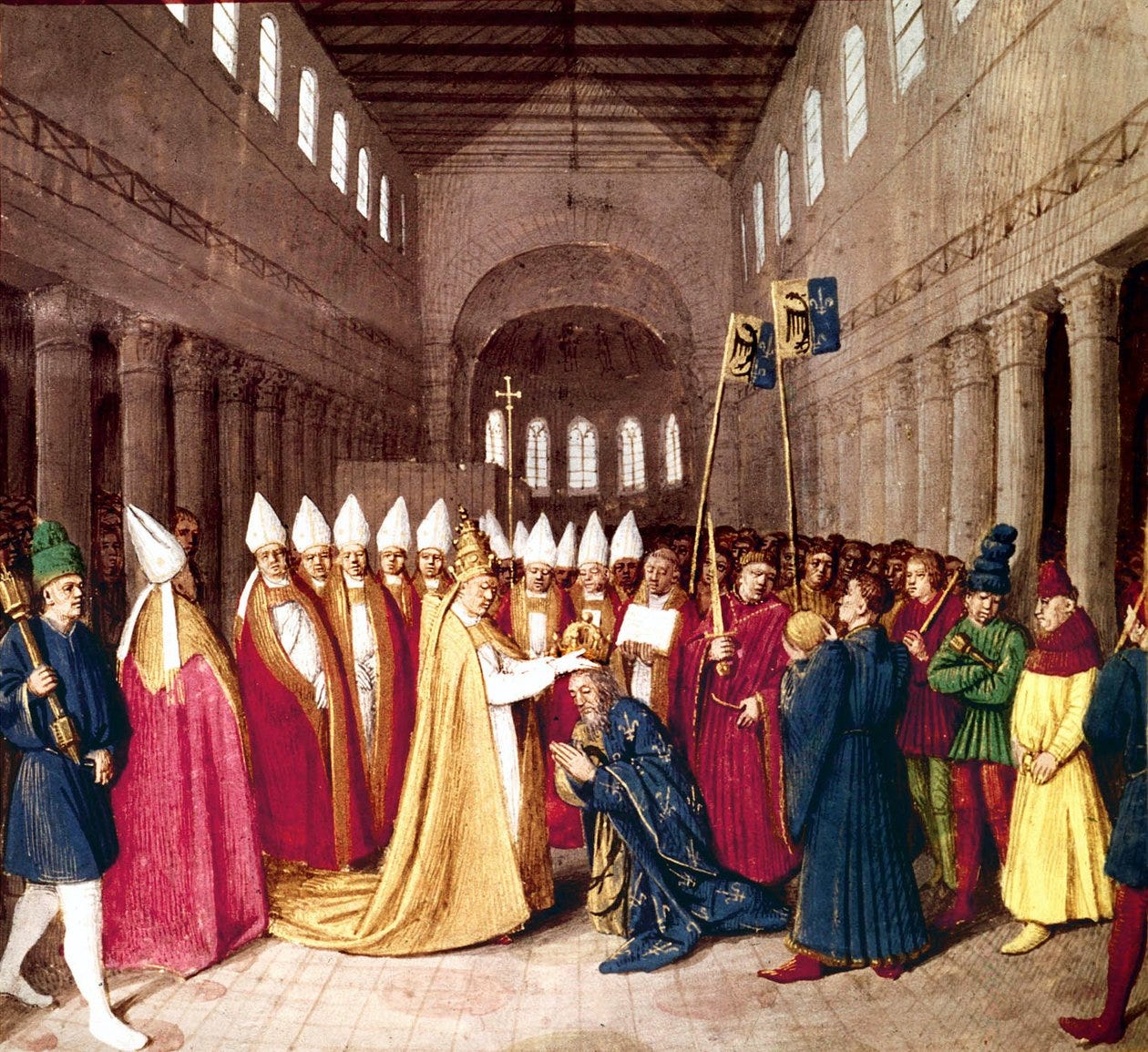
The moment symbolized a new beginning. The Roman Empire had died in the West three hundred years earlier. Now it was reborn as the Holy Roman Empire, with Charlemagne at its head. He was both king and emperor, soldier and servant of God.
But the coronation also created tension. The pope claimed to have given him the crown. Charlemagne saw it differently. He believed his power came directly from God, not from any man. The question of who held the higher authority, emperor or pope, would echo through European history for centuries.
The Builder of Civilization
Charlemagne was not content to rule by war alone. Once his empire was secure, he turned to building. He wanted to civilize the lands he had conquered and to restore learning after centuries of decay.
He made his capital at Aachen, near modern-day Germany’s border with Belgium. It became a new kind of royal court… half palace, half monastery, a place where scholars, artists, and clerics worked side by side. He invited thinkers from all over Europe to teach there, including Alcuin of York, one of the finest minds of the age.
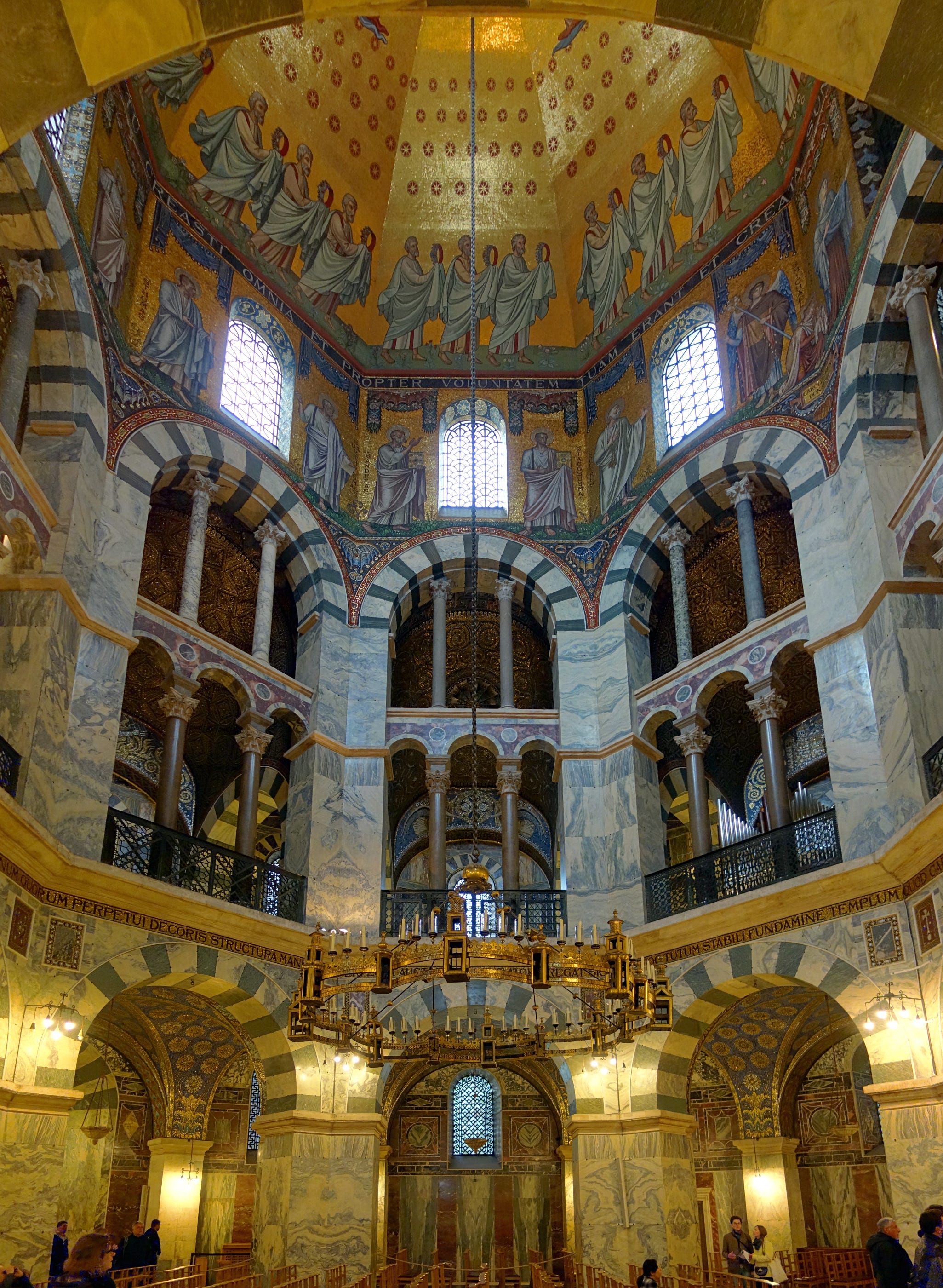
Together they began what historians call the Carolingian Renaissance. Schools were founded in monasteries and cathedrals. Books were copied and corrected. Latin was standardized so people across the empire could communicate. The alphabet we still use today was shaped by their reforms.
Charlemagne cared deeply about education. He himself could read Latin but never learned to write well. Still, he read constantly and believed knowledge was essential to rule. He ordered every cathedral to have a school, every monastery to train boys not only in prayer but in letters and numbers. “Let the word of God be heard,” he said, “and let wisdom grow.”
He also reformed law and administration. He sent royal envoys, called missi dominici, to travel through the empire and report on local officials. He insisted that justice be applied fairly, even to nobles. His government was primitive by modern standards, but it was organized and purposeful. He was building something permanent.
The Christian King
Charlemagne’s faith was at the center of everything he did. He attended church daily, prayed before battle, and saw his rule as a calling rather than a job. He believed his empire existed to serve God’s plan for the world.
He took moral reform seriously. He banned pagan practices, regulated the clergy, and tried to make his people live more virtuous lives. He saw sin as a public matter, not just a private one. The king’s job, he believed, was to make society righteous.
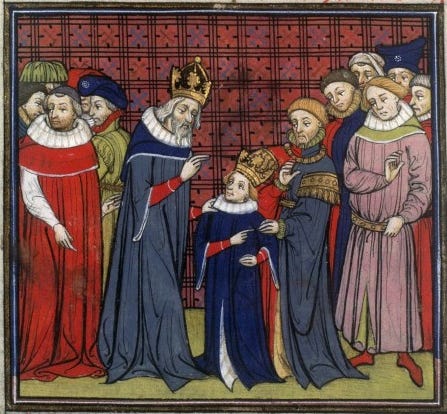
But he was not naive. He knew faith alone could not hold a kingdom together. His Christianity was practical. He used religion to unify his people, to give them one law and one belief. He made sure that every church prayed for his rule and every monk copied his decrees. Faith and power were two sides of the same coin.
At the same time, he had a genuine spiritual side. He was fascinated by theology, discussed doctrine with bishops, and collected relics. His biographer, Einhard, described him as simple in his devotion and constant in prayer. His personal piety gave his authority moral weight.
The Family of the King
Charlemagne’s private life was as full as his public one. He married several times and had many children, both legitimate and not. He was affectionate with his family and liked to keep them close. His daughters were educated, beautiful, and famously independent. He refused to marry them off to foreign princes, preferring to keep them near him in Aachen…