
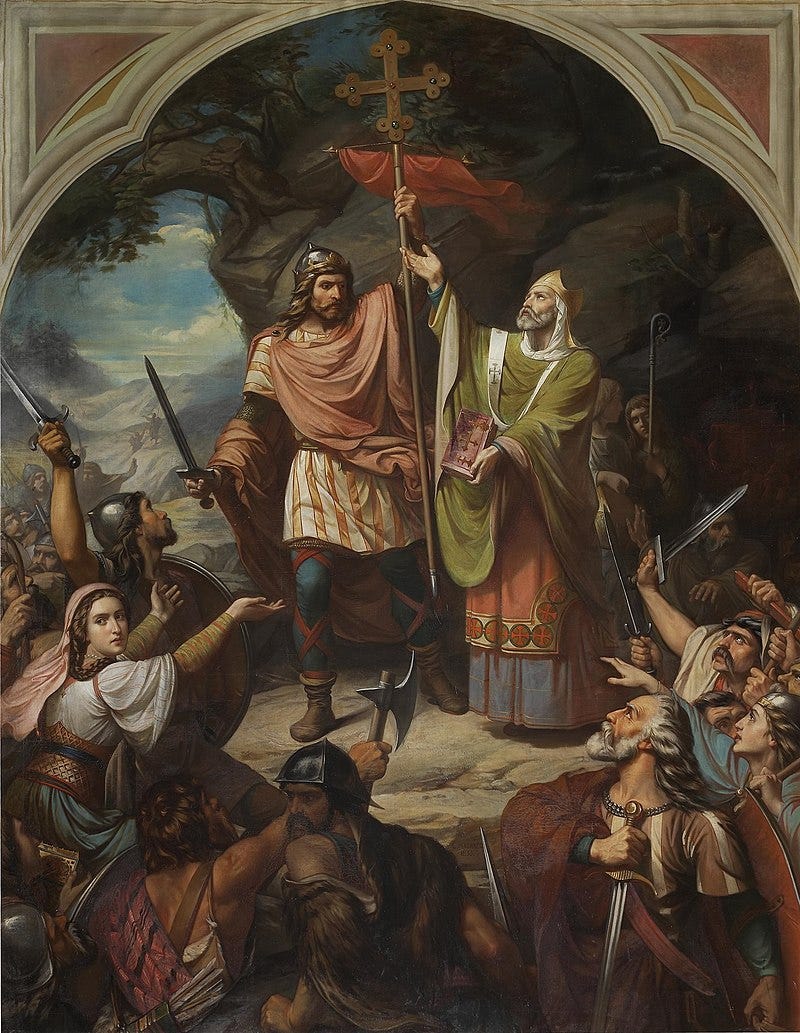
When we think about great battles that changed history, we usually imagine enormous armies clashing on open plains. We imagine kings riding at the head of vast forces, banners flying, and maps being redrawn overnight. Covadonga was not like that. It was fought in a remote mountain valley in Asturias, far from the centers of power, between a small band of Christian fighters and a Muslim force sent to put them down.
If you had lived in the year 722, you probably would not have heard about it at all. The chroniclers of the time barely noticed it. Even later Muslim historians dismissed it as little more than an insignificant skirmish. But that is exactly why it matters. It was small, but it marked the first time Christians in Iberia stood their ground and won after the Muslim conquest.
In that sense, it was the first page of the Reconquista, the centuries-long struggle to restore Christian Spain…
The Fall of the Visigoths
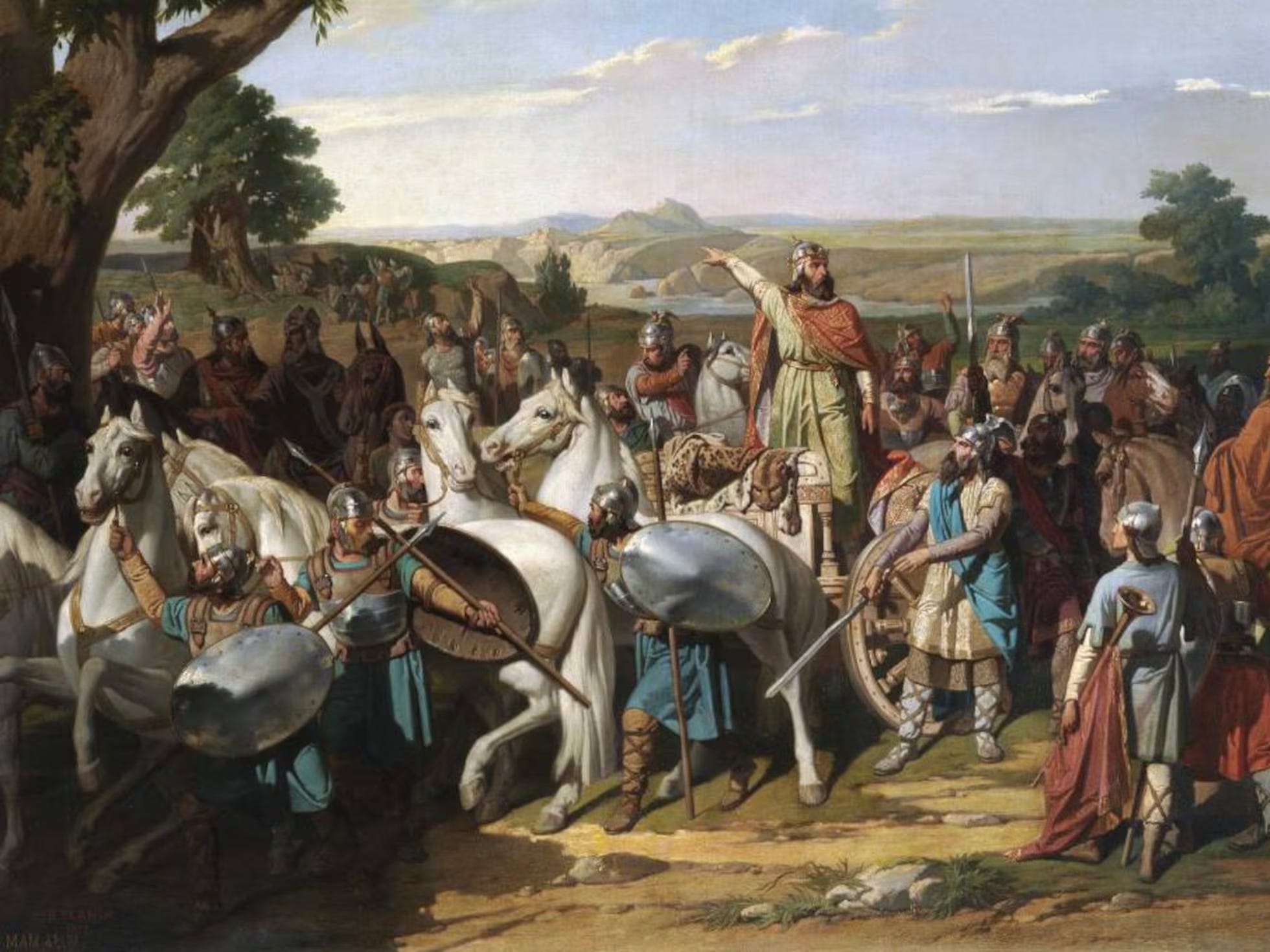
Spain before the Muslim invasion was ruled by the Visigoths, a Germanic people who had taken over after the collapse of Rome. They had been in Iberia for three centuries, ruling from Toledo, but their kingdom was fragile. Unlike most monarchies, their kings were not hereditary but elected by the nobility. Every succession invited civil war. Noble factions plotted against one another. Councils of bishops had great influence, and church politics often intertwined with dynastic struggles. By the early eighth century, the kingdom was already fraying under internal conflict.
When Tariq ibn Ziyad crossed the Strait of Gibraltar in 711 with his Berber forces, he faced a divided kingdom. King Roderic, who had only recently seized the throne, hurried south to meet them. At the Battle of Guadalete he was crushed. Roderic himself disappeared, killed in the fighting, leaving no strong leader to rally the realm. The chronicler Ibn Abd al-Hakam wrote that “God destroyed them and most of their nobles were slain,” while the Christian Chronicle of 754 recorded that “the entire army of the Goths was annihilated.”
The gates of Iberia were now open. Toledo surrendered. Córdoba fell. Seville followed. Musa ibn Nusayr, the governor of North Africa, joined Tariq and pressed the conquest north. By 718, most of Iberia was under Muslim control.
Some Visigothic nobles made deals with the conquerors to keep their estates. Others fled north into the mountains. The old ruling class was shattered. Christianity, which had been the official religion of the Visigoths, seemed on the verge of disappearing in Iberia as it had in North Africa.
Pelayo Emerges
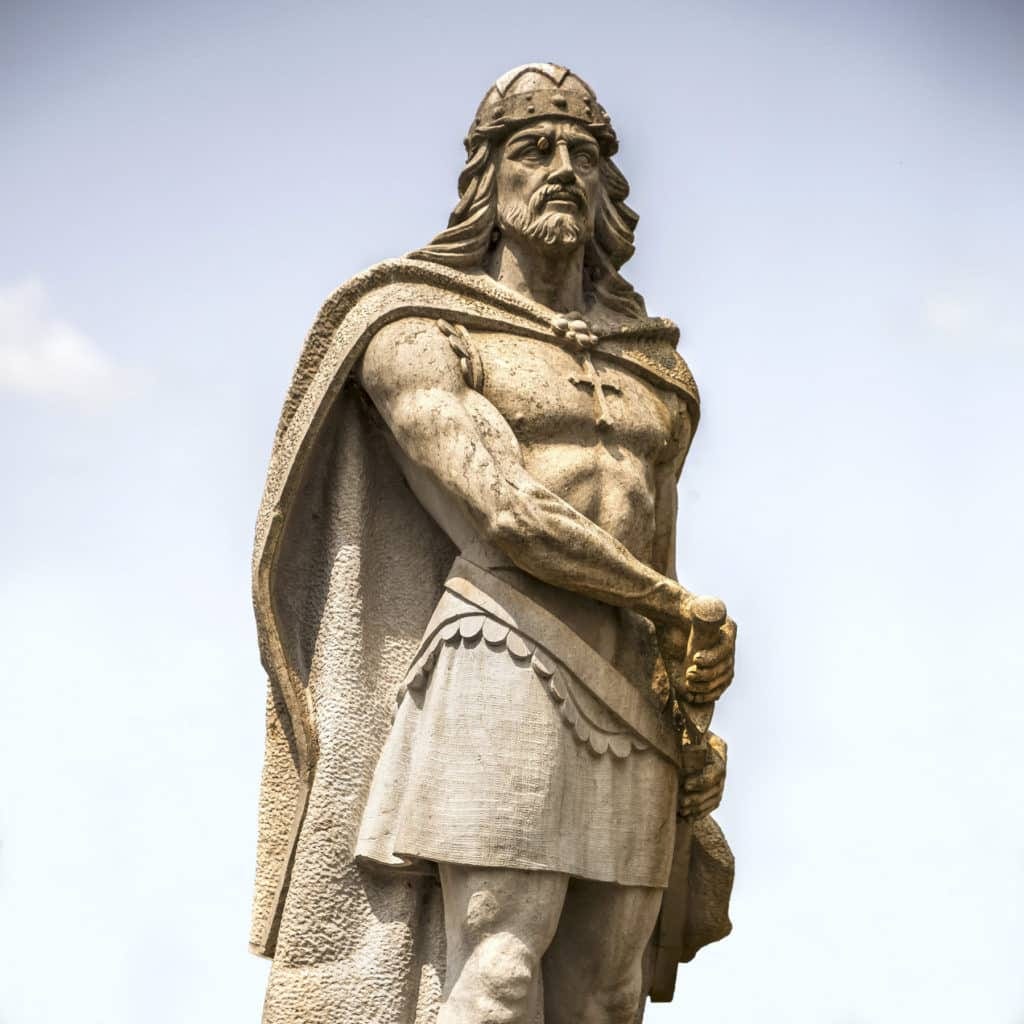
This is where Pelayo enters the story. The details of his life are shrouded in legend, but later chronicles help us sketch an outline. He was probably a member of the Visigothic nobility, perhaps connected to Roderic himself. Some traditions say he had been a royal guard in Toledo. After the conquest he may have been taken hostage by the Muslims and later escaped to the north.
In Asturias, a rugged land of steep mountains and narrow valleys, Pelayo found people who had not fully submitted. The Muslims controlled the main cities and the coastal routes, but the interior was hard to police. Local clans still clung to their independence. Pelayo began to gather them. What he offered was not power or wealth but a cause: to defend the faith and to live free of foreign rule. Around 718 he was chosen as their leader, described in the sources as princeps, a kind of war chief or prince. This was the beginning of a new Christian kingdom, though at the time it must have seemed more like a desperate gamble.
The Chronicle of Alfonso III, written later in the ninth century, described it with biblical language: “Our Lord preserved a remnant of his people, like seed for Spain, through the mercy of His compassion.” To later generations, Pelayo was not just a man but the instrument by which God kept Christianity alive in Iberia.
The Muslim Advance into Asturias
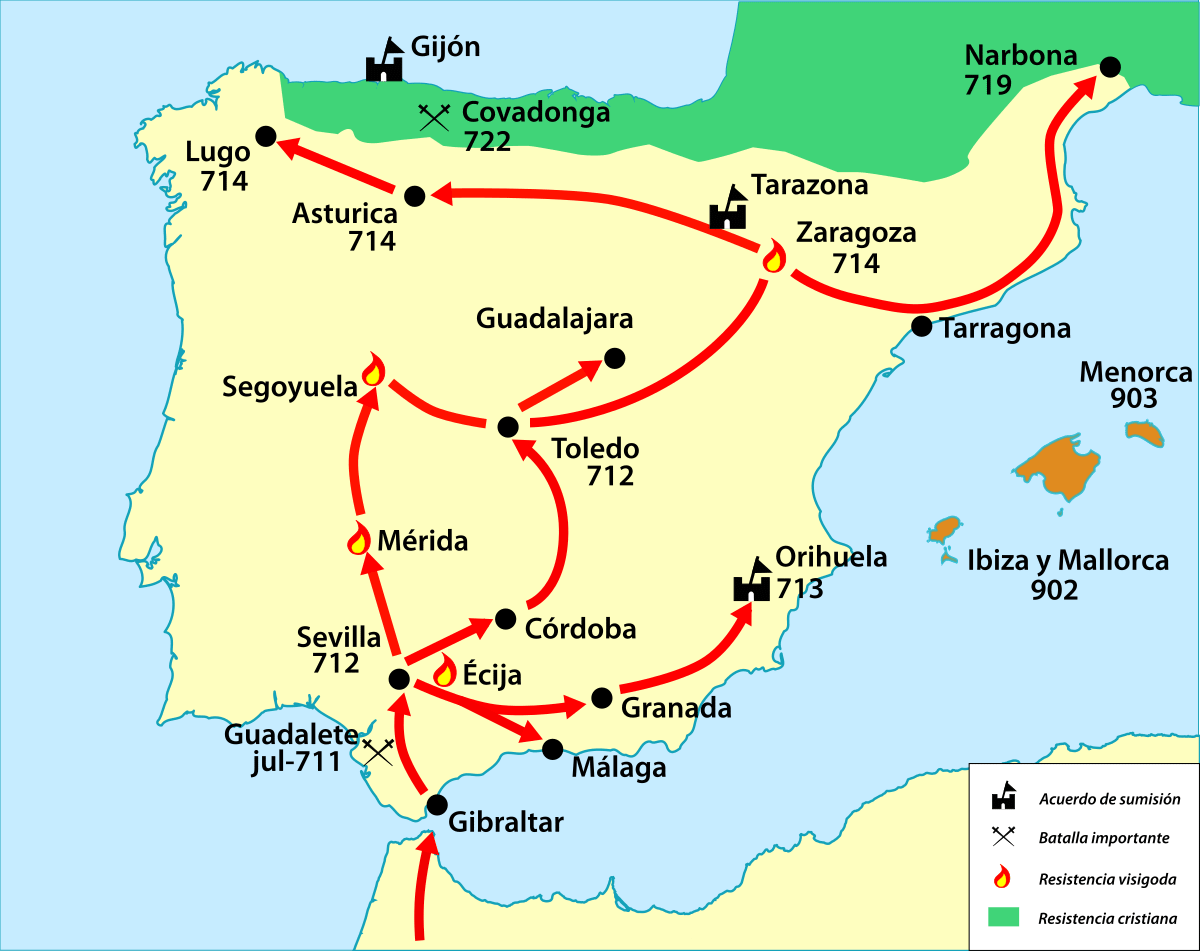
For the Muslims, Pelayo and his band were a nuisance, not a serious threat. The governor of al-Andalus at the time was Anbasa ibn Suhaym al-Kalbi, who ruled from Córdoba. His main concern was consolidating Muslim control over the wealthy and fertile heartlands of Iberia, not the harsh mountains of Asturias. But rebellion could not be ignored. If left unchecked, it might inspire others.
A Muslim expedition was organized to put Pelayo down. Sources name the commander as Alqama. With him, according to Christian chronicles, came Bishop Oppas, a high-ranking churchman from Toledo who had sided with the Muslims. Oppas is said to have tried to persuade Pelayo to surrender, warning him that resistance was hopeless. The dialogue is probably legendary, but its meaning is clear. Oppas represents the collaborators who accepted Muslim rule, while Pelayo represents the remnant who refused.
In the Chronicle of Alfonso III, Pelayo’s reply is defiant: “I will not accept the counsel of a traitor. Christ is our hope that through this mountain which you see, salvation will be given to Spain and to the army of the Goths.” Whether he actually said those words or not, they capture the spirit of the stand at Covadonga.
The Battle in the Valley
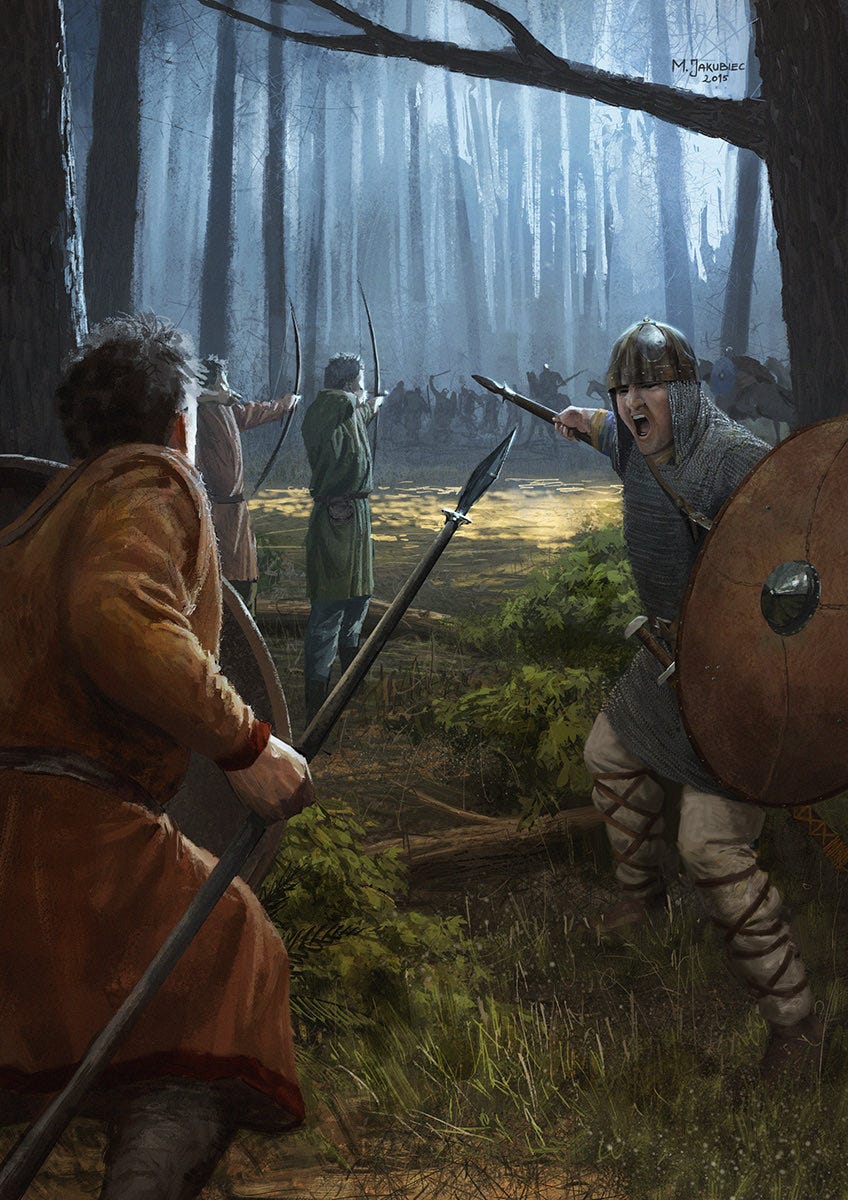
The armies met in the valley of Covadonga, a narrow gorge dominated by steep cliffs and caves. Pelayo and his men used the terrain to their advantage. Christian sources say he had around 300 warriors. Muslim sources claim they were barely 30. The truth is somewhere in between, but it was certainly a small force compared to the Muslim army.
Pelayo positioned his men in the caves and on the ridges above the valley. From there they could rain down stones, arrows, and spears on the advancing Muslims. The narrow terrain meant the larger force could not bring its numbers to bear. The Christians fought from cover, ambushing and retreating, using the land itself as a weapon.
According to legend, the cave at Covadonga became their stronghold, and a wooden cross carried by Pelayo was lifted high as a sign of divine protection. Later tradition held that the Virgin Mary herself appeared to shield the fighters. The Chronicle of Alfonso III says: “The rocks fell from the mountains and by the will of God crushed the army of the Saracens.”
The Muslim historian al-Maqqari, writing centuries later, dismissed the battle as meaningless. He wrote that “this insignificant rebellion… was of no consequence,” and that only a handful of Christians were left in the mountains. But that dismissal itself is revealing. To the Muslims, it was not worth remembering. To the Christians, it was everything.
In the end, the Muslim army broke. Harassed and unable to advance, they withdrew. On their retreat, some were caught in ambushes or even natural landslides. What had been sent as a simple mission to crush rebels turned into a failure. Pelayo had held his ground.
The Birth of Asturias
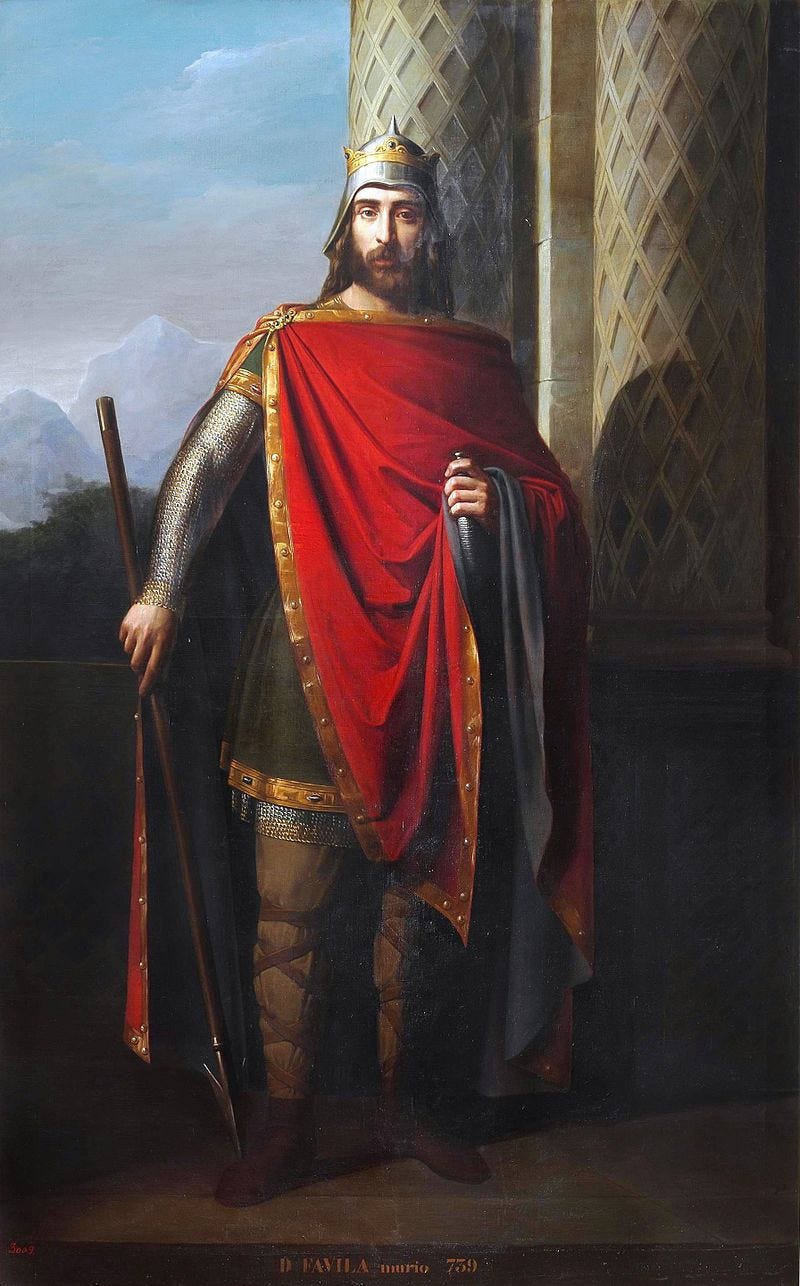
After the battle, Pelayo’s position changed completely. He was no longer a noble in exile but the founder of a new Christian polity. The Kingdom of Asturias was born in those mountains. From its base at Cangas de Onís, it would grow slowly, carving out territory and establishing itself as the first Christian state in post-Visigothic Spain.
For the Muslims, the defeat meant little at the time. Al-Andalus still stretched from the Pyrenees to the Atlantic. But for the Christians, it was a sign. They believed God had intervened to preserve them. Pelayo ruled until his death around 737, and his son Favila succeeded him. The kingdom remained small, but it had roots. It would become the nucleus of later Christian kingdoms that pushed south.
What Pelayo gave the Christians was not land or riches. He gave them something rarer: the belief that they could win. That belief spread, and it changed the fate of a continent.
This is where the story gets even better.
👉 Become a subscriber to read the rest…