
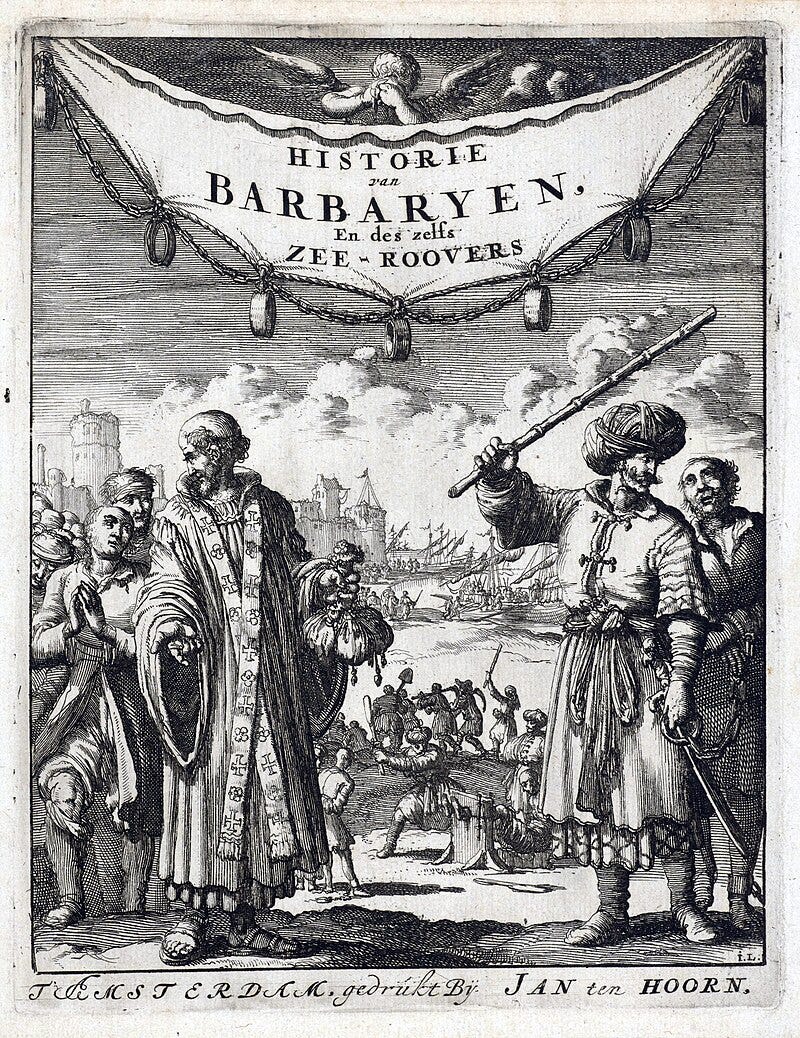
Most people don’t think of Europeans as slaves. When you say the word “slavery,” their minds go to American plantations, Africans in chains, and cotton fields in the South. That version of history is taught everywhere. But there’s another story, one most people never hear. For centuries, Muslims from North Africa raided European coasts, captured men, women, and children, and sold them into slavery.
This happened over and over for 300 years. Historians estimate that between 1 and 2 million Europeans were taken. Entire towns vanished. Coastal areas were emptied. People stopped living near the sea.
It sounds like something out of a bad movie. Pirates sailing across the Mediterranean to snatch villagers from Italy, France, Spain, and even as far as England and Iceland. But it was real. It happened. And it wasn’t a secret either. Everyone at the time knew about it.
This is about what happened (and why almost no one talks about it anymore)…
How It Started
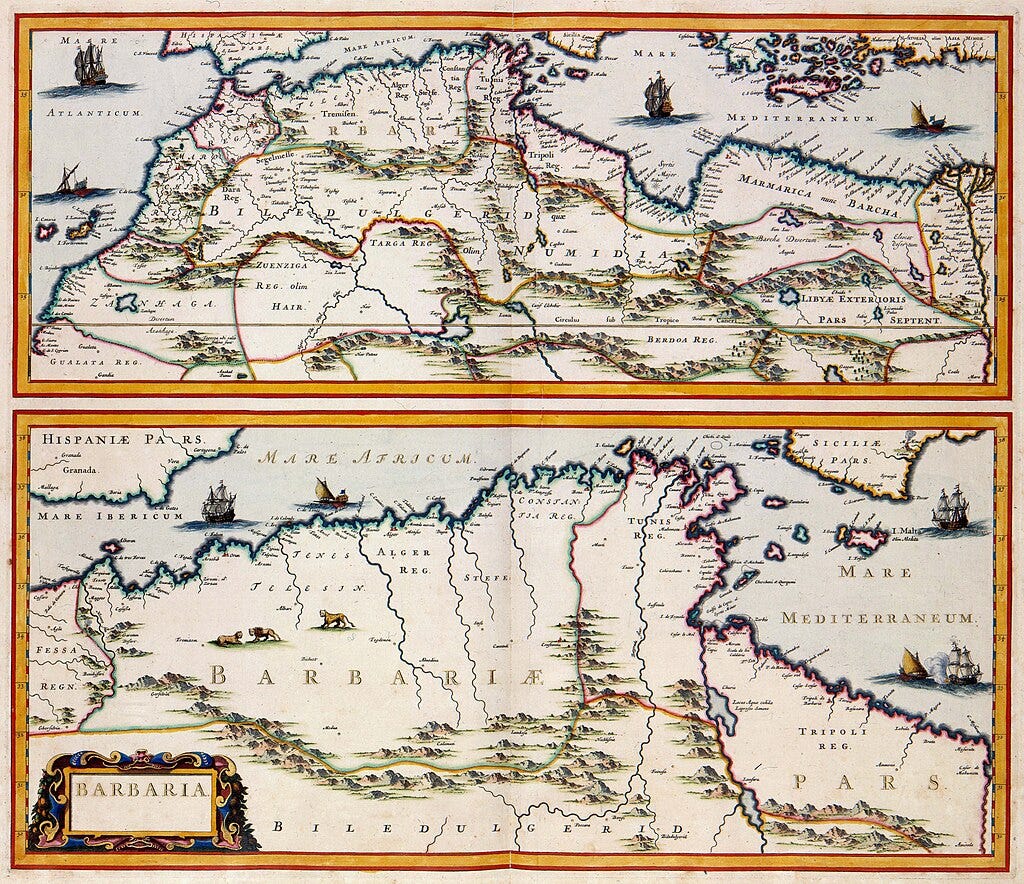
The Barbary Coast was infamous in the 1500s. It refers to the North African stretch of land that includes present-day Morocco, Algeria, Tunisia, and Libya. Back then, these areas weren’t independent countries. They were loosely ruled by the Ottoman Empire or governed by warlords who acted on their own. What they had in common was a reliance on piracy and slavery as part of their economy.
Muslim raiders from the Barbary Coast would sail across the Mediterranean or sometimes even around Spain and up the Atlantic coast looking for targets. They attacked ships, of course, but they also attacked land. Coastal villages were easy prey. A few men with muskets could terrorize a fishing town and drag everyone away in chains.
You might wonder how this was allowed to go on for so long. Part of the answer is that it was profitable. Slavery was a business. The captured Europeans were sold in slave markets in Algiers, Tunis, and Tripoli. Some were bought for labor. Others were ransomed back to their families… if the families had money. If they didn’t, the captives were never seen again.
This was a major institution. And it was accepted by the Islamic world as part of the rules of war. Christians were “infidels,” and enslaving them was considered legal under Islamic law.
Who Were the Slaves?
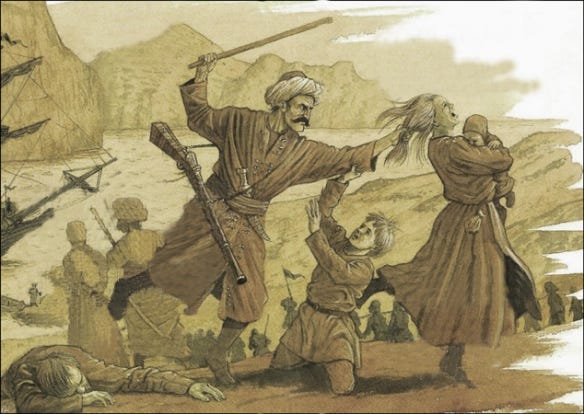
They weren’t soldiers. They weren’t criminals. They were mostly just regular people. Fishermen, farmers, priests, housewives. Entire families could be taken in a single night.
In 1627, Muslim raiders from Algiers attacked Iceland. Several times. They captured about 400 people and took them all the way back to North Africa. One woman, Guðríður Símonardóttir, was sold in a slave market in Algiers and lived there for ten years before she was ransomed. She eventually returned to Iceland and married a priest. Her nickname back home was “Turkish Guðríður,” a reminder that she’d lived among Muslims.
There were English slaves too. In 1625, Barbary pirates raided Cornwall and Devon and captured hundreds. One Englishman, Thomas Pellow, was taken when he was 11. He spent 23 years as a slave in Morocco. He eventually escaped and wrote a book about his experience.
The conditions were brutal. Slaves were whipped, starved, and forced into hard labor. Some were used as galley slaves, chained to oars in ships where they rowed until they died. Others worked in quarries or were used as household servants. Female captives were often sold into harems.
There were Christian monks who raised money to ransom back European slaves… but they could only do so much. And the pirates knew how to play the game. They demanded high prices for the release of priests or nobles, and refused to free ordinary people.
Why Did It Go On So Long?
Europe at the time was divided. The Protestant Reformation had just ripped apart the Catholic world. England and France were at odds with Spain. Venice was trying to hold on to its trade routes. There was no unified European front.
Meanwhile, the Ottoman Empire supported the Barbary states. They gave them weapons, ships, and men. Some of the most famous pirates, like Barbarossa and Dragut, were actually Ottoman admirals. Their raids were part of a larger geopolitical war between Islam and Christendom.
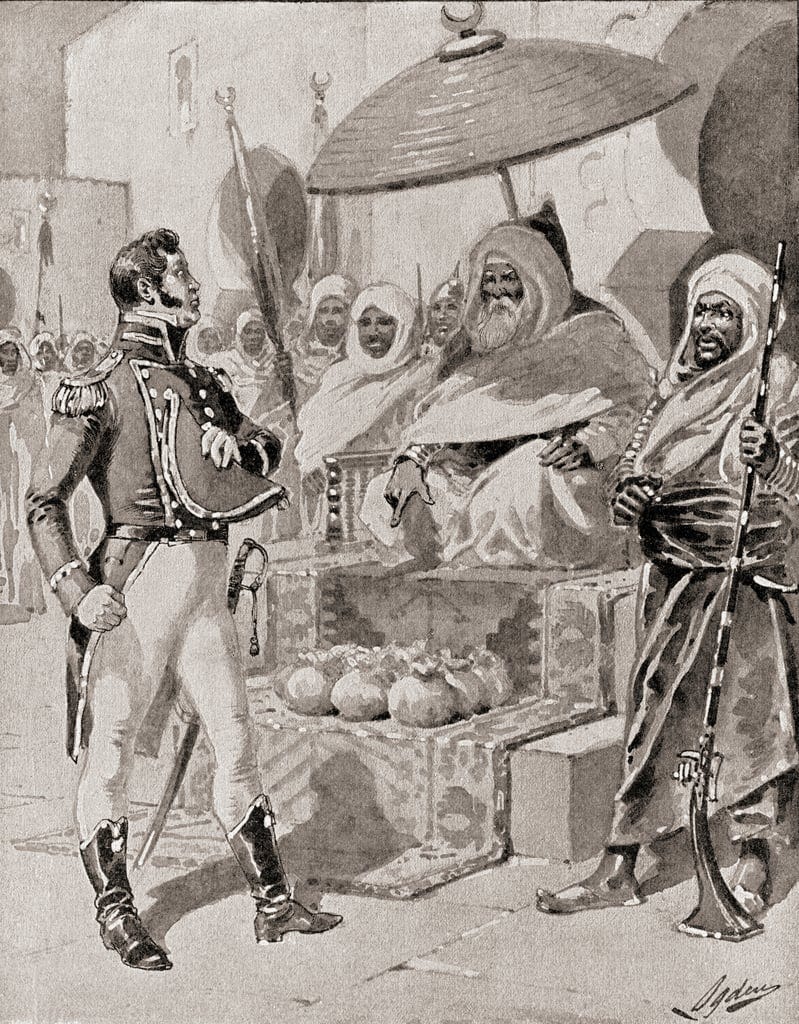
And for a long time, the Barbary pirates were winning. European navies were too weak or too busy fighting each other to stop them. Even the Americans got caught up in it. After the Revolutionary War, American merchant ships no longer sailed under British protection. Barbary pirates captured several American vessels and enslaved the crews.
This led to what we now call the First and Second Barbary Wars. In 1801, President Thomas Jefferson sent the U.S. Navy to the Mediterranean. After years of fighting, the U.S. forced the Barbary states to sign treaties. But it wasn’t until European powers grew stronger that the trade was truly ended.
“The ambassador answered us that Islam was founded on the laws of their Prophet, that it was written in their Qur’an, that all nations who should not have acknowledged their authority were sinners, that it was their right and duty to make war upon them wherever they could be found, and to make slaves of all they could take as prisoners…”
(Jefferson to Secretary of Foreign Affairs John Jay, March 28, 1786)
The final blow came in 1830, when France invaded Algiers. They crushed the Dey’s regime and ended the slave markets. Other European powers followed suit. Within a few decades, the Barbary Coast as a center of slavery and piracy was finished…
But what happened to the millions who had already vanished?
What was daily life like for a European slave in North Africa?
And why has this entire chapter of history been buried so deeply?
The answers are as disturbing as the silence surrounding them…
👇 Unlock the full story.