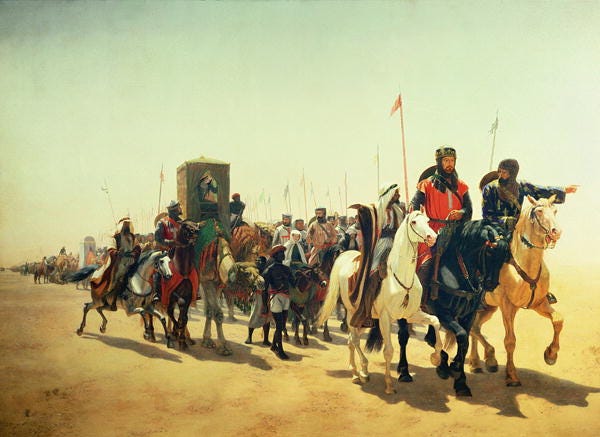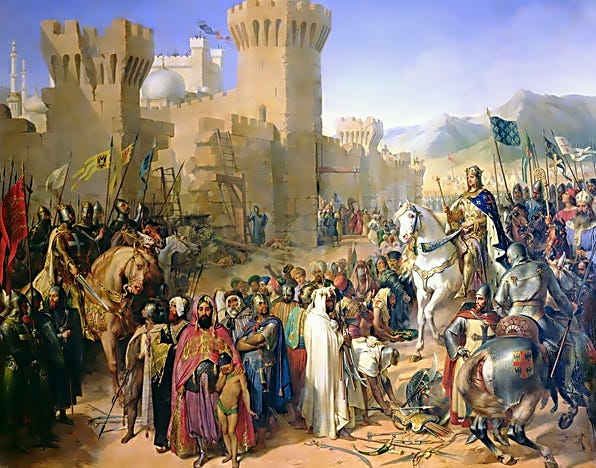
This week in history, on July 12, 1191, the great port city of Acre surrendered to the armies of the Third Crusade after nearly two years of constant fighting. It was one of the longest and bloodiest sieges of the Middle Ages, drawing kings, knights, pilgrims, and soldiers from across Europe, while Saladin threw everything he had into saving one of the most important cities in the Holy Land. When Acre fell, the Third Crusade was given a second chance after what had looked like a complete disaster.
The story, however, begins four years earlier..
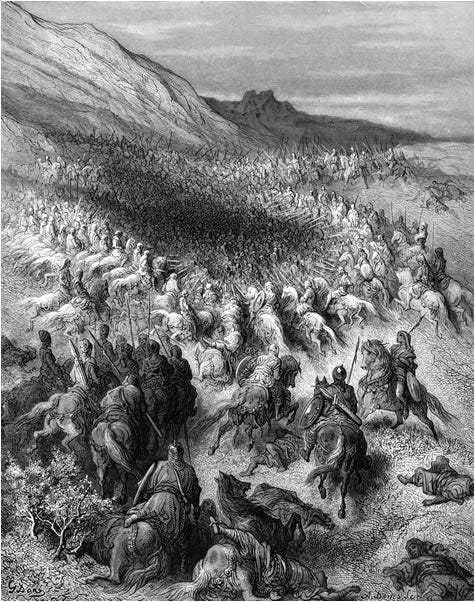
On July 4, 1187, Saladin crushed the army of the Kingdom of Jerusalem at the Battle of Hattin. King Guy of Jerusalem was captured, the relic of the True Cross fell into Muslim hands, and the crusader army was almost completely destroyed. One Christian chronicler called it “a day of mourning and misery,” and he was not exaggerating. With no army left to defend them, the Christian cities of the Holy Land surrendered one after another until, on October 2, Jerusalem itself opened its gates to Saladin.
Pope Gregory VIII immediately called for a new crusade, and before long three of Europe’s greatest rulers answered. Emperor Frederick Barbarossa marched east with what was probably the largest crusading army ever assembled. Philip II of France prepared his own expedition, while Richard of England, who would later become known as Richard the Lionheart, gathered men and ships before sailing for the Holy Land.
Long before those kings arrived, however, the surviving Crusaders decided they could not simply wait.
Friendly reminder: The Western Spirit exists because of readers like you. Join us and help keep this project alive and independent.
If you’ve been enjoying these essays, consider becoming a paid subscriber. For a few dollars a month, you’ll get:
In-depth pieces on forgotten battles, brave men, and turning points in Western history
Reflections on faith, order, tradition, and the deeper meaning behind culture
Full access to the growing archive — essays, book breakdowns, and historical deep dives
This project exists because readers like you make it possible.
In August 1189, King Guy, who had recently been released from captivity, marched against Acre with what remained of his followers. The city was far more than another fortress. It possessed the finest harbour in the Kingdom of Jerusalem, and whoever controlled Acre controlled the easiest route between Europe and the Holy Land. Every ship carrying knights, horses, food, weapons, or pilgrims needed a safe port, and Acre was the greatest of them all. One contemporary simply called it “the key of the kingdom.”
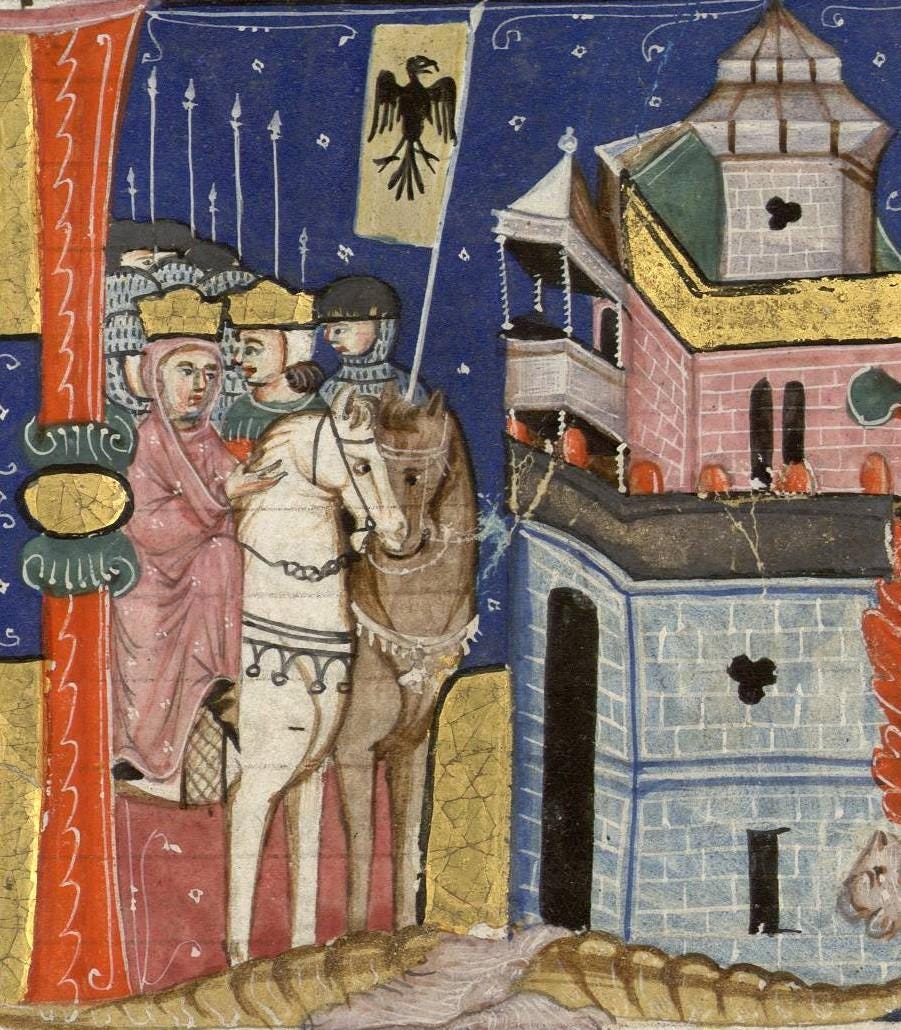
The siege that followed became unlike any other.
The Crusaders surrounded the city while Saladin surrounded the Crusaders.
Inside the walls, the Muslim garrison defended Acre. Outside the walls, the Crusaders built camps, trenches, siege towers, and enormous trebuchets. Beyond them stood Saladin’s army, attacking the besiegers whenever it found an opportunity. Any ship trying to reach Acre had to fight through the Christian fleet, while every convoy bringing food to the Crusader camp had to fight its way through Saladin’s army.
The result was effectively two sieges happening at the same time.
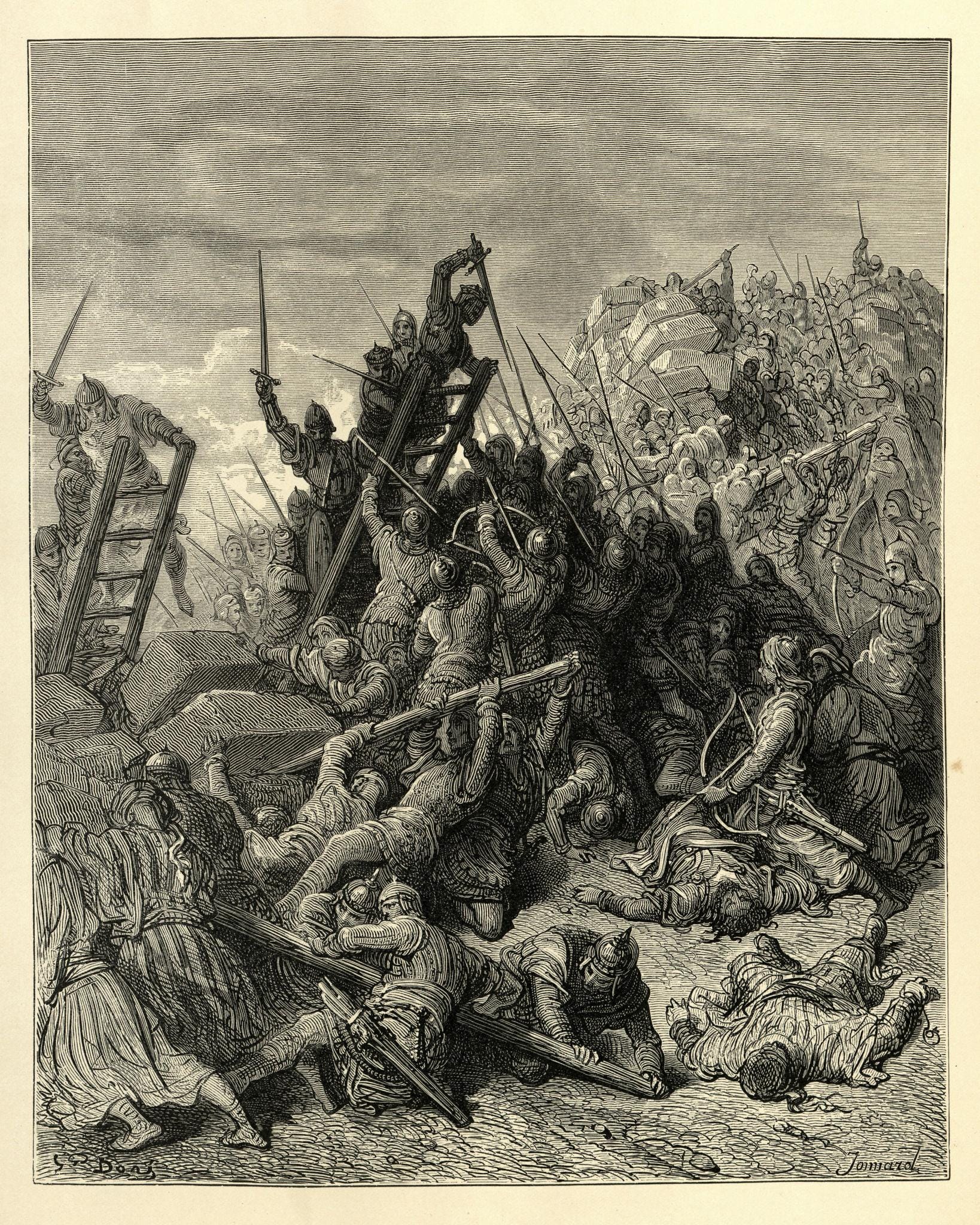
The author of the Itinerarium Peregrinorum, one of the principal Christian accounts of the Third Crusade, wrote that “hardly an hour or a day passed without some kind of fighting.” Assaults on the walls were answered by sorties from the defenders, while Saladin repeatedly attacked the Christian camps in the hope of forcing them away from the city.
Disease proved almost as deadly as the sword.
Summer heat turned both camps into breeding grounds for sickness. Food became scarce. Horses died by the thousands. Bodies lay between the lines because neither side could recover them without coming under fire. Saladin’s secretary, Baha ad-Din ibn Shaddad, later wrote that suffering affected both armies, and even victories came at a terrible cost.
Then, in the spring of 1191, everything changed..