
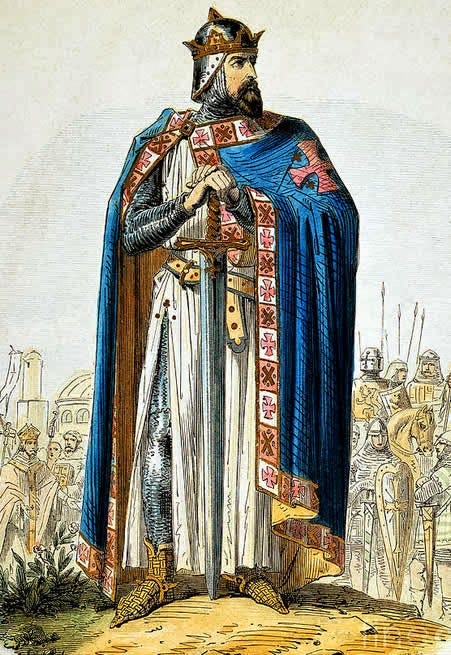
The First Crusade was special…
It began with something real, something deeply felt. A belief that the world could be redeemed. A belief that certain places still mattered. A belief that the tomb where Christ had risen should not lie in foreign hands.
And at the center of it all stood a quiet, steady man named Godfrey of Bouillon.
He did not come from a great empire. He was not the richest or most famous knight in Christendom. He was not a fiery preacher or a brilliant general. But he believed, more than most men, that he had a duty to go. He sold everything he owned, gathered a band of men from across the Rhineland, and left behind the safety of Europe to walk across a continent in search of something holy.
And when Jerusalem was finally taken, and the people offered him a golden crown, he refused it.
He said: “No man should wear a crown of gold in the city where Christ had worn a crown of thorns.”
It is one of the rare moments in history where a man stood at the height of power and chose not to rise higher but to bow lower.
But to understand the weight of that choice, you have to know the path that led him there…
The Making of a Knight
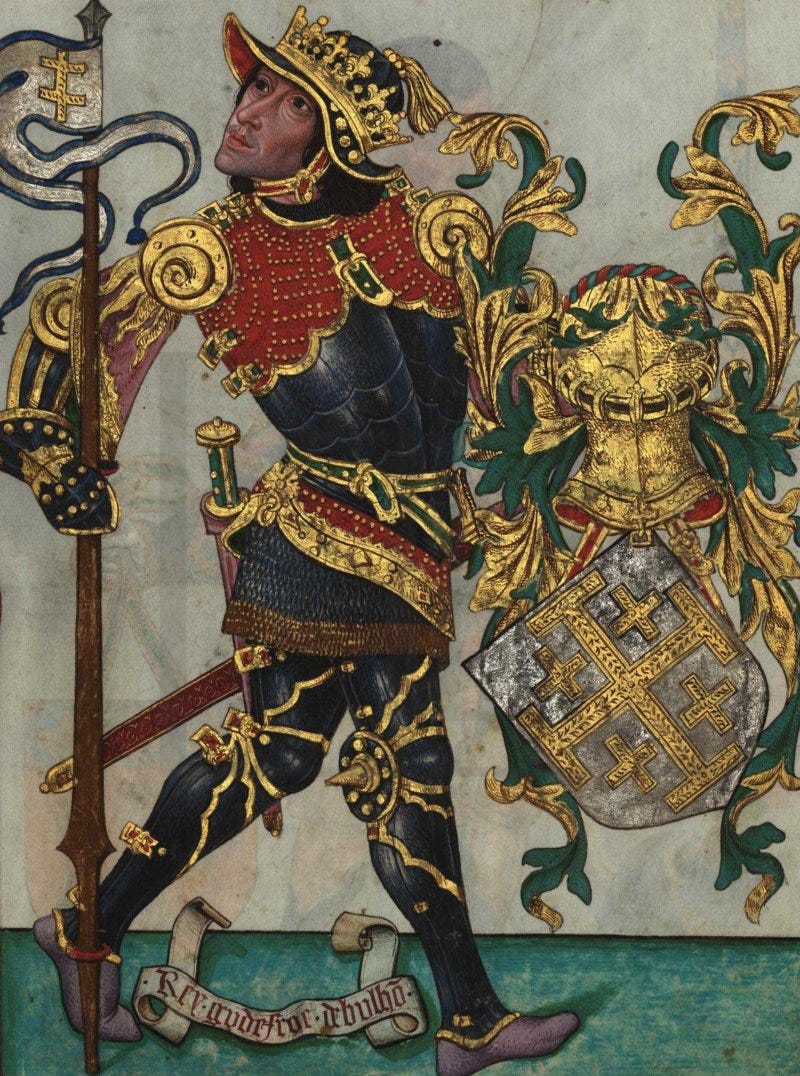
Godfrey was born around 1060, in the lands we now call Belgium, into the nobility of the Holy Roman Empire. He was the second son, which in those days meant he would inherit almost nothing. His older brother would receive the lands, the titles, the family name. Godfrey would have to make his own way.
From an early age, he was shaped by two things: war and faith.
His family had deep ties to the Church, and his mother was known for her piety. At the same time, his early life was spent in service to the Emperor, fighting in Italy and Germany, learning how to command men and how to survive in a world ruled by the sword. But even then, people noticed there was something unusual about him. He was serious without being grim. Brave without being reckless. And deeply Christian in a way that was not performative or political, but personal and internal.
He earned the title Duke of Lower Lorraine after fighting loyally for Emperor Henry IV during the civil wars of the empire. But Godfrey never let politics consume him. He saw power as something to be used, not worshipped.
That made him rare in his time.
The Call from the East
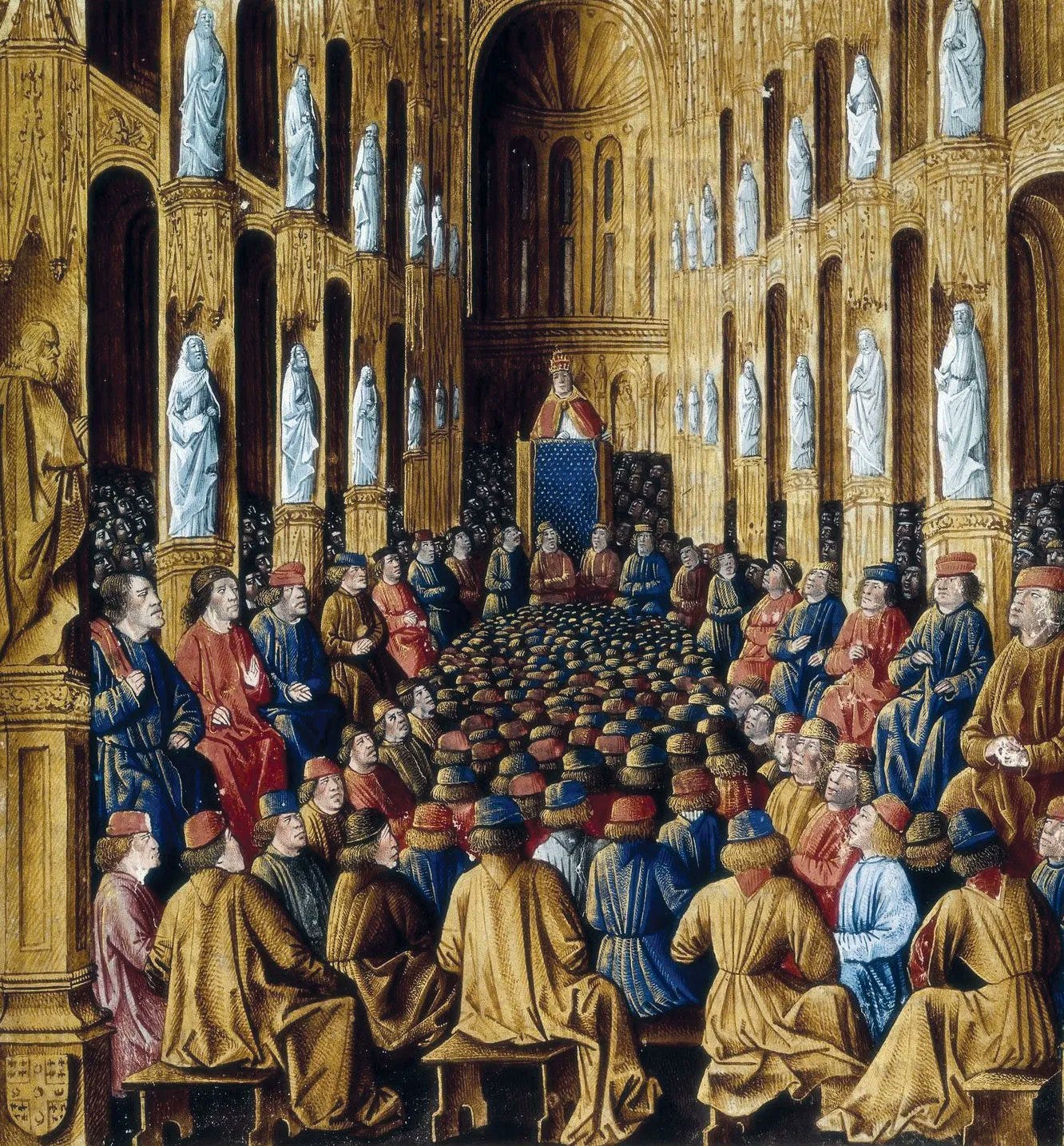
In 1095, a messenger arrived from the Byzantine Emperor, asking the Pope for help. The Holy Land, and especially the city of Jerusalem, had fallen into the hands of the Seljuk Turks. Christian pilgrims were being attacked. The old roads were no longer safe.
Pope Urban II responded with one of the most powerful speeches in Western history, calling on the knights of Europe to take up the cross, to lay down their petty rivalries, and to march east as one people united under God. He did not promise them riches. He did not promise them comfort. He promised them suffering, hardship, and the chance to redeem their souls.
Tens of thousands answered the call.
Among them was Godfrey, who sold or mortgaged everything he owned to fund the journey. He gathered a small but loyal army of knights and common men from his homeland, and together they set off…
The Road to Jerusalem
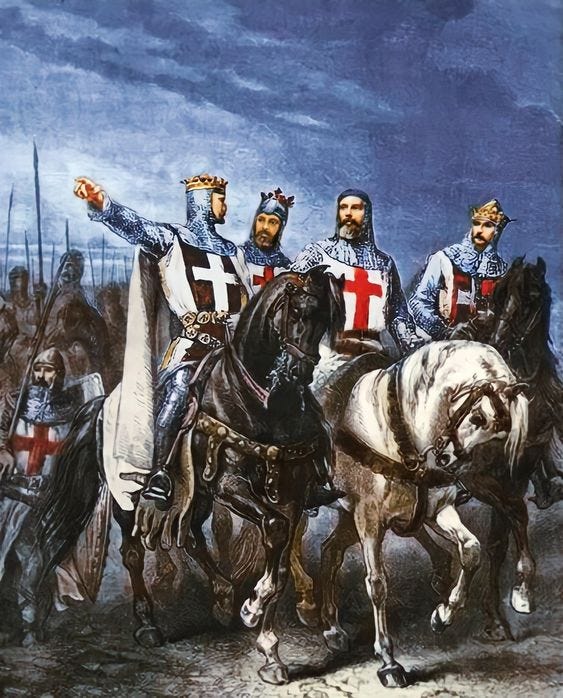
The march east was nothing like the chivalric stories. The roads were long, dry, and cruel. Food ran short. Water was scarce. Entire bands of pilgrims died before ever reaching the Holy Land. The crusading armies were not united under one leader, and tensions flared between the different princes. Greed and pride often pulled them apart.
But Godfrey stayed focused.
He did not try to dominate the other lords. He did not seek attention. He simply led his men with quiet discipline and faith. He earned a reputation for being fair, uncorrupt, and courageous in battle. When others fought over titles and spoils, he kept his eyes on the mission.
At Dorylaeum, at Antioch, at countless skirmishes and crossings, he stood with his men on the front lines. He bled with them. He buried them. And he kept moving forward.
The siege of Antioch in particular nearly broke the army. The Crusaders starved outside the walls for months. When they finally took the city, they were immediately besieged by a Muslim relief army, and the tables turned. Surrounded, starving, hopeless, many began to desert. But then, one of the knights claimed to have found the Holy Lance, the spear that had pierced Christ on the cross, buried beneath the floor of the cathedral.
Whether or not it was real did not matter.
It gave them hope. It reminded them why they were there.
The next morning, with the relic held high, the army charged out of the gates in a last, desperate assault. Against all odds, they won.
And they kept going.
The City of Cities
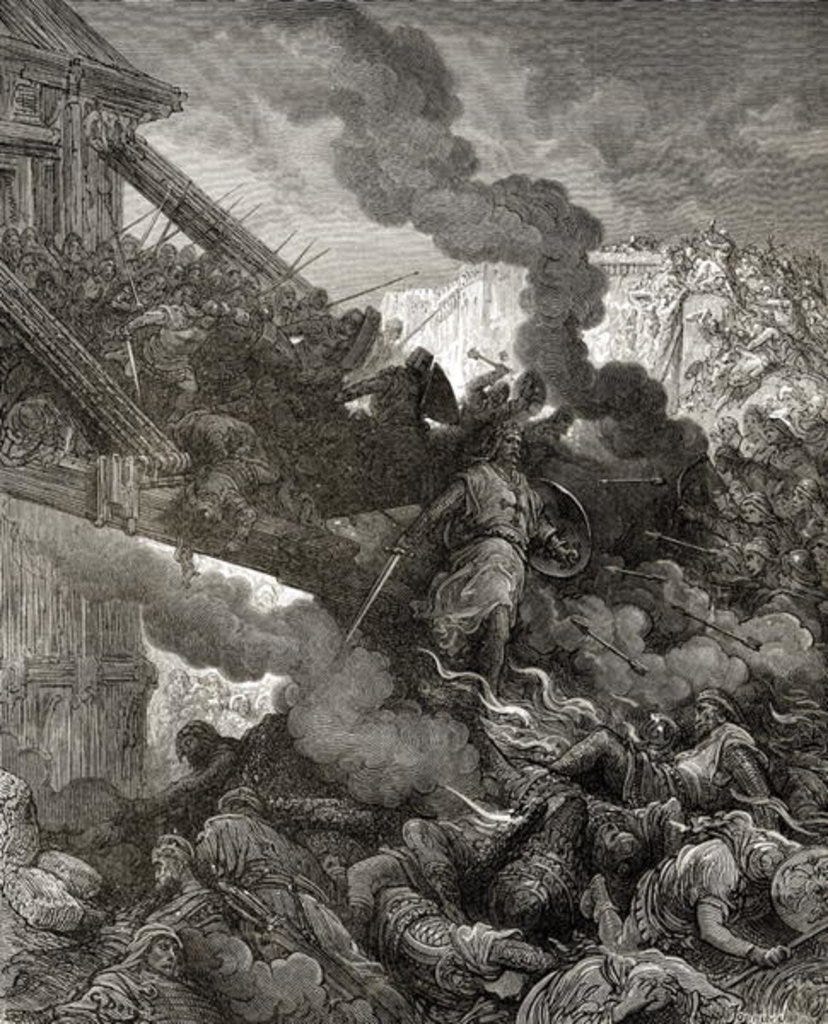
By the time the Crusaders reached Jerusalem in the summer of 1099, they were half their original size. Worn, sunburned, and hungry, they stood before the great walls of the city that had drawn them across the world.
They had no siege engines. No trees. No supplies. But they had come too far to turn back.
So they built what they could. They hauled wood from miles away. They fasted and prayed. Some walked barefoot around the city, singing psalms. And when the final assault came, they fought like men who believed the gates of Heaven stood behind the walls of stone.
It was Godfrey’s tower that reached the wall first. It was his men who broke through. He fought through the narrow passages and arrow fire to reach the Temple Mount.
The city fell…
But after the noise died down, the surviving knights and pilgrims gathered at the Church of the Holy Sepulchre.
And wept.
They had seen things they could never unsee. Done things they could never undo. But they had reached the city of their prayers.
They had come to Jerusalem.
The Refusal
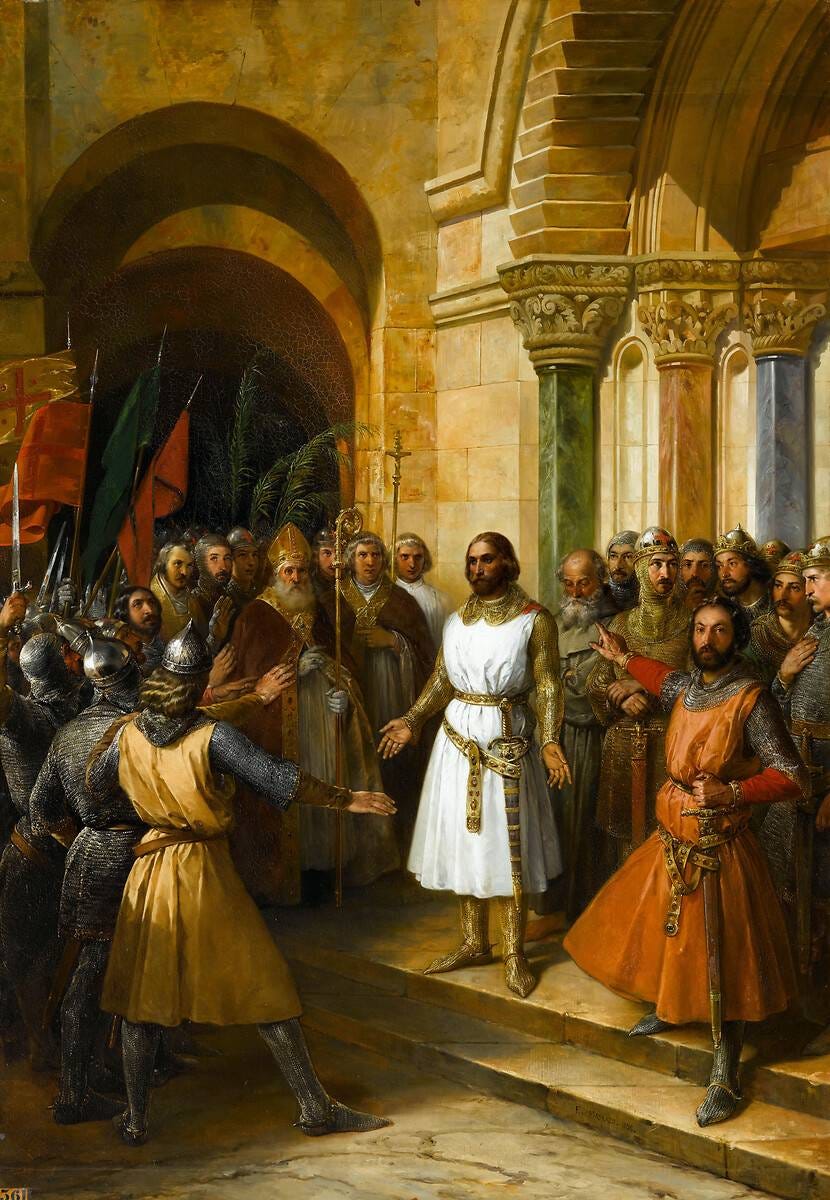
Now the city needed a ruler.
Bohemond, the cunning Norman prince, had already taken Antioch. Raymond of Toulouse had hoped to be king. But the soldiers, priests, and pilgrims looked to Godfrey.
They trusted him.
He had not sought glory, but it had found him. He had not sought power, but he had used it wisely. So they offered him the crown.
But he said no.
He would not wear gold where Christ had worn thorns.
He accepted the role of protector, the Defender of the Holy Sepulchre. He would govern, but not reign. He would serve, but not exalt himself.
Aanyone can charge into war.
It takes a different kind of courage to walk away from a throne…
If you’ve come this far, stay with me. The final act of Godfrey’s life... the last battle, the collapse, and his death is where the story becomes eternal. Upgrade now to read the part no history book will tell you this way...