
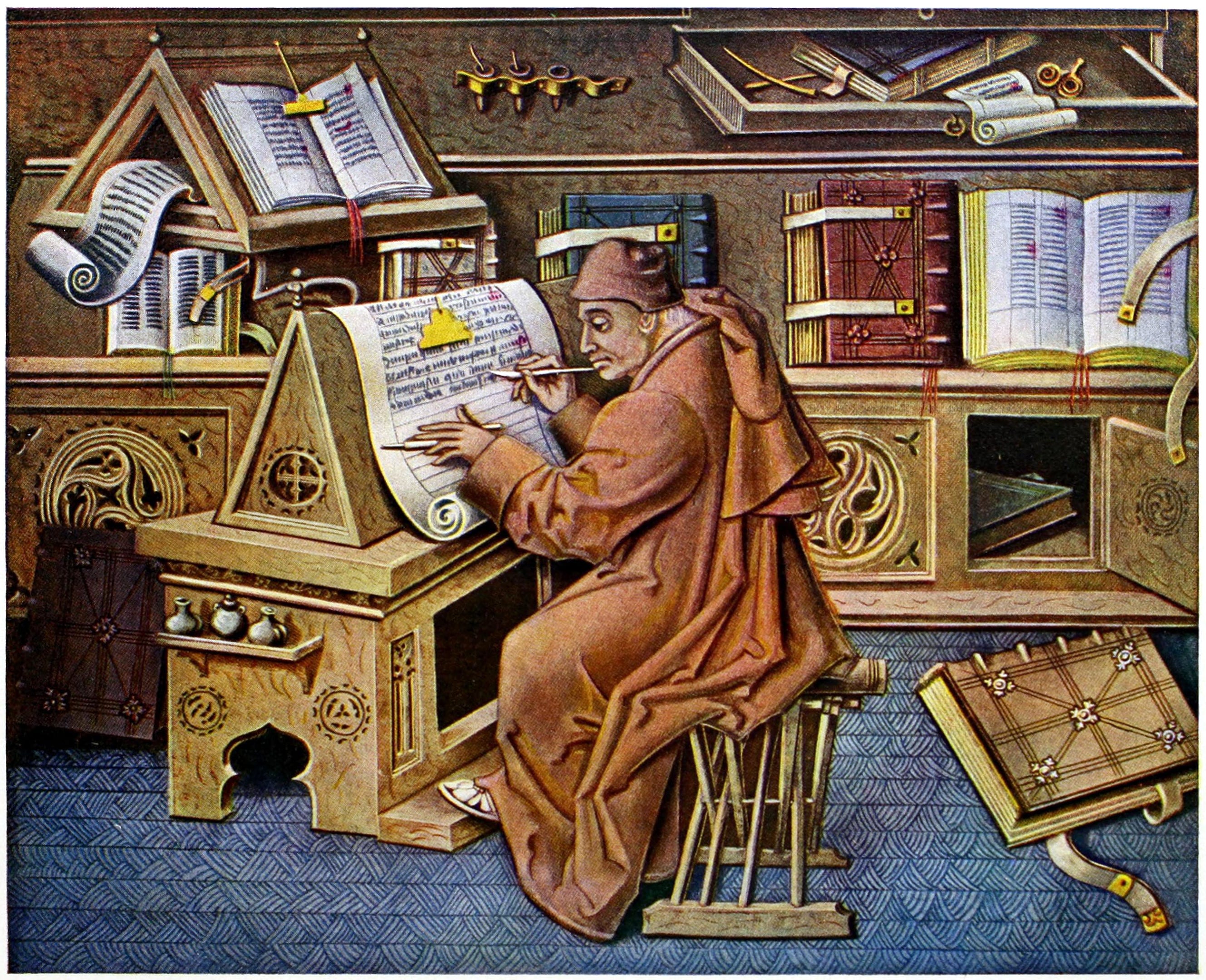
Today, many people still think of the Middle Ages as a thousand-year period when almost nobody could read.
There is some truth to this idea because people in medieval Europe were generally less literate than people today. Books were expensive, and education was not available equally to everyone. This was especially true in the early Middle Ages, when the ability to read Latin was mostly limited to priests, monks, and other members of religious communities.
However, it is difficult to know exactly how many medieval people could read. Literacy was not simply a matter of being able or unable to read. Some people could read but could not write well. Others could read their local language but could not understand Latin. Even the medieval word litteratus often meant that someone was educated in Latin, rather than simply able to read.
Historian Michael Clanchy explained this clearly when discussing how the word was used in medieval England:
Medieval people lived in the shadow of the former Roman Empire and so Latin remained the principal language of record, long after it had ceased to be anyone’s mother tongue, across the whole medieval millennium from 500 to 1500. To be “literate” (litteratus) meant to know Latin. This was the language of the medieval Bible and hence of the church and clergy in the west, just as it continued to be the principal language of law and government. England was exceptional in developing a written Anglo-Saxon vernacular which functioned alongside Latin or independently of it. The earliest texts extant in Old English are the laws of King Aethelberht of Kent, which were written down between 597 and his death in 616. Along with laws went title-deeds which might combine Latin and English: the clauses of conveyance were in Latin, while the details of the boundaries of the property were written in English so that they could be read aloud in court directly from the document and followed on the ground by witnesses.
As such the more interesting question is how far reading and writing actually reached into medieval European life.
The Monastery Was a Beginning
After Roman political rule ended in Western Europe, much of the Latin literature and learning of the ancient world survived through religious institutions. Monasteries became important centers for copying and studying texts. Religious communities needed books for worship, while educated members of the clergy used them for theology and administration.
This is where the common image of medieval monks copying manuscripts comes from.
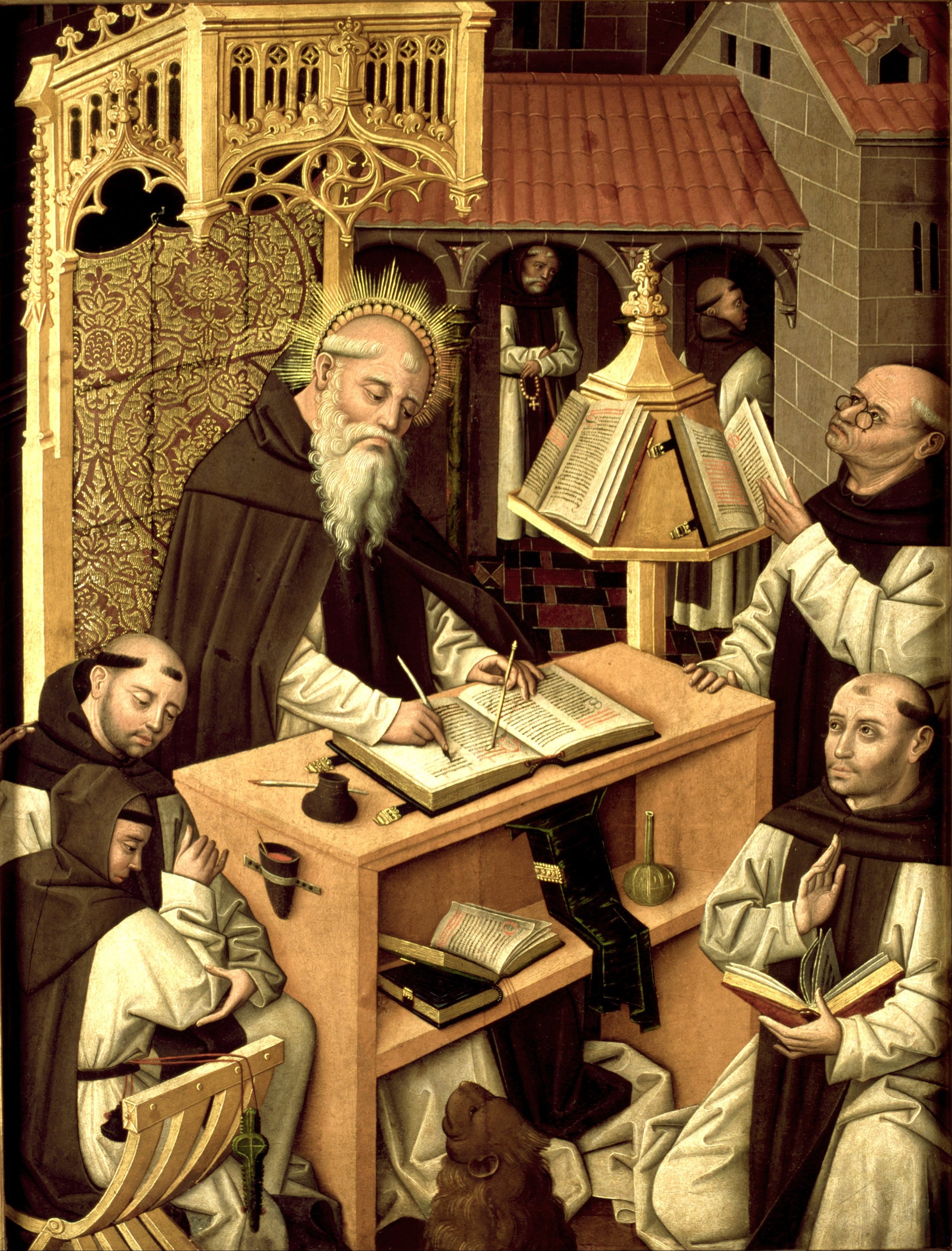
However, by the Carolingian period, writing was already being used outside monasteries as well. Charlemagne believed that poor writing could lead to poor understanding of religion. He made this connection in a document known as De litteris colendis:
Be it known, therefore, to you, devoted and acceptable to God, that we, together with our faithful, have deemed it expedient that the bishoprics and monasteries entrusted by the favor of Christ to our control, in addition to the order of monastic life and the relationships of holy religion, should be zealous also in the cherishing of letters, and in teaching those who by the gift of God are able to learn, according as each has capacity. Although right conduct may be better than knowledge, nevertheless knowledge goes before conduct. Therefore each one ought to study what he desires to accomplish, in order that so much the more fully the mind may know what ought to be done, as the tongue speeds in the praises of all-powerful God without the hindrances of mistakes. We have begun to fear that, as skill in writing was less, wisdom for understanding the Holy Scriptures might be much less than it rightly ought to be. And we all know well that, although errors of speech are dangerous, far more dangerous are errors of the understanding.
Two years later the Admonitio generalis turned that fear into a school program:
And let schools be established in which boys may learn to read. Correct carefully the Psalms, the signs in writing (notas), the songs, the calendar, the grammar in each monastery or bishopric, and the catholic books; because often some desire to pray to God properly, but they pray badly because of the incorrect books. And do not permit your boys to corrupt them in reading or writing. If there is need of writing the Gospel, Psalter, and Missal, let men of mature age do the writing with all diligence.
Historian Rosamond McKitterick argued that writing was not used only by priests and monks. In her study of Frankish society in the eighth and ninth centuries, she showed that writing had already become a normal part of everyday society:
Literacy and the use of the written word in the early middle ages have hitherto been thought to have been confined to a clerical elite, while society at large conducted its affairs orally. There was undoubtedly some continuity and much change in the functions of writing and possession of literate skills from the late Roman to the Carolingian periods; there is certainly sufficient evidence to dispose of any Pirenne-like thesis of the decline in literacy outside a clerical elite by the eighth century and a rebirth of literacy in the eleventh century. The Franks in particular increased their resort to literate modes for legal and administrative business from the mid-eighth century. The written word became a fundamental element of Carolingian culture, and Frankish society in the Carolingian period was transformed into one largely dependent on the written word for its religion, law, government and learning.
Friendly reminder:
The Western Spirit exists because of readers like you. Join us and help keep this project alive and independent.
If you’ve been enjoying these essays, consider becoming a paid subscriber. For a few dollars a month, you’ll get:
Essays on brave men, and turning points in Western history
Reflections on faith, tradition, and culture
Full access to the growing archive - essays, book breakdowns, and deep dives
This project exists because readers like you make it possible.
Then Europe Built Universities
Continue reading below.