
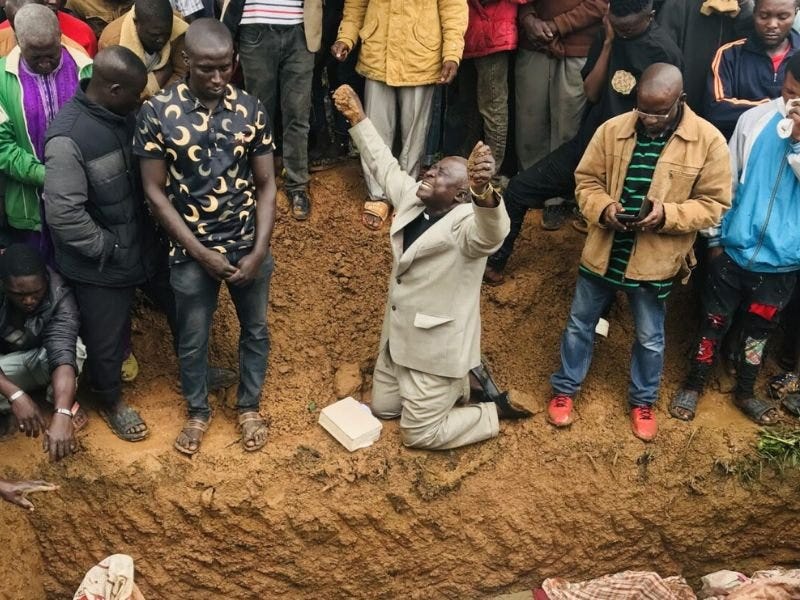
Today, Nigeria is home to one of the largest Christian populations in the world. Depending on which estimates you look at, somewhere between 43% and 50% of the country's roughly 240 million inhabitants are Christians. That's around 103 to 120 million people.
Major groups include Roman Catholics, Anglicans (Church of Nigeria), Pentecostal and independent/Aladura churches, Baptists, Methodists, and evangelical bodies such as the Evangelical Church Winning All (ECWA).
Unfortunately, the reason we have been hearing so much about Nigeria recently is that our fellow Christians are being massacred by Muslim terrorists, particularly the Fulani groups active in the Middle Belt.
Just this month, Christian villages have come under repeated attack across multiple states. Homes and churches have been burned, families have been forced to flee, and Christians have been abducted.
The violence has not been limited to a single incident. To give you some idea of what our fellow Christians in Nigeria are experiencing, consider some of the reports published over the past few months:
February: At least 12 Christians killed in Barkin Ladi and Riyom areas of Plateau State. Separately, at least 32 killed in the Borgu area of Niger State. Attack on Holy Trinity Parish in Kafanchan Diocese (Kaduna) killed three and abducted 11, including the parish priest Fr. Nathaniel Asuwaye.
March: At least 12 killed in Benue State.
Palm Sunday (around early April): At least 28 killed in a heavily Christian area of Plateau State.
Easter Sunday (around 5 April): Five Christians killed at two churches in Kaduna State (with 31 abducted); separate attack in Benue State killed 17 Christians.
22 June: Armed Fulani Muslims attacked predominantly Christian Kawel village in Bokkos LGA, Plateau State. Police reported at least 20 deaths; Morning Star News reported around 28 Christians killed, including Rev. Markus Nyam (Church of Christ in Nations pastor) and members of his congregation.
Late June–early July: At least 21 Christians killed by suspected Fulani Muslims across Kwande, Okpokwu, and Katsina-Ala LGAs in Benue State.
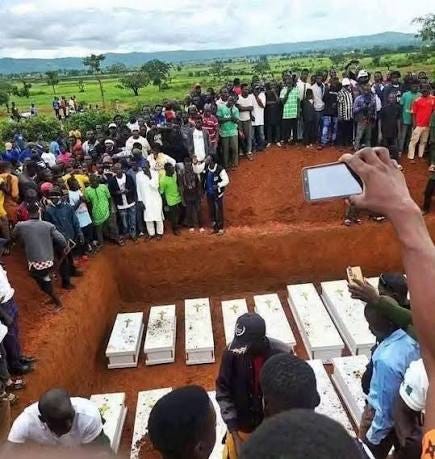
Around 26 July: Fulani Muslims attacked Naridon village, Kauru LGA, Kaduna State. At least 30 Christians killed (including 11 children; reports note 21 Catholics and 9 ECWA members). Homes burned. Mass funeral held for many of the victims.
Around 29 July: Catholic priest Fr. Samuel Opeyemi Oyetoro (Diocese of Lokoja) ambushed and killed near Ajaokuta, Kogi State, while traveling to celebrate Mass. He suffered severe machete wounds.
Early–mid August (multiple attacks, mainly Plateau and Benue): ~15 Christians killed in Plateau between 2–12 August; around 30 massacred in Benue on 16 August; close to 30 more killed in Plateau around 17–18 August; additional killings in Adamawa and elsewhere. A pastor and four others abducted and the pastor murdered in Plateau around 28 August (including reports involving Pastor Hills Emmanuel). These and other incidents contributed to Intersociety’s figure of ~138 Christian deaths in August alone.
At least 343 Christian deaths and 202 abductions tracked between 1 September and 10 October (including ~130 in Plateau and ~64 in Adamawa), plus attacks on churches, abductions of pastors, and ongoing issues such as schoolchildren held by Boko Haram. This period is included in the broader year-to-date ranges cited above.
8 November: Fulani Muslims killed at least five Christians in Plateau State (attacks in Bel/Sho District, Barkin Ladi, and Gwol-Hoss, Riyom). One of the victims was a fifteen-year-old boy, Emmanuel Pam Dachung.
15–16 November: Suspected Fulani Muslim militants murdered at least 14 Christians across four local government areas of Plateau State (Mangu, Riyom, Barkin Ladi, and Bokkos). One attack in Zwaghal village alone killed around nine or ten people, with victims later buried in a mass grave.
16 November: Pastor Caleb Myaga and two male relatives were killed in Takum County, Taraba State, after suspected Fulani Muslims broke into their compound, dragged them outside, and shot them.
17 November: Five Christians were killed and twelve children abducted in Rumirgo, a Christian community in Askira-Uba Local Government Area of Borno State. At least 27 houses were burned.
Around the same period (Kaduna): Additional abductions and killings were reported in Kaduna State, including an attack on Kurmin Wali in which twelve Christians were taken during a Sunday service (nine remained in captivity as of November 26) and a separate raid in Gonin Gora in which a man was killed and his wife and two children were abducted.
On or around 23 November: A nineteen-year-old Christian farmer named Jesse Monday lost one of his hands after suspected Fulani Muslims attacked him and others while they were working farmland in Rewienku village, Bassa Local Government Area, Plateau State.
And these are just some of the incidents that have been reported this year.
According to a report published in early September by the Nigerian human rights organization “Intersociety”, more than 3,000 Christians were killed during the first eight months of 2026 alone (their figure was 3,083 for January–August), with roughly 400 churches attacked or destroyed in the same period.
Equipping the Persecuted / TruthNigeria documented at least 4,216 Christian deaths from January 1 to September 8, 2026, describing the figure as a minimum.
Notable earlier episodes include the Christmas 2023 massacres in Plateau that killed around 200 Christians across multiple villages, and repeated large-scale raids throughout 2024 and 2025.
Now, given everything that is happening in Nigeria, I thought it would be a good time to introduce you to the history of these Christian communities. How did Christianity establish itself in Nigeria in the first place? Who were the missionaries responsible for introducing the Christian faith to this part of Africa?
The Arrival of the Portuguese
Under Prince Henry the Navigator, the Portuguese began investing heavily in maritime exploration. They wanted to establish new trade routes, but they were also interested in spreading the Christian faith beyond Europe.
By the end of the fifteenth century, the Portuguese reached the Kingdom of Benin, one of the most powerful kingdoms in this part of Africa. Now, despite its name, the historical Kingdom of Benin was actually located in what is today southern Nigeria, with its capital at Benin City.
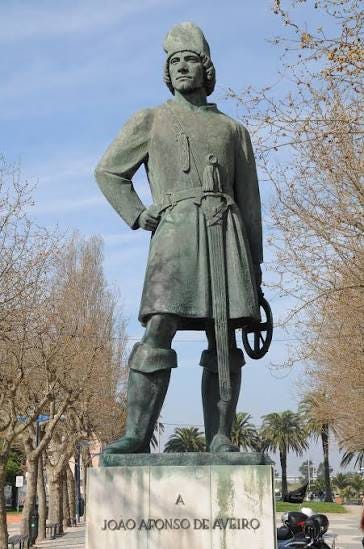
Around 1485, a Portuguese explorer named João Afonso de Aveiro established relations with the kingdom, which at the time was ruled by a man named Oba Ozolua.
As diplomatic and commercial relations between Portugal and Benin developed, Catholic missionaries were presented with an opportunity to introduce the Christian faith to the local population.
The First Catholic Missions
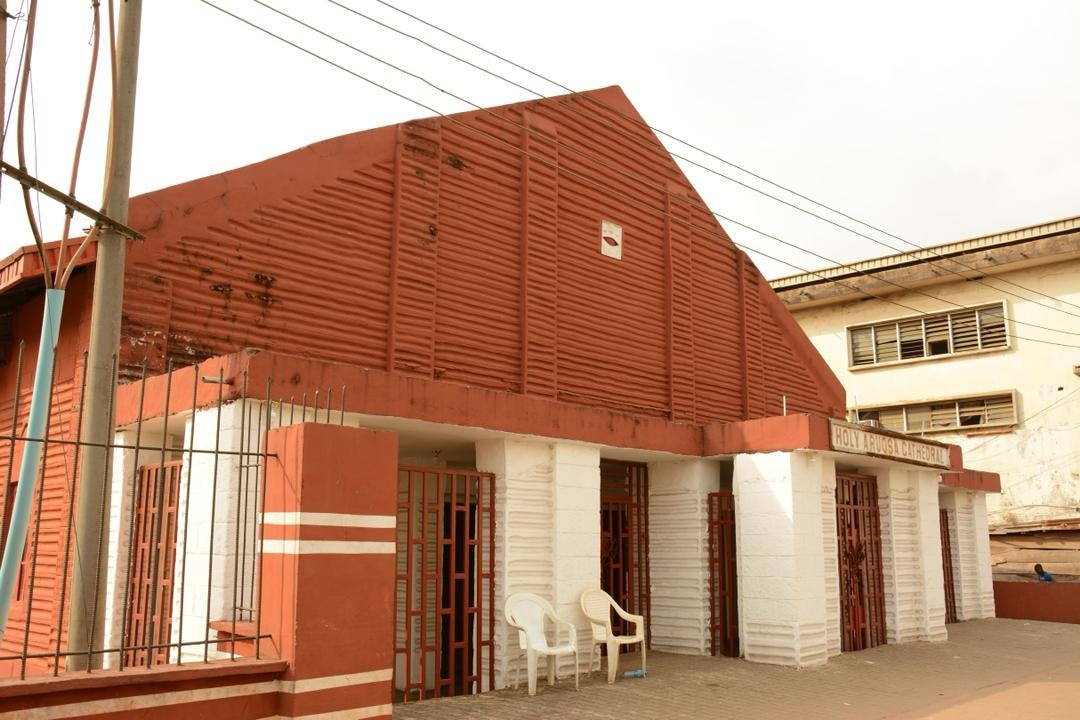
During the first half of the sixteenth century, under the reign of Oba Esigie, the Portuguese became more and more influential at the royal court of Benin.
Catholic missionaries began working in the kingdom, churches were built, and some members of the royal court were introduced to the teachings of Christianity.
Now, one of the difficulties the missionaries encountered was that the traditional religious beliefs of the people of Benin were closely tied to the authority of their ruler. If a large portion of the population were to embrace Christianity, it could fundamentally change the political structure of the kingdom.
As a result, Christianity remained largely confined to certain members of the royal court and never really took root among the wider population.
Nevertheless, these early Catholic missions are worth remembering because they mark the beginning of the history of Christianity in what is now Nigeria.
If we travel a little further along the coast, however, we come across another African kingdom where the Catholic missionaries enjoyed more success.
The Christian Kings of Warri
One of my favorite stories from this period of West African history comes from the Kingdom of Warri, which was situated in the Niger Delta. The kingdom was ruled by the Itsekiri people, who came into contact with Catholic missionaries through their commercial relations with the Portuguese.
Towards the end of the sixteenth century, one of their rulers embraced Christianity and became known by the Christian name Sebastian. His son, Dom Domingos, was sent to Portugal, where he received a Catholic education in the early seventeenth century.
Just think about this for a moment. More than two hundred years before the British established their colonial administration in Nigeria, an African prince was already receiving a Catholic education in Europe.
Dom Domingos eventually returned to Africa, where he succeeded his father as ruler of Warri. The Catholic faith continued to receive the support of successive generations of the royal family.
We even have surviving correspondence between the rulers of Warri and Catholic authorities in Europe, which gives us some insight into the relationship these African Christians maintained with the wider Catholic world.
In 1652, the Olu of Warri (Antonio Domingos) wrote directly to the Pope, appealing for a permanent missionary presence:
Most Holy Father and Vicar of Jesus Christ on earth:
I have heard of the very fervent zeal that burns in the heart of your Holiness for the propagation of the holy Faith in these regions which, because they have never been irrigated with the blood of Jesus Christ or the Apostles or saints, lack the light of the Faith. To remedy the situation, I am told that your Holiness has sent a mission of friars called Capuchins to the gentile kingdom of Benin, my neighbour. This mission could not achieve anything; the king even expelled the friars from that kingdom without giving them any information about me or my kingdom. I really believe, Most Holy Father, that Your Holiness sent these religious for me, according to the information that they gave that the king of Benin was a Christian and desired evangelical ministers. I am the Christian king and my kingdom is on the same coast and borders on that of Benin. Only my own kingdom is called Warri and has stayed a long time without disinterested ministers to propagate the Faith in my kingdom. This Faith is almost completely lost because no priest has come here for more than seven years, and any who came before came only once a year, when a ship came here from São Tomé, and he returned with the ship. I am amazed that none has come in such a long time. I was told that there is no bishop in São Tomé and there are few priests, so that they are almost in the same situation as I am. I leave Your Holiness to consider those who go around distorting the Faith, while I am serving as a preacher of what I know and I encourage my vassals to hope in the mercy of God that within a short time things will improve, as I understand, by the intervention of Your Holiness. I beg you by the blood of our Lord Jesus Christ to please help me by sending me a mission of Capuchin fathers. Since they are disinterested (as I understand) they will be very good for me and my kingdom. I, as a faithful Christian kneeling at the feet of Your Holiness and kissing your feet as the other Christian kings do, profess to Your Holiness the obedience of myself and of my kingdom, not only to your Holiness, but also to all those who afterwards will be canonically elected to your dignity.
I beg Your Holiness once again to please send me the said friars as soon as possible and, so that the mission may last long, to appoint as prefect, if possible, the provincial of these friars in Portugal, so that he may be obliged to send every year some religious on the ships coming from Lisbon to São Tomé and from there to my kingdom to trade. I will help them with all my means and with good interpreters to subject to the Faith the king of Benin, my neighbour, and others. I also beg Your Holiness to please send some relics for me and my kingdom.
I wrote to King Dom João of Portugal, my Cousin, to do me the favour of helping these friars with their transport and necessary supplies for their trip. I believe that he will do so, since the Portuguese are accustomed to helping me. Since they planted the Faith in my kingdom and married King Don Domingos, my predecessor, with a Portuguese lady I regard them as brothers that I love.
May our Lord protect Your Holiness as I desire and consider necessary.
From Warri, the City of Saint Augustine, 20 November 1652.
The King of Warri.
The problem, however, was that the rulers of Warri struggled to secure a permanent presence of Catholic priests in their kingdom. Christianity remained confined to a relatively small part of the population, and without priests to administer the sacraments and instruct younger generations in the faith, it became increasingly difficult to sustain Catholic religious life in the kingdom.
If you value well-researched stories about Western civilization that mainstream outlets ignore, consider becoming a paid subscriber.
Here’s what you get by upgrading:
In-depth essays on Christian men and great battles
Lessons from the past and what they can teach us today
Full access to the growing archive
Help keep The Western Spirit alive and independent by upgrading.
The Expansion of Islam in Northern Nigeria
Now, while these early Christian communities were developing along the southern coast, Islam was already well established in parts of what is today northern Nigeria.
During the Middle Ages, Muslim conquered the region. By the fifteenth century, the religion was influential in several of the Hausa kingdoms.
Things changed a lot at the beginning of the nineteenth century. In 1804, a Fulani Islamic scholar named Usman dan Fodio launched a jihad against the rulers of the Hausa states because, in his view, they were failing to govern in accordance with Islamic principles.
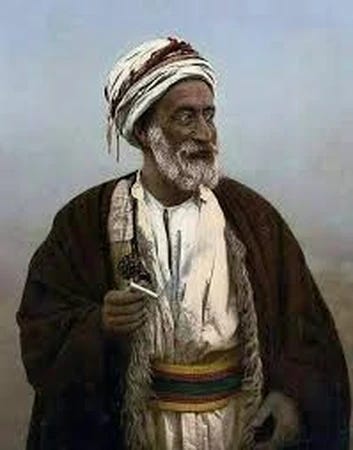
Out of this jihad emerged the Sokoto Caliphate, which would become one of the largest states in nineteenth-century Africa. It controlled much of what is now northern Nigeria, with Islamic law forming the basis of its political institutions.
The reason I mention this is because it helps us understand why the Christian missionaries who arrived in Nigeria during the nineteenth century encountered such different circumstances depending on which part of the country they entered.
In the north, they were dealing with an established Islamic political order. In the south, they encountered numerous independent kingdoms and communities that still practiced their traditional African religions.
The African Christians Who Returned Home
Interestingly, one of the most important developments in the history of Christianity in Nigeria came about as a result of British efforts to suppress the Atlantic slave trade.
In 1807, the British Parliament abolished the British slave trade, and in the years that followed, the Royal Navy began intercepting slave ships operating along the western coast of Africa.
Many of the Africans liberated from these ships were taken to Sierra Leone, where Christian missionaries established churches and schools. Among them were members of the Yoruba people, who originally came from what is today southwestern Nigeria.
During their time in Sierra Leone, some of these Africans embraced Christianity and received an education at Christian missionary institutions. Throughout the nineteenth century, a number of them returned to their ancestral homeland, bringing the Christian faith with them.
These men played an important role in the spread of Christianity in Nigeria. They spoke the local languages and understood the customs of the people they were trying to evangelize in a way that many European missionaries simply couldn’t.
One of these men was Samuel Ajayi Crowther, whose personal story I think every Christian should be familiar with.
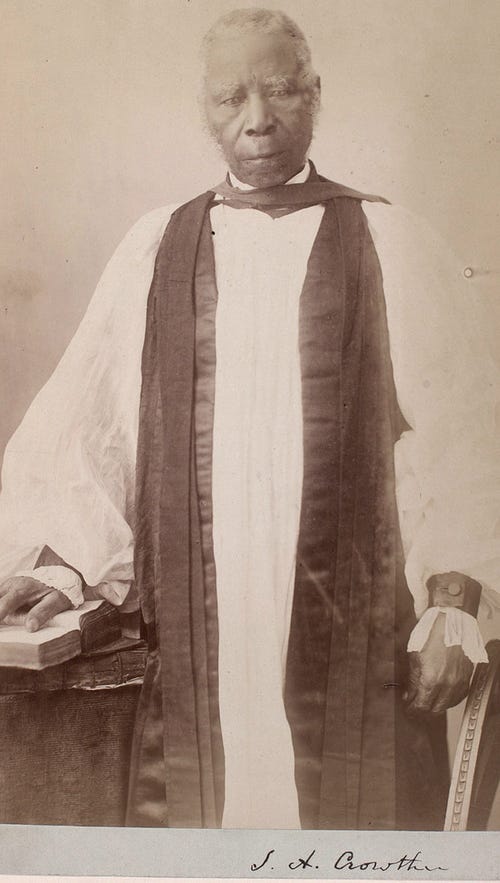
Samuel Ajayi Crowther: From Slavery to Christian Bishop
Samuel Ajayi Crowther was born around 1809 in the Yoruba town of Osogun.
In 1821, when he was still a boy, his community was attacked by slave raiders. Crowther was separated from his family and eventually sold to Portuguese slave traders.
The ship transporting him was intercepted by the British Royal Navy, and Crowther was taken to Sierra Leone.
There, he received an education through the Church Missionary Society and converted to Christianity. He was baptized in 1825, taking the name Samuel Crowther.
Reflecting on this period of his life, Crowther later wrote:
About the third year of my liberation from the slavery of man, I was convinced of another worse state of slavery, namely, that of sin and Satan. It pleased the Lord to open my heart like that of Lydia. I attended unto those things which were spoken of by his servants, and according to my desire, I was admitted into the visible Church of Christ here on earth as a soldier to fight manfully under his banner against our spiritual enemies—the world, the flesh and the devil.
May I ever have a fresh desire to be engaged in the service of Christ, for it is perfect freedom! Thus the day of my captivity was to me a blessed day, when considered in this respect; though certainly it must be unhappy also, in my being deprived on it of my father, mother, sister and all other relations. That the time may come when the Heathen shall be fully given to Christ for His inheritance, and the uttermost part of the earth for His possession, is the earnest prayer of your humble, thankful, and obedient servant.
Crowther went on to study at Fourah Bay College in Freetown, which was established in 1827 and would become one of the most important centers of Christian education in West Africa.
In 1841, he joined a British expedition up the Niger River, giving him an opportunity to return to the part of Africa where he was born. Two years later, he was ordained as an Anglican priest in England and went on to spend much of his life evangelizing his fellow Africans.
One of the things Crowther is best remembered for is his work on the translation of the Bible into Yoruba. He also devoted a huge amount of time to studying African languages and developing written forms of them.
Then, in 1864, he was consecrated at Canterbury Cathedral in England, becoming the first African Anglican bishop of the modern era.
Just think about the circumstances of this man’s life. As a young boy, he was separated from his family and sold into slavery. Decades later, he returned to his homeland as a Christian missionary, dedicating his life to educating his own people and making the Scriptures available to them in their native language.
I think Crowther’s story is worth telling because it gives us a much better appreciation of the role African Christians themselves played in bringing the Christian faith to millions of people in what is now Nigeria.
Near the end of his life, Crowther reflected on the decisive role of vernacular Scripture:
The more I think of it, the more I feel its importance, that it is the base of the spiritual success of all our missionary operations, for the “Sword of the Spirit” [the Bible], placed in the hands of the congregations, in their own tongue, will do more to convince and convert them than all our preaching, teaching and meetings of so many years put together.
After many years’ experience, I have found that the Bible, the sword of the Spirit, must fight its own battle, by the guidance of the Holy Spirit. Had we been obstinate [in opposing native religions] Christian Missionaries would long ago have been turned out of the country, the converts put to death, and the country would have been long barred against the message of salvation. But what is the result of the caution and prudence exercised? The whole country is opened to us, stations are occupied in different directions, churches are built, congregations are collected, and converts are numbered by hundreds: and yet we do not make the least compromise. … With the [Muslims] of this country cannot a like course be tried? They have great respect for the books of Moses, the Prophets, and the Psalms, and, to some extent for the Gospel of Christ also, all of which they know mostly by name. If they be quietly referred to, these books, the Law of Moses, the Prophets, the Psalms, and the Gospel in all things concerning Christ Himself, we may thus have opportunity of bringing before their minds the wholesome substance of those blessed books.
The Establishment of Christianity in Southern Nigeria
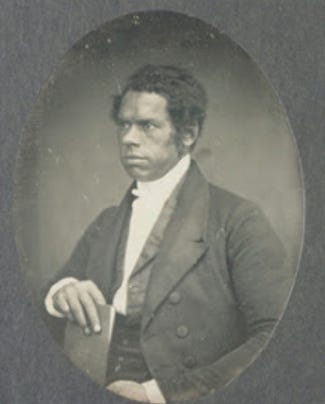
In 1842, a Methodist missionary named Thomas Birch Freeman arrived in Badagry, a coastal town in what is today southwestern Nigeria. Later that year, he traveled to Abeokuta, where some of the Africans who returned from Sierra Leone were interested in establishing a Christian mission.
The Anglican Church Missionary Society soon began working in the region as well. Among the missionaries who settled in Abeokuta were Henry Townsend and Samuel Ajayi Crowther, whom we discussed earlier.
Over the following years, the missionaries began building churches and establishing schools, while more Christian religious texts became available in the local languages.
In 1859, Henry Townsend founded a newspaper called Iwe Irohin, which is generally considered the first newspaper in Nigerian history. It was originally published in Yoruba, allowing the local population to read about religious matters as well as events taking place in the region.
Now, something worth keeping in mind when discussing the history of Christian missionary activity in Nigeria is the enormous contribution these missionaries made to education.
As more Africans embraced Christianity, there was a growing interest in learning to read so that they could study the Scriptures themselves. The schools established by the missionaries provided successive generations of Nigerians with a formal education.
In fact, many of the men who would go on to play an important role in the intellectual and political life of modern Nigeria received their education at Christian missionary schools.
The Return of Catholicism
Now, as we discussed earlier, the first Catholic missionaries arrived in this part of Africa as early as the fifteenth century. It was really during the nineteenth century, however, that the Catholic Church began establishing a permanent presence in Nigeria.
In 1861, the Society of African Missions began working in Lagos. Among the early missionaries was an Italian priest named Francesco Borghero, who devoted several years of his life to establishing Catholic communities along the West African coast.
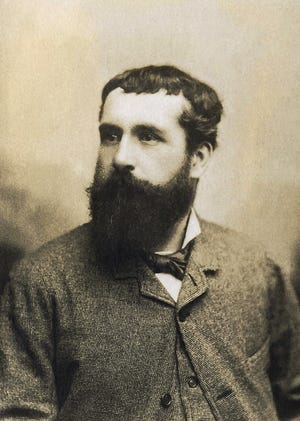
When the missionaries arrived in Lagos, they encountered communities of Africans who returned from Brazil after experiencing slavery. Some of these people were already Catholics and would go on to make an important contribution to the religious and architectural life of the city.
Over the following decades, Catholic missionaries began moving further into the interior of southern Nigeria.
One of the most important developments came in 1885, when a group of French Holy Ghost missionaries led by Father Joseph Lutz established a mission in Onitsha, a town situated on the eastern bank of the Niger River.
This is a town worth remembering because it would become one of the most important centers of Catholic missionary activity in southeastern Nigeria.
Writing to Catholic missionaries across Africa in 1890, Pope Leo XIII linked the fight against the ongoing slave trade with the work of evangelization:
How horrible it is to recall that almost four hundred thousand Africans of every age and sex are forcefully taken away each year from their villages! Bound and beaten, they are transported to a foreign land, put on display, and sold like cattle. These eyewitness reports have been confirmed by recent explorers to equatorial Africa, arousing Our desire to help those wretched men and to alleviate their lamentable condition.
This teaching should bathe those inhabitants living in darkness and blind superstition with the light of divine truth, by which they can become co-heirs with Us of the kingdom of God. We are the more concerned about this because those who have received this light have also shaken off the yoke of human slavery. Rather, mildness of character and civilized Christian liberty flourish there. Many apostolic men, like standard-bearing soldiers of Christ, go to the African interior to shed their sweat, even life itself for the welfare of their brothers. But “the harvest indeed is great; the laborers are few.” Therefore, many others are needed where that scandalous commerce is conducted. They must be full of the spirit of God, fearing neither danger, nor inconveniences, nor labors to spread the teaching of Christ, which is joined to true freedom. This might enlighten even that wretched part of the human race with the revelation of His divinity and release it from the mire of superstition and misery in which it has lain abandoned and neglected for so long.
The Conversion of the Igbo
If you want to understand why Catholicism is so deeply rooted in southeastern Nigeria today, you need to familiarize yourself with the history of the Igbo people.
When the Holy Ghost Fathers arrived in Onitsha, they encountered a society made up largely of independent communities, each with its own system of local government. The missionaries began establishing schools and providing medical care, while African catechists helped introduce the Catholic faith to the surrounding communities.
One of the men who played an enormous role in the spread of Catholicism in this part of Nigeria was an Irish priest named Joseph Shanahan, who arrived in the country in 1902.
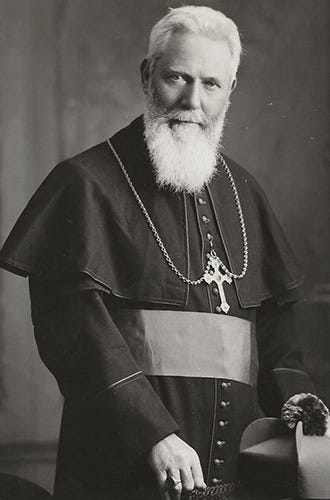
Shanahan understood that education was essential to the long-term success of the Catholic missions. Under his leadership, schools became a central part of missionary work, with African teachers and catechists taking on more responsibility for educating and evangelizing the local population.
As more Nigerians began pursuing religious vocations themselves, the Catholic Church became capable of sustaining its own religious life without relying entirely on European missionaries.
By the middle of the twentieth century, there was already an extensive network of Catholic parishes and schools throughout southeastern Nigeria.
Much of what these missionaries and the early generations of Nigerian Catholics accomplished is still visible today. Southeastern Nigeria remains one of the most important centers of Catholicism on the African continent.
Christianity Under British Colonial Rule
In 1903, the British defeated the Sokoto Caliphate and brought its territories under colonial rule. Eleven years later, in 1914, the British governor Frederick Lugard united the Northern and Southern Protectorates, essentially creating Nigeria as we know it today.
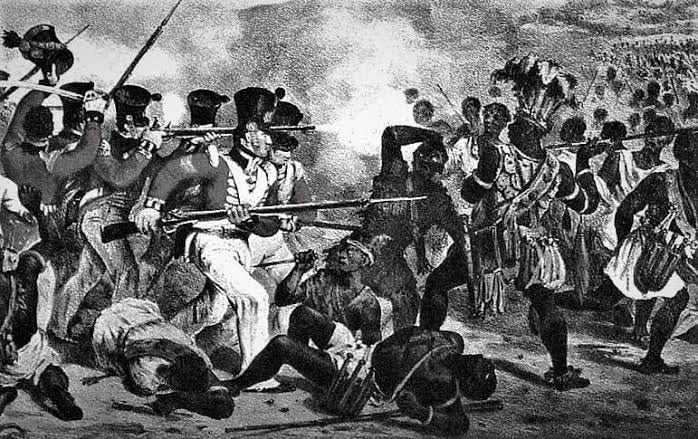
Now, one of the problems with bringing these two regions together was that they developed under very different religious circumstances. In the north, you were dealing with an Islamic political order in which non-Muslims were seen as infidels and many non-Muslim communities were subjected to slave raids. In the south, meanwhile, more and more Africans were embracing Christianity.
But here is where things get weird. Even after the British defeated the Sokoto Caliphate, they continued to protect much of the authority of the Muslim rulers.
Lugard wanted to govern northern Nigeria through the Muslim emirs, and the British knew that these rulers would slaughter Christian missionaries trying to convert their people. Rather than risk a confrontation with the emirs, the British placed restrictions on Christian missionary activity in several of these territories.
So you essentially ended up with a situation in which Christian missionaries operating under British colonial rule were prevented from freely spreading the Christian faith in certain parts of the country because the British wanted to maintain good relations with the Muslim ruling class.
This also affected the education of the local population. While Christian missionaries were establishing schools throughout southern Nigeria, their opportunities to do the same in the northern Muslim emirates were considerably more limited.
I mention all of this because it helps explain why Nigeria looks the way it does today. Some of the religious divisions we see in the country go back centuries, and the British, through their own colonial policies, “helped preserve” them.
The Christian Communities of Modern Nigeria
It has now been more than five hundred years since the first Portuguese missionaries arrived along the coast of what is today Nigeria.
Just think about how much has changed since then.
In 1982, during his pastoral visit to Lagos, Pope John Paul II reflected on this long history:
And so, in the course of time and according to the deep mystery of God’s plan, the Good News of salvation eventually reached Nigeria, coming first to the Kingdom of Benin almost five centuries ago. This first attempt at evangelisation eventually died out. The lasting work of spreading the faith had to wait until 1863, when missionaries of the Society for African Missions reached Lagos. Then, in 1885, the Holy Ghost Fathers reached Onitsha, and, a little later, the Society for African Missions arrived in Lokoja and Shendam.
The courage and heroic efforts of these first missionaries is well known to you. Some of them died within two weeks of their arrival. The others continued to preach Christ with unflagging faith, enduring love and apostolic determination, being continually renewed and enlightened by the Holy Spirit. The result of their labours is the abundant harvest which we see today. They went sowing in tears, and they come back in joy carrying their sheaves. It is because of their dedicated efforts, together with the openness and generous response of your forefathers, that we are assembled here today at the altar of the Lord, professing our one faith in God and giving glory to his holy name.
The acceptance of the Christian faith here in Nigeria has indeed been remarkable. With eager hearts, you have welcomed generations of zealous missionaries to your land. You have learned from them the excelling knowledge of Jesus and have received him into your lives through faith and the Sacrament of Baptism. Nourished by the Eucharist and the word of God, you have begun to live as Christ taught you to do. You have put your faith into practice in your private and public lives, in your families and homes, at work and in places of recreation. You have also offered your youth to Christ and the Church to be trained as priests, brothers, sisters and dedicated laity. Your catechists have, with great success, animated local Catholic communities, taught prayers, hymns and doctrine to young and old, and been indispensable helpers to the priests. The Catholic teachers deserve special recognition. In the early days they sacrificed so much and laboured with such zeal, and remained always loyal to Christ in the service of the Church. Indeed this nation owes much to its faithful teachers. May they never be lacking in your country. Their names are written in the book of life.
The Church in your land is now largely directed by Nigerian bishops and priests, although you continue to give a wholehearted welcome to the important contribution of the missionaries. My presence here today is a tribute to your missionaries, both past and present, and to yourselves, who have accepted the faith and made it your own. But above all we are gathered here to praise the Holy Spirit, the source of life and truth.
I ended up spending a lot more time on this than I originally intended, simply because there were so many interesting things I came across while researching the subject.
If some of you want to do a little research of your own, here are some primary sources and books I would recommend looking into.
Primary Sources
Journal of an Expedition up the Niger and Tshadda Rivers by Samuel Ajayi Crowther (1855)
Remember the story of Samuel Ajayi Crowther that I told you earlier in the article? Well, you can actually read his own account of his travels through this part of Africa. It gives you a much better understanding of the people he encountered and the circumstances under which he carried out his missionary work.
Journals of the Rev. James Frederick Schön and Mr. Samuel Crowther by James Frederick Schön and Samuel Ajayi Crowther (1842)
If you want to learn more about the expedition up the Niger River in 1841, you can read the journals of two of the men who participated in it. There are some interesting firsthand observations about the religious beliefs of the local population and the difficulties Christian missionaries encountered.
Iwe Irohin (1859–1867)
As I mentioned earlier, Henry Townsend established the first newspaper in Nigeria in 1859. If you are interested in the intellectual life of the early Yoruba Christians, surviving issues of this newspaper are worth looking into.
The Dual Mandate in British Tropical Africa by Frederick Lugard (1922)
If you want to understand why the British governed northern Nigeria the way they did, I would recommend spending some time reading Lugard himself. It helps put into perspective why the British were so interested in preserving the authority of the Muslim emirs.
Books
Christian Missions in Nigeria, 1841–1891: The Making of a New Elite by J. F. Ade Ajayi
If you only want to read one or two books on the subject, I would definitely include this one. There is a lot of material in here concerning the early Christian missions in southern Nigeria and the emergence of an educated generation of African Christians. It also gives you a better appreciation of the role Nigerians themselves played in the spread of Christianity.
The Missionary Impact on Modern Nigeria, 1842–1914 by E. A. Ayandele
This is another book I would recommend to anyone interested in the history of Christian Nigeria. One of the most interesting aspects of this book is the relationship between Christian missionaries and the political authorities they encountered. If you want to understand some of the difficulties I mentioned in the section on northern Nigeria, this is worth reading.
A History of Christianity in Africa: From Antiquity to the Present by Elizabeth Isichei
This book covers a much broader period of history than the one I discussed in this article. If you are interested in the early Portuguese Catholic missions and want to understand how they fit into the wider history of Christianity in Africa, you will find some useful material in here.
Black Christians and White Missionaries by Richard Gray
One of the things I really wanted to get across in this article is how much of the history of Christianity in Africa is the story of African Christians themselves. Gray spends quite a bit of time exploring the relationship between European missionaries and the African communities among whom they worked.
African Pentecostalism: An Introduction by Ogbu U. Kalu
You probably noticed that I didn’t spend much time discussing the history of Pentecostalism in Nigeria. That is a subject that could easily fill an entire article of its own. If you are curious about how these Christian communities became so numerous in modern Nigeria, this book is a good starting point.
Anyway, I hope some of you will spend a little time researching this subject yourselves. We hear so much about the suffering of our fellow Christians in Nigeria these days, yet how many of us actually know the history of these Christian communities? I hope this article helped change that for you.
Superb posting. Thank you. Have shared it with Muslim Background Believer leader friends who will doubtless make great use of it.
Nobody here is paying any attention to the terrorist violence against African Christians. Someone should convince the Israelis to come and shoot the place up; then there will be instant demonstrations on college campuses and widespread denunciations.