
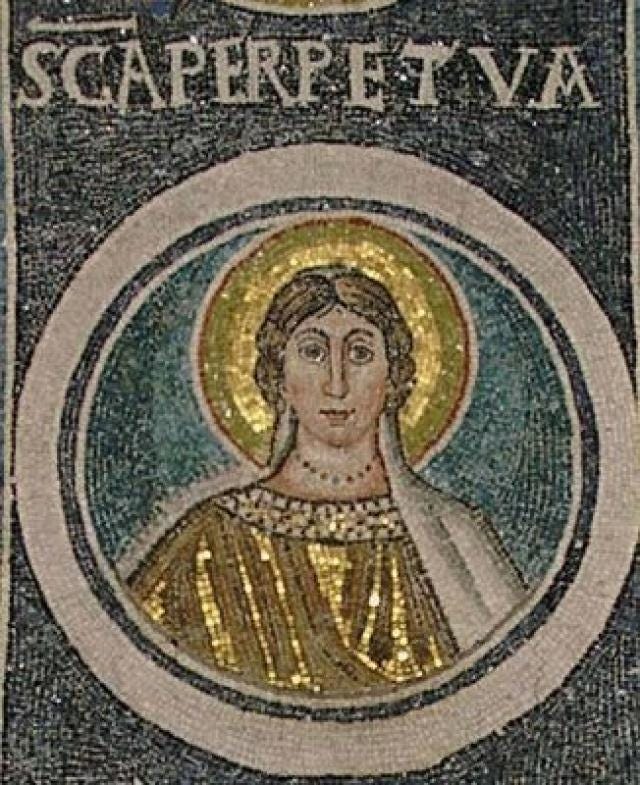
Perpetua lived in Carthage around the year 200, in a Roman world that looked outwardly stable but was already cracking at its edges. She was young, only twenty two years old, and belonged to a noble family that gave her privilege and security. She had an infant son still nursing at her breast, a sign of how early in life she was taken from the world. Everything about her situation should have pointed toward safety. She had the money and connections to live comfortably. She had the natural desire to raise her child, to stay with her family, to avoid trouble. Yet she also had something else, something more dangerous: she had become a Christian. To us that may sound unremarkable, since Christianity today is the religion of billions, but in her time it was a “minority sect” despised and outlawed. The Roman Empire tolerated many gods, but it would not tolerate Christians, because they refused to perform even the smallest act of conformity, such as offering a pinch of incense to Caesar. For the Romans, religion was not about truth, but about unity. For the Christians, religion was about truth, and truth could not be compromised. That tension made martyrdom inevitable.
When the governor of Carthage began a campaign against Christians, Perpetua was caught with a small group of believers, many of them still catechumens, people preparing for baptism. Among them was her slave Felicity, who was heavily pregnant. They were dragged to prison, accused not of any crime of violence but simply of belonging to a forbidden faith. For Perpetua, it was the beginning of a short but intense journey that would end in the arena. What makes her story unique is that she left behind a diary, one of the earliest firsthand writings of a Christian woman. That diary reveals not only the events but the inner life of a martyr, the way she thought and prayed and struggled in the days leading up to her death.
Reminder: The Western Spirit is a reader-supported publication. We are very close to 100 paid subscribers!
If you’ve been enjoying these essays, consider becoming a paid subscriber. For a few dollars a month, you’ll get:
In-depth pieces on forgotten battles, brave men, and turning points in Western history
Reflections on faith, order, tradition, and the deeper meaning behind culture
Full access to the growing archive — essays, book breakdowns, and historical deep dives
This project exists because readers like you make it possible.
The Father’s Pleas
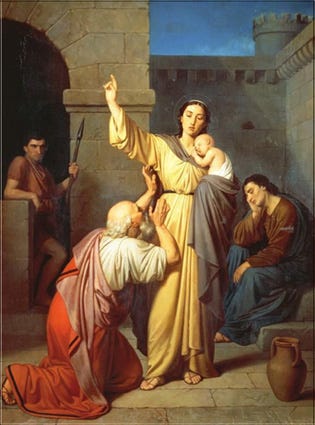
The hardest test she faced was not the roughness of prison or the mockery of guards, but the pressure of her family. Her father visited her repeatedly, begging her to renounce her faith. He was not a cruel man. He loved her and wanted to save her. He brought her child to the prison and pleaded for the sake of the baby, arguing that she was being selfish, that she was abandoning her duties as a mother, that she was throwing away her life and dishonoring her family. He tried reason, he tried anger, he tried tears. At one point he fell at her feet, weeping uncontrollably, begging her to say the words that would save her life. The Romans did not require much. She did not need to change her heart. She did not need to believe in their gods. All she needed to do was make a token gesture, burn incense to Caesar, and declare loyalty to the empire. It was, in the eyes of the authorities, a small price for survival. To her father it seemed like the only sensible choice. But to Perpetua it was impossible.
She answered him with a simple image. She pointed to a vessel sitting nearby, perhaps a pitcher or a jar. “Father, do you see that vessel lying there?” she asked. “Can it be called by any other name than what it is?” He admitted it could not. “So too,” she said, “I cannot be called anything other than what I am: a Christian.” With those words she drew a line that could not be crossed. She did not see Christianity as one label among many, something she could put on or take off at will. It was her identity. To deny it would be to deny herself. Her father left her in anguish, and the reader can still feel the pain in those scenes, because it is easy to imagine how torn she must have been. She loved him. She loved her son. The pull of survival was strong. Yet she held fast.
The Diary and the Visions
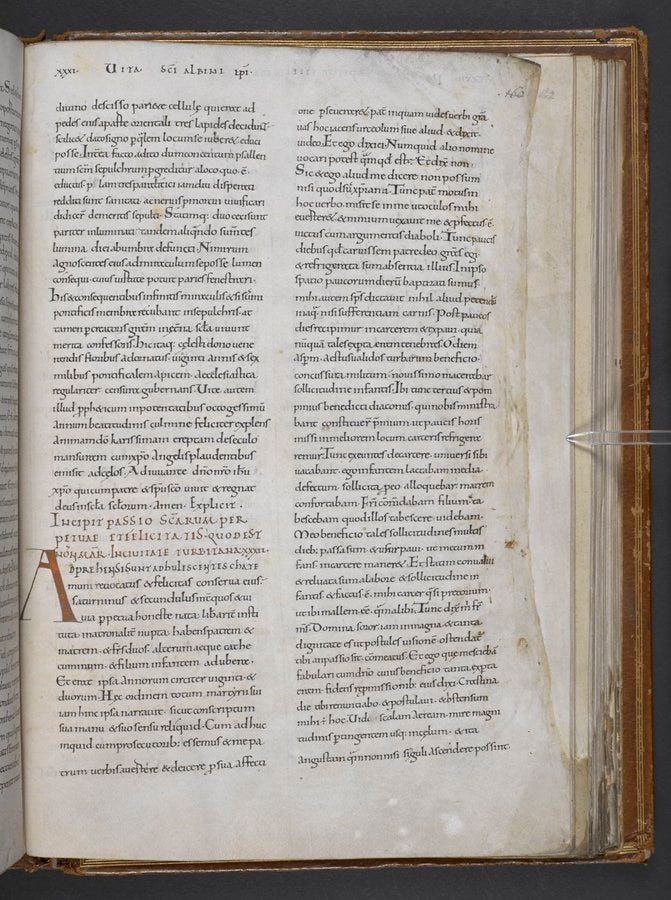
One of the most remarkable things about Perpetua’s story is that she wrote it down herself. In prison, she kept a diary, describing her experiences, her fears, and especially her visions. In one vision she climbed a tall ladder that reached into heaven. The ladder was narrow and dangerous, lined with weapons on either side. At its base lay a great dragon, waiting to devour her. But she stepped on its head and climbed upward. At the top she entered a vast garden, where she met a shepherd dressed in white, surrounded by angels. He gave her a morsel of cheese, which she ate, and she woke filled with peace. For her, the dream was a promise that her suffering would not be the end. She would conquer the dragon, a symbol of Satan, and ascend into eternal life.
In another vision she saw her younger brother Dinocrates, who had died of cancer as a child. In the dream he appeared pale and suffering, unable to reach water from a high fountain. Perpetua prayed for him, and in a second vision she saw him healed, able to drink freely and at peace. This vision comforted her, convincing her that her prayers could help even those who had died, and that her suffering might bring good not only for herself but for others. The diary shows her humanity, her love for her family, her fears, and her extraordinary courage. It is not the voice of a fanatic, but of a thoughtful young woman grappling with death and faith.
Felicity’s Trial
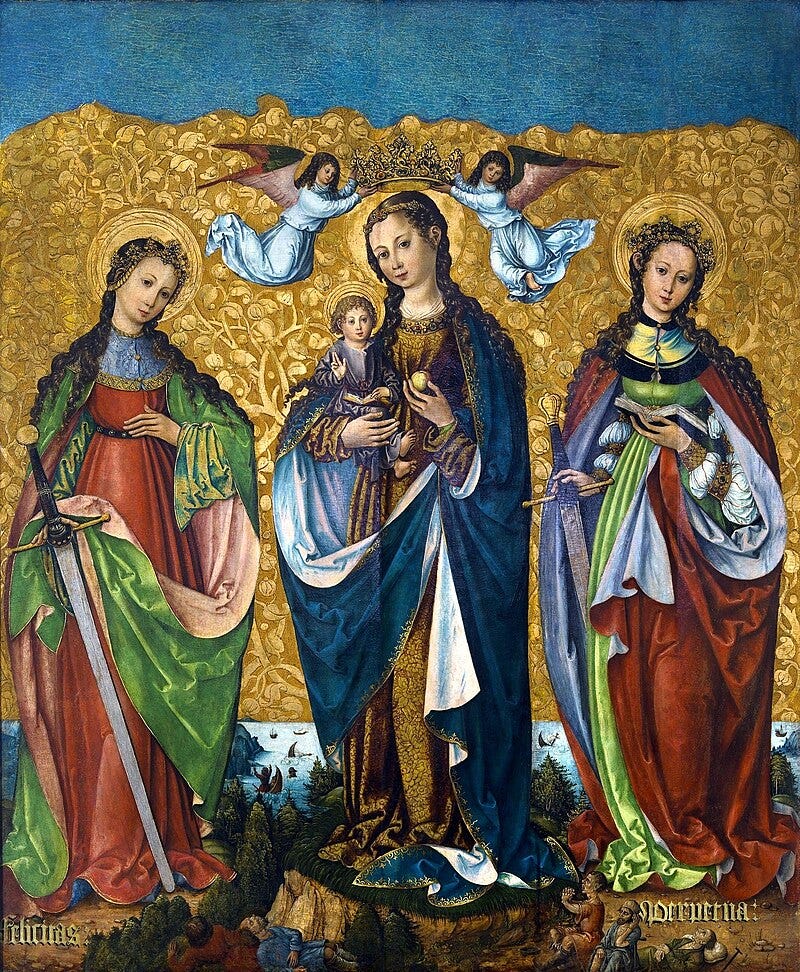
Felicity, Perpetua’s slave, faced her own ordeal. She was eight months pregnant when imprisoned, and Roman law did not allow pregnant women to be executed. She prayed that she might give birth before the day of execution, so that she could share martyrdom with her companions rather than be left behind. Her prayer was answered.
She went into labor in the prison, giving birth to a daughter who was adopted by another Christian woman. Guards mocked her, saying, “If you cry out in childbirth, what will you do when you face the beasts?” Felicity answered calmly, “Now I suffer by myself, but then another will be within me, who will suffer for me, because I will be suffering for Him.” Her words show the same mixture of realism and faith that marked Perpetua’s diary. She did not deny the pain, but she believed Christ would be with her in the final trial.
The Day of Execution
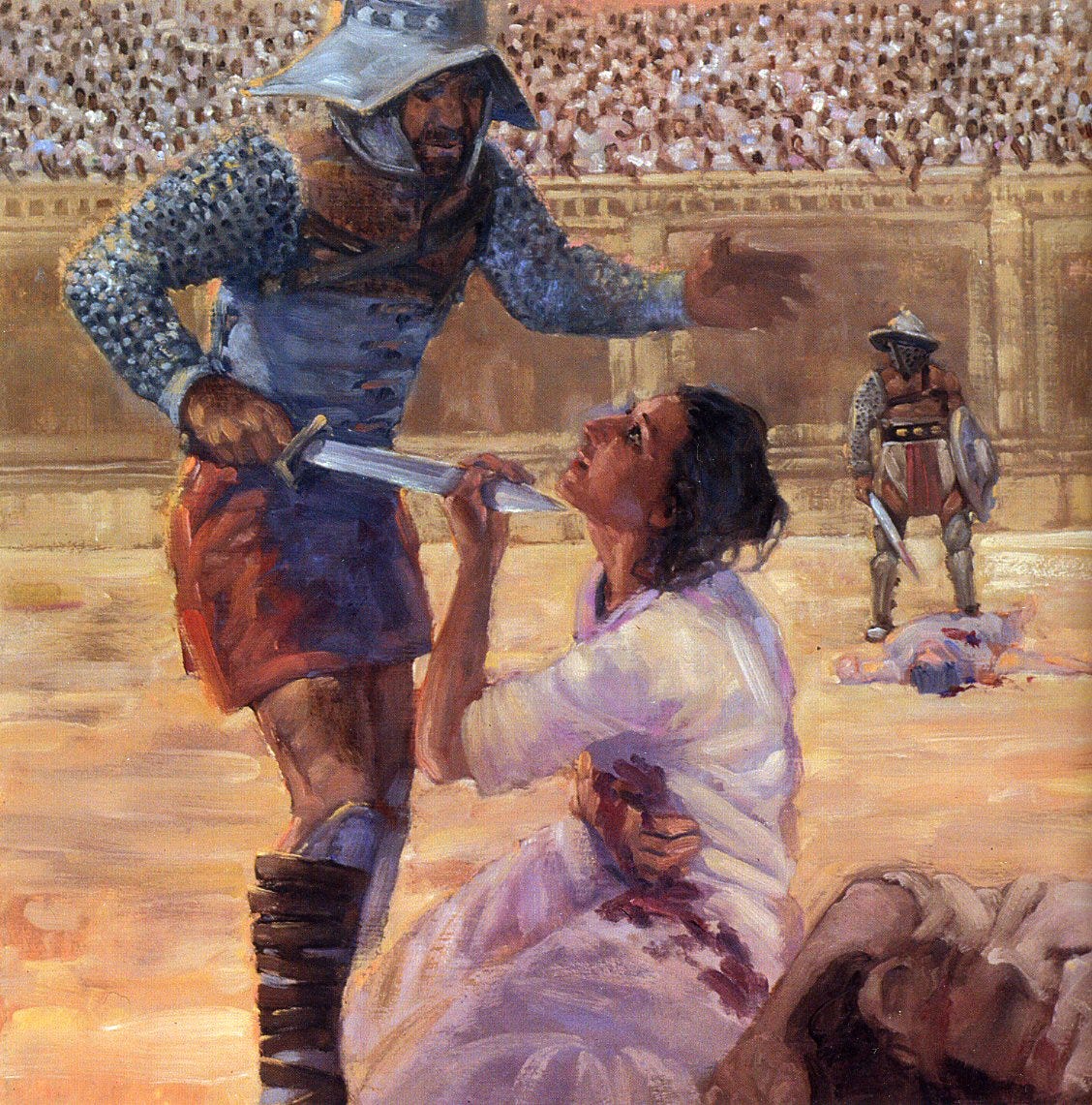
When the day of execution arrived, the martyrs were led into the amphitheater before a roaring crowd. They were dressed in simple tunics, though at first the officials tried to strip them and expose them to shame. The people protested, and the prisoners were allowed some dignity. Wild beasts were released against them, including a fierce cow that gored Perpetua and Felicity. Accounts say that when Perpetua was knocked to the ground, she calmly adjusted her tunic to preserve modesty and pinned back her hair so that she would not appear to be mourning. Even in that chaos she thought about how she would be seen, determined to go to her death with honor and composure.
The animals did not kill them outright, so the martyrs were brought forward to be executed by the sword. Perpetua stood firm, unshaken. A young gladiator approached her, trembling, and struck her weakly. She guided his hand to her throat, helping him complete the task. Her last act was one of calm control, showing that her death was not taken from her but freely given. She died as she had lived, with clarity and courage, leaving behind not only her son but a witness that would inspire generations.
The Witness of Perpetua
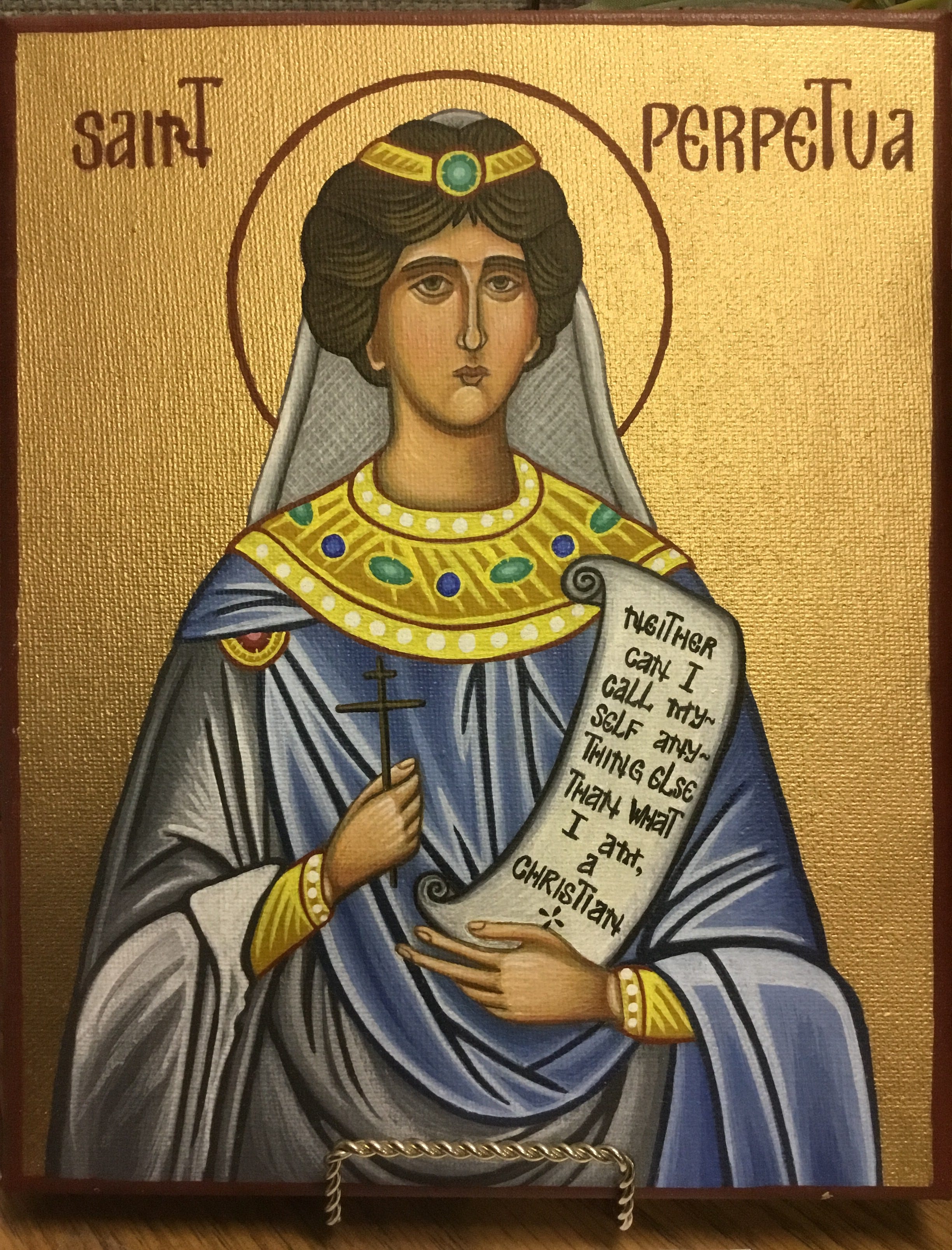
Perpetua’s story spread quickly throughout the Christian world. Her diary and the account of her companions were copied and read in churches. The Church remembered her not simply as a victim but as a victor, someone who had triumphed over fear and power by holding to the truth. She became one of the most beloved martyrs of the early Church, celebrated in liturgy and remembered in art. Her name joined the roll call of saints who proved that Christianity was not a philosophy or a private belief, but a truth worth dying for.
What makes her story powerful even today is its humanity. She was not a distant figure, not an abstract symbol, but a young woman with a child, a father, a family, and a life she might have enjoyed. She faced the same questions anyone would face in such a moment: Should I compromise for the sake of survival? Should I think of my loved ones before myself? Should I bend outwardly while holding my faith inwardly? She answered those questions with a clarity that most of us can only admire from afar. She chose to be faithful to the end, and in doing so, she gave the world an image of truth that cannot be erased.
The Meaning of Her Martyrdom
Why does her story still matter? Because it shows what Christianity has always been about. The faith is not an ornament to be added to life when convenient. It is not a private opinion that can be adjusted to fit the times. It is an identity, something that claims the whole person. Perpetua understood that, and her refusal to deny her name as Christian is the heart of her witness. In her time, that refusal led to death. In other times, it may lead to exile, poverty, ridicule, or loneliness. The form changes, but the essence remains. Christianity demands loyalty, and the world resists that demand. Martyrdom is the collision point where the two meet.
Her story also shows the paradox of martyrdom. Outwardly it looks like defeat. A young woman is killed, a child is orphaned, a family is broken. Yet inwardly it becomes victory. The memory of her courage strengthened countless others, and the spread of her story helped the faith grow. Rome thought it was destroying a sect. In fact it was building a Church. The blood of martyrs did become the seed, just as Tertullian said. Perpetua’s blood was part of that seed.
Perpetua as Symbol of Christendom
If you look at the long history of Christendom, from the catacombs of Rome to the cathedrals of Europe, you can see Perpetua’s face at the beginning. She embodies the essence of the faith: ordinary people, holding fast to truth, willing to lose everything rather than betray Christ. She was neither bishop nor theologian, neither soldier nor queen. She was a young mother, an ordinary woman. That is why her story is so powerful. It shows that martyrdom is not reserved for the great but open to anyone. Christendom was built on such witnesses, not on emperors or armies.
“I cannot be called anything other than what I am, a Christian.”
Remember, you can support The Western Spirit and get premium content every week — deep dives into the battles, books, and ideas that shaped our civilization.
Paid readers can access our entire archive of premium essays right here.
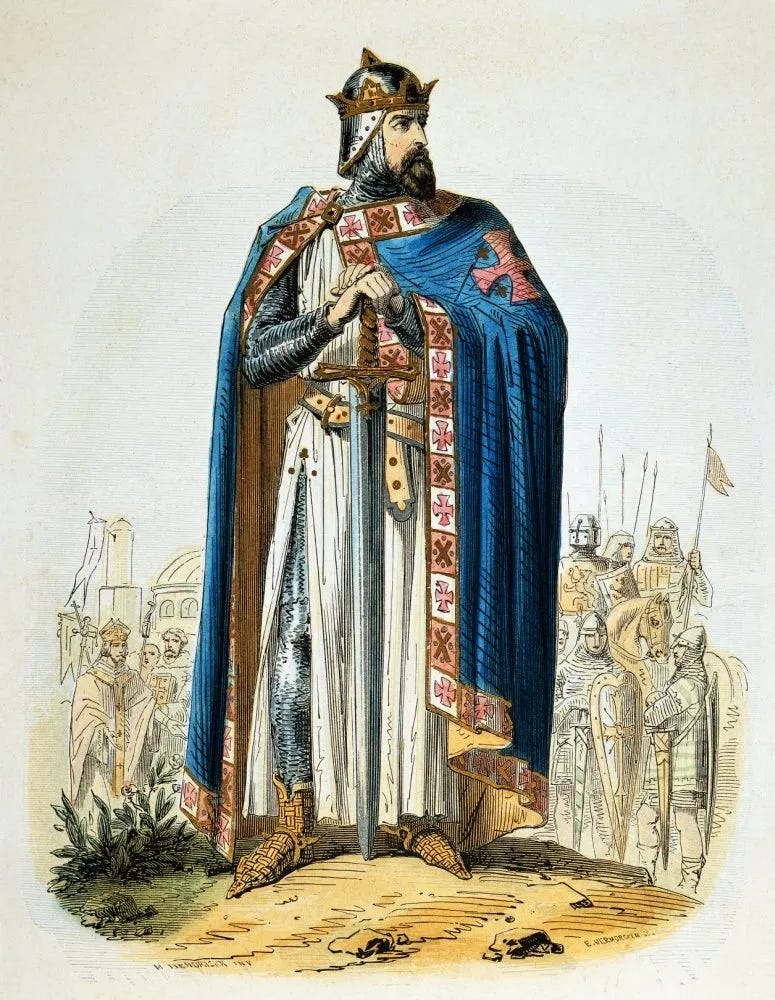
Inside, you’ll find the stories of Christian heroes such as Ferdinand III, Godfrey of Bouillon, and King Don Pelayo — men who stood firm when the fate of the West hung in the balance.
Amazing courage!
🙏✝️