
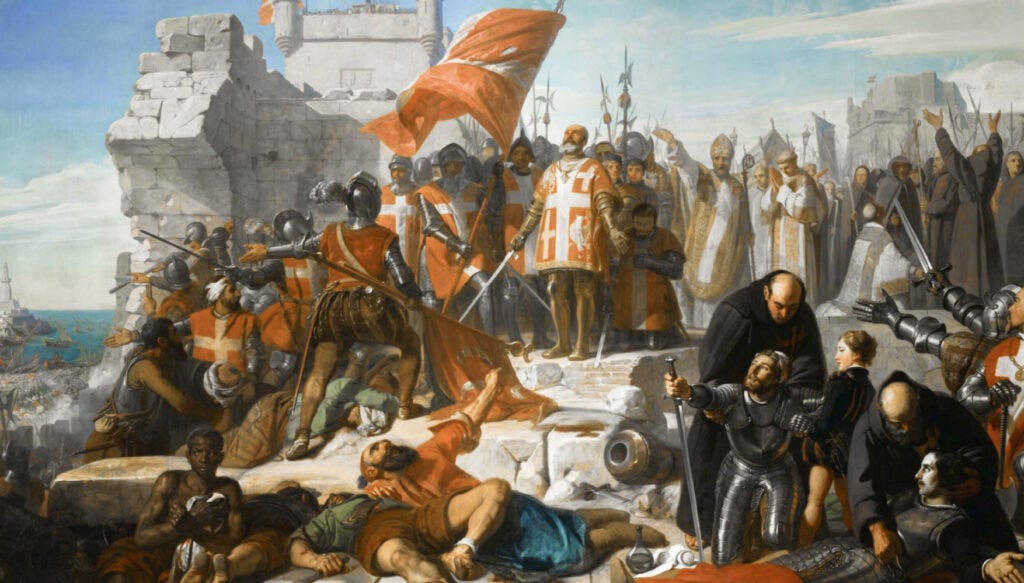
Malta was a small island, but it was in a very important location in the middle of the Mediterranean Sea, between Sicily and Ottoman North Africa. From Malta, the Knights could attack Ottoman ships and help Christian forces at sea. Sultan Suleiman the Magnificent had already forced the Knights out of Rhodes in 1522, and now he wanted to remove them from Malta too.
When the Ottoman fleet arrived near Malta on May 18, their army seemed much stronger than the defenders. Different historical sources give different numbers for the Ottoman army, so we do not know exactly how many soldiers there were. However, Grand Master Jean Parisot de Valette had only a small number of Knights, along with Maltese defenders and other soldiers.
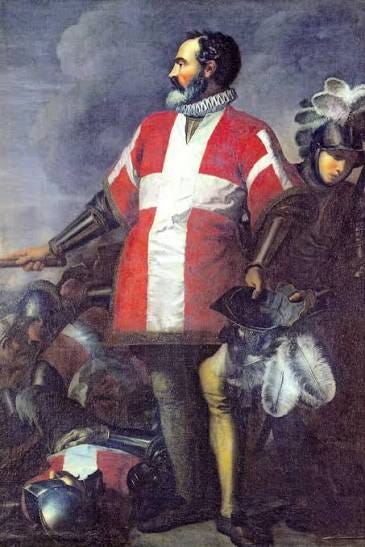
De Valette was about seventy years old when the siege began. He had spent most of his life fighting in the Mediterranean. He prepared Malta’s defenses around the Grand Harbour and waited for help to arrive from Sicily. The big question was whether this help would arrive before the Ottomans defeated the defenders.
Before the fighting began, de Valette spoke to his fellow Knights. His words made it clear that they were facing a very serious and dangerous battle:
“It is the great battle of the Cross and the Koran which is now to be fought. A formidable army of infidels are on the point of invading our island. We, for our part, are the chosen soldiers of the Cross, and if Heaven requires the sacrifice of our lives, there can be no better occasion than this.”
— Grand Master Jean Parisot de Valette, speaking to the Order on the eve of the siege
First They Had to Take St Elmo
Instead of attacking the main Knights’ positions at Birgu, the Ottoman commanders first attacked Fort St Elmo. The fort protected the entrance to the Grand Harbour, so the Ottomans needed to capture it to use their ships more freely.
At first, they expected the attack on Fort St Elmo to be fairly quick. Instead, the fighting lasted for weeks.

Every day, Ottoman cannons heavily damaged the fort. Ottoman soldiers attacked again and again, while the number of defenders became smaller. Even though the fort was being destroyed, the defenders refused to give up. When possible, new soldiers came from Birgu to help, while wounded men were taken back to Birgu.
By late June, it was clear that Fort St Elmo could not survive much longer.
Still, the remaining defenders stayed and continued fighting. Francisco Balbi di Correggio, an Italian soldier who fought with the Spanish forces and later wrote an important eyewitness account of the siege, described what happened on the night before the final Ottoman attack:
“That same night our poor brothers in St. Elmo, realizing that no relief could reach them, made themselves ready to die in the service of Jesus Christ.”
— Francisco Balbi di Correggio, La verdadera relación (1567)
When the Ottomans launched their final attack on June 23, almost all the defenders of Fort St Elmo were killed. The Ottomans finally captured the fort, but it had taken them about a month—much longer than they had expected.
The victory was costly. The Ottomans lost many soldiers, and the famous Ottoman commander and corsair Turgut Reis died during the fighting.
Even after losing Fort St Elmo, the Knights still controlled their main defensive positions across the harbour.
Now that St Elmo had fallen, the Ottomans could focus their attacks on Birgu and Senglea.
The Siege Moved Across the Harbour
After Fort St Elmo fell, the Ottomans focused their attacks on Birgu and Senglea, where de Valette had gathered most of his remaining forces. Ottoman cannons constantly fired at the walls, while soldiers tried to break through the damaged defenses.
The defenders did not simply hide behind the walls. They repaired damaged areas whenever they could and built new defenses behind weak points. This meant that even when the Ottomans broke through one defense, they could find another barrier waiting for them.
On July 15, the Ottomans launched a major attack on Senglea, while also attacking Birgu. Large numbers of Ottoman soldiers reached the defenses, and the fighting became extremely fierce. However, the Christian defenders managed to hold their positions, and the Ottomans failed to break through.
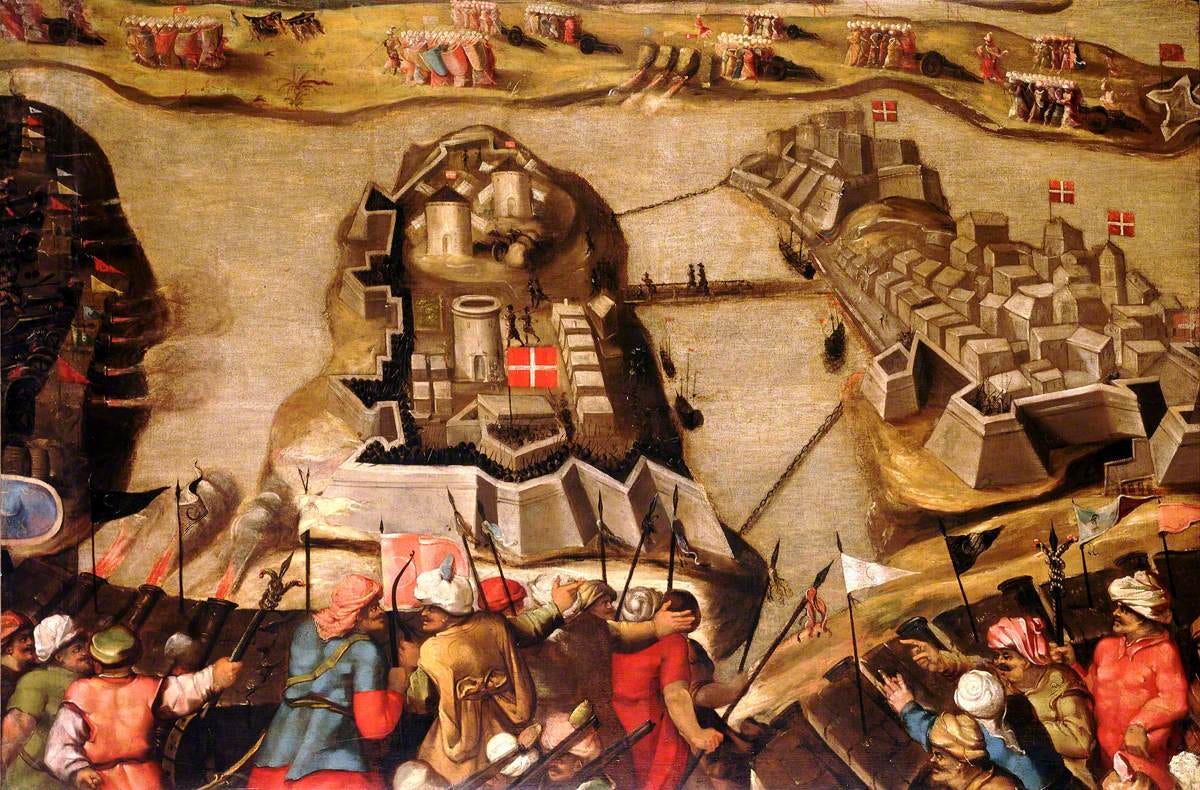
Another major attack came in August. This time, Ottoman soldiers managed to enter part of Birgu’s defenses. The situation became so dangerous that de Valette himself rushed toward the fighting.
Balbi wrote that a knight ran to de Valette in the main square and warned him that the Ottoman soldiers had already entered the Post of Castile, an important part of Birgu’s defenses.
“Unmoved, the Grand Master turned to his knights and said: ‘Let us all go and die there, for this is the day.’ Having said this, with admirable courage, he took his helmet from a page and his pike from another, and went towards the Post of Castile followed by all the reserves.”
— Francisco Balbi di Correggio, diary entry for the great August assault
Although de Valette was wounded during the fighting, he refused to leave his men or move to safety. Later writers recorded what he supposedly said when his companions begged the elderly Grand Master to move away from the dangerous fighting:
“And how can an old man like me end his life more gloriously than when surrounded by his brethren and fighting the battles of the Cross?”
— Jean Parisot de Valette, reported by later historians drawing on siege testimony
The defenders eventually regained control of the damaged area, and the Ottoman attack failed once again to defeat the Knights.
By this point, the siege had continued for much longer than the Ottomans had expected.
Continue reading below…
Friendly reminder: The Western Spirit exists because of readers like you. Join us and help keep this project alive and independent.
If you’ve been enjoying these essays, consider becoming a paid subscriber. For a few dollars a month, you’ll get:
Essays on brave men, and turning points in Western history
Reflections on faith, tradition, and culture
Full access to the growing archive - essays, book breakdowns, and deep dives
This project exists because readers like you make it possible.