
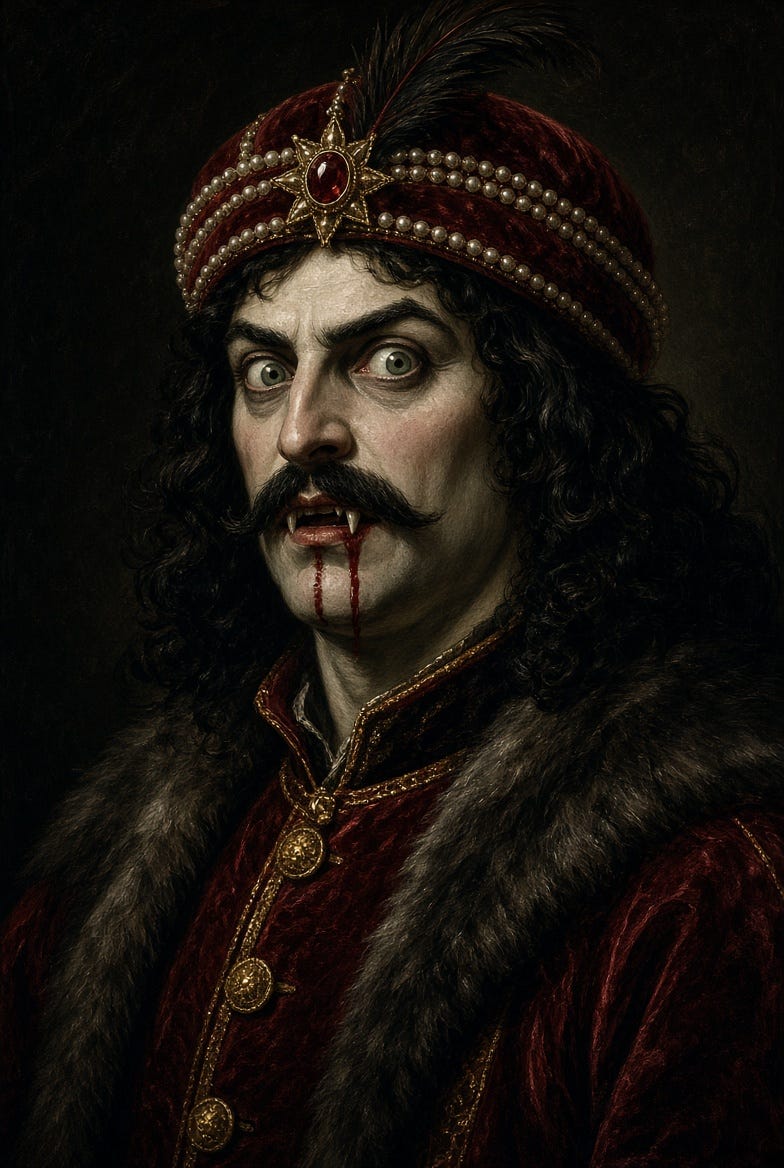
In 1897, Irish author Bram Stoker published his Gothic horror novel Dracula, introducing the world to Count Dracula, a mysterious Transylvanian nobleman who slept in coffins and survived by drinking human blood. The novel became one of the most influential works of horror literature ever written, inspiring countless films and turning Dracula into a permanent fixture of popular culture.
But here’s where things get interesting. Long before Bram Stoker wrote his novel, the real Dracula, Vlad III, better known as Vlad the Impaler, already had a pretty terrifying reputation across Europe. People were telling all sorts of horrifying stories about him, with some accounts even claiming that he enjoyed sitting down for a meal surrounded by the bodies of his victims.
Things became even worse after Johannes Gutenberg’s development of European movable-type printing in the mid-fifteenth century.
For the first time, stories could be reproduced and distributed far more efficiently than handwritten manuscripts allowed. Vlad’s enemies made good use of this new world of printed propaganda. By the late fifteenth century, German-language pamphlets describing his supposed atrocities were circulating through parts of Europe, including this printed edition from the 1490s.
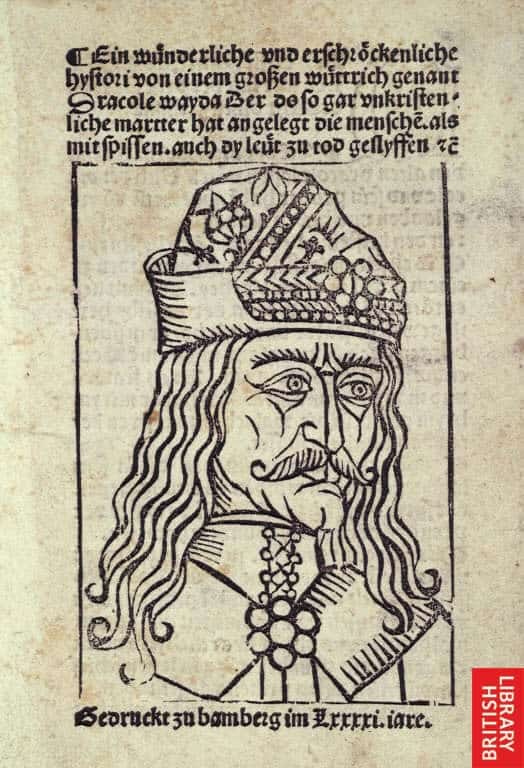
Of course, we need to be careful here. Not every atrocity attributed to Vlad was invented by his enemies, and his use of impalement is well documented. But many of the most sensational stories were written by hostile authors.
The claim that he literally drank human blood, for example, should not be treated as an established historical fact. His early reputation was for bloodthirstiness in the sense of extreme cruelty, rather than the supernatural blood-drinking associated with Stoker’s vampire.
But there is another side to this story that never makes it into the Halloween films..
Continue reading below.
Friendly reminder:
The Western Spirit exists because of readers like you. Join us and help keep this project alive and independent.
If you’ve been enjoying these essays, consider becoming a paid subscriber. For a few dollars a month, you’ll get:
Essays on brave men, and turning points in Western history
Reflections on faith, tradition, and culture
Full access to the growing archive - essays, book breakdowns, and deep dives
This project exists because readers like you make it possible.