
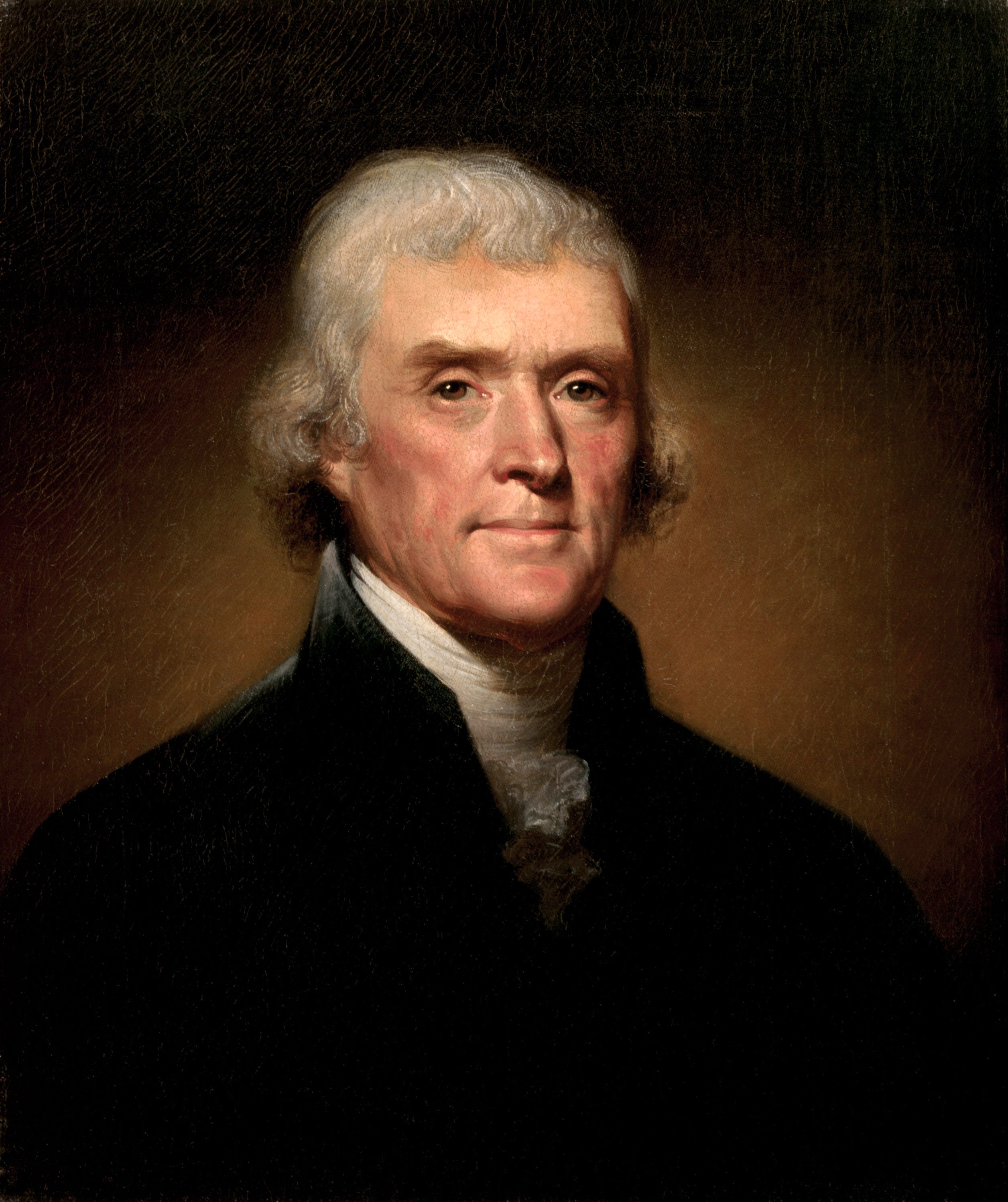
Thomas Jefferson owned a Quran. That does not mean he admired Islam.
The idea that he bought the book because he secretly wanted to become a Muslim is insane. The real story is way more interesting.
Jefferson purchased his copy of the Quran in 1765 while he was still a young law student. He read everything he could get his hands on. History, philosophy, law, theology, science, architecture, agriculture, politics, and classical literature all filled his shelves. The Quran joined his collection for the same reason the Roman histories and Greek philosophy did. He wanted knowledge.
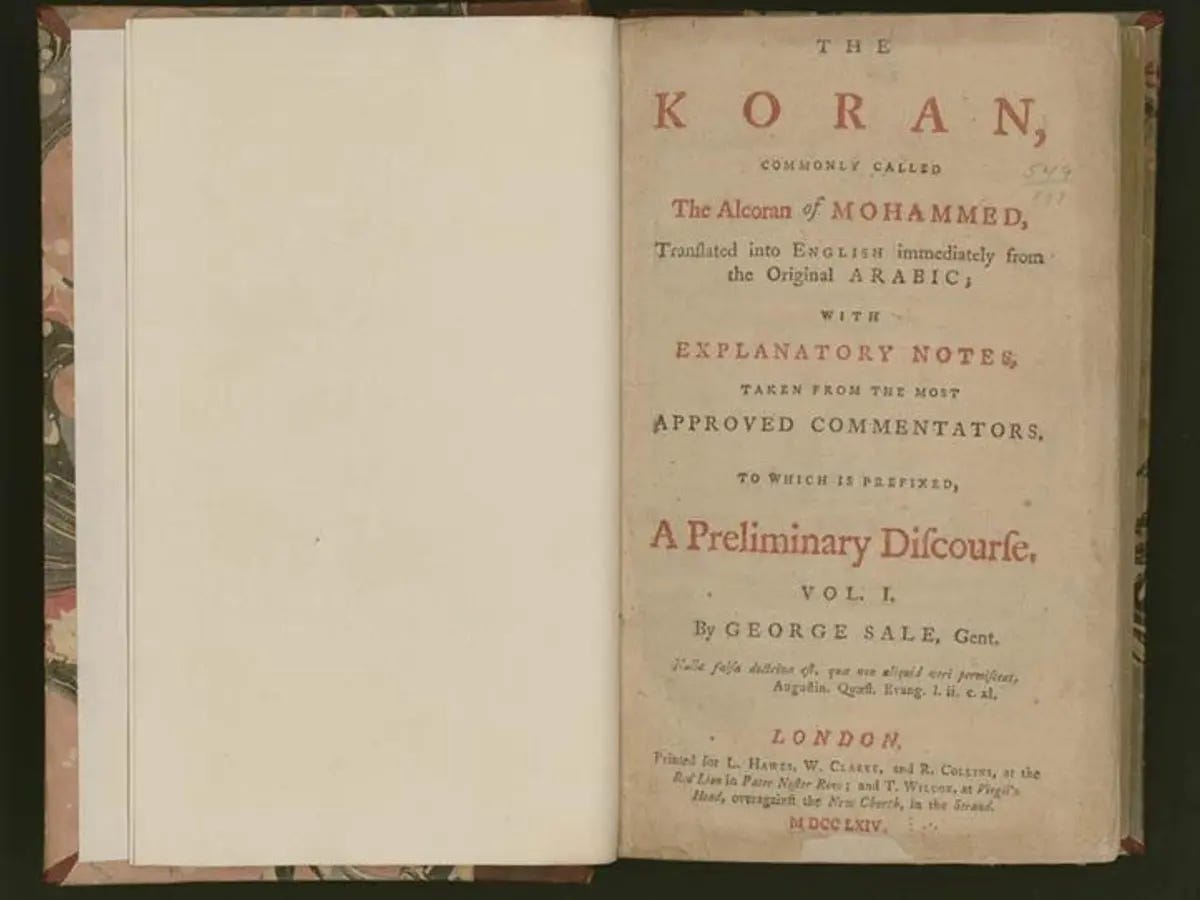
Over the following decades Jefferson encountered the Islamic world in real life.
After America gained independence, the new nation lost the protection of the British Navy. American merchant ships now sailed alone. The rulers of North Africa quickly took advantage. Morocco, Algiers, Tunis, and Tripoli had long demanded tribute payments from any nation that wanted safe passage through the Mediterranean. Pay, or face seizure of ships, stolen cargo, and captured crews sold into slavery.
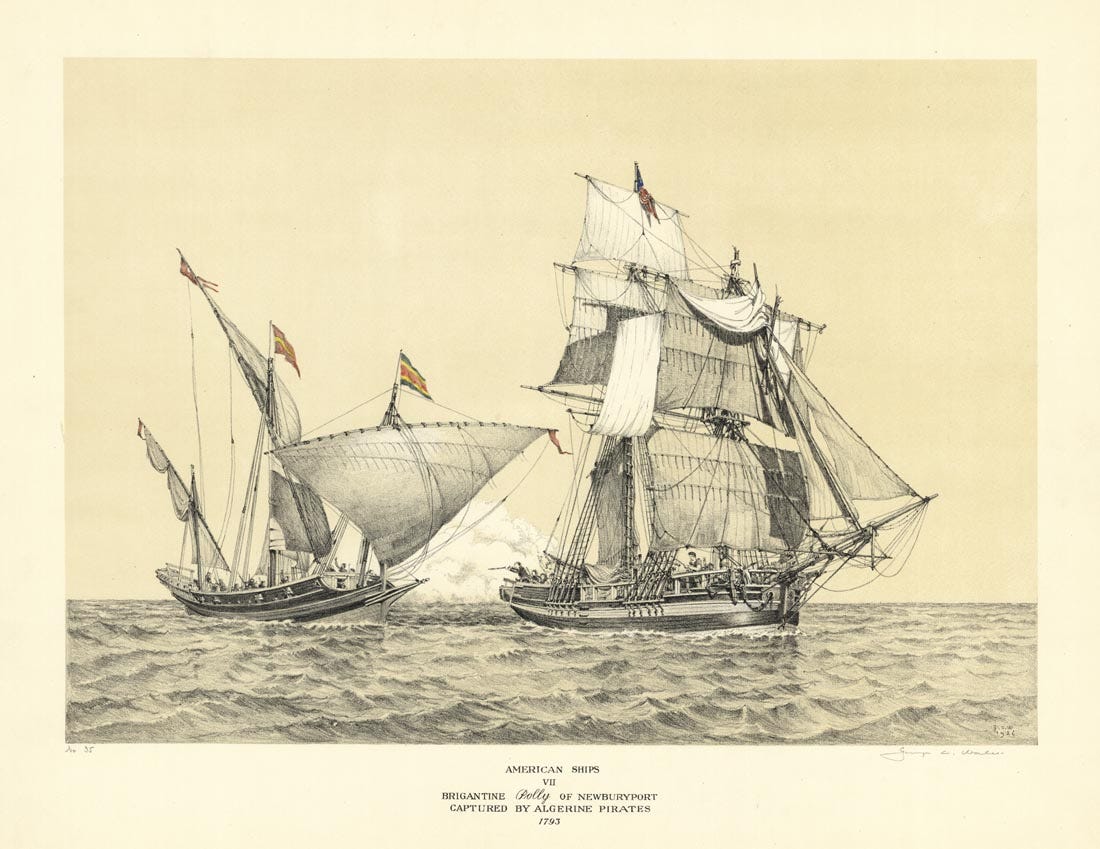
European powers had paid this tribute for generations. Now the United States faced the same demand. Beginning in 1785, Algiers captured two American ships, the Maria and the Dauphin, and held their crews for ransom. More seizures followed. American sailors were imprisoned under harsh conditions, sometimes for years, while families back home begged the government to act. Newspapers printed heartbreaking stories of captured fathers and sons. Congress debated what to do, but the young country had no navy and very little money.
Jefferson found the entire system unacceptable. He believed paying tribute to avoid attack was both dishonorable and shortsighted. Each payment only invited more demands.
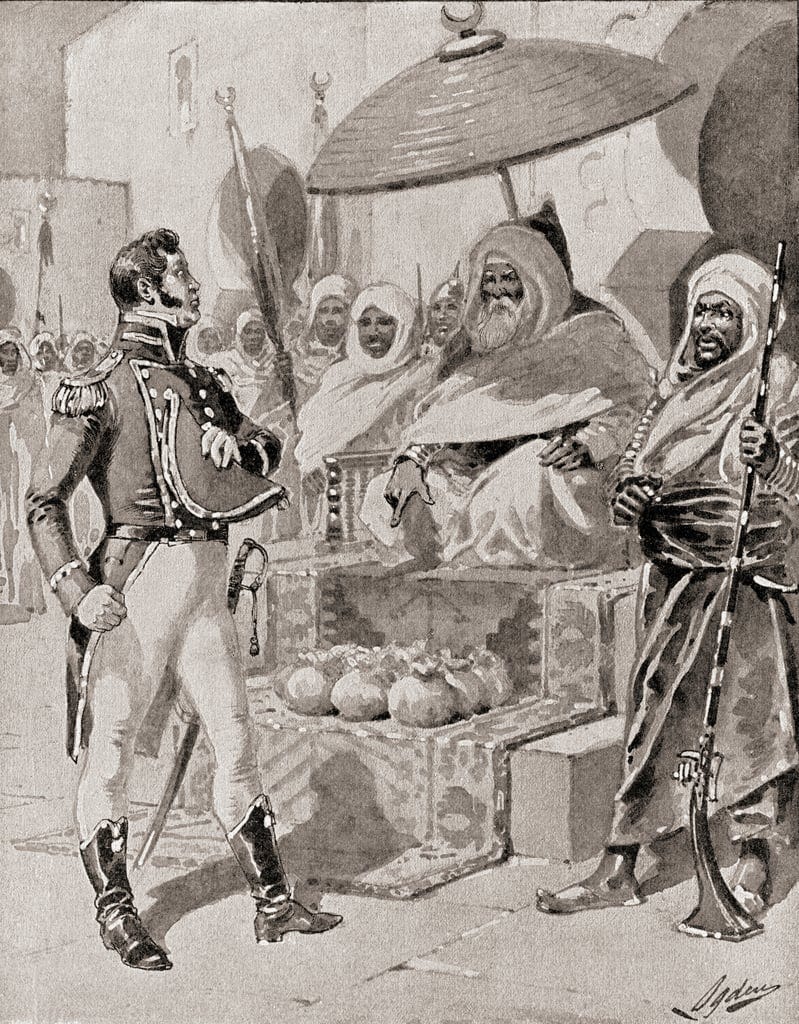
In 1786, Jefferson and John Adams met with Sidi Haji Abdrahaman, the ambassador from Tripoli, in London. They asked why the Barbary states attacked American ships even though the United States had done nothing to provoke them. The ambassador replied that it was founded on the laws of their Prophet. Jefferson and Adams reported the full exchange to Congress in a letter to John Jay on March 28, 1786:
“We took the liberty to make some enquiries concerning the grounds of their pretensions to make war upon nations who had done them no injury, and observed that we considered all mankind as our friends who had done us no wrong, nor had given us any provocation. The Ambassador answered us that it was founded on the Laws of their Prophet, that it was written in their Koran, that all nations who should not have acknowledged their authority were sinners, that it was their right and duty to make war upon them wherever they could be found, and to make slaves of all they could take as Prisoners, and that every Musselman who should be slain in battle was sure to go to Paradise.”
Adams later described the Barbary rulers as driven by avarice and fanaticism. In their private letters that summer, the two founders debated the best response at length. On July 3, 1786, Adams wrote to Jefferson arguing that building and maintaining a navy would be extremely expensive and that buying peace through tribute might be the cheaper and more practical choice for the time being. Jefferson replied firmly on July 11, 1786:
“I very early thought it would be best to effect a peace thro’ the medium of war... Justice, honor, and respect in Europe demand it.”
Their correspondence showed a deep personal friendship mixed with sharp disagreement on foreign policy. Adams worried about costs and American weakness. Jefferson saw tribute as a trap that would weaken the young nation forever. They continued this back-and-forth for years.
Friendly reminder: The Western Spirit exists because of readers like you. Join us and help keep this project alive and independent.
If you’ve been enjoying these essays, consider becoming a paid subscriber. For a few dollars a month, you’ll get:
In-depth pieces on forgotten battles, brave men, and turning points in Western history
Reflections on faith, order, tradition, and the deeper meaning behind culture
Full access to the growing archive — essays, book breakdowns, and historical deep dives
This project exists because readers like you make it possible.
Throughout the 1790s, the United States continued paying tribute and ransoms under Presidents Washington and Adams simply because it had no better option. Treaties were signed, but the demands kept growing. By the time Jefferson took office in 1801, the Pasha of Tripoli, Yusuf Karamanli, demanded $225,000 in immediate payment on top of the usual annual tribute. Jefferson refused.
Before sending any ships, Jefferson wrote directly to the Pasha on May 21, 1801: