
What happened to the churches of Asia Minor, the region that is now modern-day Turkey? How did a land that was once one of Christianity’s most important centers lose so many of its churches?
That’s exactly what we are going to talk about today..
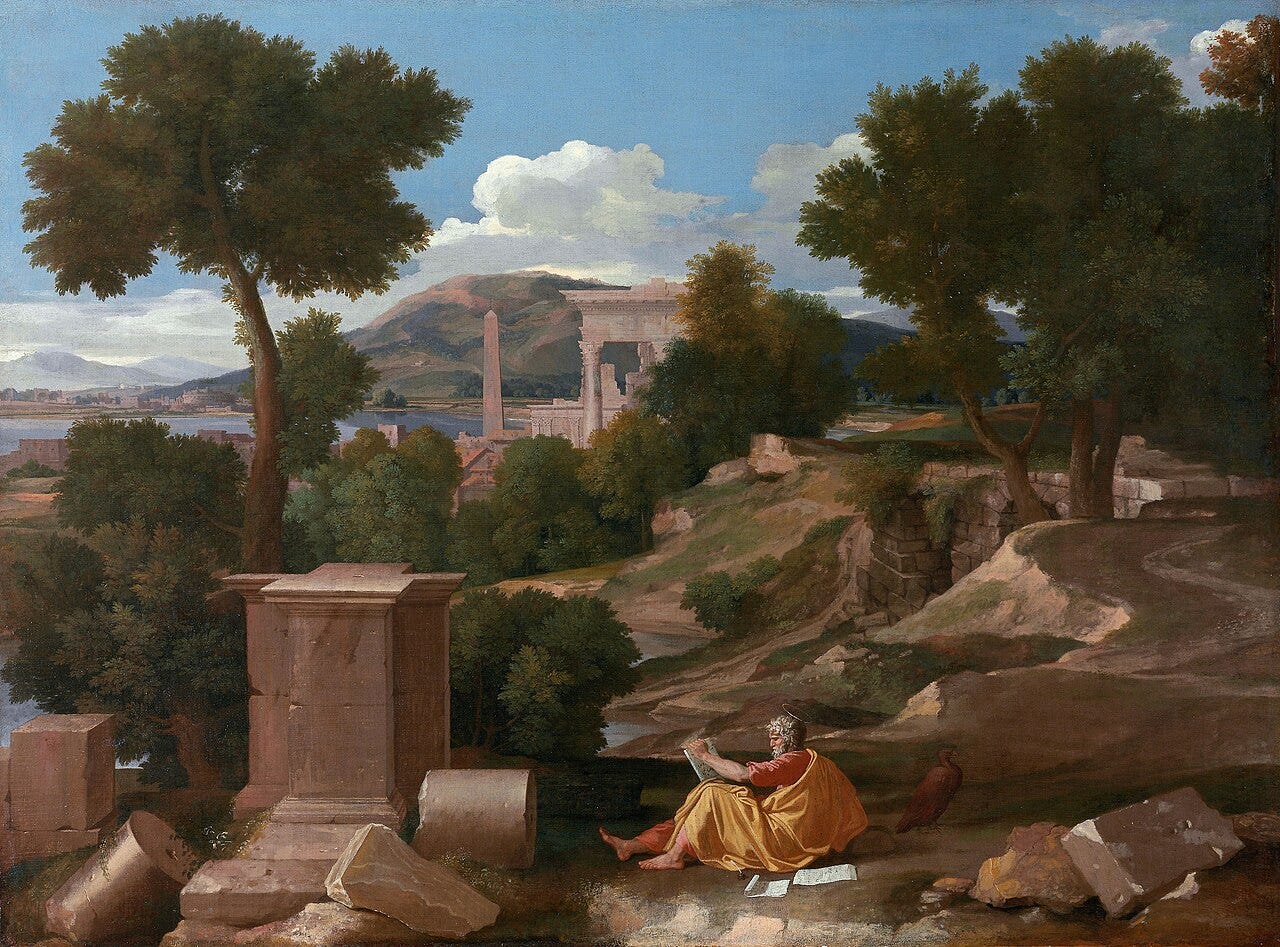
The Book of Revelation opens with seven letters addressed to seven churches:
Ephesus.
Smyrna.
Pergamum.
Thyatira.
Sardis.
Philadelphia.
Laodicea.
Today, very little remains of those churches.
Now… what happened?
Early Christianity
A lot of people don’t realize this, but Christianity didn’t come from Europe - it came from the Middle East and the eastern Mediterranean. In fact, places like modern-day Syria, Israel, Palestine, Lebanon, and Egypt were the heart of Christianity centuries before Europe converted. You could argue these regions were more important to (early) Christianity than Europe.
Most of the Middle East (with the exception of places like the Arabian Peninsula) was overwhelmingly Christian. Over the centuries, following the Islamic conquests beginning in the 7th century, much of the region became Muslim.
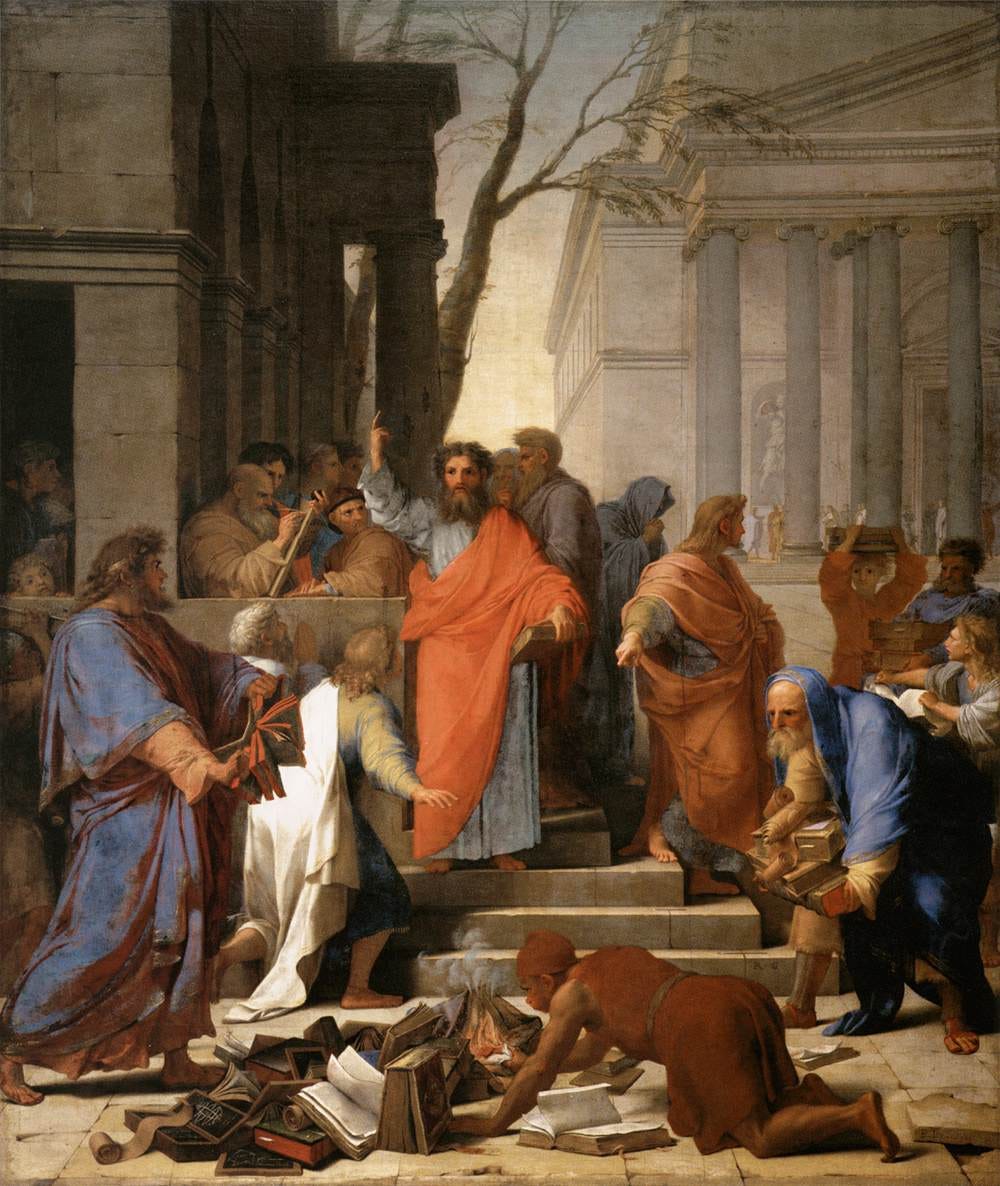
Take Asia Minor, for example. This was one of the most important centers of the early Church. The Apostle Paul founded churches in some of the largest cities of the Roman Empire. St. John is believed to have spent the last years of his life in Ephesus, and according to ancient Christian tradition, the Virgin Mary lived there under his care.
The New Testament shows just how central this region was. Paul’s letters to the Ephesians, Galatians, and Colossians were all written to churches in Asia Minor.
The Great Fathers of the East
Asia Minor was home to some of the greatest saints and theologians in Christian history.
One of the earliest was St. Polycarp of Smyrna, a disciple of the Apostle John who belonged to the generation that learned directly from Christ’s apostles. When Roman authorities ordered him to renounce his faith, Polycarp answered:
“Eighty-six years have I served Him, and He has done me no wrong. How then can I blaspheme my King who saved me?”
He was martyred around AD 155, becoming one of the most revered figures of the early Church.
The fourth century brought another great generation.
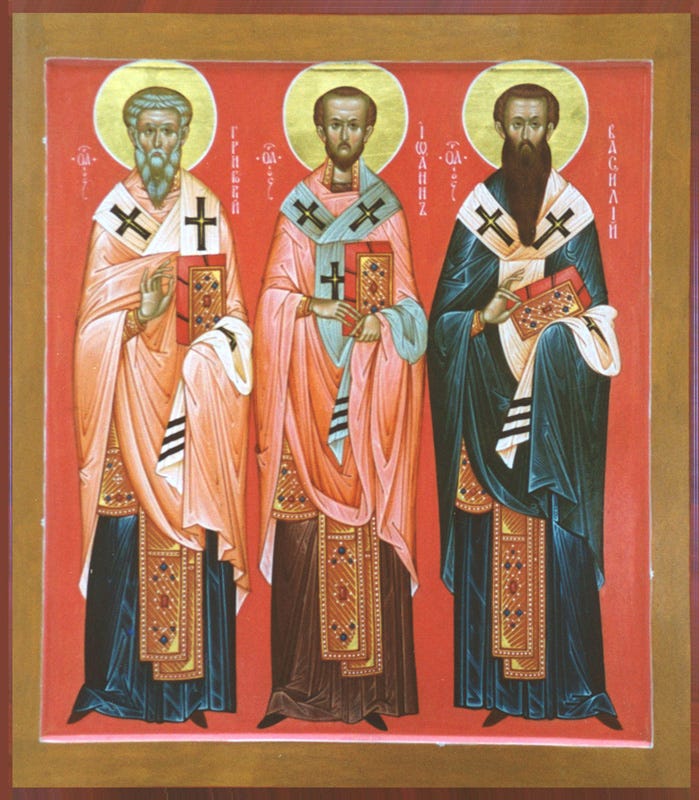
St. Basil the Great served as Bishop of Caesarea in Cappadocia and became one of Christianity’s most influential leaders. His brother, St. Gregory of Nyssa, emerged as one of the Church’s greatest theologians and philosophers. Their close friend, St. Gregory of Nazianzus defended the doctrine of the Trinity with such brilliance that history remembers him simply as “the Theologian.”
The Great Councils
Asia Minor also hosted the most influential councils in Christian history.
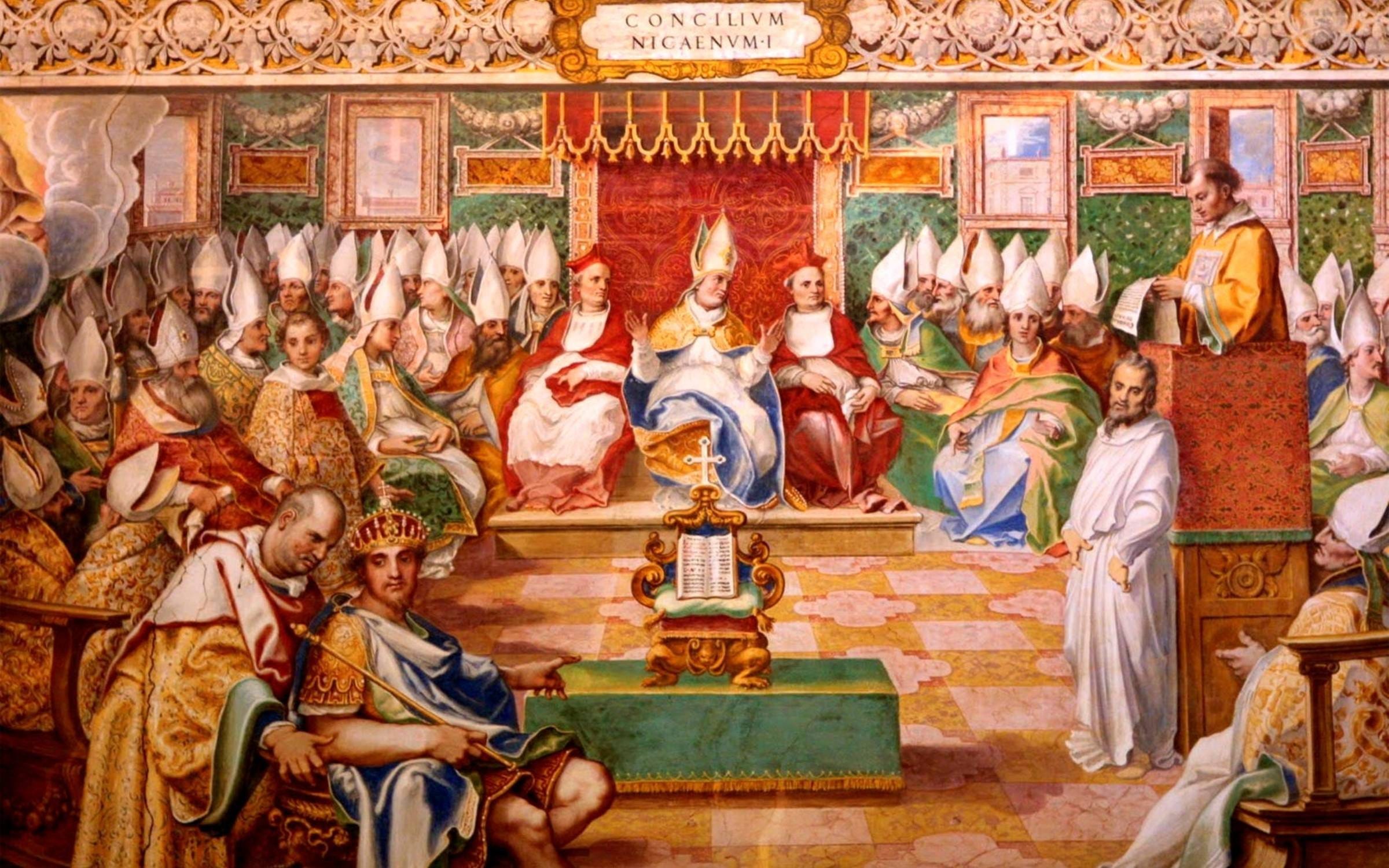
The first was the Council of Nicaea in AD 325. Bishops from across the Christian world gathered to defend the faith against Arianism and declared that Christ is “begotten, not made, being of one substance with the Father.” The Nicene Creed, still recited by hundreds of millions of Christians today, was born here.
More than a century later, the Council of Ephesus met in AD 431. There, the bishops affirmed the unity of Christ’s person and declared that Mary could rightly be called Theotokos, meaning “Mother of God.”
Just twenty years later, the Council of Chalcedon met in AD 451, further clarifying the Church’s teaching on the nature of Christ.
These councils laid the theological foundations of Christianity. Their decisions continue to shape the beliefs of the Catholic Church, the Orthodox Church, and many Protestant denominations nearly 1,700 years later.
The Rise of Islam
The seventh century marked a turning point in Christian history.
At the time, the Byzantine Empire stretched across the Balkans, Anatolia, Syria, Palestine, and Egypt. These lands were home to many of Christianity’s oldest churches, monasteries, and centers of learning.
Everything began to change with the rise of Islam.
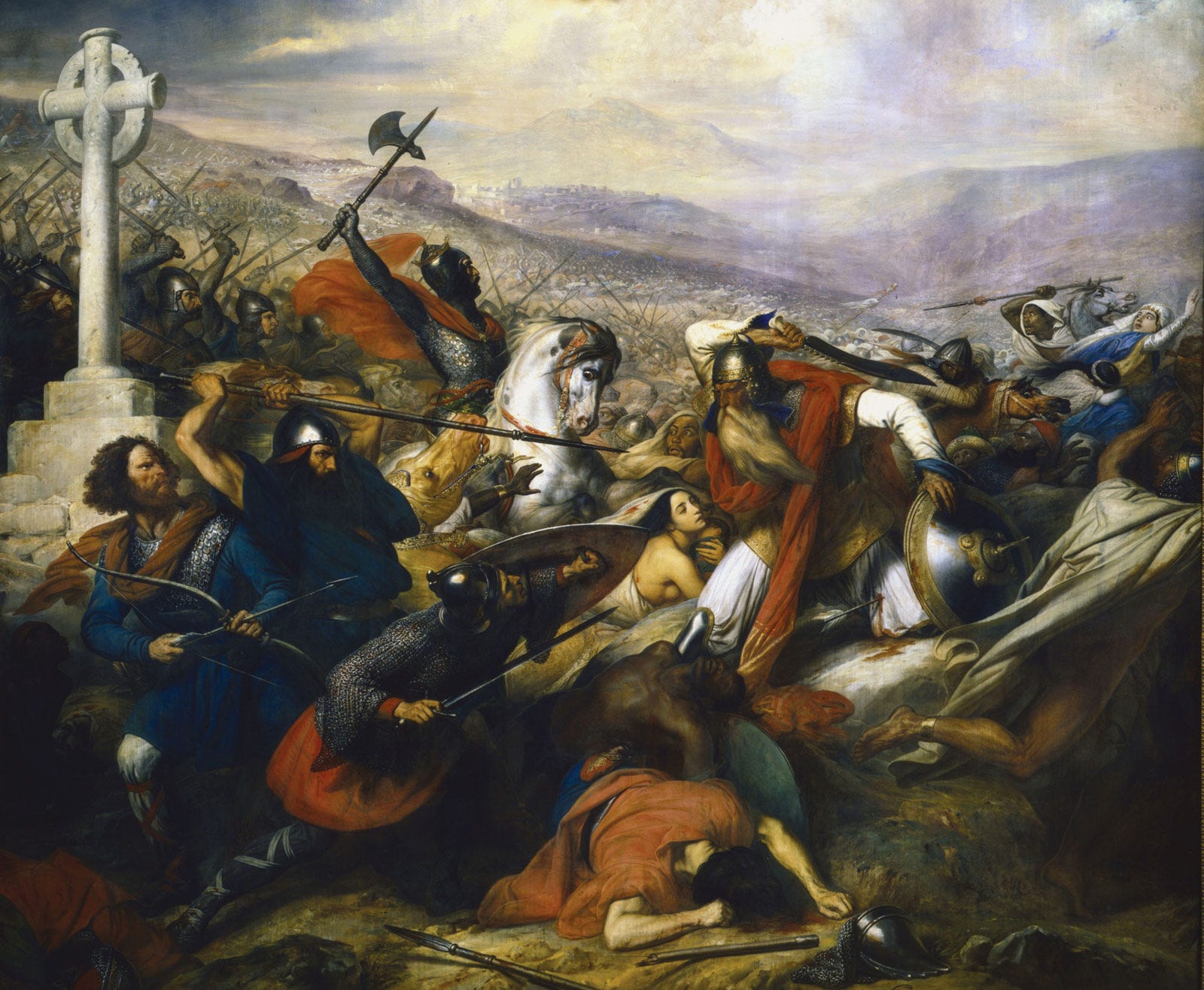
After the death of Muhammad in AD 632, Arab armies rapidly expanded across the Middle East, conquering Syria, Palestine, Egypt, and North Africa within just a few decades. Asia Minor remained under Byzantine rule, becoming the frontier between the Byzantine Empire and the expanding Islamic world.
For centuries, Muslim armies launched repeated campaigns across the Taurus Mountains into Anatolia, while Byzantine emperors fought to defend the peninsula. The region became one of the medieval world’s great borderlands, where the fate of the Byzantine Empire (and much of eastern Christianity) was decided.
The Turning Point
The decisive change came in 1071.
The Battle of Manzikert ended in a crushing Byzantine defeat against the Seljuk Turks. Emperor Romanos IV fell into captivity, and Byzantine authority across much of Anatolia collapsed. Turkish tribes settled throughout the countryside, establishing new towns and new centers of power.
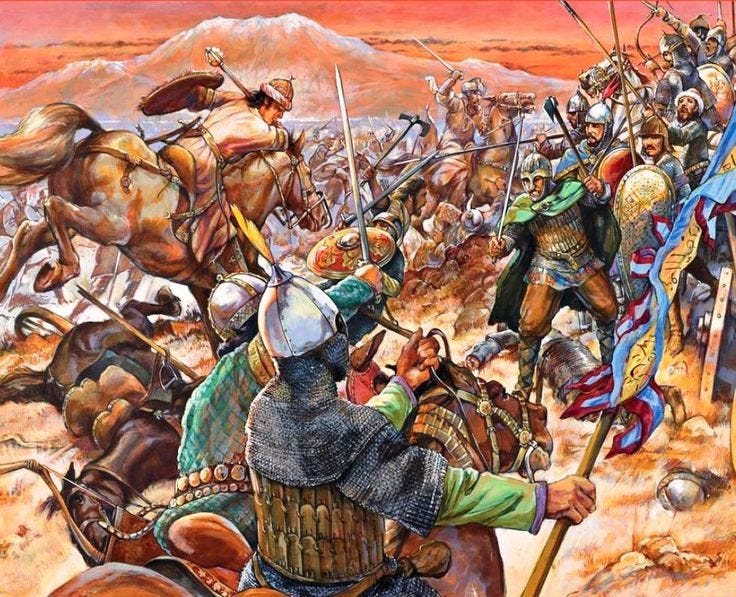
The Byzantine princess and historian Anna Komnene, writing a generation later in The Alexiad, described the immediate aftermath:
“...the fortunes of the Roman Empire had sunk to their lowest ebb. For the armies of the East were dispersed in all directions, because the Turks had over-spread, and gained command of, countries between the Euxine Sea [Black Sea] and the Hellespont, and the Aegean Sea and Syrian Seas [Mediterranean Sea], and the various bays, especially those which wash Pamphylia, Cilicia, and empty themselves into the Egyptian Sea [Mediterranean Sea].”
The First Crusade temporarily restored parts of western Asia Minor to Byzantine rule, but the larger transformation continued.
Generation after generation, the demographic character of the region changed.
Greek-speaking Christian communities became smaller.
Turkish-speaking Muslim communities grew larger.
By the fourteenth century, the intellectual and official Alexios Makrembolites, a high-ranking Byzantine courtier and writer who lived through the successive waves of Turkish settlement and raiding, recorded the human cost:
“Have we not been delivered to the sons of Agar as sheep for the slaughter? Have they not invaded our whole land and laid it waste? Do they not dwell in our illustrious and honored cities, do they not treat as slaves their inhabitants, refined and sheltered from misery in the past? Have we not been scattered all over the earth as captives; after innumerable slaughters, is its expanse not pitifully strewn with our bones? Have our bodies not been thrown out as food to the birds of the sky and to the animals of the earth? Not long ago the survivors among us were routed by disorder and confusion and consumed. For this reason, have not our cities and our countryside been devastated and abandoned by their inhabitants?”
A contemporary patriarchal document of 1369, reflecting on one of the seven churches themselves, captured the fate of Sardis:
“Time... alters and changes all and... causes prosperity to progress towards extinction.... The great metropolis of Sardes... had for so long attained such glory and fame... and its most beautiful order and culture, so that it was numbered among the first and the greatest metropolitanates... and at the tip of the tongues of all, as a pleasing delight and ornament of those many cities that are in Asia. But [time] brought her to such degradation, by consent of God that is, and so disposed her affairs as not to preserve even the outline or some small trace of a city, transferring it from a garden of luxury into a plain of destruction and extinction.”
An official ecclesiastical notitia of the same era summed up the broader collapse across Anatolia:
“What a frightful decline! Read all [of the following] and you shall greatly lament.... Of these, many were made desolate and were completely obliterated by those who rule us. And neither is a metropolitan to be found in the metropolitanates, nor an archbishop in the archbishoprics, nor a bishop in the bishoprics, nor priest in church, nor monk in monastery or pious foundation or cell, nor other Christian layman in castle or land.... Fifty-one metropolitanates, eighteen archbishoprics, and four hundred and seventy-eight bishoprics are desolate.... And not only were those metropolitanates, archbishoprics, bishoprics, the monasteries and churches obliterated; But also the provinces of the three patriarchs of Alexandria, Antioch, and Jerusalem.... Because the churches of their provinces have been obliterated completely and Christ’s people, that is the Christians, have been utterly destroyed.”
Friendly reminder: The Western Spirit exists because of readers like you. Join us and help keep this project alive and independent.
If you’ve been enjoying these essays, consider becoming a paid subscriber. For a few dollars a month, you’ll get:
Essays on brave men, and turning points in Western history
Reflections on faith, tradition, and culture
Full access to the growing archive - essays, book breakdowns, and deep dives
This project exists because readers like you make it possible.
The End of an Ancient Christian World
The twentieth century brought the greatest upheaval.
The collapse of the Ottoman Empire, the First World War, the Greek-Turkish War, and the population exchange of 1923 transformed Asia Minor more than any previous century. Hundreds of thousands of Greek Orthodox Christians left lands their families had inhabited for generations, while Muslims from Greece moved in the opposite direction.
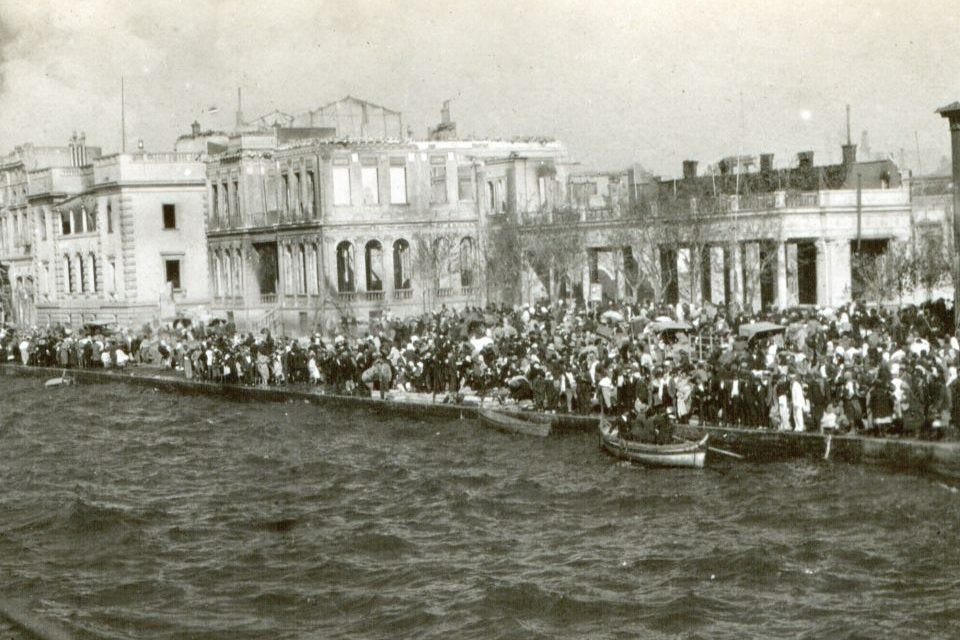
George Horton, the American Consul-General in Smyrna and a writer who had served more than thirty years in the Near East, was an eyewitness to the catastrophe of September 1922. In The Blight of Asia he recorded what he had seen and understood: