
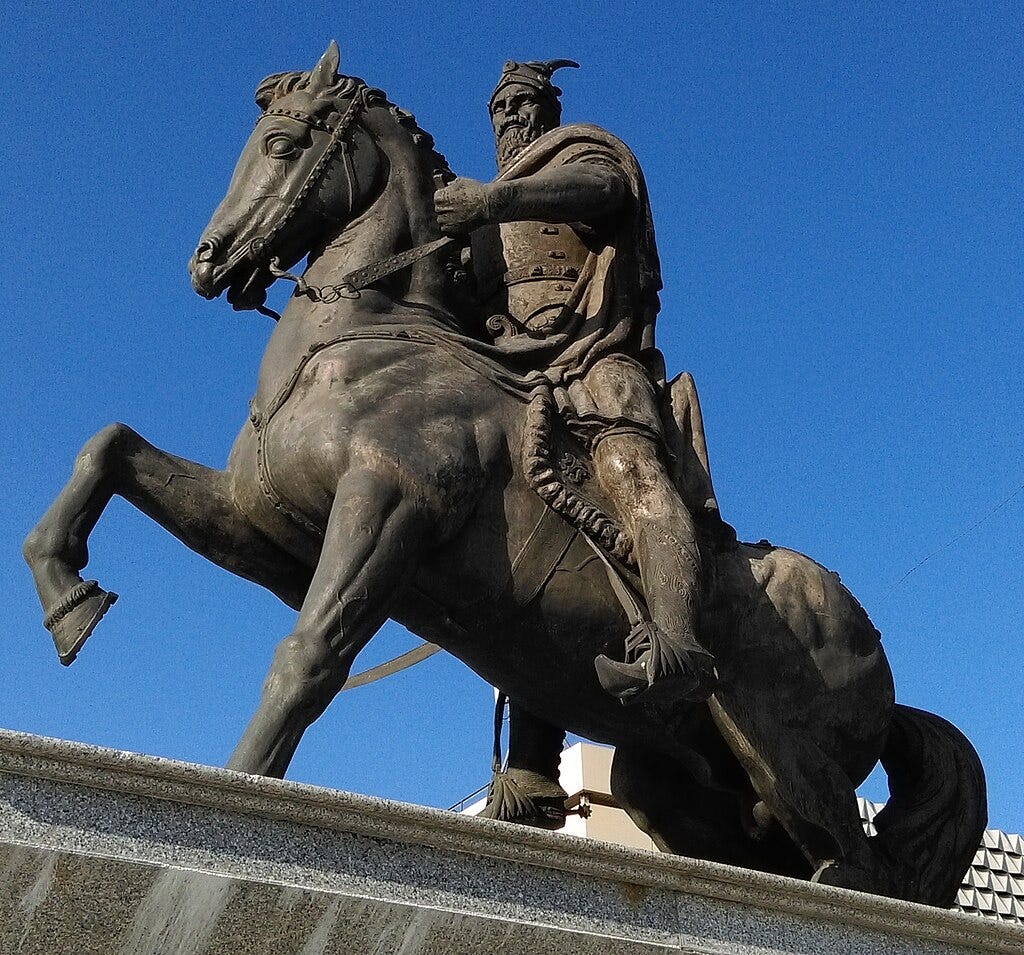
There are figures in history who don’t just fight wars; they preserve civilizations. They appear when something sacred is on the brink of extinction, and their defiance buys the world more time. Skanderbeg was one of those men.
His real name was Gjergj Kastrioti. The Turks called him Iskender Bey… Alexander the Lord… a name that eventually became Skanderbeg. He was born in 1405 in the mountains of Albania, into a small Christian noble family surrounded by empires. His father ruled a sliver of land under Ottoman pressure. Like many others, he was forced to send his sons as hostages to the Sultan. It was a cruel strategy: take the heirs, train them as loyal soldiers, and ensure obedience through affection or fear. Gjergj was one of those boys. He was raised in Edirne at the heart of the Ottoman court, trained as a Muslim, educated in military science, and molded into a perfect servant of the empire that had enslaved his people. But some parts of the soul can’t be converted.
The Western Spirit exists because of readers like you. Join us and help keep this project alive and independent.
If you’ve been enjoying these essays, consider becoming a paid subscriber. For a few dollars a month, you’ll get:
In-depth pieces on forgotten battles, brave men, and turning points in Western history
Reflections on faith, order, tradition, and the deeper meaning behind culture
Full access to the growing archive — essays, book breakdowns, and historical deep dives
This project exists because readers like you make it possible.
I. The Boy Hostage
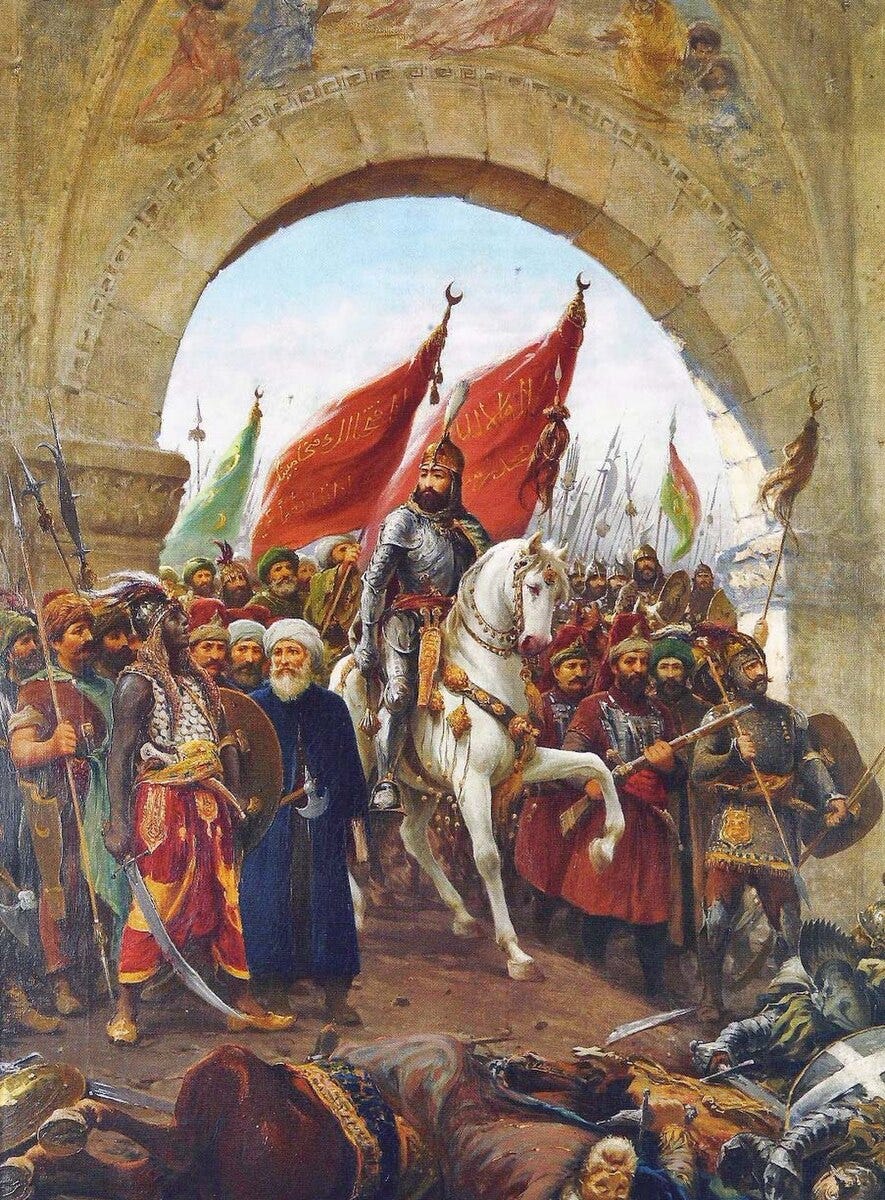
I’ve always been struck by the image of a boy torn from his home and raised among his enemies. It’s the kind of beginning that could either break a man or make him unbreakable. The Ottomans knew how to shape loyalty… they used praise, power, and fear in perfect balance. The young Gjergj excelled. He was intelligent, strategic, and physically gifted. He learned Turkish, Arabic, Persian. He mastered the art of war. He fought in campaigns across Asia Minor and Europe. In every sense, he was one of them. And yet, beneath the surface, a memory endured: the mountains of Albania, the language of his father, the cross. Marin Barleti, his biographer, wrote, “They taught him their laws, their faith, their arms, but they could not uproot his nature.”
That line captures Skanderbeg’s essence. He learned everything from his captors… how they thought, how they fought, how they ruled… and then turned that knowledge against them. For years, he hid his true allegiance. Outwardly, he was a loyal Ottoman officer; inwardly, he was waiting. And that patience was his first victory. Because most men, when taken young, become what they are told to be. They absorb the habits of their masters and forget who they were. Skanderbeg remembered. That’s the first act of rebellion: to remember who you are in a world that wants you to forget.
II. The Escape
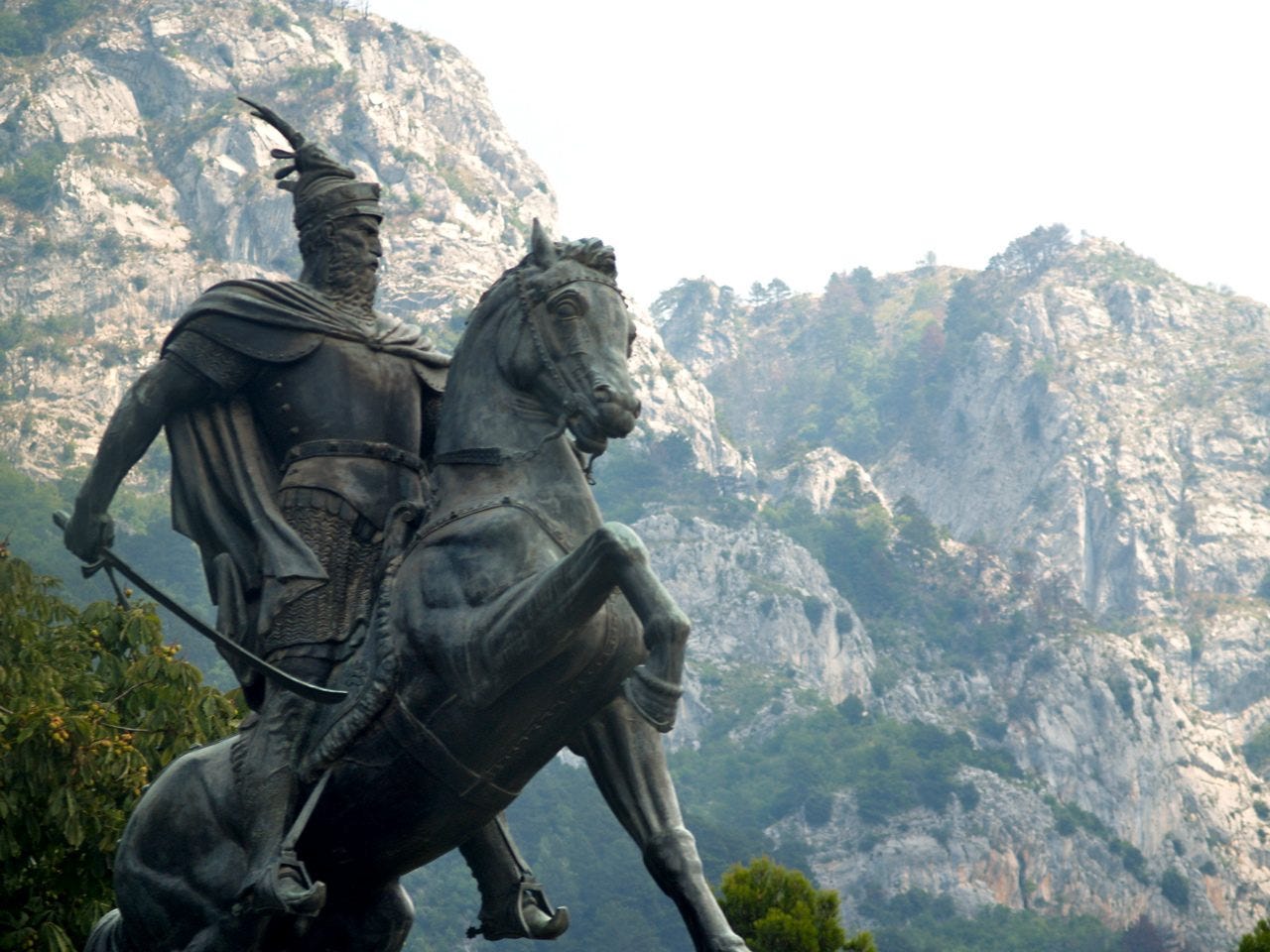
The turning point came in 1443. The Ottomans were fighting the Hungarians under John Hunyadi, one of the greatest generals of the age. Skanderbeg was part of the Ottoman army sent to suppress the Christian forces near Nish. In the chaos of battle, he saw his moment. With three hundred Albanian cavalrymen under his command, he broke from the Ottoman line and vanished into the winter hills. It was the moment his two lives separated. The Sultan’s soldier became a rebel. The Muslim general became a Christian leader.
He rode south across frozen rivers and rough terrain until he reached Krujë, the fortress that had once belonged to his father. The city was under Ottoman control, but Skanderbeg carried forged orders bearing the Sultan’s seal. He presented them to the garrison commander, who, believing them authentic, handed over the keys. That night, the crescent banner came down, and the double-headed eagle of Albania rose again over the walls. Inside the church, Skanderbeg gathered his men and declared his return to the faith of his fathers. “I do not bring you gold or silver,” he told them, according to Barleti, “but I bring you liberty.”
It’s one of those scenes that feels almost mythic: a handful of riders, a mountain fortress, a stolen seal, and a man reclaiming his soul. But it happened. From that night, Albania was free, at least for a time. Word spread through the valleys and highlands, and clans rallied to him. The Ottomans, humiliated, prepared for vengeance. But they didn’t know whom they were dealing with. Skanderbeg was not a warlord of impulse; he was a strategist shaped by their own schools. He knew their formations, their discipline, their arrogance. He had studied them from within.
III. The First Victories
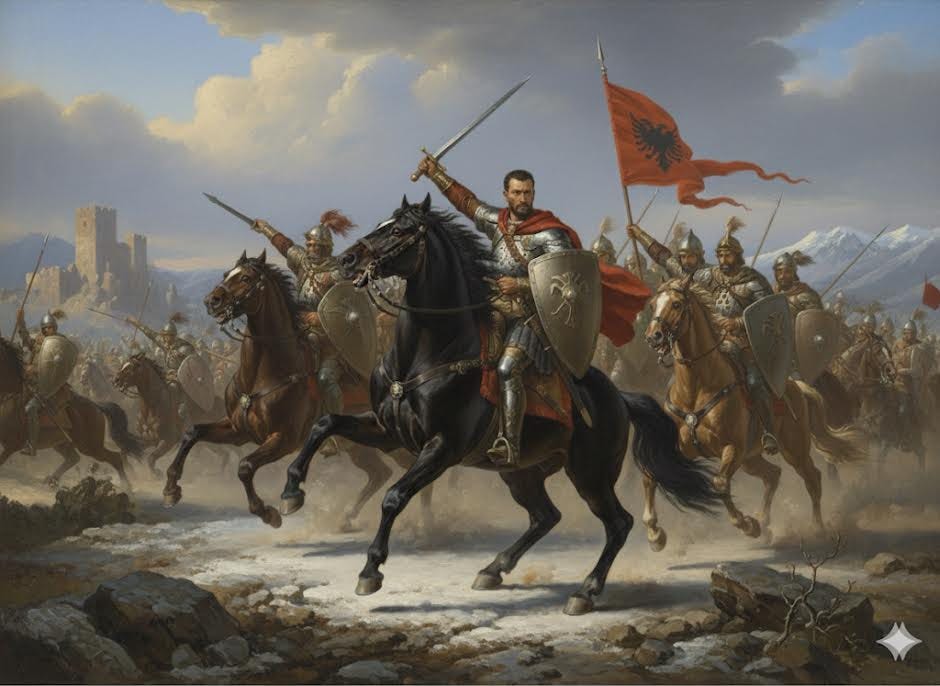
The first great test came the next year, in 1444, at the Battle of Torvioll. The Ottomans sent an army of twenty-five thousand under Ali Pasha to crush the rebellion. Skanderbeg had perhaps ten thousand men, most of them irregulars armed with whatever they could find. The battle took place in a valley surrounded by forest. Skanderbeg hid half his forces in the woods and lured the Ottomans into the open with a feigned retreat. When the Turks charged, he signaled his hidden troops to attack from behind. It was over in hours. The Ottomans were routed, thousands dead, the rest fleeing in confusion. The victory shocked Europe. Pope Eugenius IV hailed him as the “athleta Christi,” the champion of Christ.
From then on, his reputation grew with every campaign. He organized the League of Lezhë, uniting the Albanian princes under one banner. He fortified the mountain passes, built alliances with Venice and Naples, and held the Ottomans at bay for nearly twenty-five years. There was something almost supernatural about his success. The Sultan sent army after army… some said as many as fifteen campaigns in all… but none could break him. Mehmed II, the conqueror of Constantinople, tried personally to destroy him and failed. Skanderbeg’s men fought like shadows, appearing out of nowhere, ambushing, retreating into the hills, striking again. It wasn’t just bravery; it was mastery of terrain, discipline, and morale.
In a world where Europe was fractured by politics and fear, Skanderbeg reminded people that courage could still resist numbers. The Venetians, who had once distrusted him, began to respect him. Naples sent aid. Even the Pope wrote letters calling him “the sword of Christendom.” His victories at Mokra, Otonetë, and Albulena became legendary. Barleti wrote, “He seemed to fly rather than march; his blows fell where least expected; his mind was ever awake while his enemies slept.”
IV. The Long Resistance
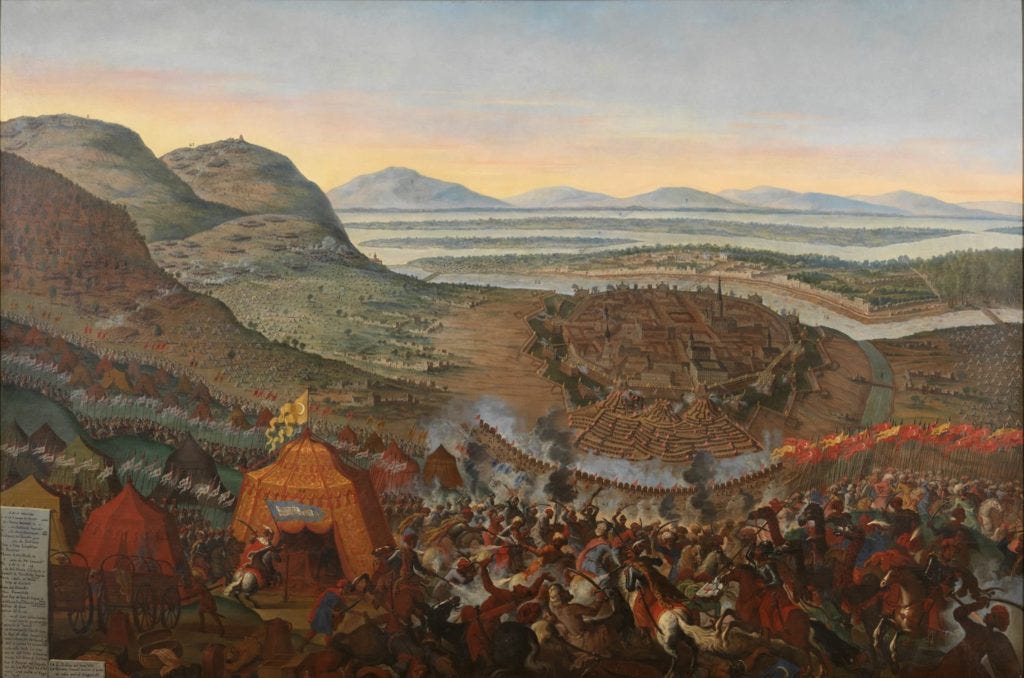
But no man can fight forever. The Ottomans never stopped coming. Each time Skanderbeg won, another army arrived. Each time he raised a banner, betrayal flickered nearby. Albania was small and poor. Supplies were scarce. His men sometimes fought barefoot in winter. Yet they kept going because he believed. He made belief contagious. He rode at the front, shared their food, prayed with them before battle. His faith was not for display; it was his foundation. When emissaries offered him wealth and pardon in exchange for surrender, he refused. “Better the grave of my fathers,” he said, “than the chains of the Turks.”
What I find remarkable is that he didn’t just fight a military war; he fought a moral one. His defiance inspired all of Europe. In 1463, Pope Pius II tried to organize a new crusade with Skanderbeg as its spearhead. But the plan faltered. Western kings had grown cautious and weary. While they debated, Skanderbeg kept fighting alone. Even when plague struck his lands, when allies betrayed him, when his fortresses crumbled one by one, he didn’t yield. He was not fighting for survival alone, but for something spiritual… the right to stand unbowed.
As he aged, he became almost a symbol rather than a man. The Turks called him “the mountain storm.” Venetian soldiers spoke his name with reverence. And yet he lived simply. His letters to European rulers are humble but proud. In one, he wrote, “The Turks have the world’s riches, but not its soul. The soul belongs to those who refuse them.” That single sentence could summarize his life.
V. The Final Stand and Legacy
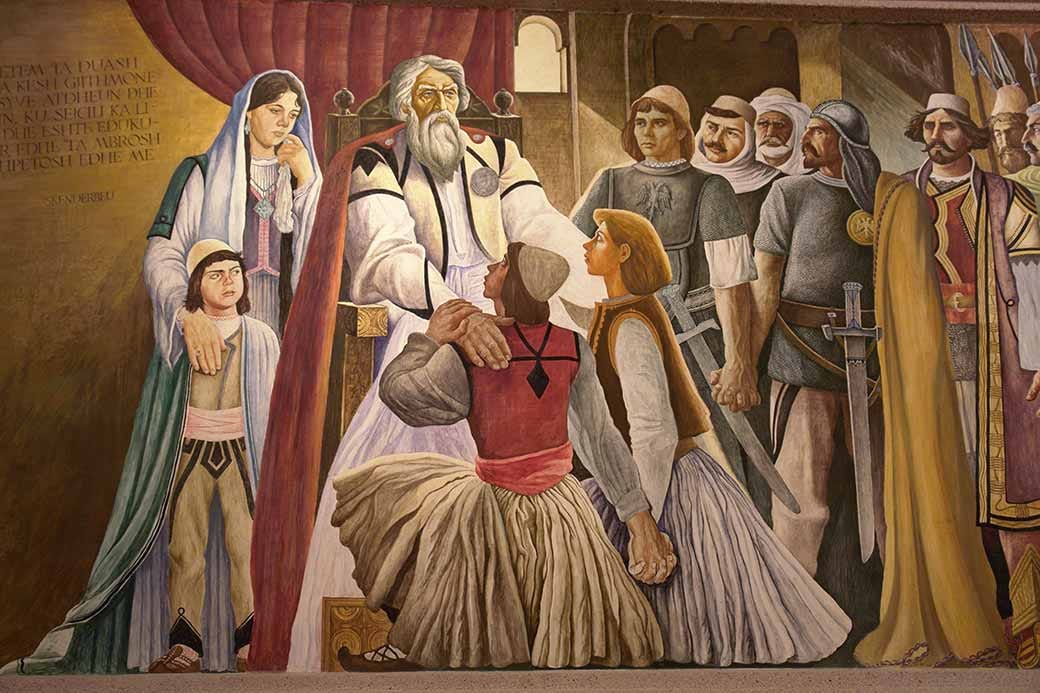
By 1467, the Ottomans launched one of their largest invasions yet. Mehmed II sent tens of thousands to finish what his predecessors could not. Skanderbeg was ill but still led his troops. He defended Krujë once more, and again the Turks withdrew. But his body was failing.