
Did you know that Miguel de Cervantes, the man who wrote Don Quixote, spent five years as a slave in Muslim Algiers?
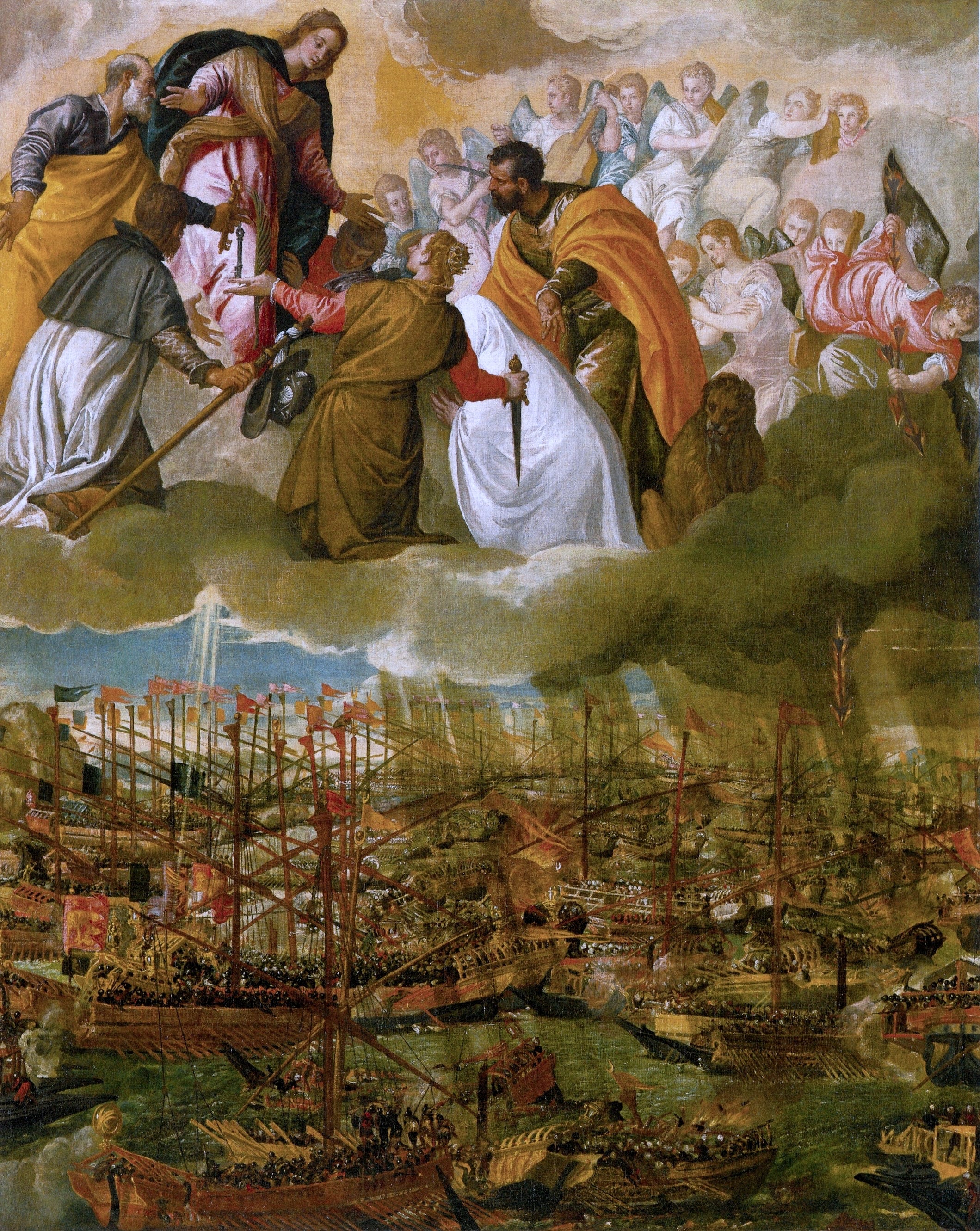
Four years earlier, he fought at the Battle of Lepanto (a super important victory for Christendom), where the fleet of the Holy League confronted the Ottoman navy on October 7, 1571.
Cervantes got shot multiple times, and permanently lost the use of his left hand. He was incredibly proud of having fought there, later describing Lepanto “as one of the great events of his life”.
Then, in 1575, while sailing back toward Spain, his ship was attacked by Algerian corsairs.
They captured him and took him across the Mediterranean to Algiers.
For the next five years, he lived as a slave awaiting ransom…
From Lepanto to Algiers
Algiers belonged to the Ottoman political world, although its corsair society possessed “considerable autonomy”, and Christian captives could be sold, put to work, held for ransom, or incorporated into households according to their circumstances.
Cervantes became one of them.
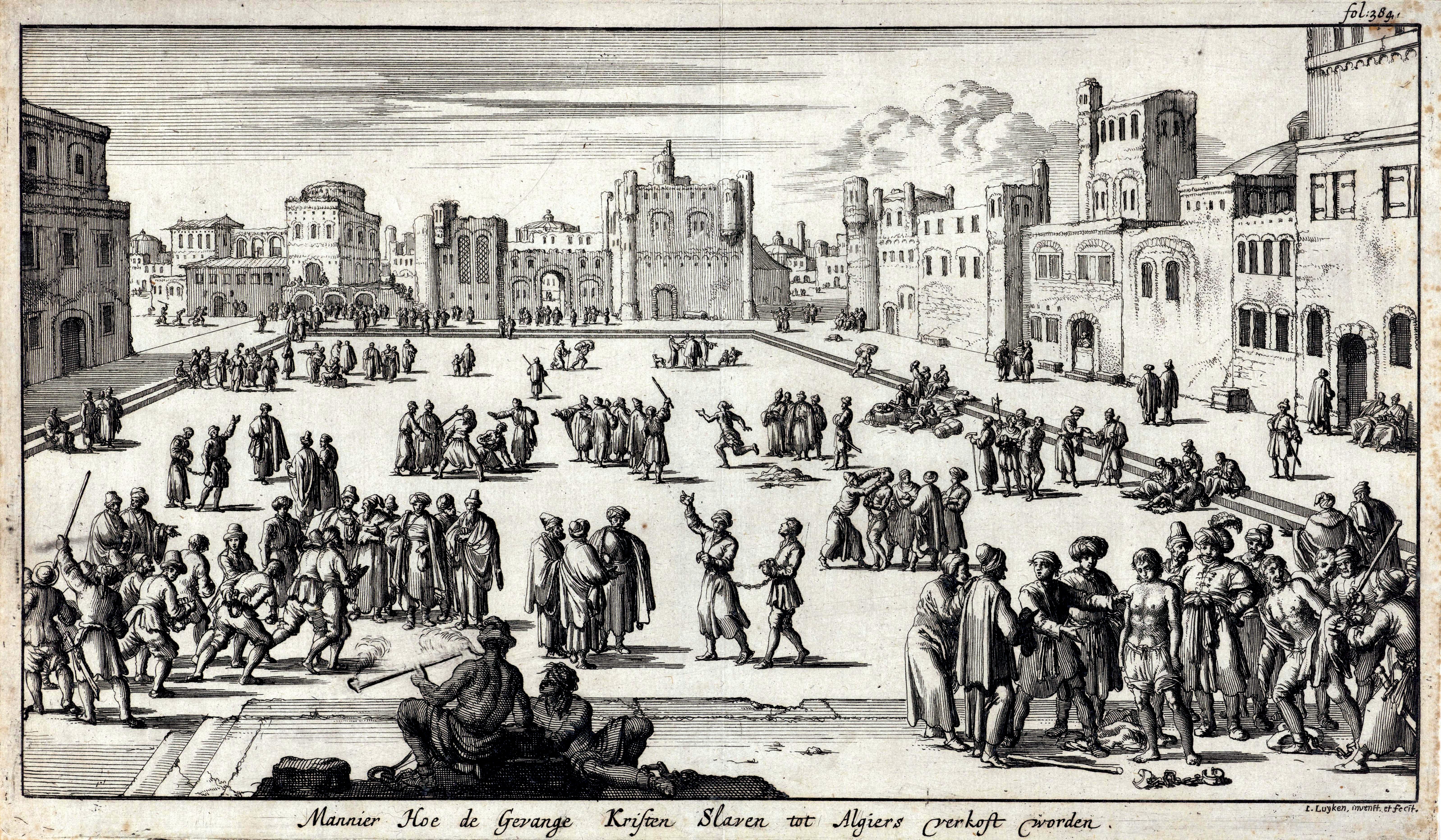
His captors believed he might be worth a lot of money because letters found on him made him appear more important than he actually was. This helped keep him alive while making his release more expensive.
But Cervantes had absolutely no intention of spending the rest of his life there…
He Tried to Escape Again and Again
He tried to escape.
Then he tried again.
And again.
And again.
One attempt involved Cervantes and other captives hiding in a cave outside Algiers while waiting for a ship that was supposed to carry them back to Christian territory. The plan collapsed after betrayal, and Cervantes assumed full responsibility rather than snitching on his friends.
According to the sworn testimony recorded in the Información de Argel (October 1580), when the Turks were binding the group, Cervantes declared loudly so that both Turks and Moors could hear him:
“None of these Christians who are here are guilty in this business, because I alone have been the author of it and the one who induced them to flee.”
Taken alone before Hasan Pasha, he repeated that he alone was responsible and begged that any punishment fall only on him. Despite death threats, a rope placed around his neck, and hands bound behind his back as if for hanging, he refused to name any other Christian.
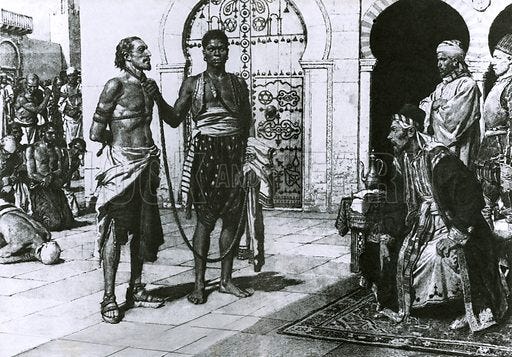
Another scheme involved trying to arrange a larger escape by sea. That failed too. His captors eventually placed him under heavier confinement, recognizing that they had an unusually determined prisoner on their hands.
Friendly reminder: The Western Spirit exists because of readers like you. Join us and help keep this project alive and independent.
If you’ve been enjoying these essays, consider becoming a paid subscriber. For a few dollars a month, you’ll get:
Essays on brave men, and turning points in Western history
Reflections on faith, tradition, and culture
Full access to the growing archive - essays, book breakdowns, and deep dives
This project exists because readers like you make it possible.
Christian Captives in a Muslim City
Cervantes was surrounded by other Christian captives in Algiers.
Some waited for relatives or religious orders to gather enough money for ransom, while others faced years of labor and confinement. Cervantes later drew heavily upon this environment… Four of his surviving plays deal with Christian captives held by Muslims, with Los tratos de Argel and Los baños de Argel drawing closely upon the Algerian setting he knew personally.
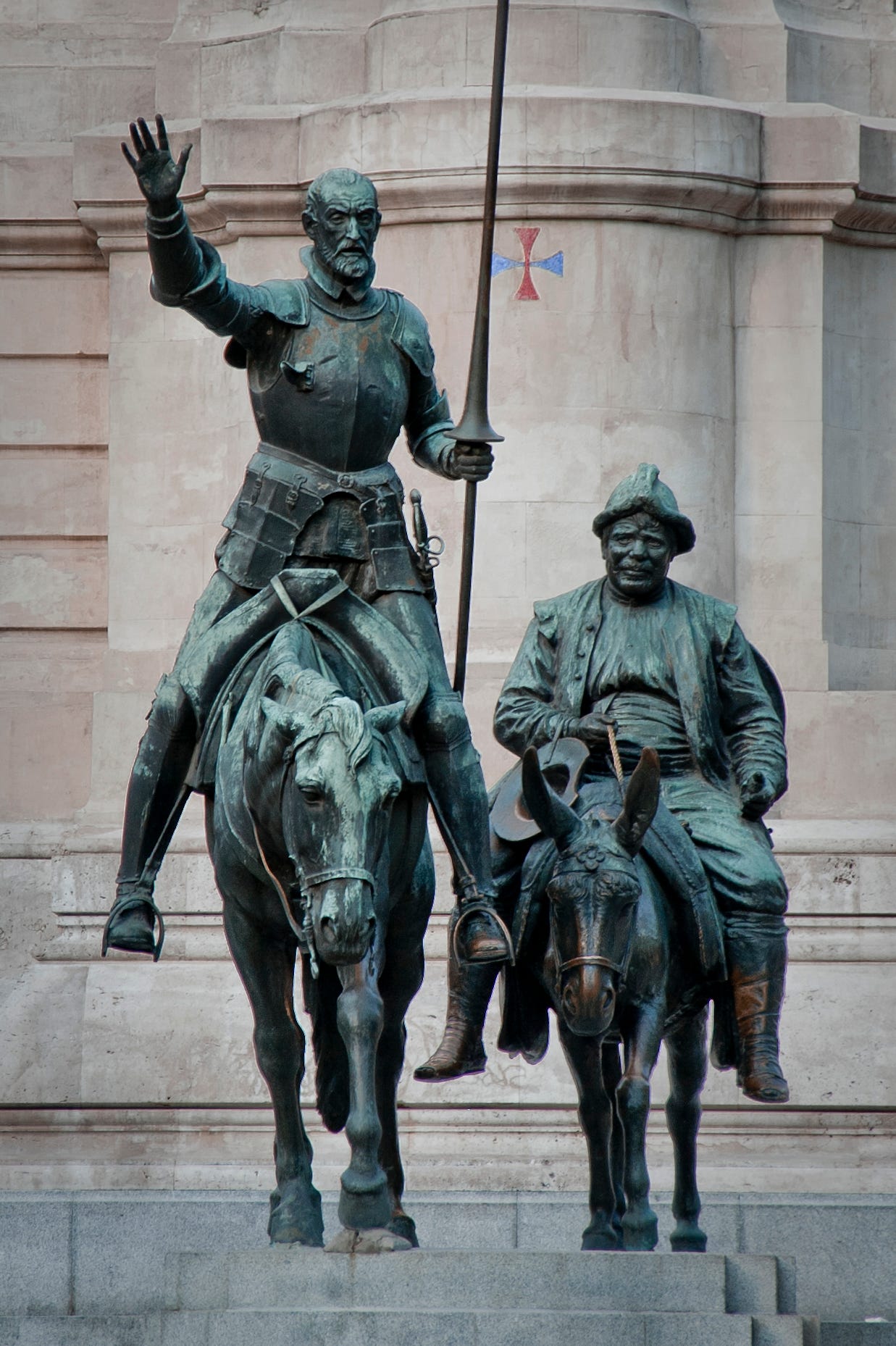
Even Don Quixote contains one of the most famous examples…
The Captive’s Tale
Around the middle of the first part of Don Quixote, Cervantes introduces a character called the Captive, who begins telling the company about his life.
The similarities to Cervantes:
The man is a Christian soldier.
He fights at Lepanto.
He becomes a captive of Muslims.
He experiences the world of Ottoman and North African slavery.
He dreams of freedom.
And he describes Christian captives being held in the baños of Algiers while ransom negotiations take place.
In one passage, the Captive recalls life under Hasan Pasha:
“And though hunger and nakedness might trouble us at times, and indeed almost always, nothing afflicted us so much as to hear and see at every turn the till then unheard-of and unseen cruelties which my master inflicted upon the Christians. Every day he hanged some one, impaled another, and cut off the ears of a third; and this upon so small a pretext, or on none at all, that the Turks themselves acknowledged he did it merely for the sake of doing it, and because his natural disposition inclined him to cruelty.”
A little later the same narrator says:
“The only one who held his own with him [Hasan] was a Spanish soldier named Saavedra, to whom, though he did things which will remain in the memory of those people for many years, and all for the recovery of his liberty, his master never gave a blow, nor ordered one to be given him, nor even spoke an ill word to him.”
(The character is not simply Cervantes writing straightforward autobiography, and the events of the Captive’s Tale should not be treated as a literal day-by-day account of his own captivity. But Cervantes was writing from a world he knew intimately.)
Who Ransomed the Captives?
His family spent years trying to raise enough money to ransom him, but it was simply too much money. In 1580, the Trinitarian friar Juan Gil arrived in Algiers carrying ransom funds, and after negotiations and additional money were assembled, Cervantes was finally redeemed.
On September 19, 1580, after nearly five years in captivity, he became a free man.
Imagine the moment.
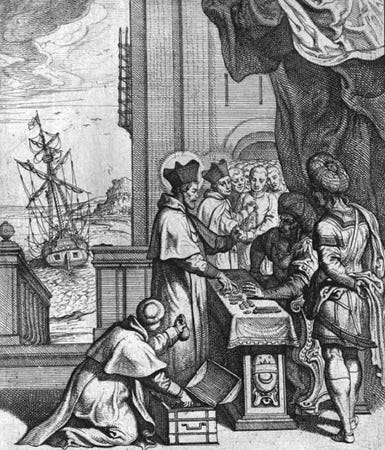
Cervantes survived Lepanto, capture at sea, years in Algiers, repeated failed escapes, threats of punishment, and the possibility of being transported farther east into Ottoman territory, and now, at thirty-three years old, he could finally return to Spain.
In Don Quixote he later crystallized the value of that hard-won freedom:
“Liberty, Sancho, is one of the most precious gifts that Heaven has bestowed upon man; no treasures the earth contains or the sea conceals can equal it; for liberty, as for honour, one can and should risk one’s life; and, on the other hand, captivity is the greatest evil that can befall a man.”
Then He Started Writing..
Cervantes returned to a simple life.
His military service did not make him rich, his employment brought further difficulties, and his life continued taking strange turns…
Then, in 1605, he wrote the first part of Don Quixote.
He was fifty-seven at the time.
The second part followed in 1615.
It would eventually become one of the foundational works of modern European literature.
By the way, last September we read Don Quixote in our book club, Athenaeum, with a great group of people.
We’ve also read many other great books together like Confessions, The Iliad, The Odyssey, The Aeneid, The Count of Monte Cristo, and more.
If you’re interested in the classics…
We just started our most exciting read-along yet inside our book club.
The Brothers Karamazov.
If you’ve been on the fence about joining the Athenaeum Book Club, now’s the time. You do not want to miss this.
We had our first discussion on August 4, covering Books 1–4. Our next discussion is on August 18, covering Books 5–9.
Take out a paid subscription if you want to join our “inner circle” and participate in the discussions directly. You’ll get:
- Live book club discussions (biweekly)
- Access to our incredible community chat
- Essays to guide you through the Great Books
- All past recordings, essays, and podcasts
- Ability to vote on what we read next
Of course, you may also read along for free and tune into the live broadcasts. Let’s make this our biggest read-along ever!
See you inside

This is an excellent summary of Cervantes’ extraordinary life. I plan to write a column on the Battle of Lepanto next month.
Great story. Thanks.