
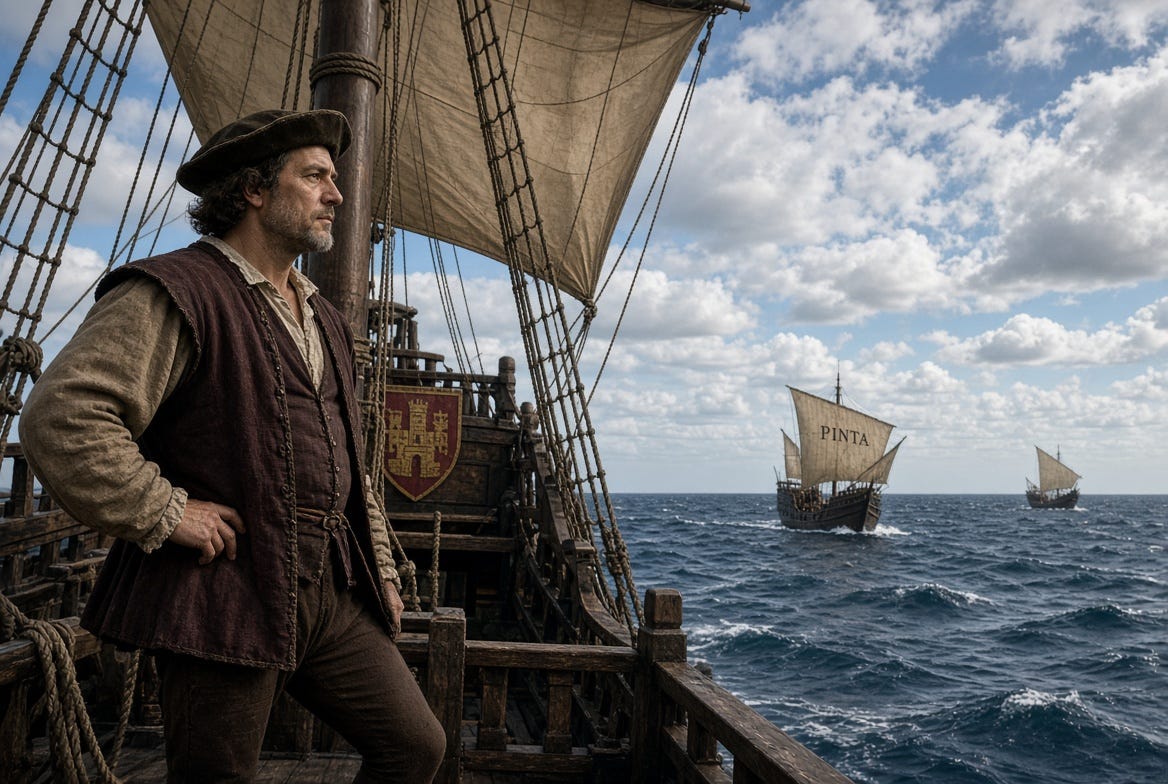
In 1492, Christopher Columbus sailed west across the Atlantic with three ships, hoping to find a new route to Asia, but instead reached the Caribbean and began a new chapter in the history of Europe and the Americas. What many people do not realize is that his voyage was connected to the centuries-long conflict between Christian Europe and the Muslim world that controlled trade routes to the East. For generations, European merchants depended on trade networks that connected the Mediterranean with the wealthy markets of Asia, but many of these routes passed through territories controlled by Muslim rulers, who profited from the trade.
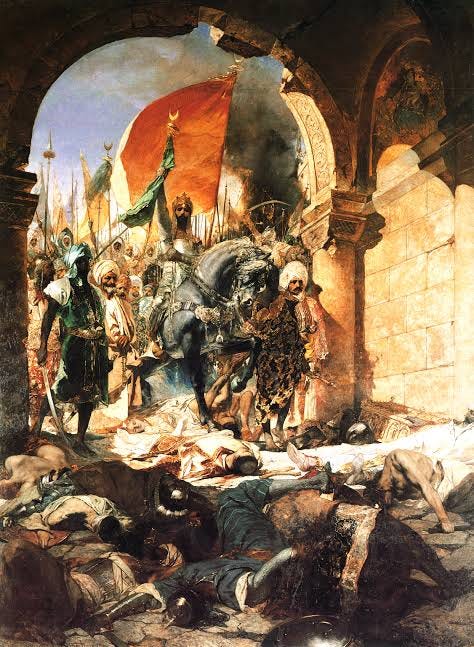
Then, in 1453, the Ottoman Turks conquered Constantinople, bringing the ancient Christian capital of the Byzantine Empire under Muslim rule and strengthening Ottoman control over trade in the eastern Mediterranean. European rulers already had good reasons to search for alternative routes to Asia, and the growing power of the Ottomans made the prospect even more attractive. While the Portuguese explored the possibility of sailing around Africa, Columbus proposed something much more ambitious: reaching Asia by sailing west across the Atlantic.
The rulers who eventually agreed to finance his expedition were Ferdinand and Isabella, the Catholic monarchs of Spain, who had just completed the Reconquista by capturing Granada, the last Muslim kingdom on the Iberian Peninsula, in January 1492.
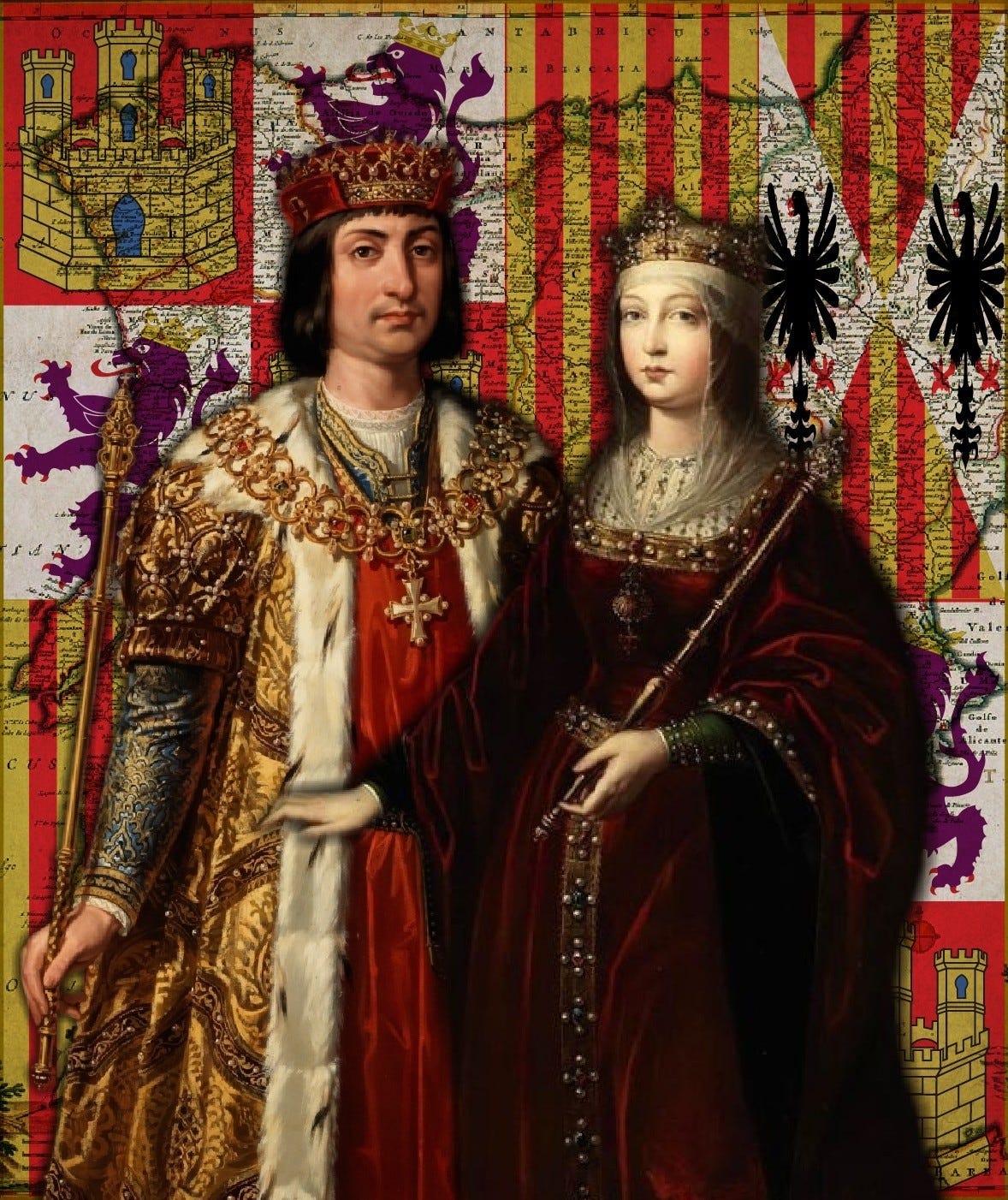
Only a few months after bringing nearly eight centuries of Muslim rule in parts of Spain to an end, they sent Columbus across the Atlantic.
As Columbus wrote in the opening of his journal:
“In this present year 1492, after Your Highnesses had brought to an end the war with the Moors who reigned in Europe ... Your Highnesses ... determined to send me, Christopher Columbus, to the said regions of India.”
The Fall of Constantinople
Christian leaders at the time did not hold back. Cardinal Bessarion wrote:
“The head of all Greece, the splendor and glory of the East, the school of the best arts, the refuge of all good things, has been captured, despoiled, ravaged, and completely sacked by the most inhuman barbarians and the most savage of enemies of the Christian faith, by the fiercest of wild beasts.”
Aeneas Silvius Piccolomini (later Pope Pius II) put it this way:
“We ourselves allowed Constantinople, the capital of the East, to be conquered by the Turks. And while we sit at home in ease and idleness, the arms of those barbarians are advancing to the Danube…. In the Eastern imperial city they have massacred the successor of Constantine, along with his people, desecrated the temples of the Lord, sullied the noble edifice of Justinian with their hideous cult of Muhammad.”
Trade was another reason for these voyages, as European merchants wanted direct access to the spices and other valuable goods coming from Asia, which passed through several merchants before reaching Venice and other trading cities of the Mediterranean.
The Ottoman conquest of Constantinople did not bring this trade to an end, and merchants continued making considerable profits from it, but European rulers wanted to find routes that would allow them to trade with Asia without depending on intermediaries.
Finding a direct sea route would not only open new commercial opportunities but also allow Christian kingdoms to build alliances with rulers beyond the Mediterranean and extend their influence into parts of the world they had previously struggled to reach.
Portugal Searches for a Way Around Africa
Long before Columbus crossed the Atlantic, the Portuguese were already exploring the western coast of Africa, hoping to gain access to African gold, discover a sea route to the wealthy markets of Asia, and find Christian allies beyond the territories controlled by Muslim rulers.
One of their most interesting ambitions was to find the legendary Christian ruler known as Prester John, whom many Europeans believed ruled a powerful kingdom somewhere beyond the Islamic world. They hoped that an alliance with him would help Christian Europe in its long struggle against Muslim powers.
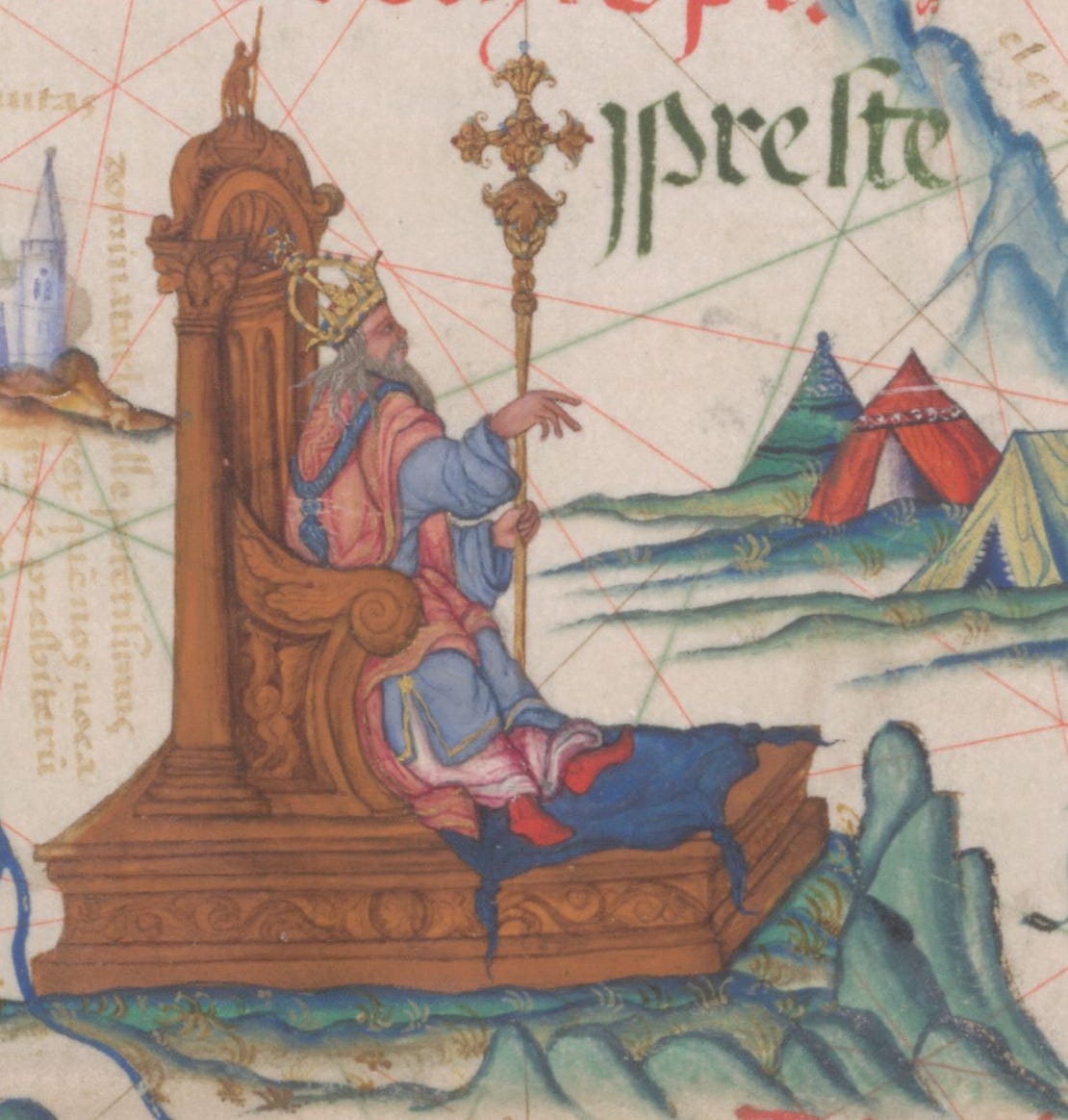
According to contemporary accounts, Prince Henry the Navigator was particularly interested in finding this kingdom, and he welcomed news that brought his explorers closer “to the Indies and to the land of Prester John.” He also hoped to find Christian rulers in Africa who might help Portugal in its wars against the Moors.
Portuguese explorers continued sailing farther south along the African coast until, in 1488, Bartolomeu Dias rounded the southern tip of Africa, proving that ships could reach the Indian Ocean from the Atlantic without passing through the Mediterranean.
But Columbus believed there was another way to reach Asia, and instead of following the Portuguese around Africa, he proposed sailing directly west across the Atlantic.
He was convinced that the distance between Europe and Asia was much shorter than it actually was, having underestimated the size of the Earth and the big stretch of ocean separating the two continents.
Ferdinand and Isabella Complete the Reconquista
In January 1492, the Christian kingdoms of Spain finally brought to an end a struggle their ancestors had fought for centuries, when Ferdinand of Aragon and Isabella of Castile captured Granada, the capital of the last Muslim kingdom on the Iberian Peninsula.
The surrender marked the end of the Reconquista and nearly eight centuries of Muslim rule in parts of Spain. On January 2, the Catholic monarchs entered Granada, and Christopher Columbus was there to witness the occasion.
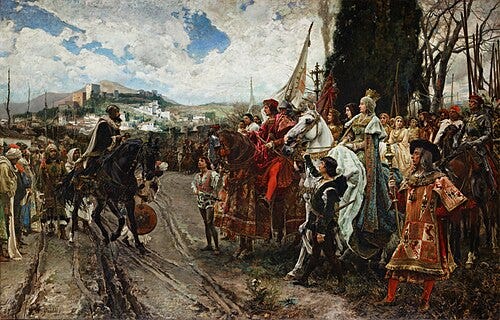
In the account of his first voyage, Columbus recalled seeing the royal banners raised over the Alhambra, before explaining how Ferdinand and Isabella commissioned him to sail west in search of a route to Asia.
Columbus had spent years trying to convince European rulers to finance his voyage, but his proposals were repeatedly rejected or delayed until Ferdinand and Isabella finally agreed to support him.
In April 1492, they signed the Capitulations of Santa Fe, granting Columbus the titles of Admiral of the Ocean Sea and viceroy and governor of the lands he discovered, along with a share of the profits from his expedition.
The potential rewards were enormous, but Columbus also believed his voyage could serve a religious purpose, opening the way for the spread of Christianity into lands Europeans had not yet reached.
Reminder:
The Western Spirit exists because of readers like you. Join us and help keep this project alive and independent.
If you’ve been enjoying these essays, consider becoming a paid subscriber. For a few dollars a month, you’ll get:
Essays on brave men
Reflections on faith and culture
Full access to the growing archive
This project exists because readers like you make it possible.
What Columbus Himself Said
The account of Columbus’s first voyage shows how tightly he tied the trip to the religious goals of Ferdinand and Isabella.
Continue reading below..