
Some people claim that “Christianity destroyed the civilization of Greece and Rome”. They claim the Church replaced classical learning with theology, that the ancient world disappeared under Christian rule, and that it only came back during the Renaissance.
That is, of course, bullshit.
From its earliest centuries, many of Christianity’s greatest thinkers received a classical education before their conversion. St. Justin Martyr studied philosophy. St. Basil the Great encouraged young Christians to read Greek literature. St. Augustine spent years immersed in Cicero, Virgil, and the Latin classics before becoming one of Christianity’s greatest theologians.
Indeed, Augustine credited one pagan author with awakening his desire for wisdom.
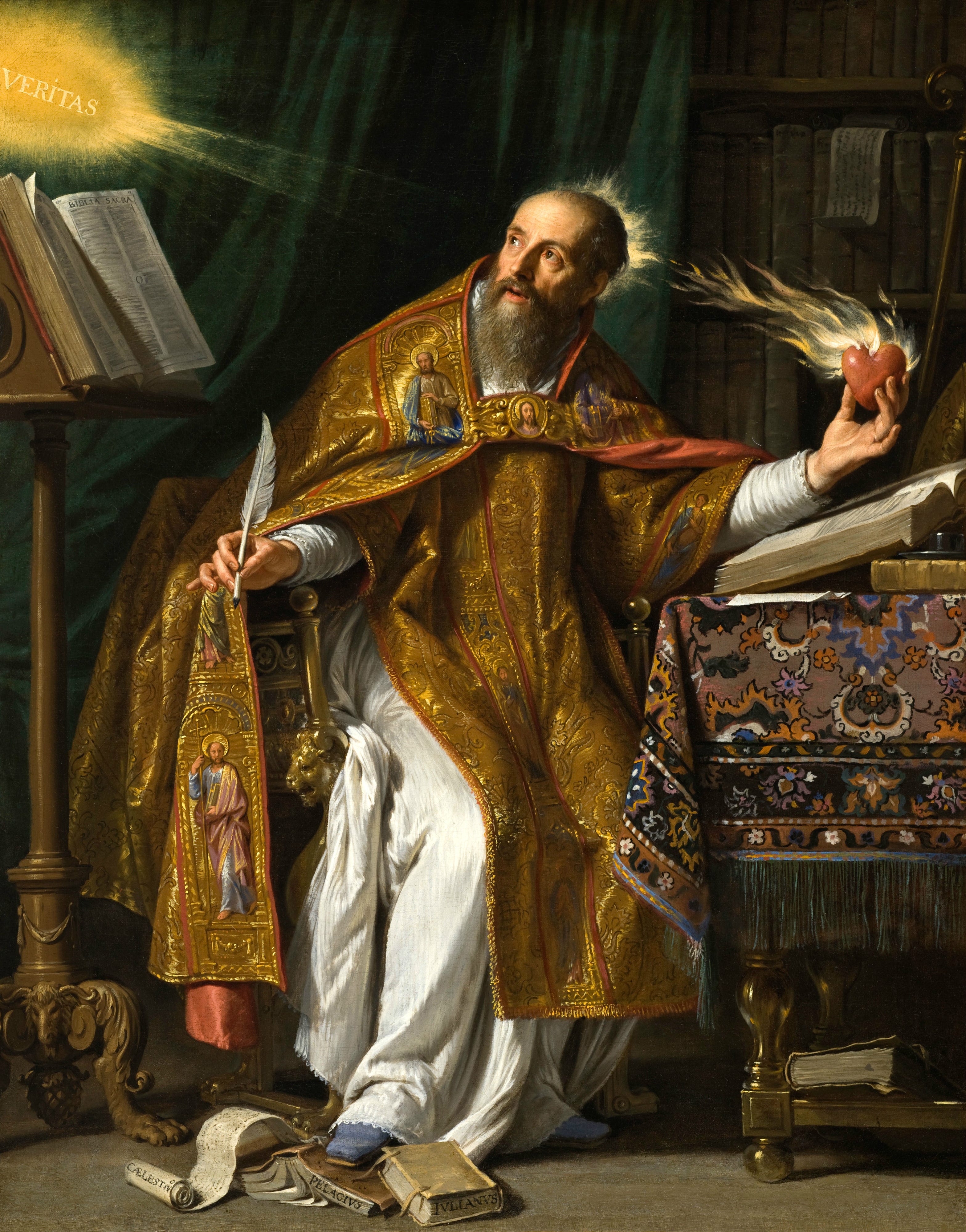
Reflecting on his youth in the Confessions, he recalled reading Cicero’s now-lost dialogue Hortensius:
Among such as these, in that unsettled age of mine, learned I books of eloquence, wherein I desired to be eminent, out of a damnable and vainglorious end, a joy in human vanity. In the ordinary course of study, I fell upon a certain book of Cicero, whose speech almost all admire, not so his heart. This book of his contains an exhortation to philosophy, and is called Hortensius. But this book altered my affections, and turned my prayers to Thyself, O Lord; and made me have other purposes and desires. Every vain hope at once became worthless to me; and I longed with an incredibly burning desire for an immortality of wisdom, and began now to arise, that I might return to Thee. For not to sharpen my tongue (which thing I seemed to be purchasing with my mother’s allowances, in that my nineteenth year, my father being dead two years before), not to sharpen my tongue did I employ that book; nor did it infuse into me its style, but its matter.
Augustine eventually rejected Cicero’s philosophy where it conflicted with Christianity, but he never rejected the pursuit of wisdom that Cicero had inspired.
The Monks Saved More Than Christian Books
The preservation of classical learning did not end with Augustine.
As the Western Roman Empire gave way to the early Middle Ages, monasteries became some of Europe’s most important centers of learning. Within their scriptoria, monks copied not only the Scriptures but also the writings of Aristotle, Plato, Virgil, Ovid, Livy, Tacitus, Cicero, and countless other authors whose works might otherwise have disappeared.
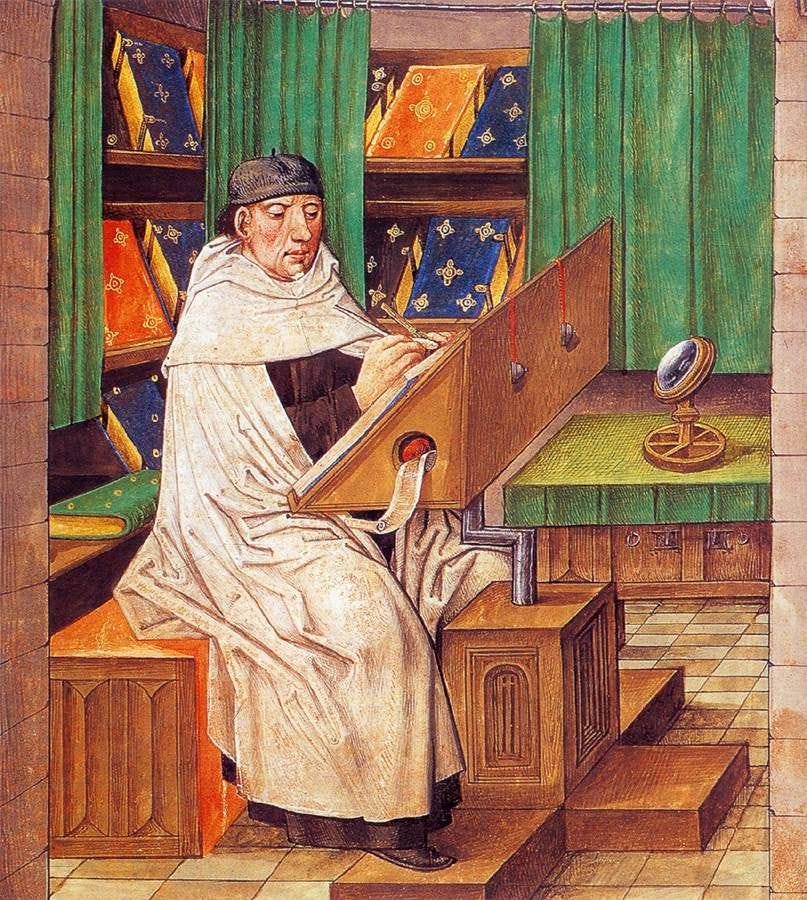
Without those generations of copyists, much of classical civilization would have been lost forever.
Friendly reminder: The Western Spirit exists because of readers like you. Join us and help keep this project alive and independent.
If you’ve been enjoying these essays, consider becoming a paid subscriber. For a few dollars a month, you’ll get:
Essays on brave men, and turning points in Western history
Reflections on faith, tradition, and culture
Full access to the growing archive - essays, book breakdowns, and deep dives
This project exists because readers like you make it possible.
Why Every Christian Should Read The Classics
Modern Christians sometimes ask why they should read Homer or Plato when they already have the Bible.
St. Basil addressed this question in his Address to Young Men on the Right Use of Greek Literature. He compared pagan authors to flowers visited by bees:
We must be conversant with poets, with historians, with orators, indeed with all men who may further our soul’s salvation. Just as dyers prepare the cloth before they apply the dye… so indeed must we also, if we would preserve indelible the idea of the true virtue, become first initiated in the pagan lore, then at length give special heed to the sacred and divine teachings… Just as the bee takes the honey from the flower and leaves the rest, so should the Christian take from the pagan writers what is useful and true, and leave what is harmful.
The Church Fathers read the great books of the ancient world with open eyes and careful judgment. They neither idolized them nor discarded them. They received what was true, rejected what was false, and allowed the best of classical wisdom to serve the higher light of the Gospel.
That way of reading is still the best guide for any Christian who wants to read the classics today..
And if you are looking for a place to put that approach into practice with others, we just crossed 45,000 readers over at the Athenaeum Book Club!!
We had no idea so many people would want to be part of this project, but here's why we think it's happening:
– People are tired of surface-level, short-form content
– They crave depth and genuine conversation with others
– They know that deep reading of great literature is our best weapon against the technological forces seeking to hijack our mental faculties
That said, we never thought we'd find such a thoughtful, intentional group of people so quickly. We hope you'll be with us for a long time!
Our plan is to grow stronger every day, and to build a deep online resource to help as many people as possible discover the beauty and significance of the Great Books and the Great Conversation.
We are about to begin Dostoevsky’s The Brothers Karamazov, which we will read over the next 7 weeks. This will undoubtedly be one of our most important read-alongs so far.
The first discussion, focusing on Books 1–4, is on August 4, at noon ET. Please join us (remember, all sessions are recorded if you can’t make it live)!
Note: you don’t have to have read all of Books 1-4 by then, but the more you have read, the more you’ll get out of the session.

Thanks to every one of you for being here and making it possible for us to do this work.
To celebrate, we’re running a 24-hour discount — 25% off!
If you’re new here, definitely join our book club discussions if you can. They take place biweekly, and have been nothing short of electric of late. And if you can’t make it, everything is recorded!
Welcome!
Catholics ought to reject anti-Catholic and anti-Church narratives whenever they can. I plan to publish a column on how the Catholic Church is the author of the university system, as we know it, developing and supporting educational institutions during the Middle Ages.
Once humanity learned how to write, scribes and then monks preserved everything. We have the Bible and literally everything else that comes down to us from the ancient world because those copyists were not selective, but just copied everything in the stack of clay tablets and parchments, and some of those copies (best estimate is that less than 10% survived) got stashed where the sands of time preserved rather than destroyed them.
We cannot know what needs to be preserved. I was randomly dipping in the Bible when I came across what was quite obviously a case of the scribe copying whatever was in the stack without regard for the contents or even if it was in the right stack -- it's going on about some historical event, when suddenly there's what appears to be a tax document (so-and-so owns so many sheep, so many goats, and paid so many shekels) then after about a handwritten page worth of that, the historical narrative picks up again. Obviously a page that was in the wrong stack, and got copied anyway.
If one is a believer, one might say G-d finds nothing too trivial to preserve, and that if you're willing to read between the pages, there is a lesson in everything, even some random dude's misplaced tax receipt.