
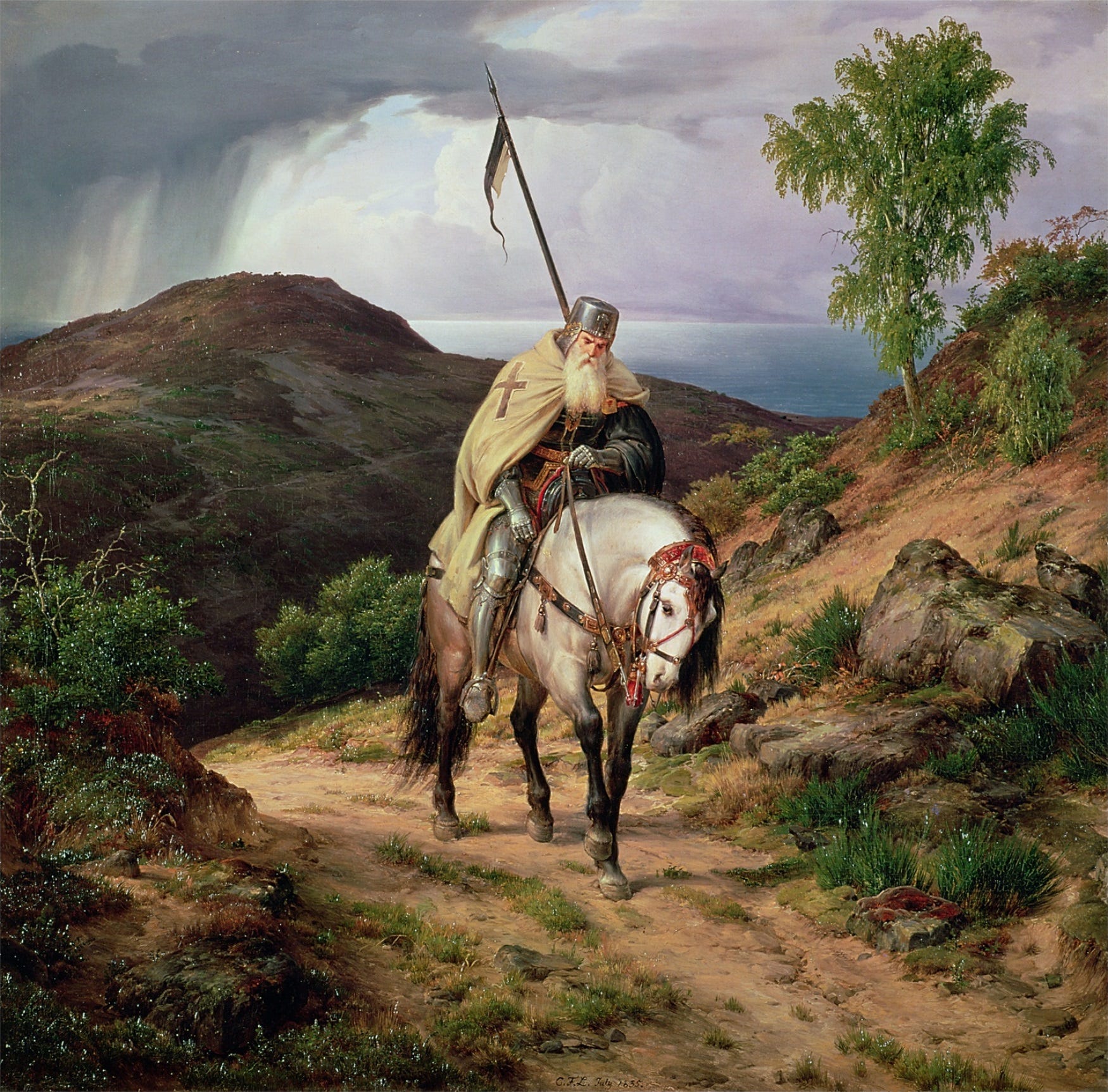
Have you ever wondered whether medieval knights had a rulebook?
Turns out, they did.
Sometime between 1274 and 1276, the Catholic philosopher Ramon Llull wrote The Book of the Order of Chivalry, essentially a medieval guide to what a Christian knight was supposed to be, explaining everything from the virtues a knight needed and the duties he owed to others to the way he should prepare for knighthood and even what the sword, shield, helmet, horse, and rest of his equipment were supposed to remind him of.
And this is where it gets interesting, because when you read what Llull expected from a knight, you realize that medieval chivalry demanded far more than courage on the battlefield.
A knight first had to learn how to rule himself…
Before You Carry a Sword, Know What It Is For
Llull begins his book with a young squire traveling to the court of a great king, hoping to become a knight, when his horse carries him into a forest where he encounters an elderly knight who has withdrawn from the world and now lives as a hermit.
The old knight asks the young man where he is going, and when the squire explains that he wants to receive knighthood, the hermit begins teaching him what the title means.
Llull’s point becomes clear immediately: before a man receives the weapons of a knight, he needs to understand the responsibility that comes with them.
For Llull, the knight exists to uphold justice, defend the Christian faith, remain loyal to his lord, preserve peace, and use his strength in defense of those who need it, which means the sword hanging from his side is never supposed to become a license for violence or personal glory.
It has a purpose.
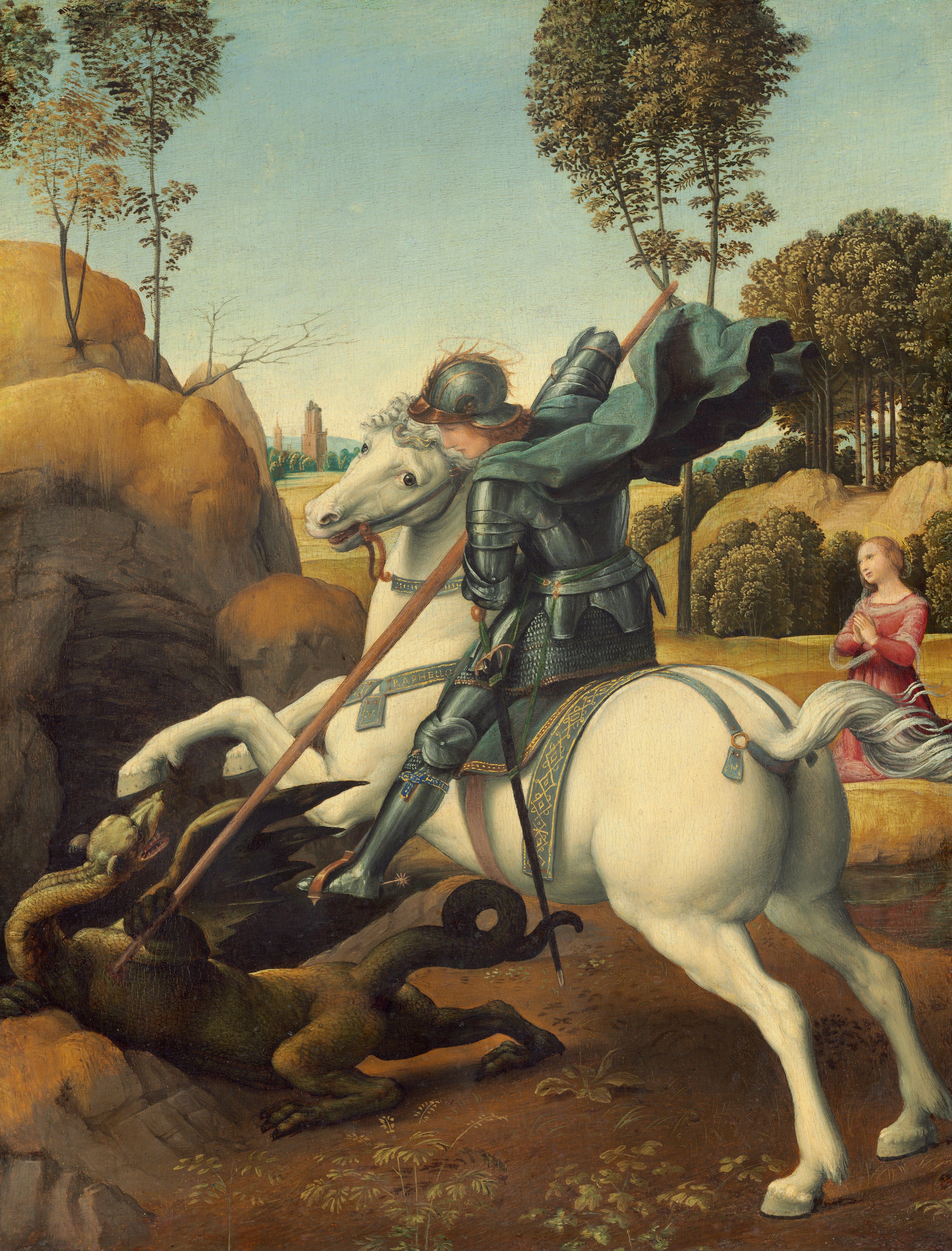
And that gives us the first rule:
Know what you are fighting for.
“The office of the knight is the aim and purpose for which the Order of Chivalry was begun; thus, if the knight does not practise the office of knighthood he is contrary to his Order and to the aforesaid beginnings of Chivalry, and because of this contradiction he is not a true knight even though he may be called a knight, and such a knight is baser than the weaver or the trumpeter who does practise his office. It is the office of the knight to uphold and defend the Holy Catholic Faith, for which God the Father sent His glorious Son into the world to take human flesh in the glorious Virgin our Lady Saint Mary, and to honour and defend His lord, and to uphold justice. God grants honour in this world and the next to those knights who are the upholders and defenders of the office of God and of the faith through which we shall be saved. Therefore the knight who is not a defender of the Faith and of justice is not a true knight, for he fails in the very purpose for which the Order was instituted.”
Learn to Conquer Yourself
This may be the most important part of Llull’s entire vision of knighthood, because the Christian knight faces enemies on two fronts.
There are enemies who threaten the people and things entrusted to him, and then there are the passions within himself that can destroy the kind of man he is supposed to become.
Pride, lust, greed, anger, cowardice, gluttony, envy and dishonesty all matter to Llull because a man capable of defeating another man in battle can still be defeated by himself, and physical strength becomes dangerous when the man possessing it lacks the virtues required to control it.
This is why Llull connects knighthood with faith, hope, charity, justice, prudence, fortitude and temperance, drawing the knight into the wider Christian understanding of virtue.
And think about what that means for a moment.
Before you can talk about defending a kingdom, leading other men, protecting your family, or fighting for the faith, you first have to ask whether you can govern your own appetites, keep your word, control your temper, remain faithful when nobody is watching, and do what you know is right when doing it costs you something.
The first kingdom a Christian knight has to rule is himself.
“Just as all of these aforesaid practices pertain to the knight with respect to the body—riding a horse, taking part in tournaments, fencing, and other things similar to these—so justice, wisdom, charity, loyalty, truth, humility, fortitude, hope and prowess, and the other virtues similar to these, pertain to the knight with respect to the soul. For if the knight has strength of body and is without the virtues of the soul, then his strength is of no value, and he is more dangerous than useful, because he can use his strength to do evil. The knight must therefore conquer himself first: he must overcome pride with humility, lust with chastity, greed with liberality, anger with patience, and all the vices with the opposing virtues, so that his body may serve the soul and both together may serve God and the Order of Chivalry.”
Use Your Strength to Protect
Llull then gives the knight a responsibility that sits at the heart of the medieval ideal of chivalry: protect those who cannot protect themselves.
He specifically speaks about widows, orphans, women and other vulnerable people who require the knight’s assistance, because in Llull’s understanding, greater strength creates greater responsibility.
If God gives you power, that power has a purpose.
If you are physically strong, someone weaker should be safer because you are there. If you have wealth, your family should be provided for. If you possess authority, the people beneath you should receive justice. If somebody has entrusted himself to your protection, your word should mean something.
This is what separates the knight from the mere fighting man.
Both can carry a sword.
The knight is supposed to know whom the sword serves.
“It is the office of the knight to support widows, orphans and the helpless. If Chivalry, which is such an honourable office, were an office that involved robbing and destroying the poor and the helpless, and deceiving and raping widows and other women, it follows that offering aid and support to orphans, widows and the poor would be a very great and noble office indeed. Therefore the knight is bound by his office to protect the weak against the strong, the poor against the rich, and to be a shield between the prince and his people, receiving the blows that would otherwise fall upon those who cannot defend themselves. For greater strength creates greater responsibility, and power given by God must be used for the defence of those who have none.”
Choose the Men Around You Carefully
Llull also spends a lot of time discussing whether a man should be allowed to become a knight in the first place, because receiving knighthood was supposed to require an examination of the candidate’s life, habits, character, and intentions.
And you can understand why.
A medieval knight could possess land, weapons, horses, servants and considerable authority over other people, so placing that kind of power in the hands of a man without character could become disastrous.
Llull therefore wanted to know what kind of man stood beneath the armor.
That same principle applies to the company a man keeps, because the men around you establish what you consider normal. If your friends expect courage, fidelity, discipline and responsibility from one another, those standards become part of the friendship, and when one man begins slipping, the others have a duty to pull him back.
So choose men who make you better.
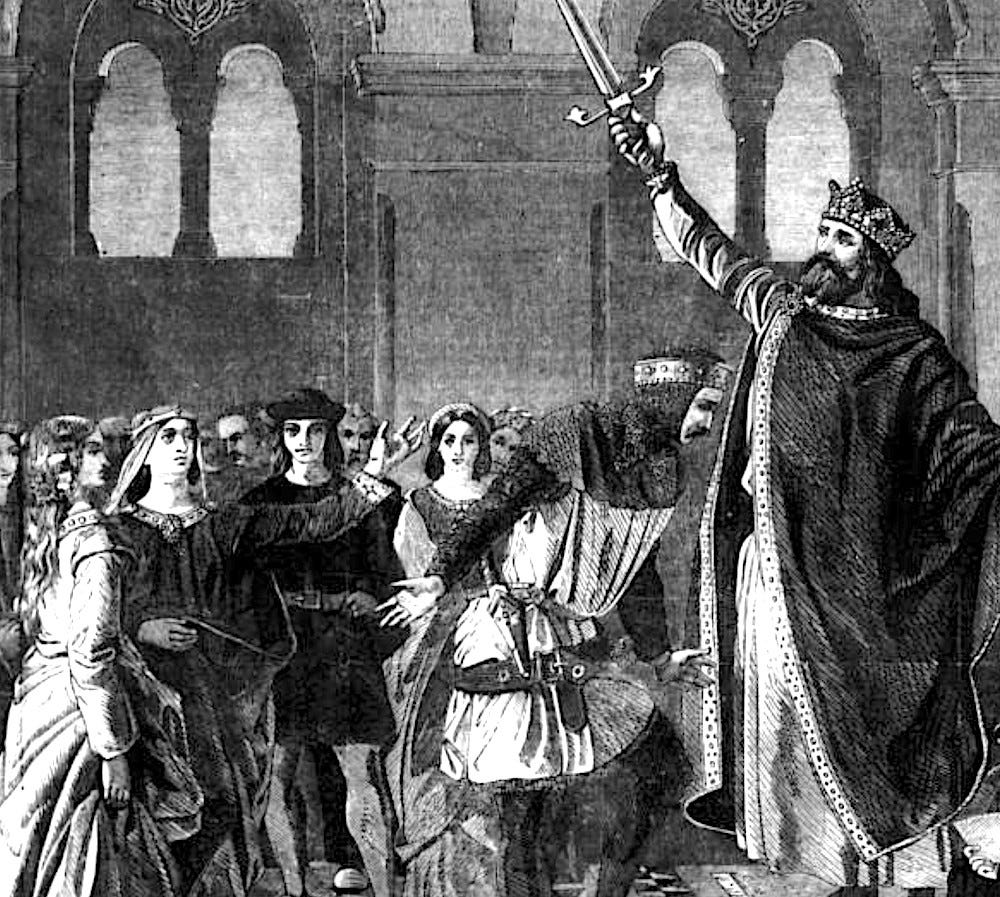
And become the kind of man who makes your friends better too.
“In order to examine the squire the examiner must be a knight who loves the Order of Chivalry, for there are some knights who have greater love for a large number of knights rather than that they be good, and since Chivalry does not protect a multitude in number and loves nobility of courage and good manners, therefore, if the examiner loves a multitude of knights more than the nobility of courage, he will fail in his examination. The squire must be examined as to his life, his habits, his character, and his intentions, for if a man without virtue is made a knight, he will dishonour the Order and bring ruin upon those placed under his power. Likewise, a knight should keep company only with those who love the Order and practise its virtues, for the company a man keeps will either raise him to honour or drag him into dishonour.”
Friendly reminder: The Western Spirit exists because of readers like you. Join us and help keep this project alive and independent.
If you’ve been enjoying these essays, consider becoming a paid subscriber. For a few dollars a month, you’ll get:
Essays on brave men, and turning points in Western history
Reflections on faith, tradition, and culture
Full access to the growing archive - essays, book breakdowns, and deep dives
This project exists because readers like you make it possible.
Prepare Your Soul Before You Fight
When the time finally came for the squire to become a knight, Llull described the ceremony in explicitly Christian terms, with the candidate expected to confess his sins, fast, pray and spend the night in vigil before receiving his weapons.
Imagine being that young man.
You have spent years learning to ride, fight and use weapons, and now the night before receiving the title you have dreamed about, you are sent into a church to examine your conscience before God.
That tells you everything about the ideal Llull was trying to preserve.
The making of a knight began with the soul.
The ceremony reminded him that his new honor came with obligations, and when he eventually walked out carrying a sword, he was supposed to understand that his strength now belonged to an office greater than himself.
“The squire who is to receive the Order of Chivalry must first confess his sins, fast, pray, and spend the night in vigil in the church, examining his conscience before God. For the making of a knight begins with the soul, not with the body. He must understand that the honour he is about to receive comes with grave obligations, and that his strength will now belong to an office greater than himself. Only after he has prepared his soul by purifying it of sin and fixing it upon God should he receive the sword and the other arms of knighthood, so that he may go forth not as a mere fighting man but as a true knight whose body serves the soul and whose soul serves God and justice.”
Remember What Your Sword Means
This is probably my favorite part of Llull’s book.
He gives meaning to the knight’s equipment.
The sword, with its straight blade and crossguard, reminded the knight of the Cross of Christ and of his duty to uphold justice, while the shield, helmet, lance, armor, horse and even the equipment used to control the horse carried lessons of their own.
In other words, a knight effectively dressed himself in reminders.
Every time he prepared for battle, the objects around him told him something about the man he was expected to be.
There is something worth taking from that even seven hundred years later.
Keep things around you that remind you of your duties. Put the crucifix somewhere you will see it. Carry a rosary. Keep photographs of your family. Read the books that formed the men you admire. Learn the history of the civilization you inherited and surround yourself with reminders of the things you have decided are worth serving.
Because it is much easier to remember who you are when your daily life continually points you toward it.
“Everything that the priest wears in order to sing mass has some meaning appropriate to his office, and since the office of the cleric and the office of the knight belong together, the Order of Chivalry therefore requires that everything of which the knight has need in order to practise his office has some meaning through which the nobility of the Order of Chivalry is signified. Unto the knight is given a sword which is made in the shape of a cross to signify that just as our Lord Jesus Christ vanquished on the Cross the death into which we had fallen because of the sin of our father Adam, in the same way the knight must defeat and destroy with his sword the enemies of the Cross. And just as the sword cuts with both edges, and Chivalry exists in order to defend justice, which consists of giving to each one his right, therefore the knight’s sword signifies that he should uphold Chivalry and justice with the sword. The shield signifies that the knight should stand between the prince and the people, receiving the blows that would fall upon them. The helmet signifies shame, that the knight may be ashamed to do anything contrary to the Order. And so with every piece of his equipment: each is a reminder of the man he is expected to be.”
Become Wise Enough to Use Your Strength
Llull also understood that courage alone could never make a good knight, because a courageous fool can cause enormous damage.
The knight therefore needed wisdom.
He needed to understand justice, know his faith, recognize his obligations, judge when action was necessary and develop enough self-command to keep courage under the direction of reason.
This is another part of medieval chivalry that deserves more attention today, because these men were expected to cultivate the mind alongside the body.
So read.
Learn your history.
Understand your faith.
Know why you believe what you believe.

Study the men who came before you, including their victories and their mistakes, because if you intend to defend something, you should first understand what it is.
“Courage alone can never make a good knight, for a courageous fool can cause enormous damage. Therefore the knight needs wisdom. He must understand justice, know his faith, recognise his obligations, judge when action is necessary, and develop enough self-command to keep courage under the direction of reason. Just as the body of the knight is trained by riding, jousting, and the use of arms, so the soul must be trained by the study of the virtues, by knowledge of the Faith, and by understanding of the history and the civilisation he is sworn to defend. For if a man intends to defend something, he should first understand what it is, why it is worthy of defence, and how it is to be defended without destroying the very thing he seeks to protect.”
So How Do You Live Like a Crusader Knight?
Read the great heroes who came before you. Study their victories and their failures. Learn how they ruled themselves, kept their word, and spent their strength. The men of the past still teach the living, if we are willing to listen.
It’s never too late to start reading the Great Books. And really, there’s no better time to start than now.
If you’d like to join me — and a whole community of readers — on the adventure, I’d love to have you in the Athenaeum Book Club.
I founded the project with a few friends a year ago, and we couldn’t be happier with what it’s become:
— 56,000 total members
— 6th largest literature Substack in the world
— Nearly 400,000 followers and millions of impressions on X
Our group has already journeyed through The Iliad, The Confessions, Don Quixote, The Count of Monte Cristo, The Odyssey, The Aeneid, and many other great works.
Right now we’re finishing The Brothers Karamazov — our most powerful read-along yet — on 1 September. After that, we vote on the next book… and you get to decide.
Take out a paid subscription if you want to join our “inner circle” and participate in the discussions directly. You’ll get:
Live book club discussions (biweekly)
Access to our incredible community chat
Essays to guide you through the Great Books
All past recordings, essays, and podcasts
Ability to vote on what we read next
Of course, you may also read along for free and tune into the live broadcasts. See you inside!
Great piece. The details may be anachronistic but the ethos has much to teach us and remind us of. I couldn’t help but consider the values and behaviors of our political leaders, many of whom wrap themselves in the cloth of Christian ‘chivalry’ but don’t use their strength to defend the defenseless, their riches to care for the poor or sacrifice Self to virtues like fidelity.
Sir Walter Scott’s Ivanhoe is one of the best novels depicting chivalry. It should be required reading for all young men.